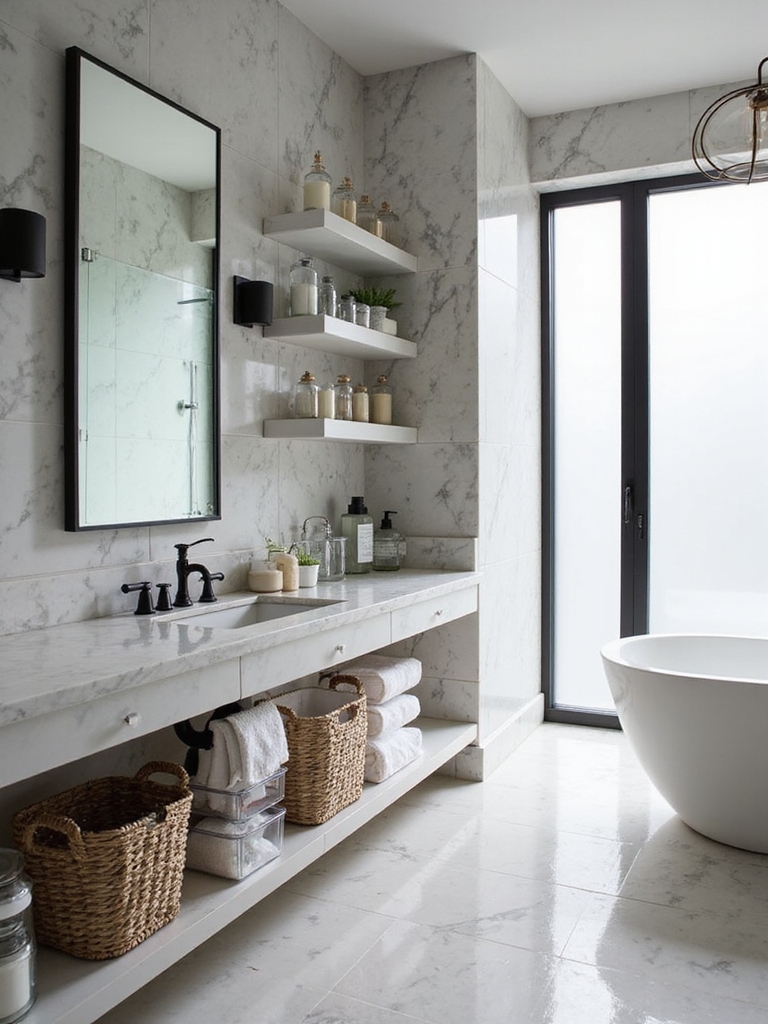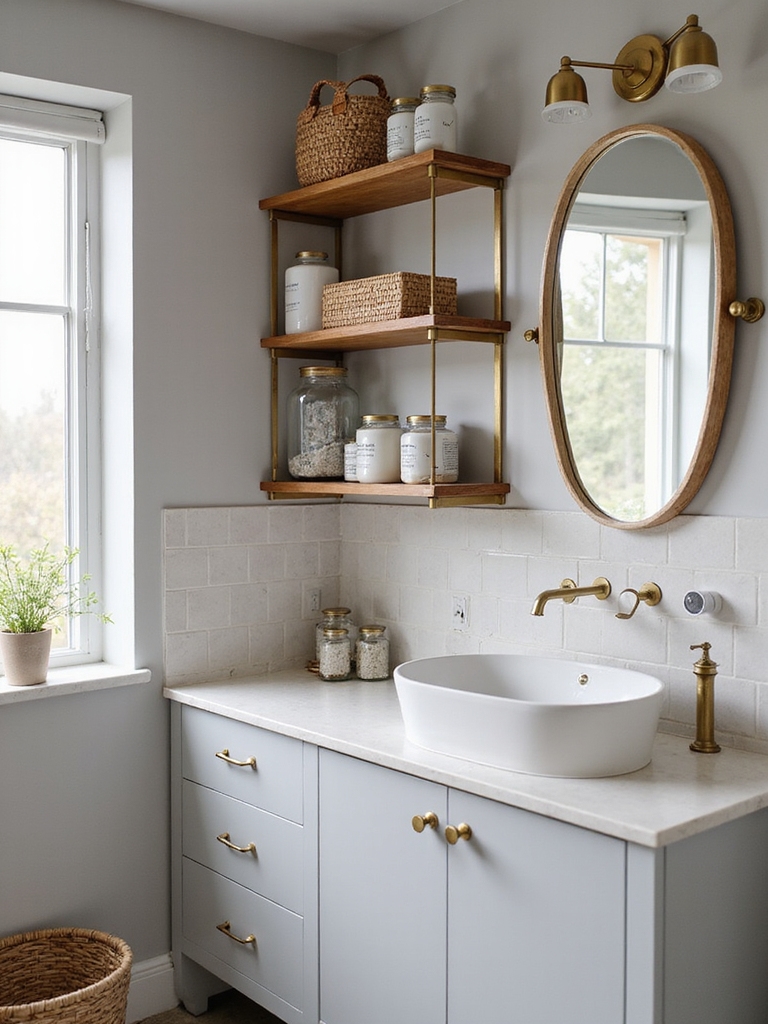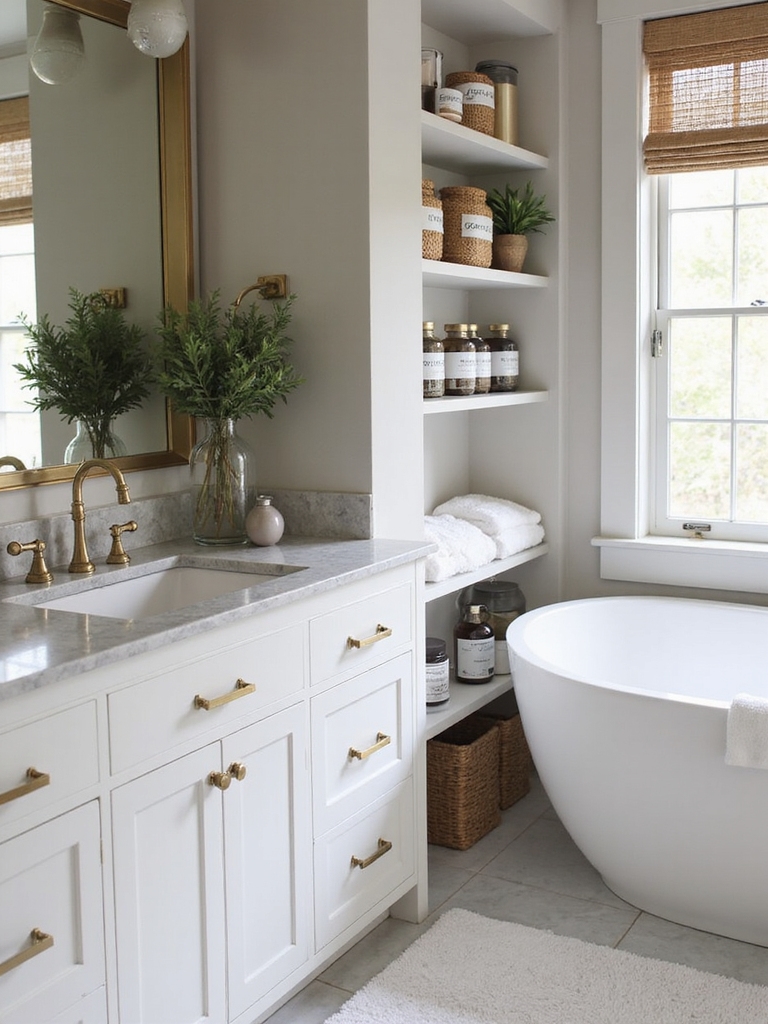

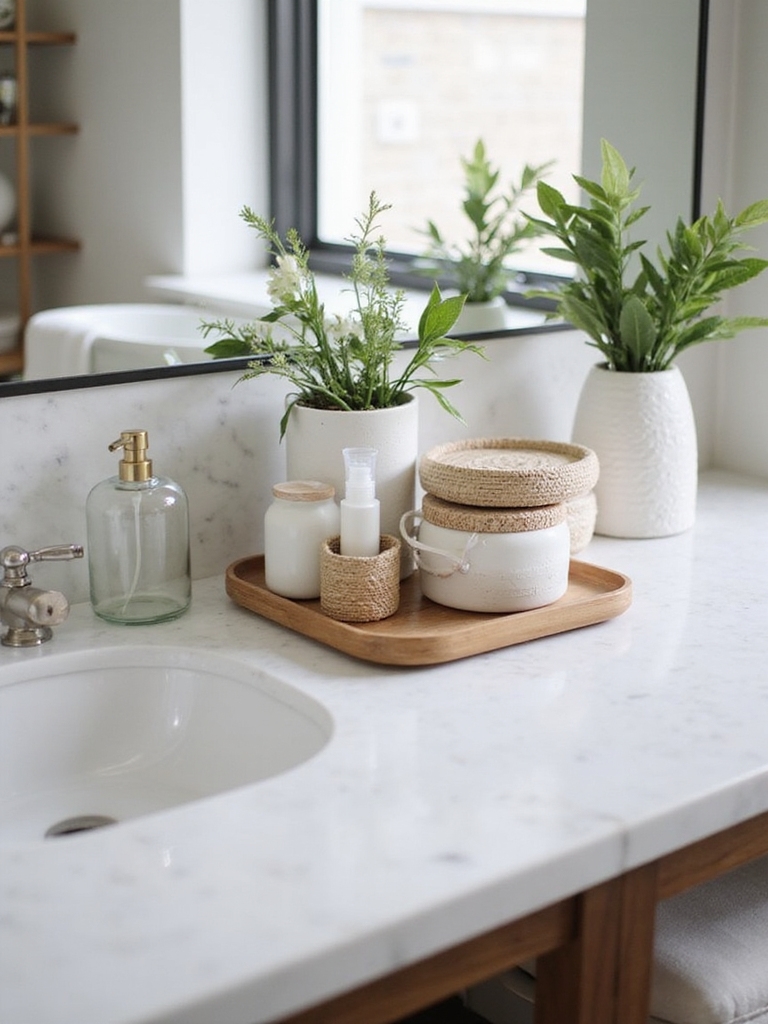
The honest reason most counters stay messy is simple: they hold too much. Every clever bin in the world cannot fix a surface carrying forty products. So the simplest organization idea is also the most powerful: own less on the counter. Everything below flows from that one rule, and it is why a near-empty vanity feels instantly calm.
These 16 simple bathroom countertop organization ideas lean minimalist on purpose, built around a single guideline you can apply in minutes: if it is not daily, it does not live on the counter. For a more budget-and-speed take see these countertop organization ideas; this one is about doing less, better. Fewer things, clearer containers, one calm surface.
The Simple Approach, in Short
What is the one rule? If it is not part of your daily routine, it leaves the counter. That single filter does most of the work.
What do I actually buy? Almost nothing. A couple of clear acrylic organizers ($10-25) and a magnetic strip, if anything at all.
How do I keep it simple? Use one-in-one-out: nothing new lands on the counter unless something else leaves. The number stays low forever.
Reclaim Space by Reducing Chaos
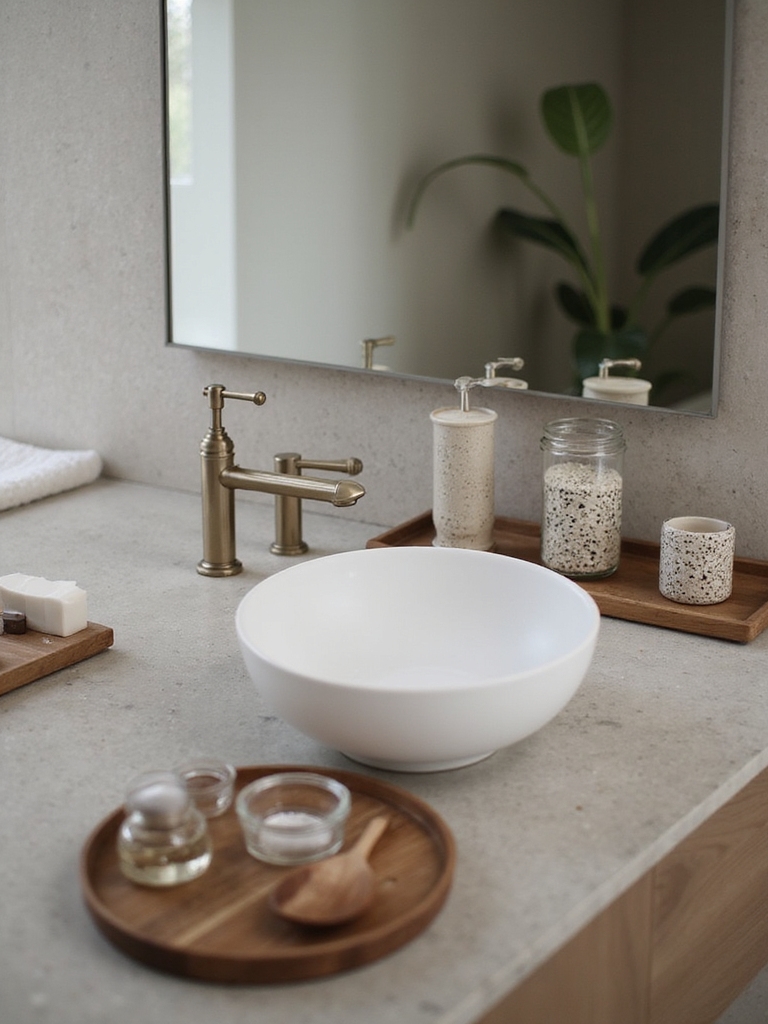
The simplest way to reclaim a counter is to put less on it, full stop. Before any organizer enters the picture, I cut the number of things competing for the surface, because a tidy counter with forty items is still a busy counter. The simplest counters I style own the fewest things, and that emptiness is exactly what makes them feel restful.
- Keep only the daily few out; everything occasional moves to a drawer or cabinet.
- Count what is left. If it is more than a handful, cut again before you organize.
- Treat empty surface as the win you are actually after.
Sort, Zone, Store in Three Steps
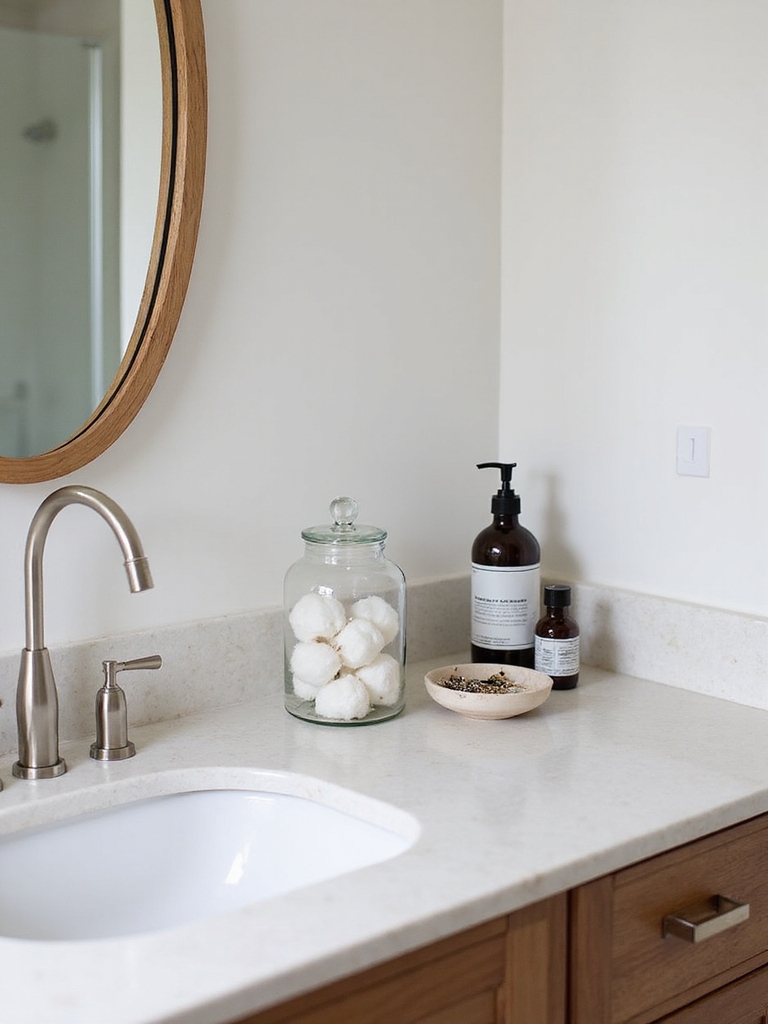
Once you have decided to own less, the method is three quick moves and nothing fancier. The simplicity is the point; a system you can describe in three words is a system you will actually keep. Here is the whole thing:
- Sort: pull everything off, and split it into daily, occasional, and gone.
- Zone: keep the daily few by the sink; send the occasional things out of sight.
- Store: give the survivors one container each so nothing floats loose again.
Two terms behind a simple counter:
📖Decant
Transfer products into matching, refillable containers so a few items read as one calm set.
📖One-in, one-out
A rule that lets nothing new onto the counter unless something already there leaves, keeping the total flat.
Space-Saving Clear Acrylic Organizers
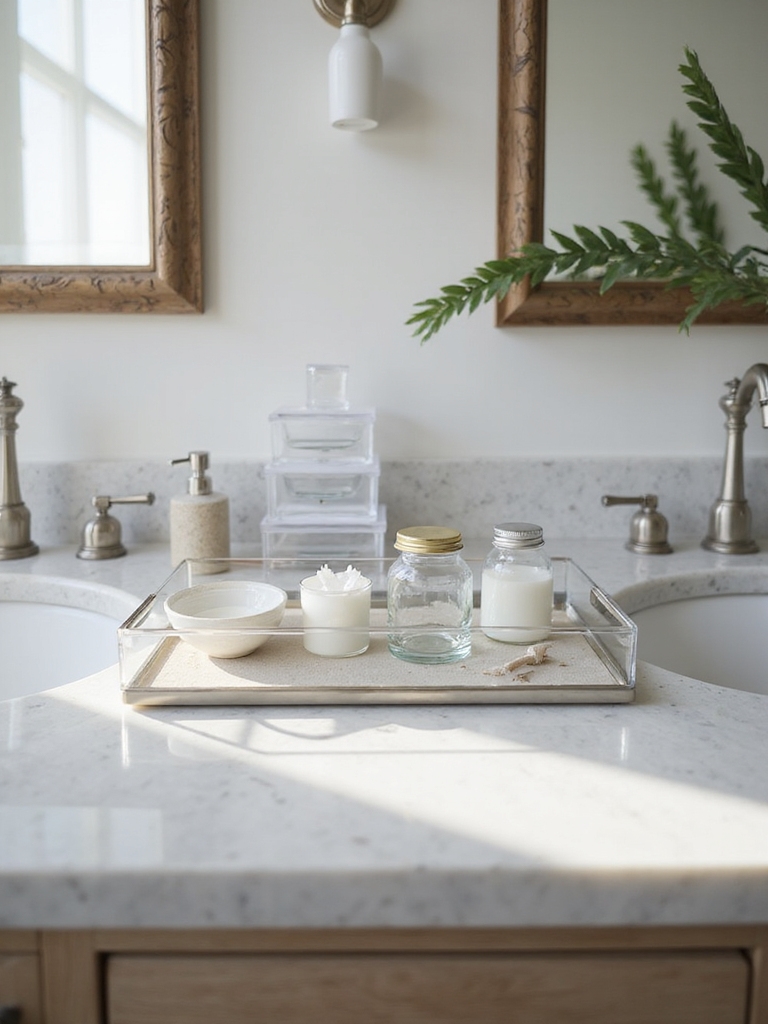
If you buy one thing, make it clear acrylic. A simple stackable acrylic organizer keeps the few things you do keep visible and contained, and the see-through material almost disappears, so it adds storage without adding visual clutter. A set runs about $10 to $25 and lasts for years in a wet room.
The reason acrylic suits a simple counter is that it shows everything you own at a glance. You see your levels at a glance, so you stop buying duplicates, and the matching, transparent look feels quiet and orderly. I lean on a slim two-drawer acrylic unit for the daily few and a single open tray for the rest.
- Choose clear, stackable acrylic so storage adds capacity, not visual noise.
- Use a shallow drawer unit for daily items and one open tray for the grab-and-go few.
- Pick one shape and repeat it, since matching containers read as intentional.
Raised and Tiered Countertop Organization
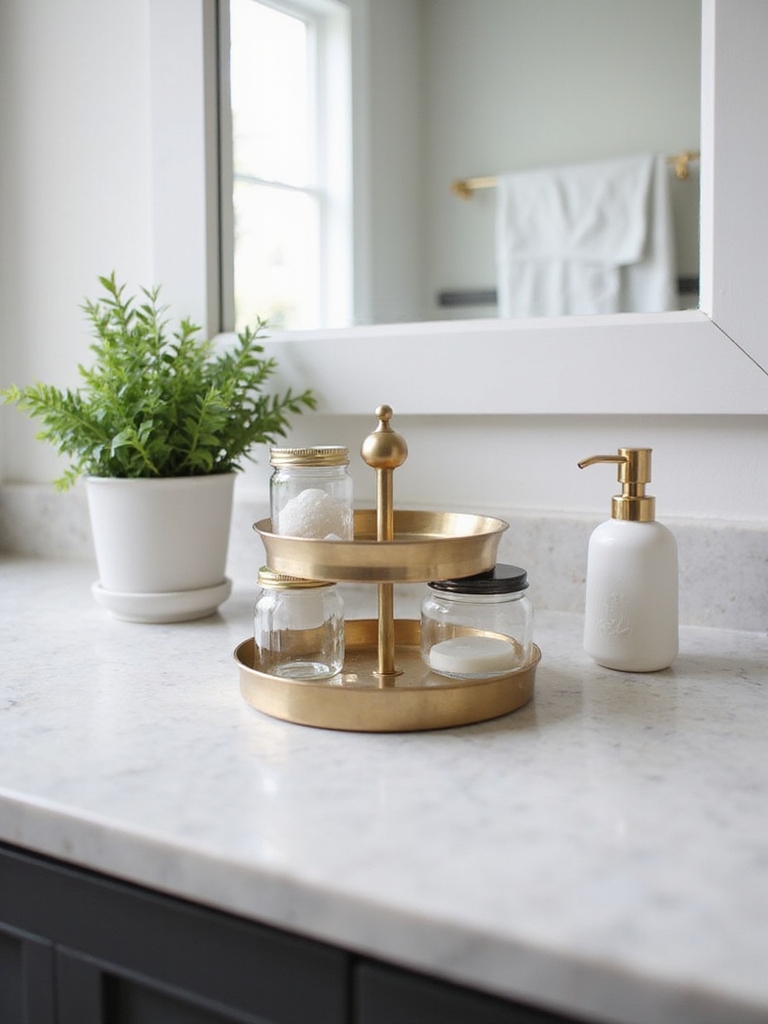
A small riser or a tiered stand is the quiet trick that makes a simple counter work harder without adding stuff. Lifting your products onto two levels lets the back row peek over the front, so you can see and reach everything in one glance. It keeps the footprint tiny while doubling what you can store in it.
One Riser Becomes the Focal Point
A cake-stand-style riser also gives a counter a single, intentional focal point. Group the daily few on one raised tray and the whole vanity instantly looks composed, because a single tidy island of products gives the eye one calm place to land. The height does the styling for you.
Keep the tier itself simple and low so it does not crowd the mirror or the sink. One level of lift is usually plenty in a bathroom. Style the rest of the surface with the same restraint you would bring to any vanity counter, and the raised group becomes the one thing the eye lands on.
The most organized counters I style are not the ones with the cleverest bins. They are the ones with the fewest things on them.
Magnetic Strips for the Small Stuff
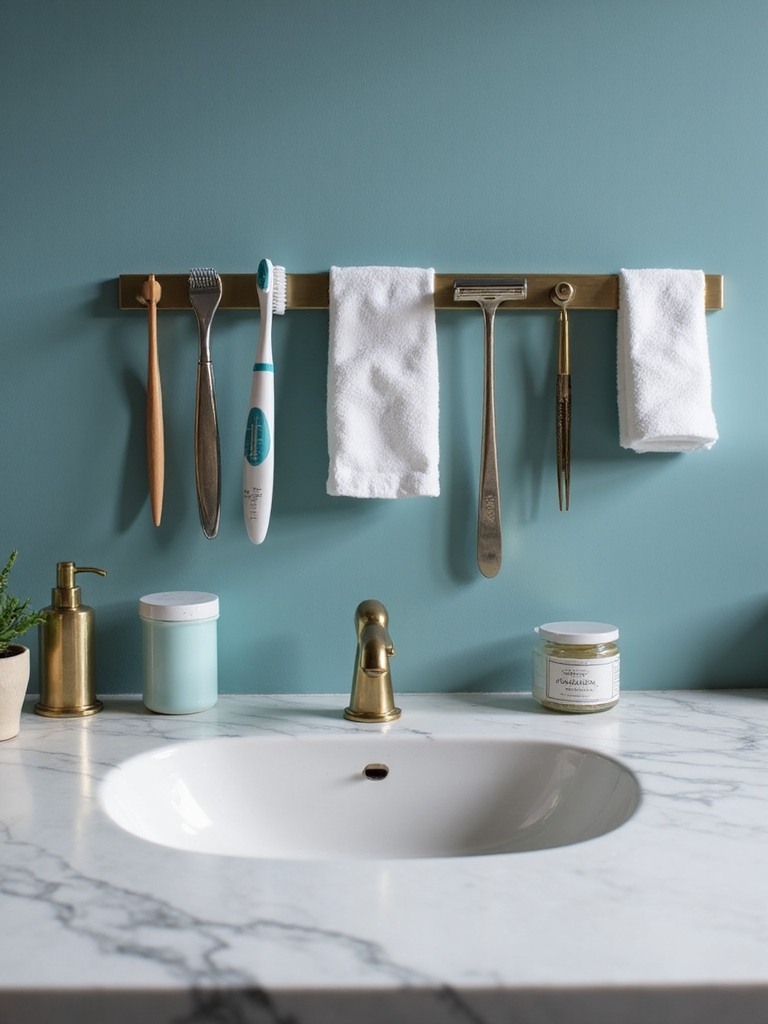
The fiddly little metal things are what clutter a counter fastest, and a magnetic strip gets every one of them off the surface. Mounted inside a cabinet door or low on the wall, a simple strip holds tweezers, clippers, bobby pins, and small scissors where you can see and grab them. It costs $8 to $15 and clears a whole category of clutter at once. Here is how I use it:
- Mount a magnetic strip inside a cabinet door to keep it hidden but handy.
- Stick metal tweezers, clippers, and scissors to it so they leave the counter for good.
- Add a small magnetic cup for bobby pins, the tiniest things that always go missing.
The One-In, One-Out Rule
A simple counter stays simple only if the number stops climbing, and the easiest guardrail is one-in, one-out. Nothing new earns a spot on the surface unless something already there leaves, which keeps the total flat no matter how many samples and gifts come through. It is the single habit that protects all the work above.
The rule I live by is blunt: if it is not part of my actual daily routine, it does not get to sit on the counter. New serum, finished bottle out. Travel kit home, travel kit unpacked and put away. I have watched this one idea keep a client’s vanity clear for a year with zero re-organizing, because the clutter never accumulates in the first place.
Apply the same thinking to backups. Keep just one in reserve and store it below the sink. When the counter physically cannot hold more than your daily few, staying simple takes no ongoing willpower at all; the limit does the work for you.
Decant and Match for a Quiet Surface
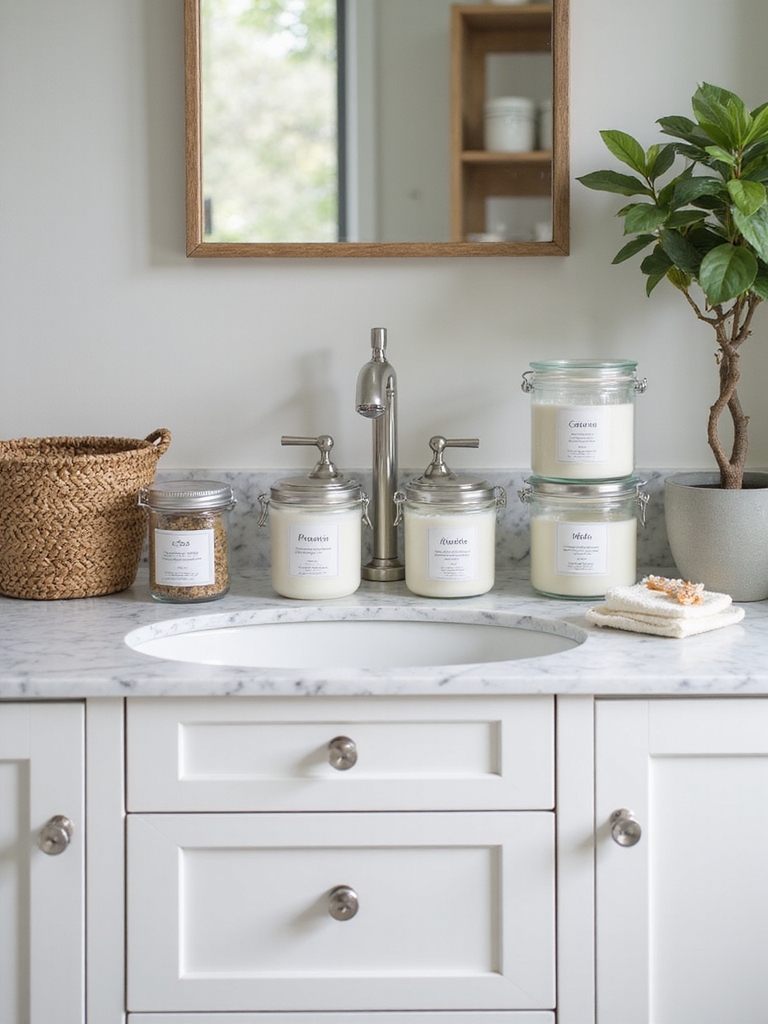
Even a few products look busy when every bottle shouts a different brand, color, and font. Decanting the daily things into matching containers is the simple styling move that makes a sparse counter look deliberate. The eye takes sameness as order, so a row of identical pumps and jars quiets a surface that the same number of loud, mismatched originals would clutter.
You do not need much: a couple of refillable pumps for soap and lotion, a jar for cotton, a tray to hold them. Keep the palette tight and tied to the room, the way you would plan any color-by-mood scheme, and the simplicity starts to look intentional and considered.
- Decant soap and lotion into matching refillable pumps for an instant calm.
- Keep the container palette to one or two tones that match the bathroom.
- Refill rather than rebuy, so the look stays consistent over time.
What Actually Earns a Spot on the Counter
The whole simple method hinges on one honest question asked of every item: do I use this every single day? If the answer is yes, it stays out. If it is anything softer, weekly, sometimes, just in case, it goes into a drawer. That binary is what keeps the decision fast and the counter empty, with no agonizing over maybes.
For most people the true daily list is shockingly short. A hand soap, a toothbrush, maybe a face wash and a moisturizer, and that is often the whole list. Everything else, the once-a-week mask, the holiday perfume, the backup razors, has been squatting on the counter out of pure habit. Naming the real daily few is the most clarifying ten minutes you can spend.
I run this audit with clients by having them physically separate the daily items from everything else, and the daily pile is always smaller than they guessed. Once you see how little you actually reach for each morning, putting the rest away feels surprisingly good. The counter you are left with is the one you wanted all along.
Store It in a Drawer, Not on the Surface
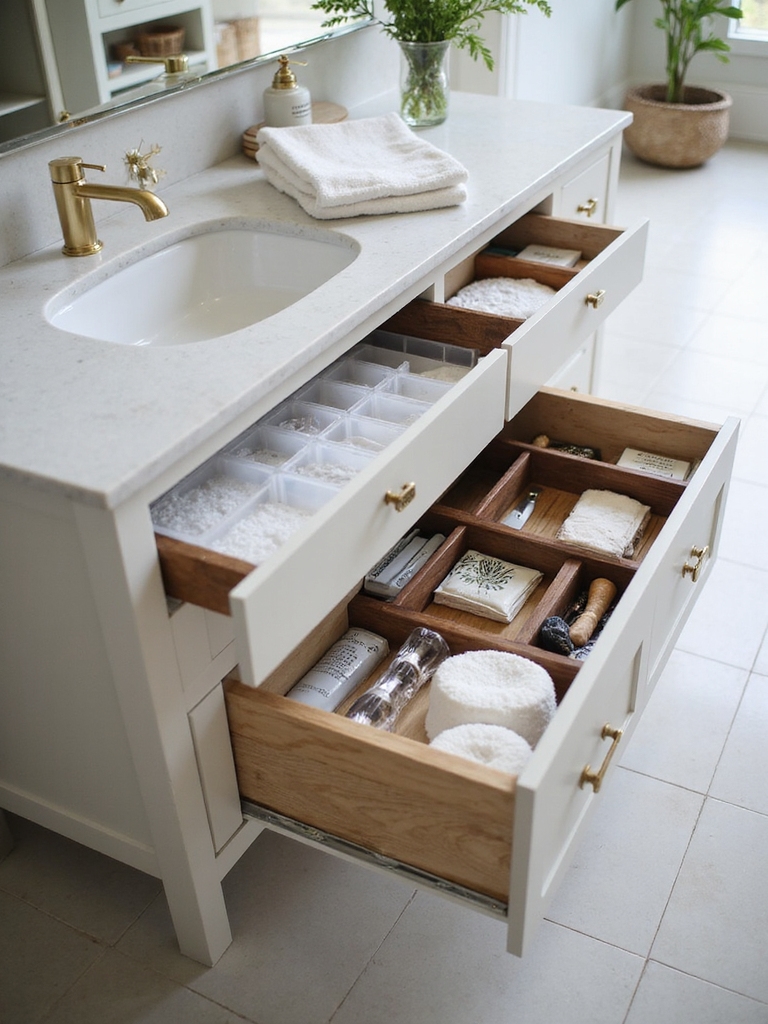
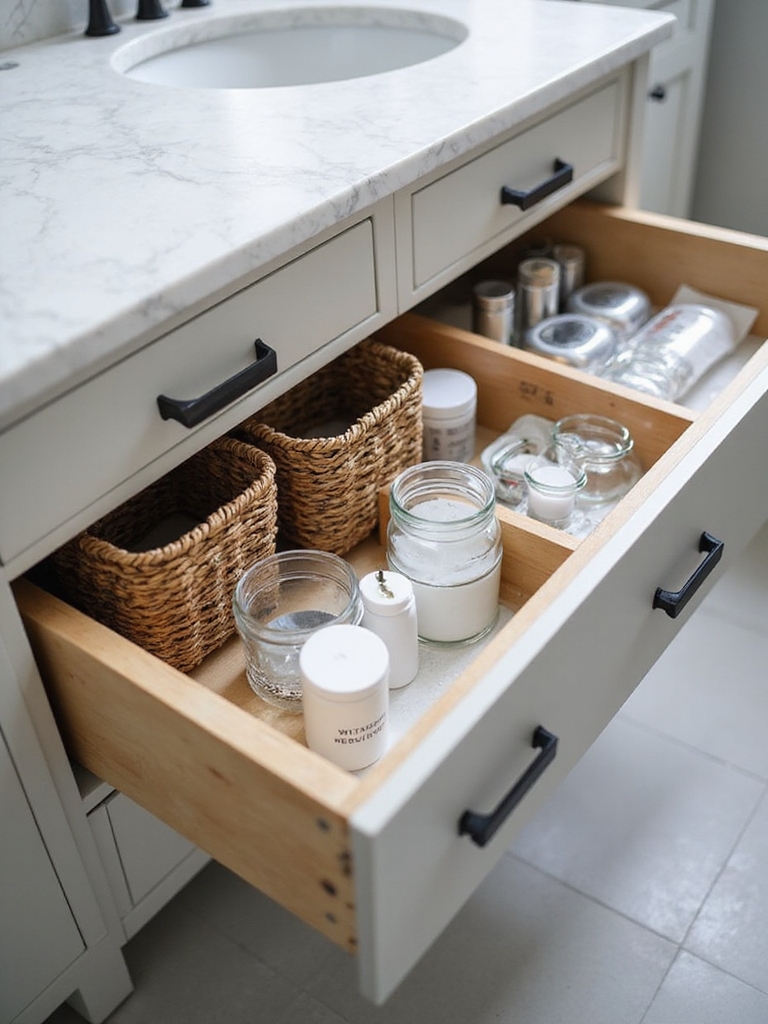
The simplest counter trick of all is to treat the drawer as the default and the counter as the exception. Most things are perfectly reachable an inch below the surface, so a shallow drawer organizer holds the bulk of your routine out of sight and still grabbed in a second. Hidden still means reachable. The counter only earns the handful you literally cannot start the day without.
Drawer-first thinking is what finally clears the surface above for good. When the drawer absorbs the grooming tools, the cotton, the backups, the counter can finally breathe. Sort the drawer the same way you would any storage-obsessed cabinet, with dividers so each thing has a slot.
- Make the drawer the default home and the counter the short exception list.
- Add drawer dividers so the hidden storage stays as ordered as the visible part.
- Keep only what you cannot start the morning without on the surface itself.
Maintenance & Care
The beauty of a simple counter is that there is almost nothing to maintain. With only a daily few out, a ten-second wipe-and-return as you finish getting ready keeps it perfect, and there is no pile to ever dig back out of. The fewer things on the surface, the less upkeep it can possibly need.
Do one slightly bigger check on a slow rhythm. Once a week, glance at your acrylic organizers, refill what is low, and pull anything that crept in and is not truly daily. Wipe the clear containers when they fog, and the whole simple system resets in under two minutes, which is the entire point of doing less.
Simple Counter Questions, Answered
?What is the simplest way to organize a bathroom counter?
Own less on it. Keep only the items you use every day on the surface and move everything occasional to a drawer or cabinet. A near-empty counter needs almost no organizing, which is why reducing what is out wins over any clever bin or system you could buy.
?Do I need to buy organizers to keep a counter simple?
Barely. A couple of clear acrylic organizers and a magnetic strip are plenty, and many people need nothing more than a tray they already own. The real work is deciding what leaves the counter; the containers just hold the few things that stay.
?How do I keep a minimal counter from filling up again?
Use the one-in, one-out rule: nothing new lands on the counter unless something already there goes. Pair it with a ten-second daily return and a quick weekly glance, and the number of things out stays low permanently, so the surface never creeps back toward clutter.
Simple Means Fewer Things, Not More Bins
Every idea here circles back to one quiet truth: the simplest counter is the one carrying the least. Cut to the daily few, give the survivors a clear container, lift them on a small riser, send the metal bits to a magnetic strip, and protect the whole thing with one-in, one-out. You end up with less to buy, less to clean, and a surface that stays calm on its own.
Try the daily-only rule first, before you buy a single organizer, and see how much lighter the counter feels by tomorrow morning. If it works, the rest is easy. So what is the first thing on your counter that is not actually part of your day?