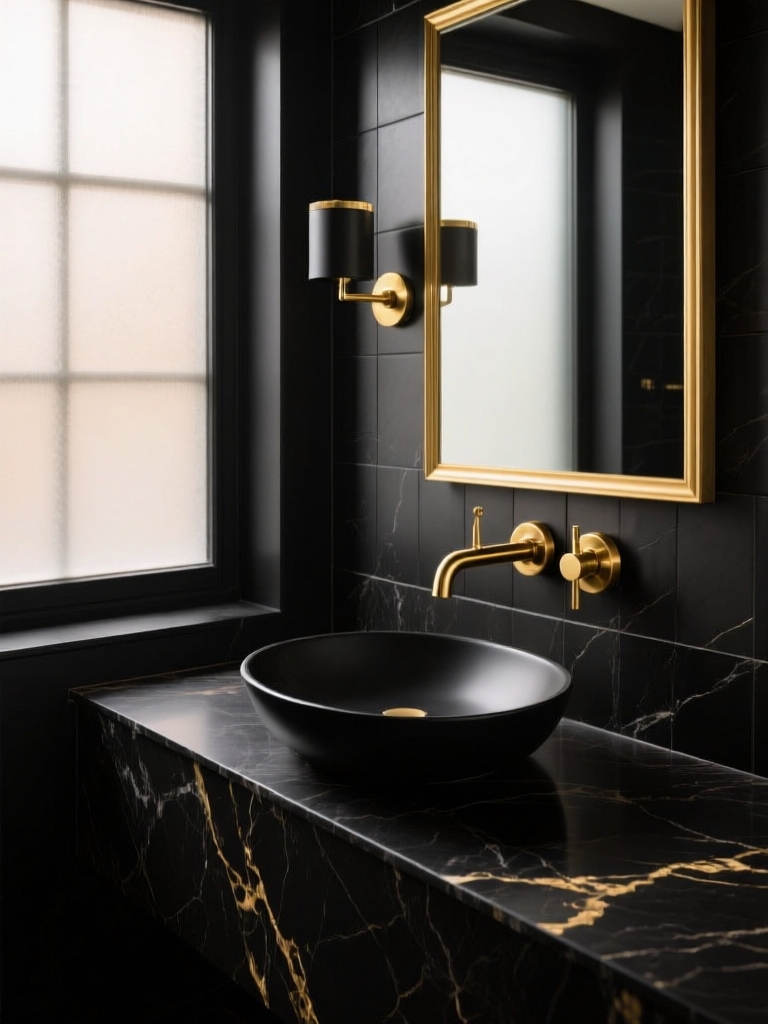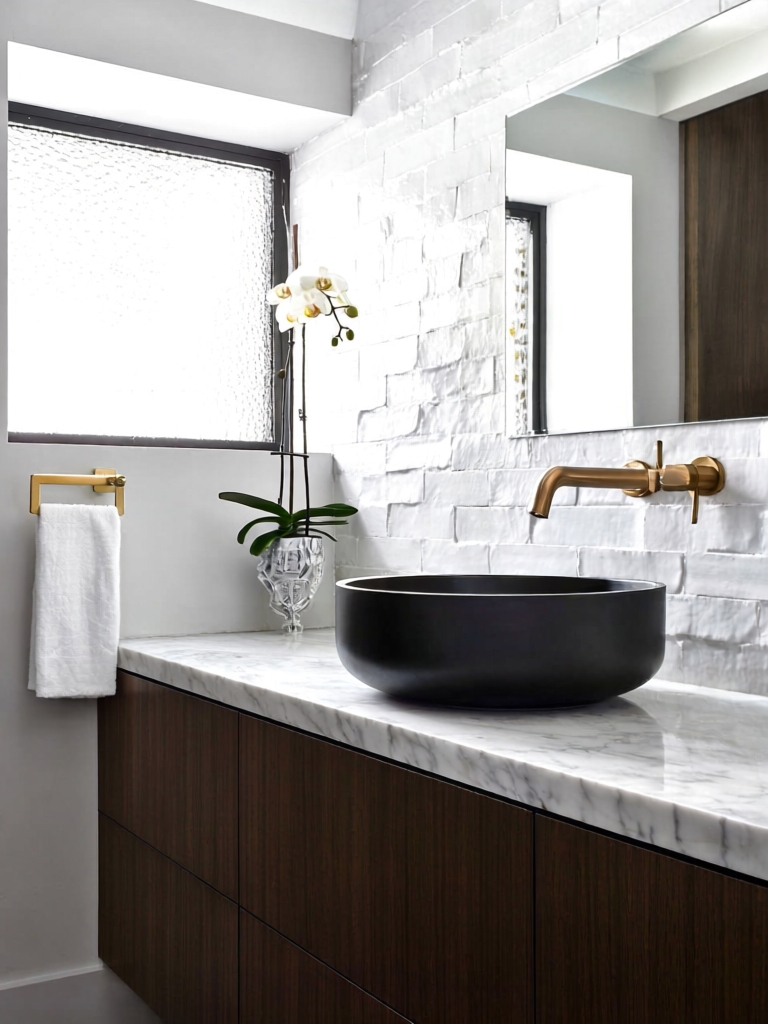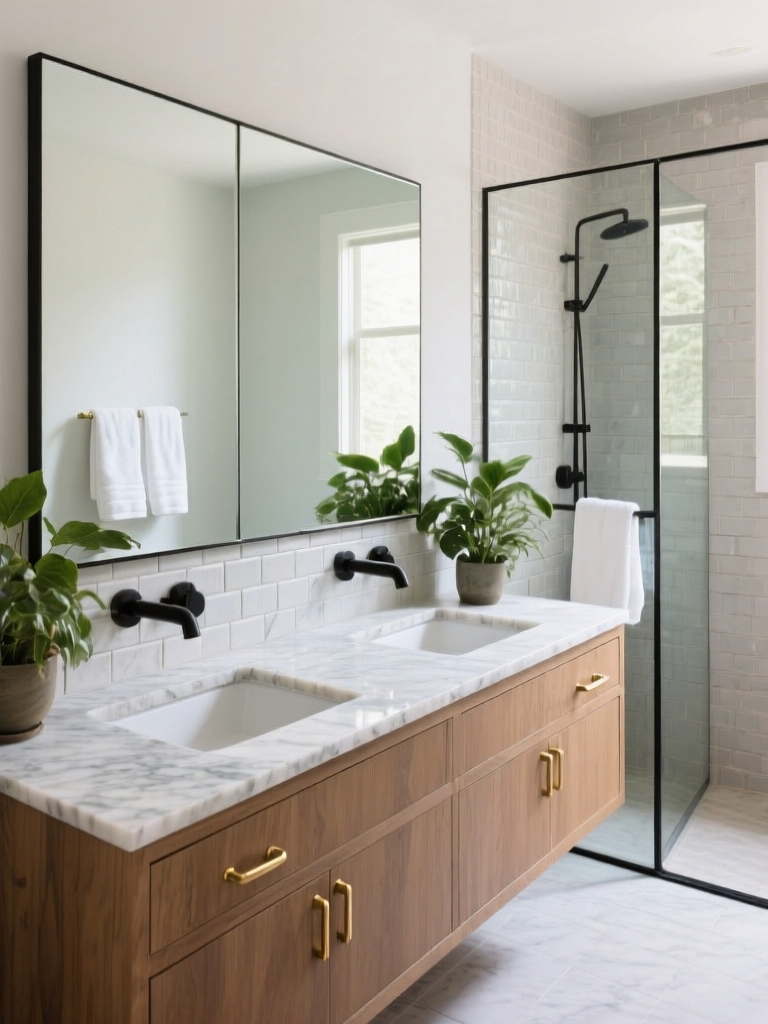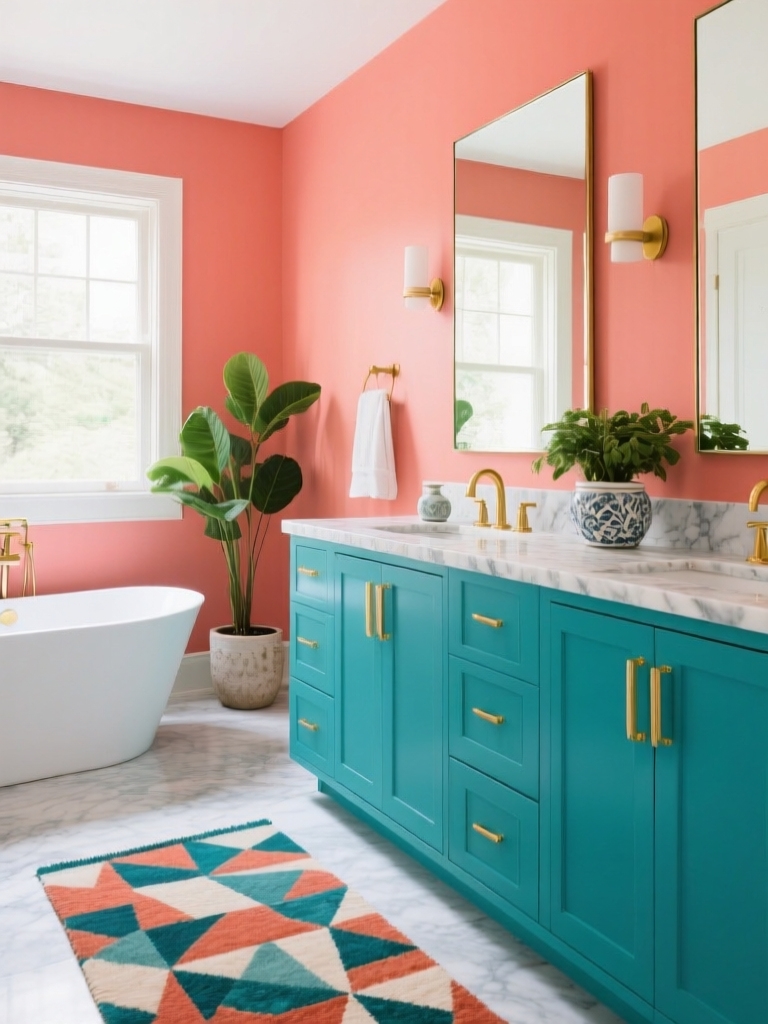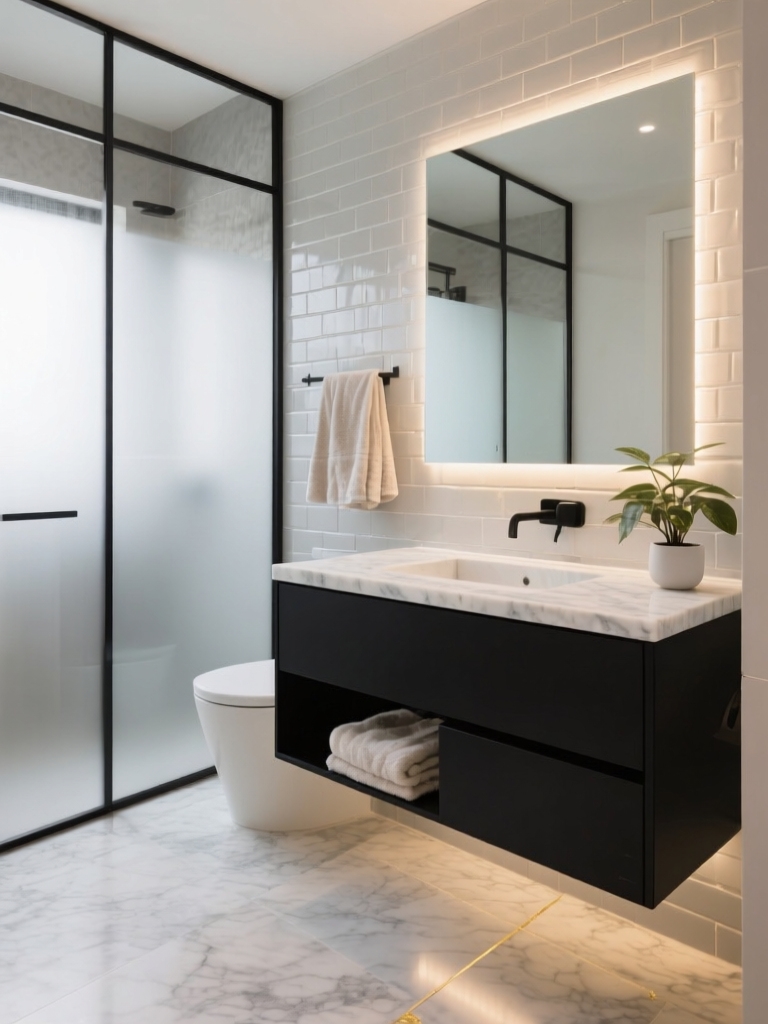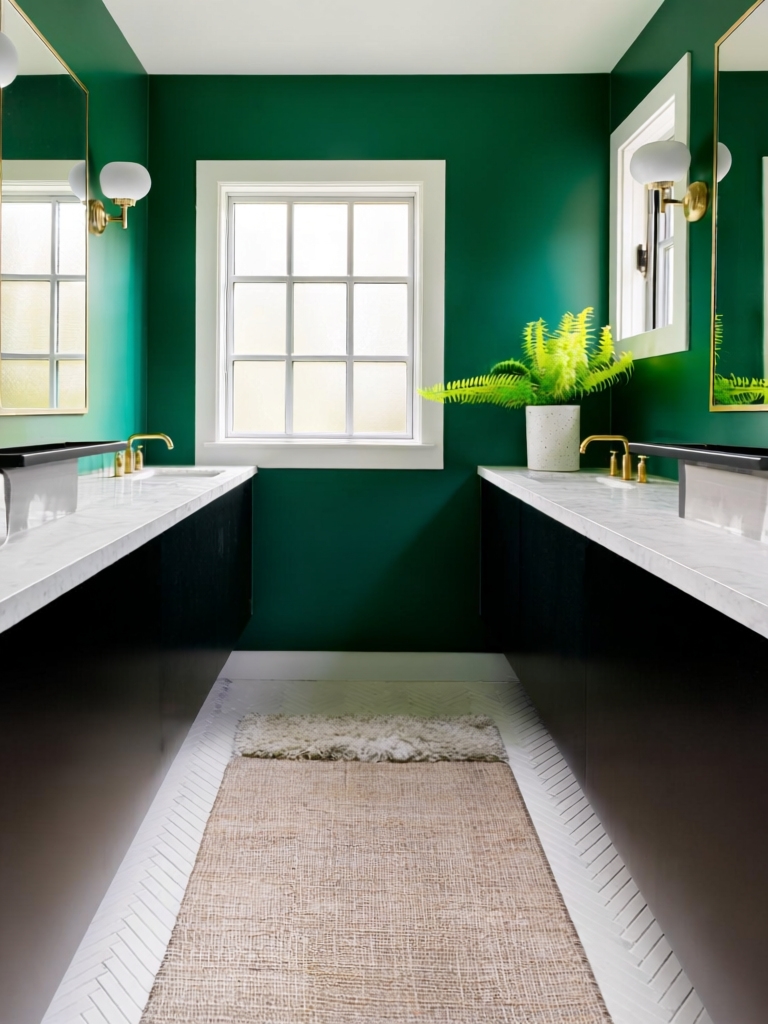

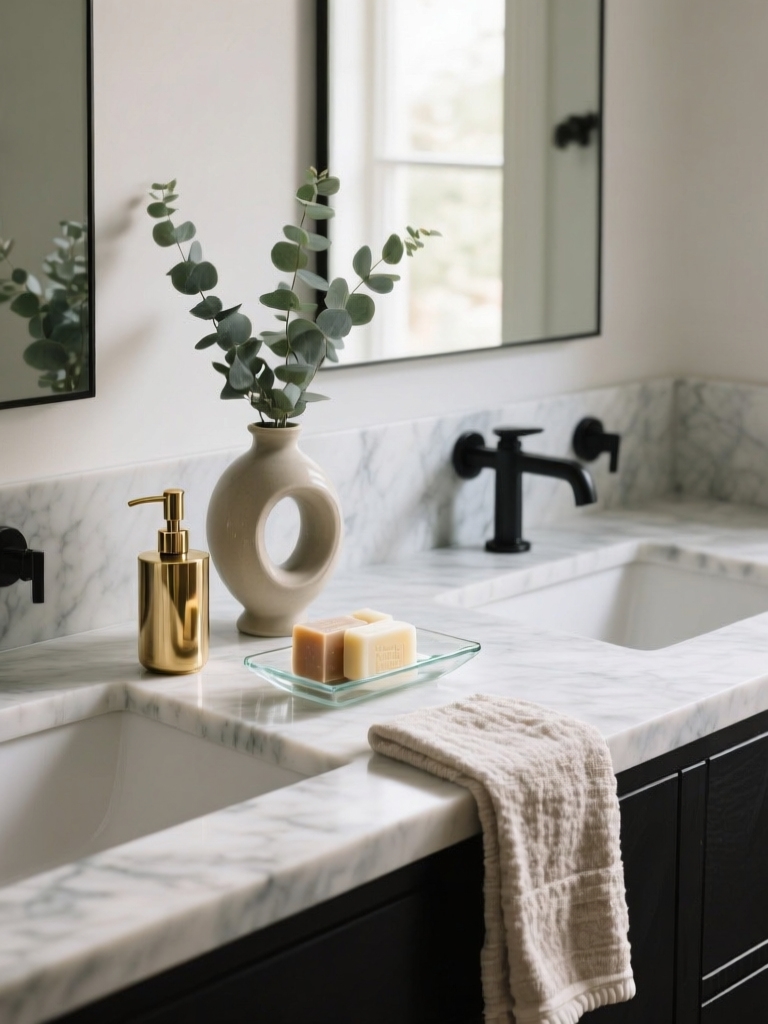
Here is the honest truth about a vanity: the counter is the first thing anyone sees, and most of them are a mess of toothpaste and product bottles. The good news is that styling a counter is the fastest, cheapest upgrade in the whole bathroom. You do not need new tile or a new vanity. You need a tray, a little restraint, and a plan for what actually earns a spot on the surface.
These 13 bathroom counter decor ideas walk you from a cluttered top to a styled one, in the order I tackle it for clients: edit first, group what stays, then layer in a little texture and life. Most of it costs under fifty dollars, and the whole reset takes an afternoon. The goal is a counter that looks calm and pulled together, yet still works every single morning.
Counter Styling, in Short
Where do I start? Clear the whole counter, then put back only your daily five. Everything else goes behind a door.
What makes a counter look styled? A tray to corral things, varied heights, one plant, and a tight palette. Grouping is what reads as intentional.
How much will it cost? Usually under $50. A tray, a ceramic jar, and a small plant are the whole starter kit.
Functional Counter Design Comes First
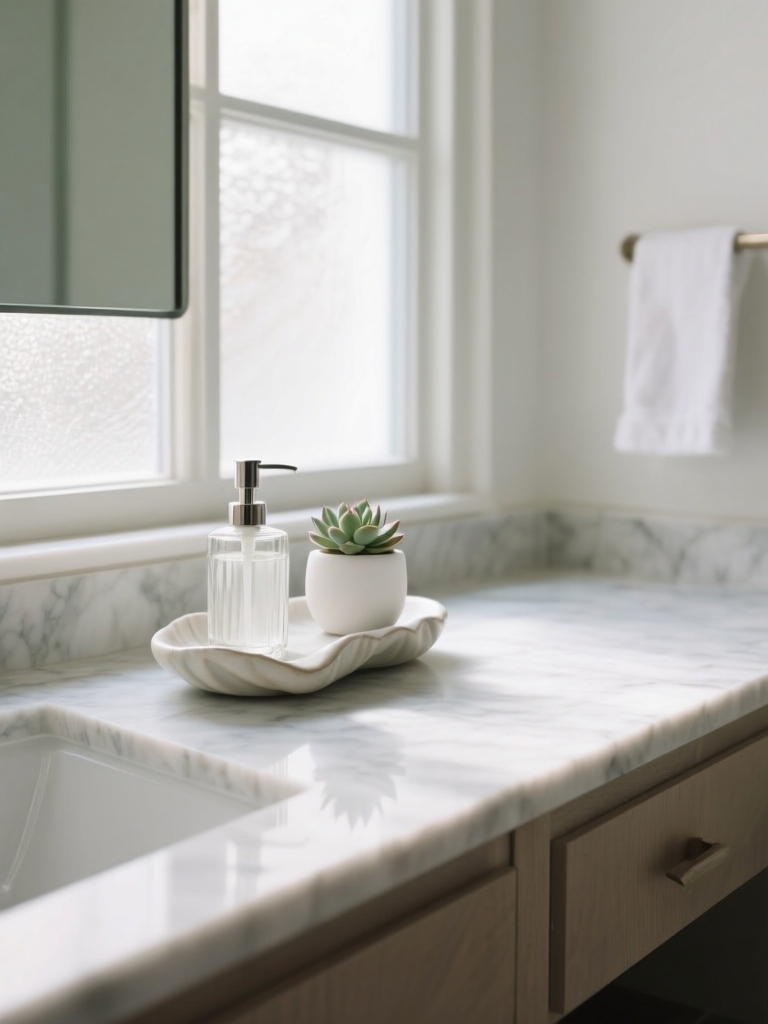
Before a single pretty object goes down, the counter has to work. I start every vanity by clearing it completely, then deciding what truly lives on the surface versus what hides in the cabinet. The honest answer is usually three to five things. Everything else, the backup bottles, the rarely used tools, belongs behind a door where it stops stealing visual calm.
Once the counter is edited, I think in zones. A small landing spot near the sink for daily use, a corner for a styled grouping, and clear space to actually set down a glass or get ready. Function first keeps a styled counter usable for actual mornings. Tuck the overflow into smart storage, the way you would in these storage-obsessed cabinet ideas.
- Keep only your daily five on the surface; the rest goes in the cabinet.
- Leave real open space so the counter still functions for getting ready.
- Group daily items in one spot so they look intentional, not scattered.
A Cohesive Decor Palette for the Counter
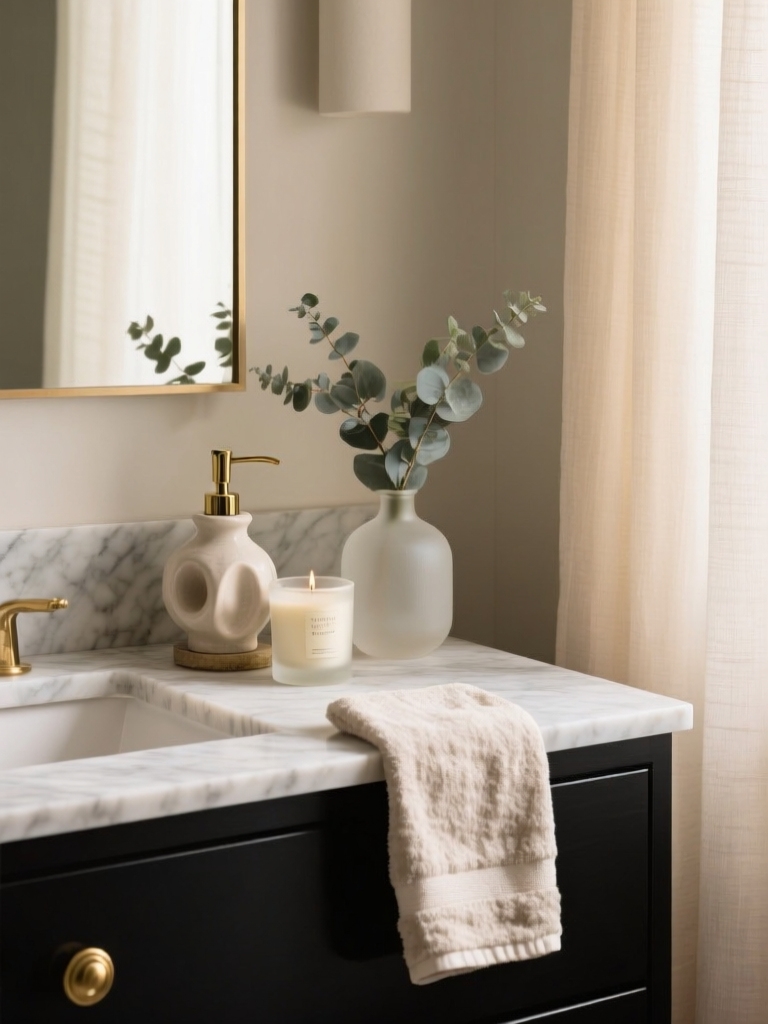
A styled counter almost always uses a tight palette, because cohesion is what separates curated from cluttered. I pick two or three tones that talk to the room, then repeat them across the tray, jars, and a single accent. When the colors agree, even a handful of mismatched products suddenly looks deliberate.
Let One Accent Color Repeat
Pull the palette from something already there, the tile, the hardware, the wall color. A brass faucet wants warm metals and creamy ceramics nearby; a black-and-white bath loves a marble tray and a touch of green. Build it the way you would plan any color-by-mood scheme, just at counter scale.
One accent color is plenty. A sage plant, an amber bottle, a blush soap pump, choose one note and let it repeat. The restraint is what makes a small grouping look styled and calm, and it costs nothing to pick colors that get along.
A counter-styling myth, cleared up:
❌ Myth: A styled counter means you cannot actually use it.
✅ Reality: Not true. Good counter styling starts with function: your daily essentials stay out, just in nicer containers on a tray. The point is a surface that looks composed and still works every morning, not a display you have to tiptoe around.
❌ Myth: You need to buy a lot to make a counter look good.
✅ Reality: The opposite, usually. Editing what is already there, adding a tray you may own, and decanting into a jar costs little or nothing. A styled counter is more about subtraction than shopping.
Fresh, Intentional Daily Counter Essentials
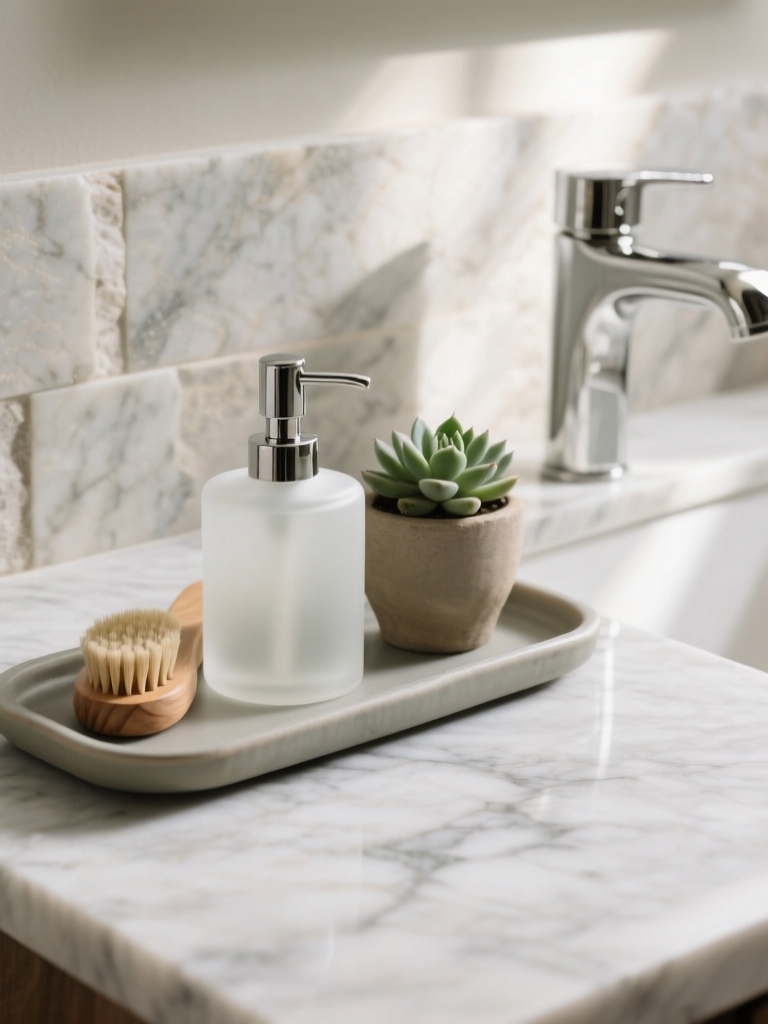
The things you use every day do not have to look like clutter. The fix is to upgrade the containers, not hide the function. I decant hand soap into a nicer pump, stand toothbrushes in a small ceramic cup, and keep cotton rounds in a little lidded jar. The same daily items suddenly read like decor because the vessels are doing the styling.
Upgrade the Containers, Not the Hiding Spots
Group the daily five on a tray so they move as one unit and the counter wipes clean in seconds. A tray is the single most useful counter object I own, because it draws an invisible frame around the essentials and makes the whole thing look planned. Always use a tray. Lift everything off the bare counter and onto something.
Keep it truly usable. The point is a countertop you can actually live on, where the soap is reachable and the toothbrush has a home. Fresh and intentional beats fussy, so resist the urge to add one more thing once it already looks good.
Layered Texture, Curated and Balanced
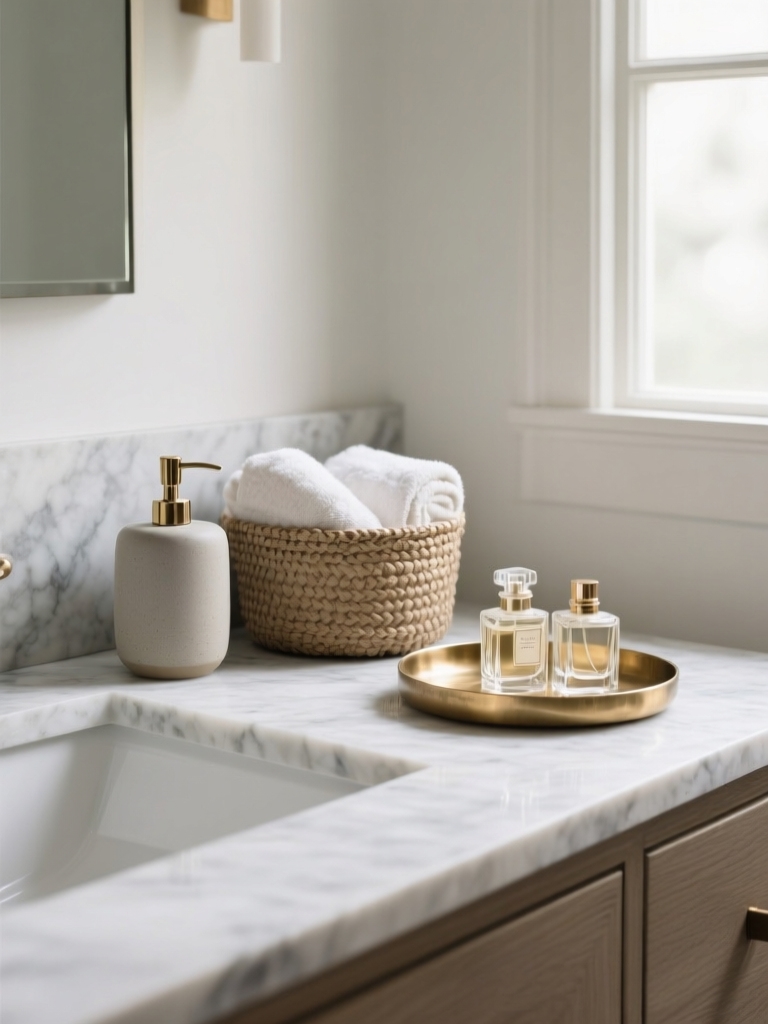
Texture is what gives a styled counter depth and keeps an all-white, all-glossy surface from feeling flat. I layer materials that disagree on purpose: matte stone against a glossy ceramic, a brass tray under a frosted bottle, a nubby little towel folded nearby. The contrast in finish is what makes a simple grouping feel rich without adding more stuff.
Balance the cool and the warm so the counter feels collected. Cold tile and chrome want a warm note, a wood riser, a leather catchall, a soft towel, to keep the vanity from feeling clinical. A few finishes, repeated, beat a dozen competing ones, and the surface ages gracefully because nothing is fighting.
- Mix matte and glossy finishes so the grouping catches light and feels layered.
- Add one warm material, like wood or leather, to soften cold tile and chrome.
- Vary the height of objects so the eye moves across the grouping.
“My fastest counter formula is four steps: tray, height, green, edit. Set a tray, vary the heights of what sits on it, add one small plant, then remove one thing. That last step is the one people skip, and it is the one that makes the whole vanity look intentional.”
Stylish Storage That Doubles as Decor
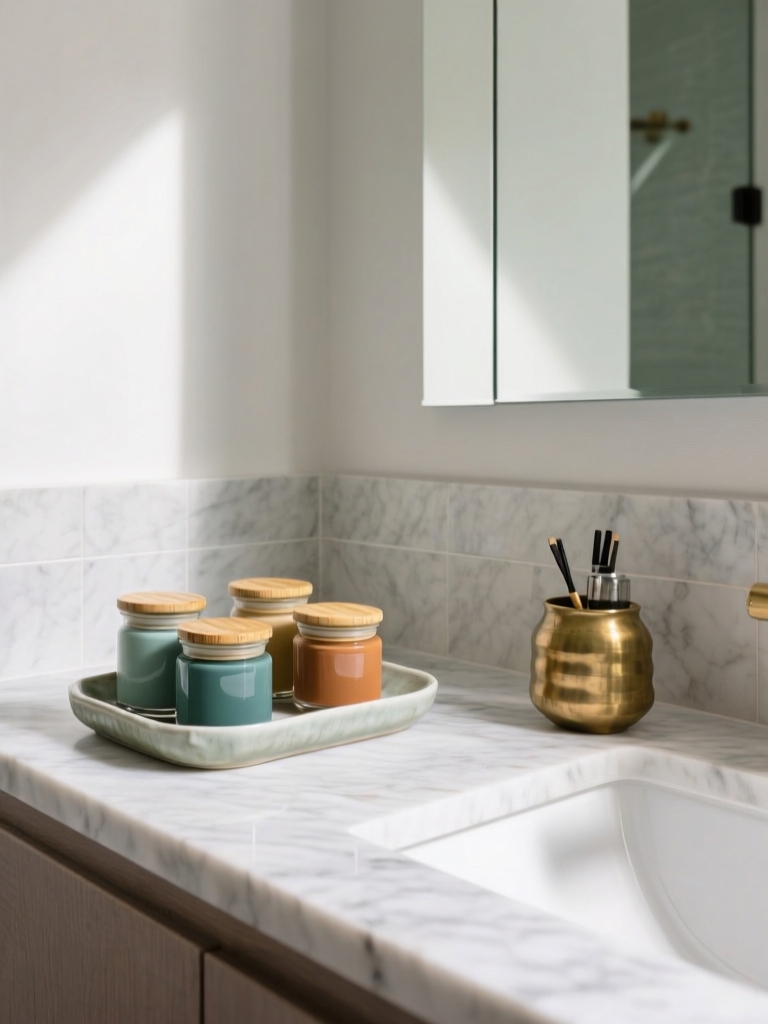
The best counter storage looks like a vignette, not a supply shelf. A few beautiful containers hide the daily mess while adding to the styling, so the storage earns its spot twice. Here is how I make storage look like decor:
- Use a decorative box or lidded jar to hide small clutter in plain sight.
- Choose low-profile organizers in finishes that match the counter’s palette.
- Anchor the grouping with one larger piece, like a tray or a vase, so it reads composed.
Easy Plants and Greenery for the Counter
A little greenery is the fastest way to make a counter feel alive, and a bathroom is a surprisingly good home for the right plant. I lean on low-fuss species that handle humidity and low light, like a snake plant, a pothos, or a small peperomia, because nobody wants a fussy plant in a busy bathroom. A plant and a pretty vessel together usually run $15 to $30.
Scale it to the counter so it adds life without crowding. One small plant in a vessel that matches your palette is plenty in a tight bath, while a larger vanity can carry a taller stem or a little trailing pot near the mirror. A single sprig in a bud vase works when the counter is truly small.
Faux is a fair shortcut if your bathroom gets no light at all. A good-quality faux stem brings the same shape and color and never needs watering, which makes it a reasonable choice for a windowless powder room. Real or faux, the green is what warms up all that hard tile and porcelain.
Lighting That Frames the Vanity
Styling falls flat under bad light, so the bulbs around the vanity matter as much as the objects on it. I build a little depth with layers: an overhead source, light at face level by the mirror, and a soft warm tone that flatters both skin and the counter styling. Cool, bluish light drains the warmth right out of a carefully chosen palette.
Warmth and placement do the framing. A pair of sconces or a backlit mirror lights faces evenly and casts a flattering glow over the whole vanity. Sort your fixtures by warmth first, the way you would coordinate lighting by tone, and the counter you styled finally gets seen the way you meant it.
- Choose warm 2700K to 3000K bulbs so the counter palette stays flattering.
- Light faces from the sides or with a backlit mirror to avoid harsh shadows.
- Add a dimmer so the vanity can go bright for routines and soft at night.
Minimalist or Maximalist: Find Your Balance
There is no single right amount of stuff on a counter, only the amount that suits you. A minimalist leans toward a near-bare surface, a single tray, a plant, and clean space, which feels serene and is the easiest to keep tidy. If that calm is your goal, edit hard and stop early.
A maximalist counter can absolutely work, as long as it is curated. The trick is intention: a bold vase, a stack of pretty boxes, a sculptural soap pump, chosen on purpose and grouped with care, looks collected and composed. What separates styled-maximal from messy is whether each piece was a real decision. A ten-minute weekly edit keeps it honest. Edit, then walk away.
Most people land happily in the middle. Keep the working surface clear and let one styled corner hold your personality. Refresh that corner with the seasons, a sprig of evergreen in winter, a brighter stem in spring, and the counter stays fresh with almost no effort.
Common Mistakes to Avoid
The mistake I see most is the toothbrush parade: every product standing out in the open like a little army. Decant, corral, and hide the backups, and that single change transforms a counter more than any decorative object you could add. The second most common slip is skipping the tray, which leaves even nice objects looking scattered.
The other trap is overdoing it. Once a counter looks good, the urge is to add one more candle, one more frame, one more thing, until it is cluttered again. Style any open shelf nearby the way you would an open-shelf display, then stop while it still feels calm. Restraint is the whole skill here.
Vanity Counter Questions, Answered
?What should I keep on a bathroom counter?
Only your daily essentials, ideally three to five things, and ideally in nicer containers. Hand soap in a good pump, toothbrushes in a ceramic cup, and cotton rounds in a small jar, all grouped on a tray. Everything you reach for less often belongs in the cabinet, not on the surface.
?How do I make my bathroom counter look more expensive?
Add a tray, vary the heights of what sits on it, repeat one metal finish, and bring in a plant. Grouping items on a tray and decanting products into matching containers reads as intentional and costs very little. Cohesion and restraint are what make a counter look high-end.
?What is the best low-maintenance plant for a bathroom counter?
A snake plant, pothos, or peperomia all handle humidity and lower light with little fuss. Keep them compact so they add life without crowding, and pair them with a vessel that matches your palette. In a truly dark bathroom, a good faux stem is a fair substitute.
?How do I keep a styled counter from getting cluttered again?
Give everything a home and do a quick daily reset. Keep backups in the cabinet, group daily items on a tray so wiping down is fast, and resist adding one more object once it looks good. A ten-second nightly tidy keeps the styled look from sliding back into a pile.
A Calm, Working Vanity in an Afternoon
Styling a vanity counter comes down to a simple order: edit hard, group your daily five on a tray, repeat a tight palette, and add a little texture and life. None of it requires a renovation or much money, and the whole reset fits in an afternoon. The result is a counter that looks pulled together and still earns its keep every single day.
Start with the edit, because a cleared counter is already halfway styled. Add the tray, the plant, and one accent, then stop while it still feels calm. So when you look at your vanity tomorrow morning, which thing is coming off the counter first?