
Most bathroom cabinets waste half their space. I know that sounds harsh, but I have opened thousands of them, and the story is almost always the same: a deep box with one shelf, a tangle of bottles on the bottom, and dead air up top. The cabinet is not too small. It is just not working hard enough.
Fixing that is what storage-obsessed people actually mean when they talk cabinets, and it is mostly about the interior, not the doors. Below are 16 bathroom cabinet ideas that turn wasted volume into easy, grab-it-in-a-second storage, with honest costs so you know what a real upgrade runs before you start pulling things out.
The Cabinet Upgrade in Short
The biggest wins live inside the cabinet you already own. Add pull-out organizers and soft-close drawers so deep boxes give up their back corners, divide drawers so small items stop migrating, and recess a medicine cabinet to gain storage without losing an inch of floor. None of it requires a renovation.
Budget tells you where to start. A pull-out runs $20 to $60, drawer dividers $10 to $30, and a recessed medicine cabinet $80 to $300. A floating vanity is the bigger swing at $300 to $1,200, but it frees the floor and makes a small bath feel open. Measure the interior before you buy anything; that one habit saves the most returns.
Assess Your Storage Needs Before You Buy
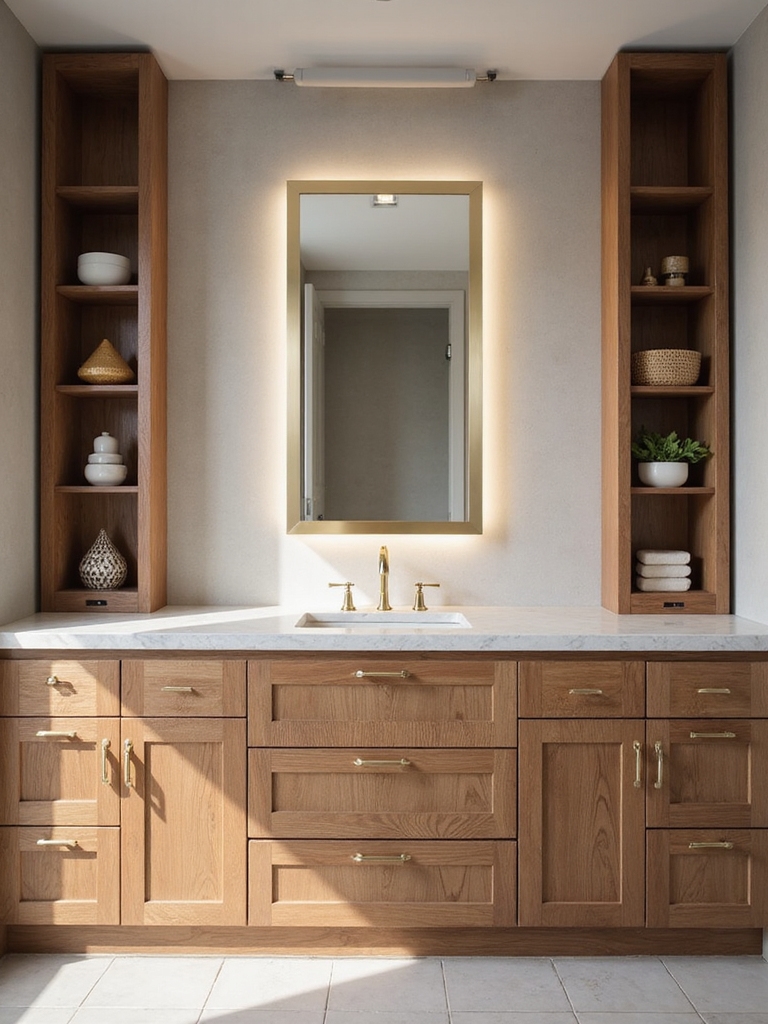
Skip this step and you will buy three organizers that do not fit. I learned to start every cabinet project the same way: empty it completely, sort what is left, and only then shop. Here is the order that saves the most money and frustration:
- Empty and edit first. Toss expired products and duplicates; half of most cabinets is stuff you forgot you owned.
- Group by how often you reach for it. Daily items go at eye level and the front, backups go up high or deep.
- Measure the interior, every dimension. Width, depth, and the gap under the shelf decide which organizer actually fits.
Pull-Outs That Maximize a Narrow Cabinet
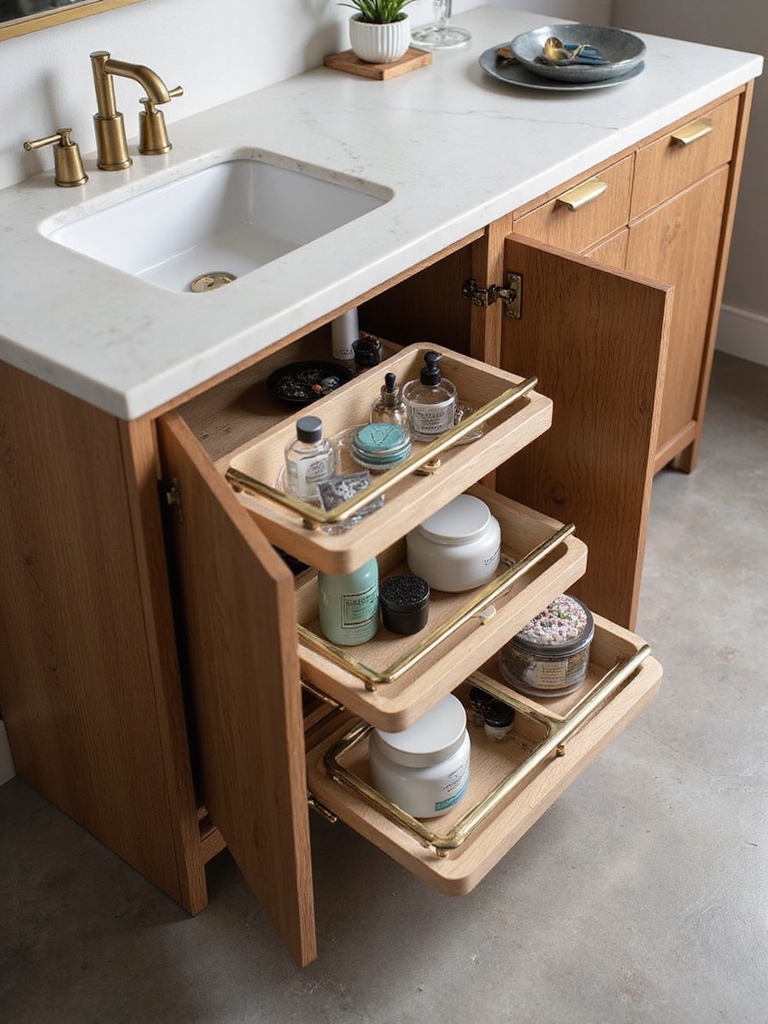
A narrow cabinet is where pull-outs earn their keep, because the back third of a deep box is otherwise lost. A slim slide-out tray brings the rear forward with one motion, so nothing hides behind anything. This is the single upgrade I recommend most, and at $20 to $60 it is a small spend for a daily payoff.
The detail people miss is the slides. Cheap rollers stick and rattle within a year, so I spend a little more on soft-close slides that glide and stay quiet. Pair the pull-out with labeled bins and you turn a junk cabinet into something that runs like a clever cabinet organization setup.
- Use a two-tier pull-out under the sink to clear the plumbing and double your usable height.
- Add small caddies on the slide so bottles do not tip when it moves.
- Keep the front row for daily products and the back for refills you reach for less.
🅰️Pull-out organizers
Best for deep, narrow cabinets where the back is wasted. Higher cost, biggest daily payoff, and they make under-sink storage usable.
🅱️Door-mounted racks
Best for shallow cabinets and small budgets. Cheap, fast, and they claim a surface that was doing nothing, though they hold less weight.
Storage That Is Both Elegant and Practical
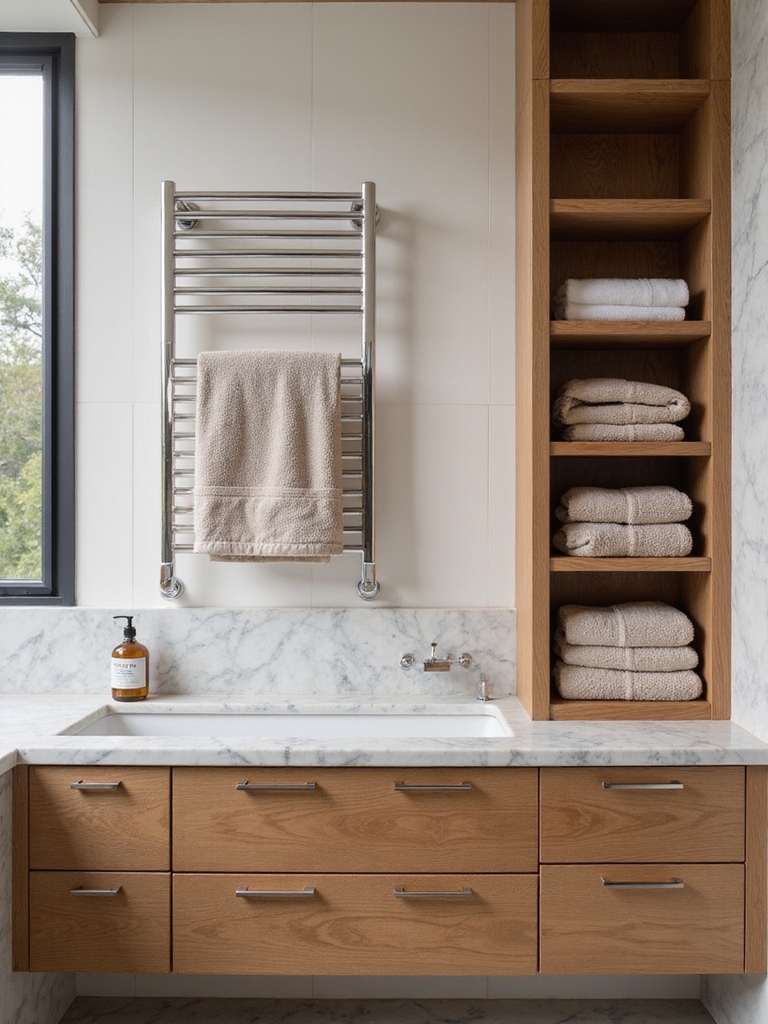
Storage does not have to look like a utility closet to work hard. The pieces I love most pull double duty, hiding the mess while adding a little warmth to the room. A few favorites that earn their spot:
- A vanity with deep drawers instead of one open shelf, so everything has a home and the counter stays clear.
- A slim towel ladder or rail in painted wood or stainless, mounted near the sink for grab-and-go reach.
- A tray inside the top drawer for the daily five, which keeps your morning routine to one open-and-done motion.
Smart Medicine Cabinet Storage
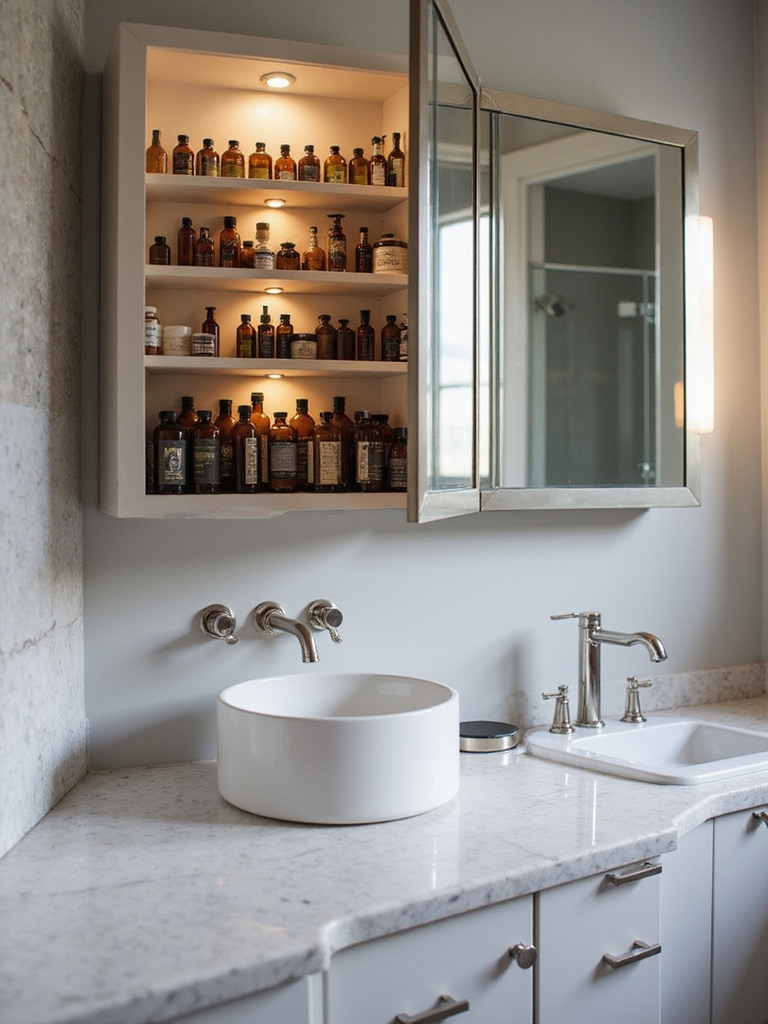
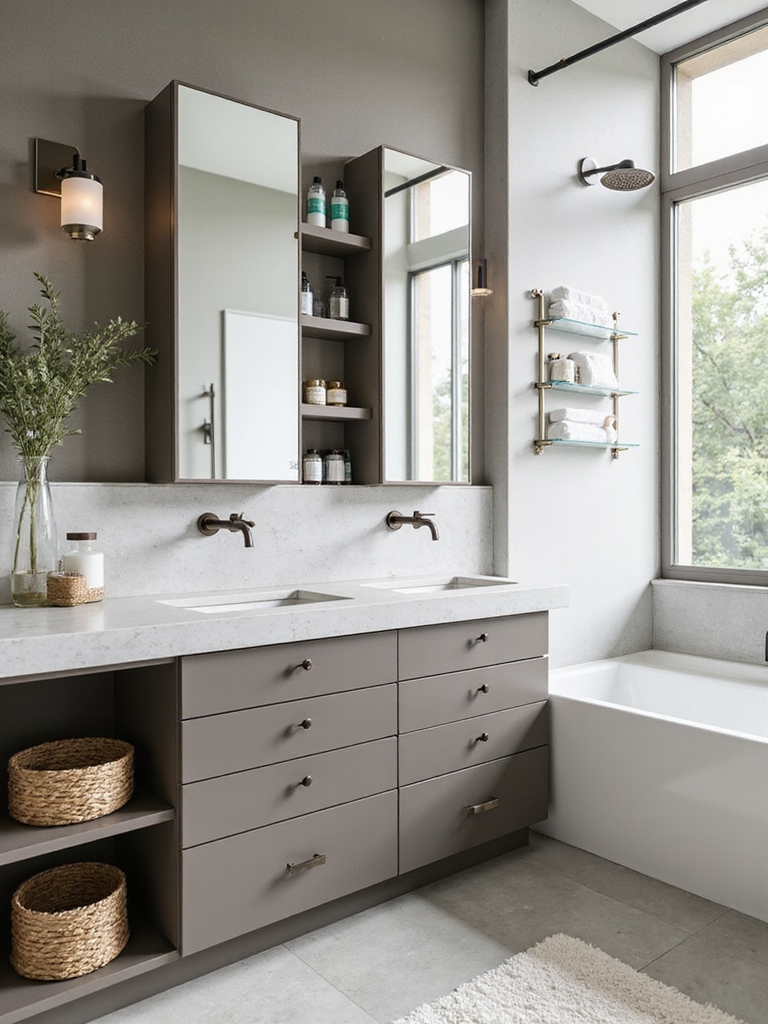
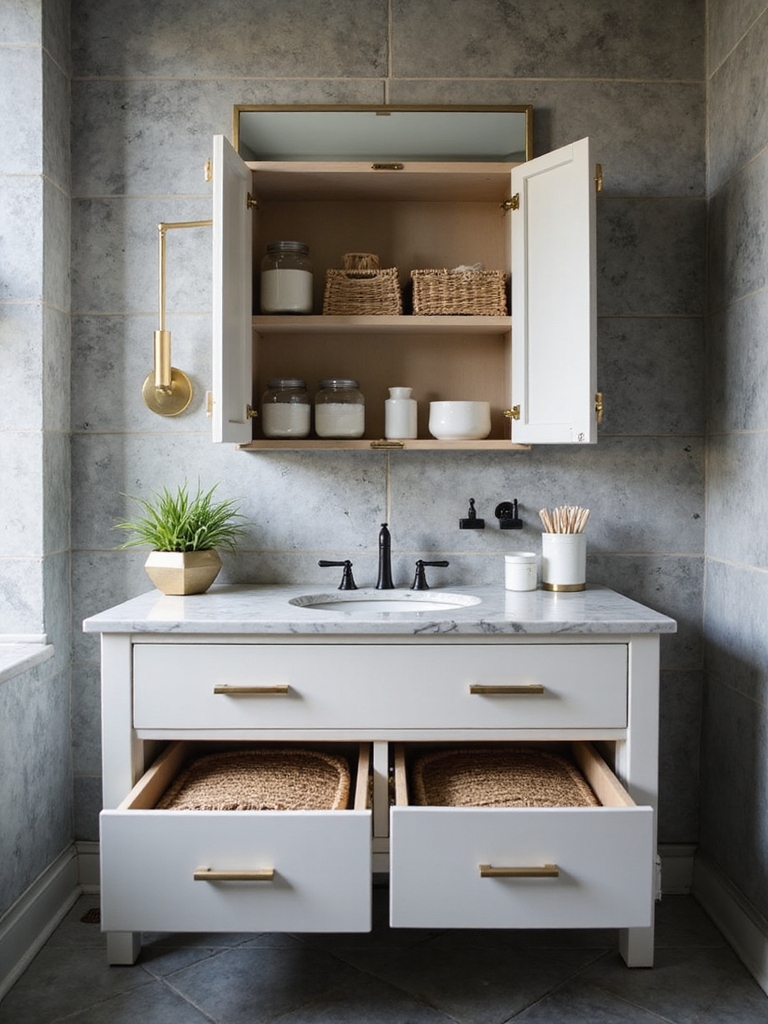
The medicine cabinet is the most underused box in the bathroom, and a smart one quietly solves the counter-clutter problem. The upgrade I push hardest is going recessed: set into the wall between the studs, it adds real storage without stealing a single inch of room, and it reads cleaner than a bulky surface-mount.
Recessed Beats Surface-Mount
Inside is where the magic happens. Shallow, adjustable shelves let you store short bottles two-deep, and a mirrored door that opens to lit, organized rows beats digging through a drawer every morning. A recessed unit runs $80 to $300 depending on size and lighting.
One honest caution: recessing means cutting into a wall, so confirm there is no plumbing or wiring in the bay first, and call a pro if you are unsure. For the mirror side of the equation, these mirror cabinet ideas pair storage with a face-lit reflection.
Three terms worth knowing before you shop:
📖Soft-close
Hinges and slides that catch and ease shut quietly, protecting the cabinet from slamming wear.
📖Recessed
Set into the wall between studs, so storage gains depth without projecting into the room.
📖Lazy Susan
A rotating tray that brings the back of a corner cabinet around to the front with a spin.
Drawer Dividers That Minimize Clutter
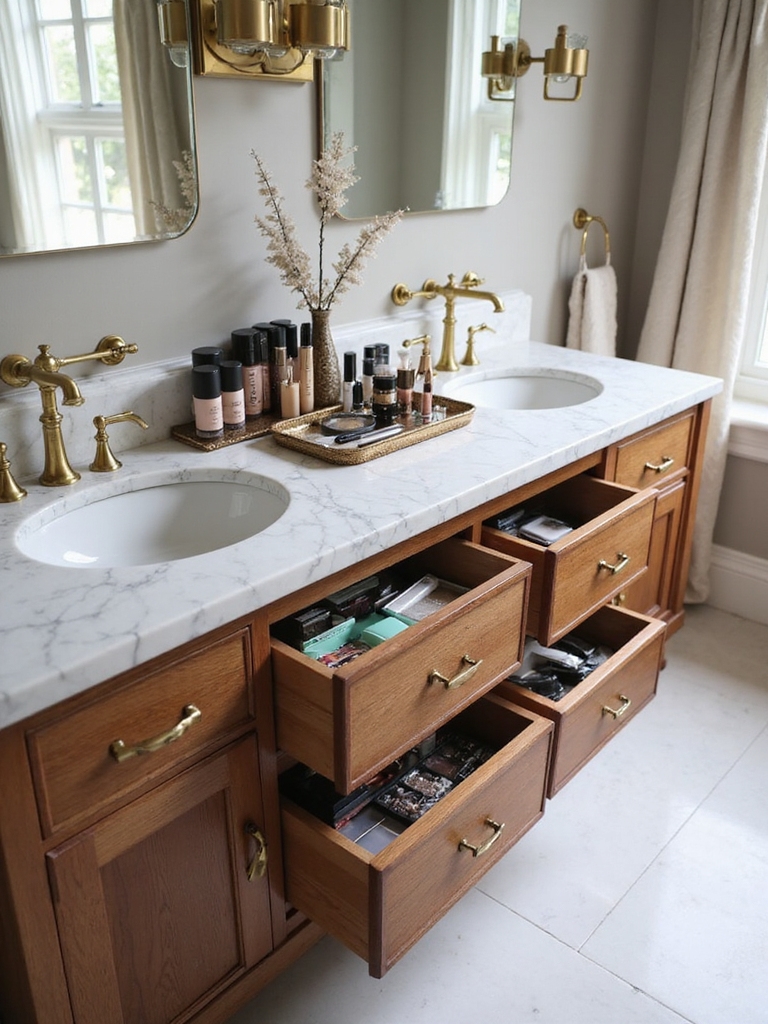
If pull-outs are the big move, drawer dividers are the daily one. A deep drawer without dividers becomes a single pile where small items sink and disappear. Add a few compartments and that same drawer turns into quick, confident pulls, with the tweezers always where the tweezers live.
Label the Zones, Not the Bottles
I size dividers to the drawer and the products, not the other way around. Adjustable spring-loaded dividers flex as your kit changes, while fixed acrylic trays look tidier behind a closed front. Either way you are spending just $10 to $30 for the calmest part of a morning routine.
Labeling is the finishing touch that keeps a shared bathroom honest. A small label on each zone means everyone returns things to the right slot, and the system survives more than a week. It is a low-effort habit with an outsized payoff.
Floating Vanities and Door-Mounted Organizers
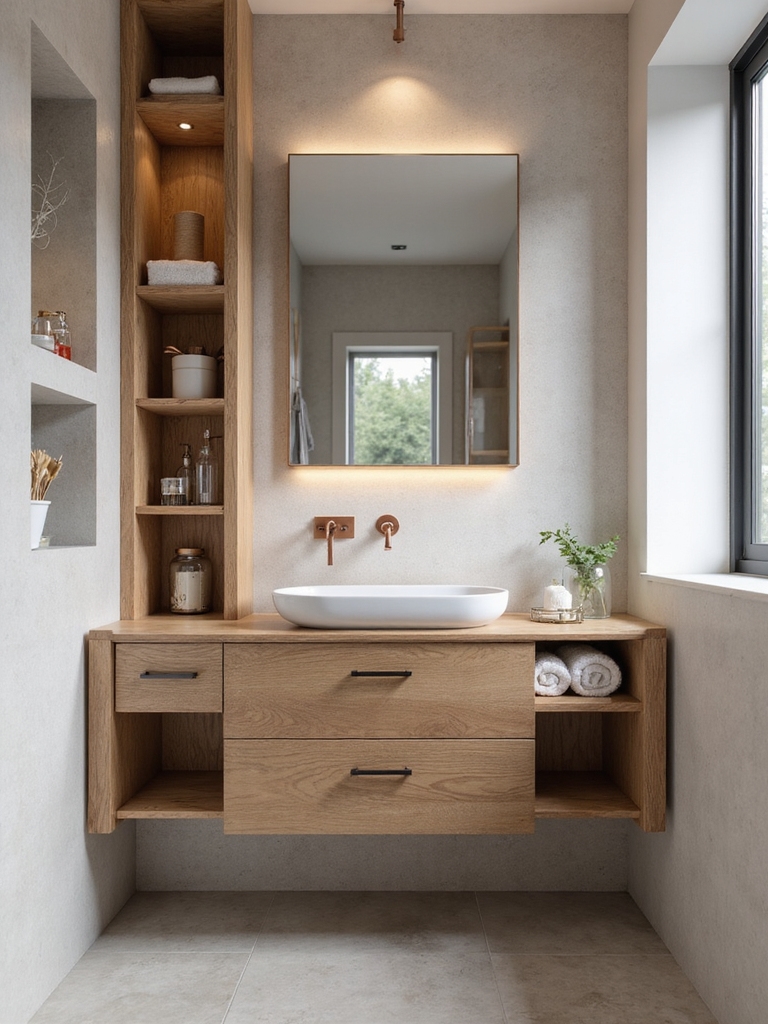
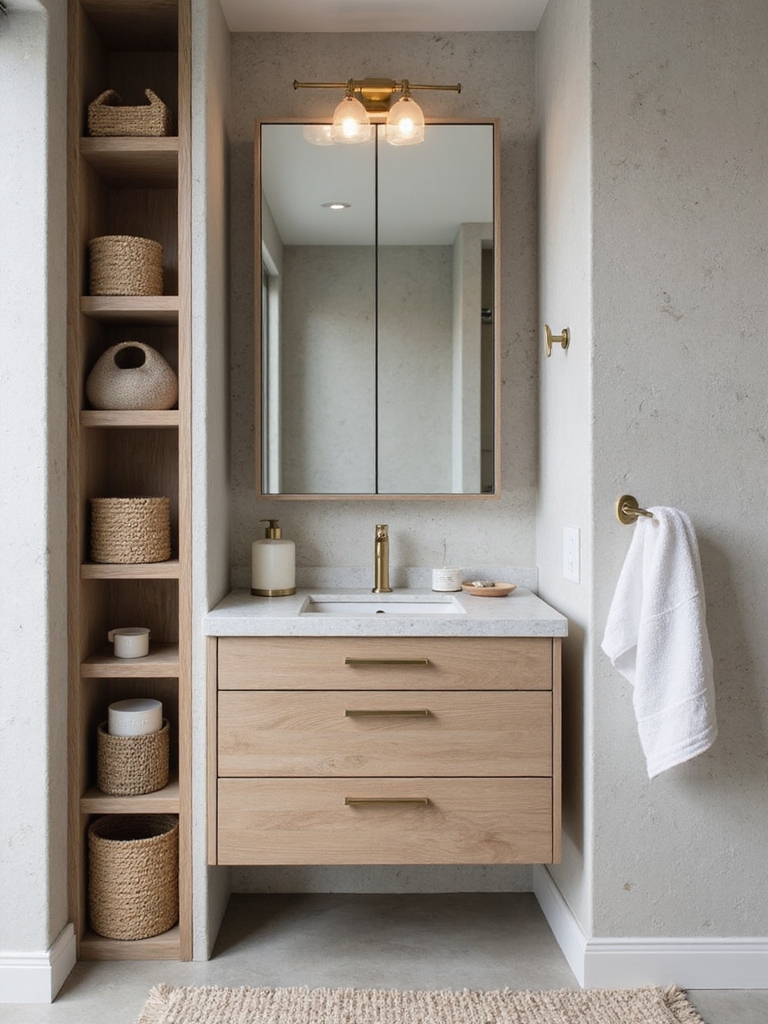
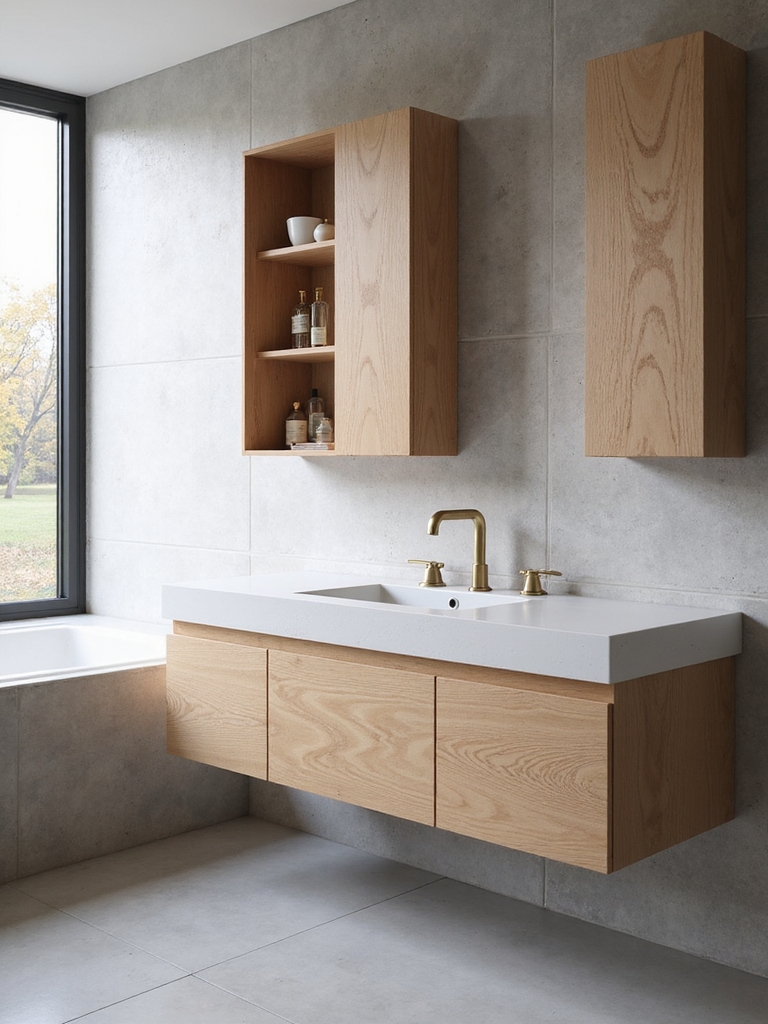
When the floor feels cramped, a floating vanity changes the whole room. Mounting the cabinet to the wall clears the floor beneath it, which tricks the eye into seeing more space and makes mopping a five-second job. It is the priciest idea here at $300 to $1,200, but in a small bath it buys both storage and breathing room.
On a smaller budget, the back of a cabinet door is free real estate. Door-mounted racks and slim caddies hold the things you want hidden but handy, like brushes, sprays, and a hair dryer. I add them to almost every project because they cost little and use a surface that was doing nothing.
Together these two moves attack the problem from both ends. One opens the floor, the other claims a forgotten vertical surface, and both keep daily clutter behind a closed door where it belongs.
Corner Cabinets and Recessed Built-Ins
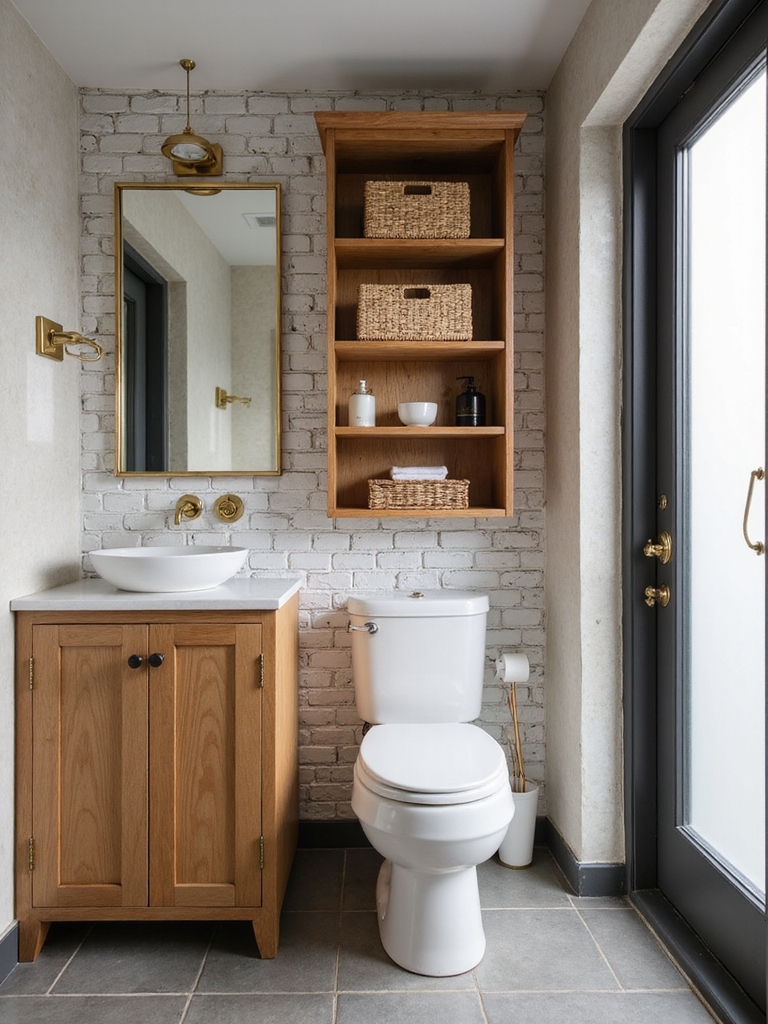
Corners and odd gaps are where storage usually goes to die, and a few smart fittings revive them. A lazy Susan or a pull-out tray turns an awkward corner cabinet into easy, spinnable access, so the back stops being a black hole. In a tight powder room, that reclaimed corner can be the difference between cluttered and calm.
Recessed shelving niches do the same trick in shower and wall spaces. Built into the wall cavity, they hold bottles and towels without any piece sticking into the room, which keeps the lines clean in a small space. Borrow a few small-space storage tricks to find the hidden inches.
- Fit a lazy Susan in a blind corner cabinet so nothing gets stranded in the back.
- Add a recessed niche between studs in the shower wall for shampoo and soap.
- Use tension shelves in tall, narrow gaps beside the vanity for backstock.
Materials and Finishes That Survive a Bathroom
A storage system is only as good as the cabinet holding it, and bathrooms are brutal on materials. Steam, splashes, and daily wiping wear down the wrong finish fast. I default to moisture-resistant laminate or sealed wood for the box, because they shrug off humidity and clean up without swelling at the edges.
Hardware is the quiet workhorse. Soft-close hinges and slides keep doors and drawers from slamming, which protects the cabinet and your sanity over years of use. Brushed nickel and stainless pulls resist spotting in a damp room far better than cheap chrome that pits.
Finish matters for upkeep, too. A matte or satin surface hides fingerprints and water spots that a high-gloss door shows off all day. Picking the durable option once saves you wiping the same smudges every single morning.
Custom Built-In Cabinets for a Tailored Bath
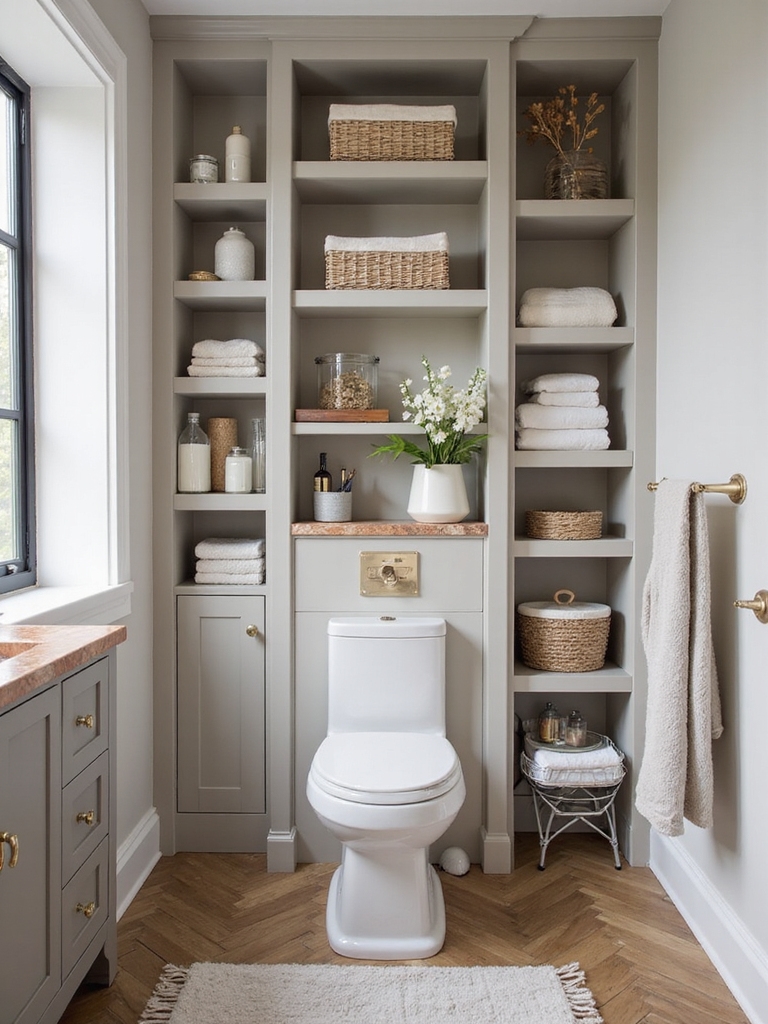
When a bathroom has an awkward layout or a long blank wall, a built-in cabinet is the upgrade that finally uses every inch, and it is the move I suggest for clients who want their storage to disappear into the architecture instead of sitting on top of it like furniture. A floor-to-ceiling built-in linen tower beside the vanity, for instance, swallows towels, backstock, and a hamper while keeping the footprint to a few flat inches of depth against the wall.
The appeal of going built-in is that it is measured to your exact room rather than a stock size that almost fits. That tailoring is why a custom run can hold noticeably more than an off-the-shelf cabinet of the same width, since no space is lost to filler panels or gaps. I have watched a single built-in wall absorb the contents of three crowded cabinets with room to spare.
The trade-off is cost and commitment. Built-ins run higher and are not something you pack up and take when you move, so I reserve them for a long-term home or a layout that stock cabinets simply cannot solve. Done well, they look original to the house.
What to Expect
Set realistic expectations and you will actually finish the project. A single cabinet makeover with pull-outs and dividers is a weekend job and well under a few hundred dollars. A recessed medicine cabinet or a floating vanity is a bigger lift, sometimes a one-day pro install, and worth budgeting for if the room needs it.
The honest part is that storage only stays solved if the habits do. The systems make tidy easy, but a quick monthly edit is what keeps a cabinet from sliding back into chaos. Style the open parts the way you would any vanity counter, and the whole bathroom feels calmer for it.
Bathroom Cabinet Storage Questions, Answered
?What is the best bathroom cabinet upgrade for the money?
A pull-out organizer under the sink, hands down. At $20 to $60 it reclaims the wasted back third of a deep cabinet and makes everything reachable in one motion. Pair it with drawer dividers and you have transformed the two messiest spots for under a hundred dollars.
?How do I add storage to a small bathroom without a renovation?
Work inside what you have. Add pull-outs and dividers, mount racks on cabinet doors, use a recessed medicine cabinet to gain depth without floor space, and add tension shelves in narrow gaps. These upgrades are reversible and need no permits or contractors.
?Is a floating vanity worth it for storage?
For a small bathroom, often yes. A floating vanity clears the floor beneath it, which makes the room feel larger and cleaning faster, while still holding drawers and cabinets. It costs more at $300 to $1,200, so it is the upgrade to budget for when you want both storage and openness.
?How do I keep an organized cabinet from getting messy again?
Build in dividers and labels so everything has a fixed home, then do a quick monthly edit to clear duplicates and expired products. The systems make tidy the easy default, but a five-minute monthly reset is what keeps the cabinet from sliding back into a pile.
Make the Cabinet You Own Work Harder
Storage obsession is really just refusing to accept a cabinet that wastes its own space. Empty it, edit it, measure it, then add the pull-outs, dividers, and recessed tricks that turn dead volume into easy access. Most of these ideas cost under a hundred dollars and a Saturday, and the floating vanity or recessed cabinet earns its bigger price in a small room.
Start with the cabinet that frustrates you most, usually the one under the sink, and fix that one completely before you move on. A single well-organized cabinet is enough to make the whole morning feel calmer, and that quiet payoff is what storage lovers are really obsessed with.