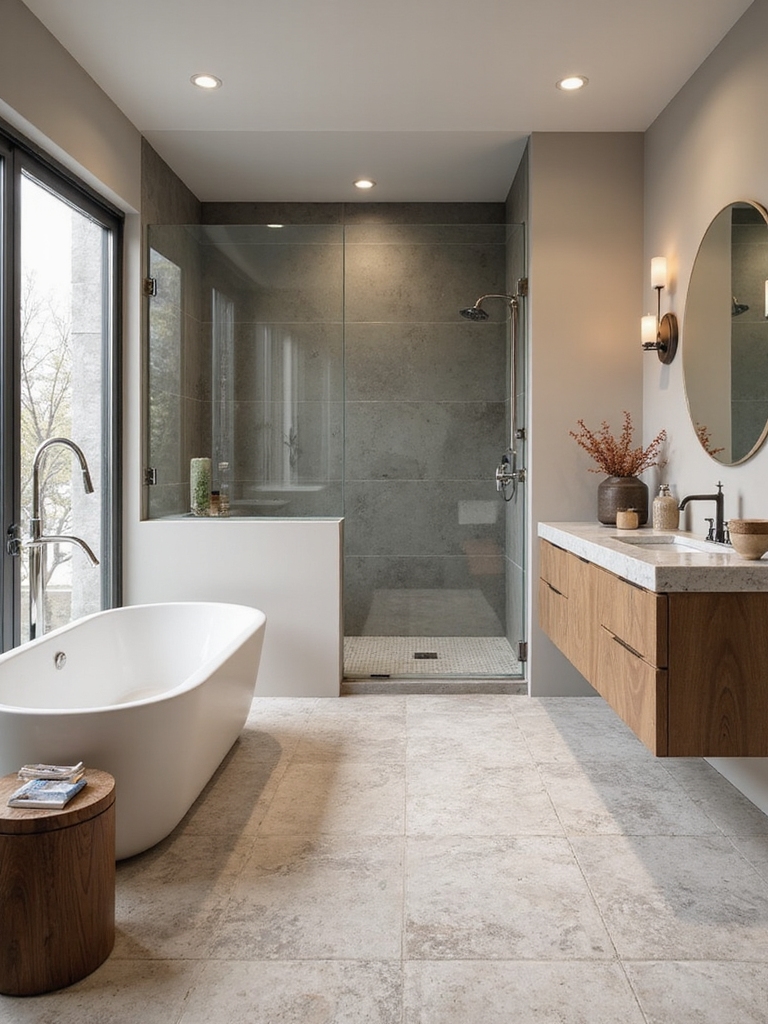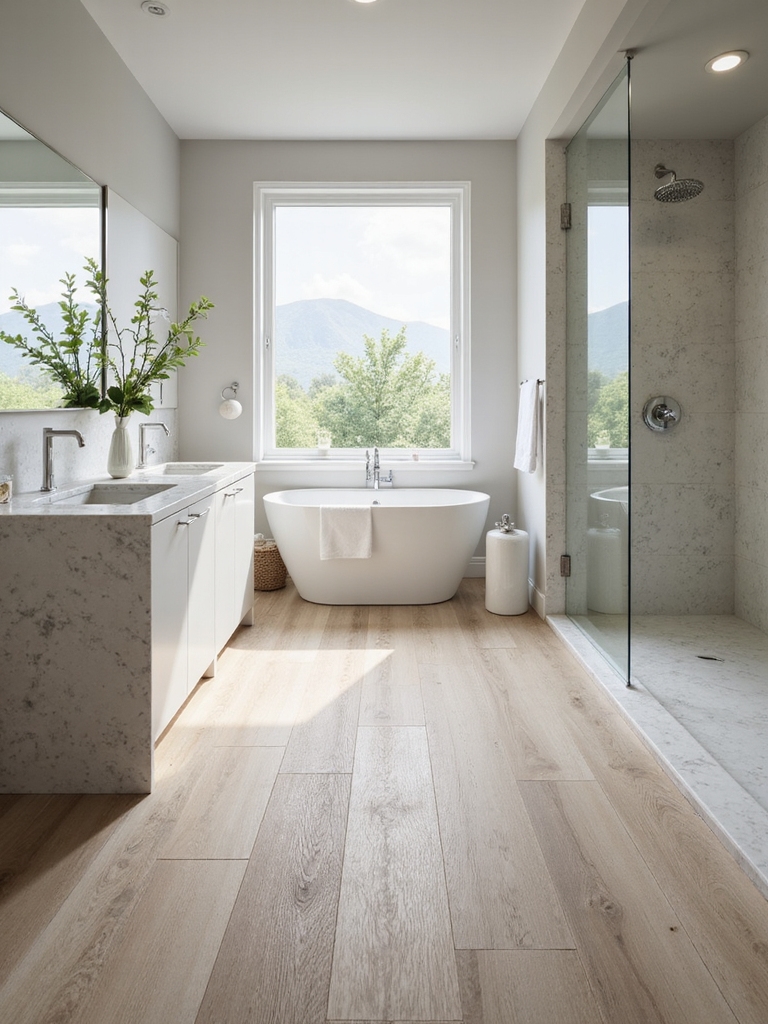
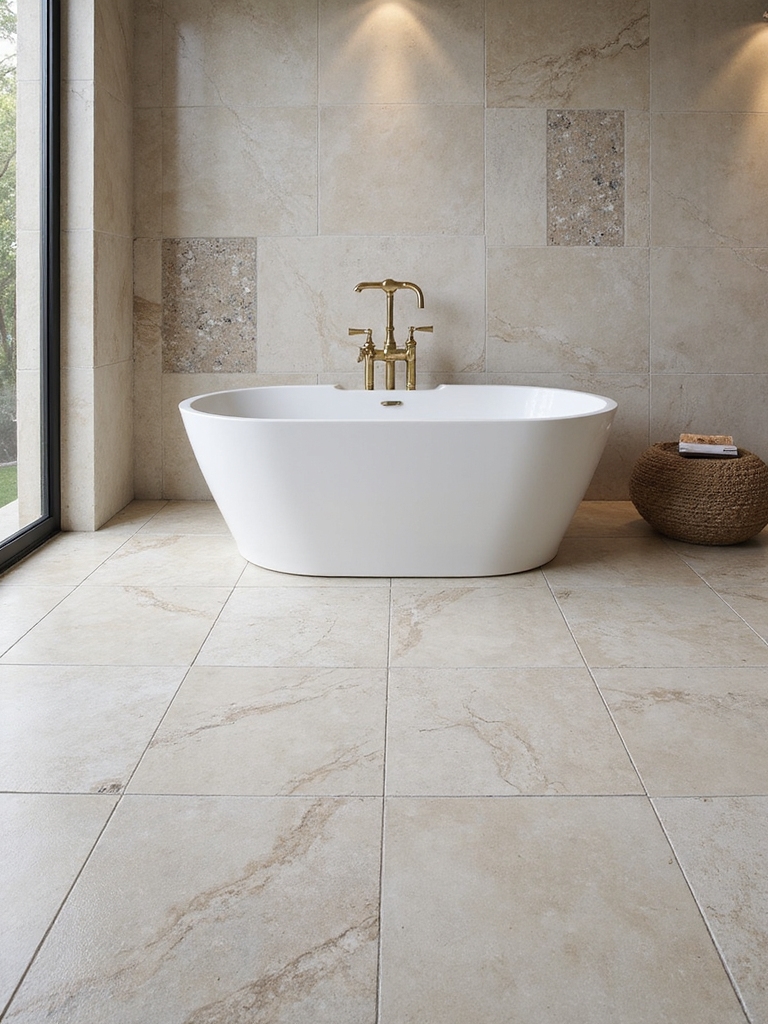
A bathroom floor survives more than any other surface in the house. Standing water, dropped bottles, wet feet at six in the morning. And yet most people pick it dead last, after the vanity, the paint, the towels. Tile lovers flip that order, and with bathroom flooring ideas, they are onto something.
The right tile floor is the rare decision that is both the most practical and the prettiest thing in the room. So this is the floor worth living with: which patterns earn their upkeep, which finishes stay safe underfoot, and where to spend so it still looks designed five years in. Below are the tiles worth obsessing over, and the unglamorous specs that decide whether yours holds up.
Quick Answers Before You Shop
Which tile is easiest to keep clean? Large-format porcelain. Fewer grout lines means less to scrub, and porcelain barely absorbs water.
What is the one safety number to check? The DCOF slip rating. Aim for 0.42 or higher on any floor that gets wet.
Is natural stone worth it on a bathroom floor? It is beautiful but porous, so budget for sealing twice a year. A stone-look porcelain gets you the look without the babysitting.
What Makes a Tile Floor Worth the Obsession
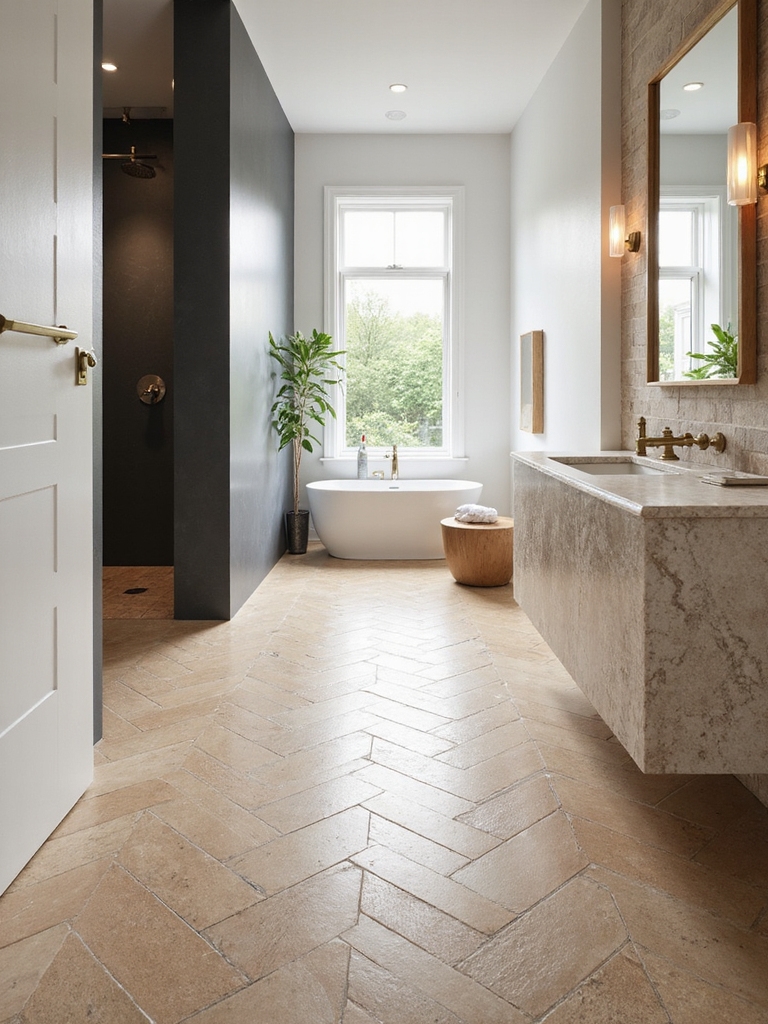
Tile earns its obsession through sheer range. No other bathroom floor swings from the soft scallop of a penny round to a wide porcelain slab to a graphic encaustic pattern, all while shrugging off water. That flexibility is why a tile lover will spend a whole afternoon in a showroom, running a palm over samples.
Cost tracks with the look you chase. Porcelain runs about $3 to $8 per square foot for the tile, natural stone climbs to $10 and well beyond, and labor often matches or beats the material. The payoff is a floor that looks more expensive than the receipt and outlasts every trend, since the paint and palette will change around it for years.
Two unglamorous things decide whether a floor ages well, and they are the first specs I check on any sample: grip and grout. A tile that turns slick when wet, or pale grout that grays within a month, will undo the prettiest pick. So the choices ahead weigh the look you want against the routine it quietly asks for in return.
Penny Rounds and Hex Mosaics for Vintage Charm
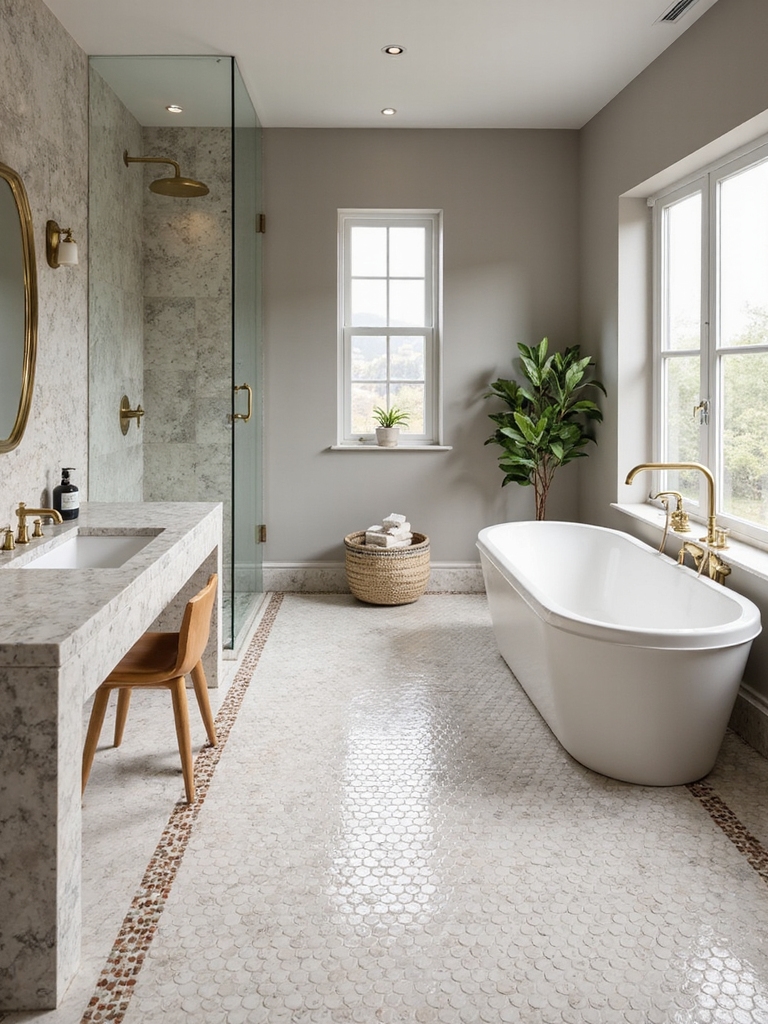
Small mosaics are the tile a true enthusiast falls for first. Penny rounds, tiny hexagons, and fish-scale shapes carry a vintage charm that big tiles cannot fake, and all those edges grip wet feet beautifully.
The catch lives in the same edges, because more tile means more grout, and more grout means more to keep clean. Fish-scale and elongated hex shapes are having a real moment right now, especially in soft sage and warm clay tones that feel current without chasing a fad you will regret by next year.
- A warm grey or greige grout keeps the pattern crisp and forgives the daily specks a busy bathroom collects by the second week.
- Save the busiest mosaics for smaller zones, like a powder room or a shower pan, where the charm lands and the cleaning stays sane.
- Ask for epoxy grout in the wettest spots. It resists stains and mildew far better than standard cement, which matters when you have this many lines.
| Tile type | Roughly per sq ft | Upkeep |
|---|---|---|
| Large-format porcelain | $3 to $8 | Low; seal grout only |
| Penny round / mosaic | $8 to $15 | More grout lines to clean |
| Natural stone | $10 to $30 | Seal twice a year |
Large-Format Porcelain Slabs and Fewer Grout Lines
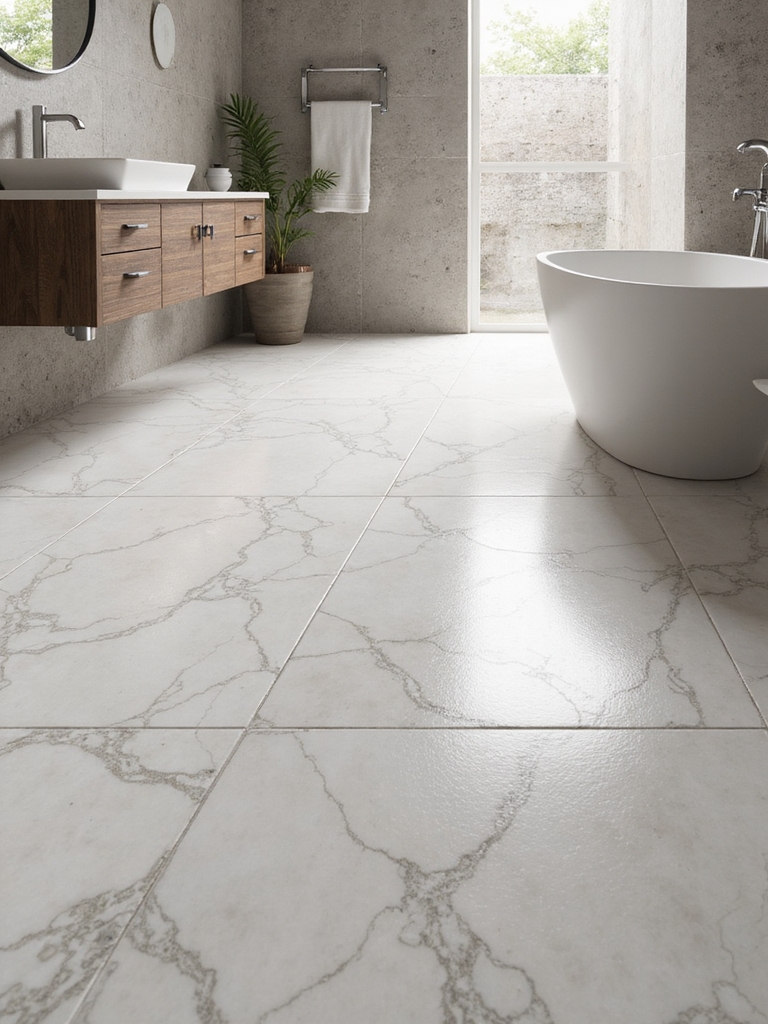
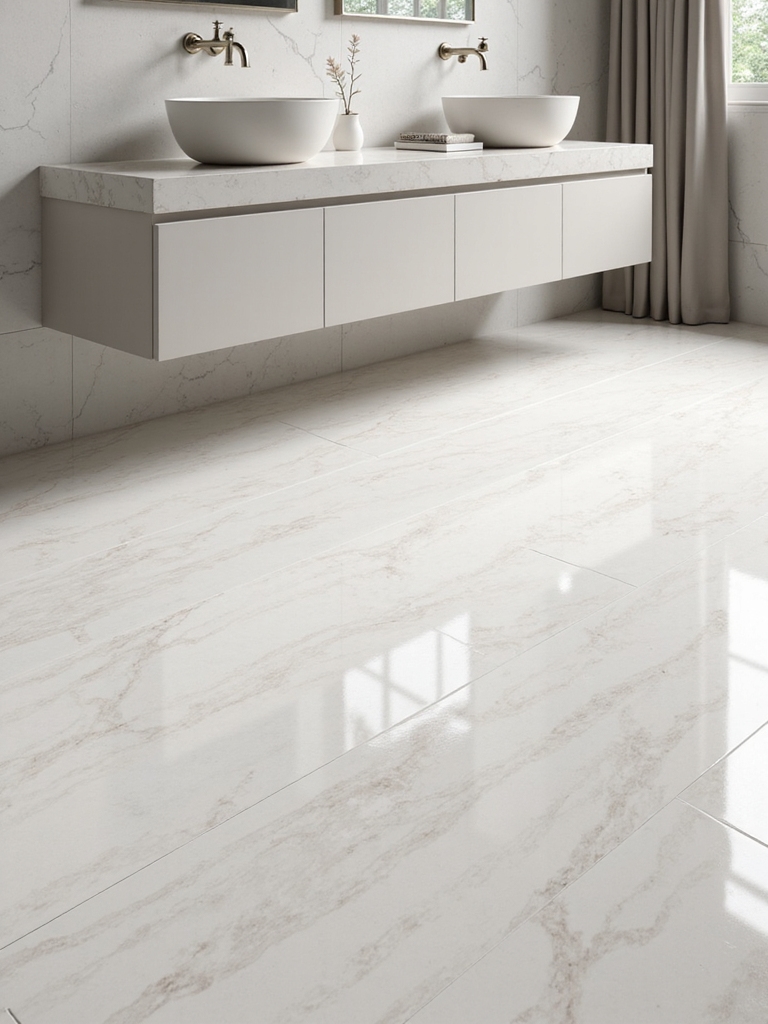
If mosaics are maximalist, large-format porcelain is the calm opposite. Tiles that run 24 by 48 inches or bigger cover a floor with only a handful of joints, so the eye glides and a small bathroom feels larger than it is. Fewer grout lines also leave fewer places for water and grime to settle.
These slabs want a flat, well-prepped subfloor and an installer who can handle the weight and the cuts, so a good chunk of the budget sits in labor as much as in the tile. What you get back is a quiet, modern floor that pairs with nearly any wall color you throw at it. Large-format is the floor I recommend most for a small or windowless bathroom, where every extra grout line would only chop up the little space you have.
- Choose rectified edges, the machine-cut, perfectly square kind, so grout lines can shrink to just a few millimeters.
- Matte or honed finishes hide water spots and grip far better than a high polish, which turns into a skating rink the moment it is wet.
- A greige or soft limestone tone stays timeless. You can rotate towels and repaint around it without the floor ever fighting you.
Bold Patterns That Hide Wear and Earn Their Keep
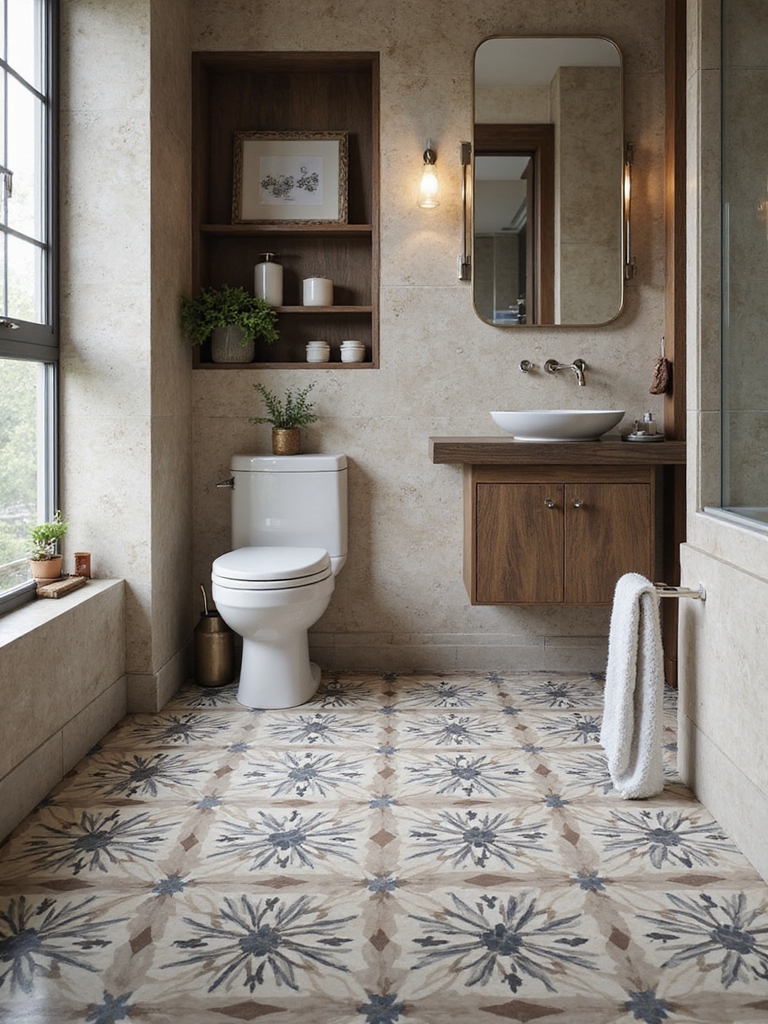
Here is the quiet advantage of a busy floor: pattern hides almost everything. Encaustic-look porcelain, Moroccan motifs, and checkerboards camouflage the scuffs, dust, and dropped mascara that a plain pale floor puts on display all day. In a family bathroom, that is a practical win, not just a pretty one.
Where a bold floor pays off most
What makes it work is letting the floor be the loud one. Keep the walls and vanity calm, whether that is warm white, a soft sage, or natural wood, so the pattern registers as a deliberate, designed choice. The styling mistake I see most is a loud floor fighting an equally loud wall, so keep one bold surface per room; a busy floor pairs especially well with an all-black or moody scheme up above.
Durability has to match the drama. Look for the pattern fired deep into a porcelain body rather than glazed on top, so years of traffic do not wear the design thin right in the doorway where everyone pivots.
📋Before you commit to a bold floor
- ✓Buy one full sample and live with it for a week under your real bathroom light.
- ✓Confirm the slip rating is 0.42 DCOF or higher.
- ✓Check the pattern is fired into the body, not just printed on the glaze.
- ✓Order 10 to 15 percent extra for cuts and future repairs.
Wood-Look and Stone-Look Tiles With Real Texture
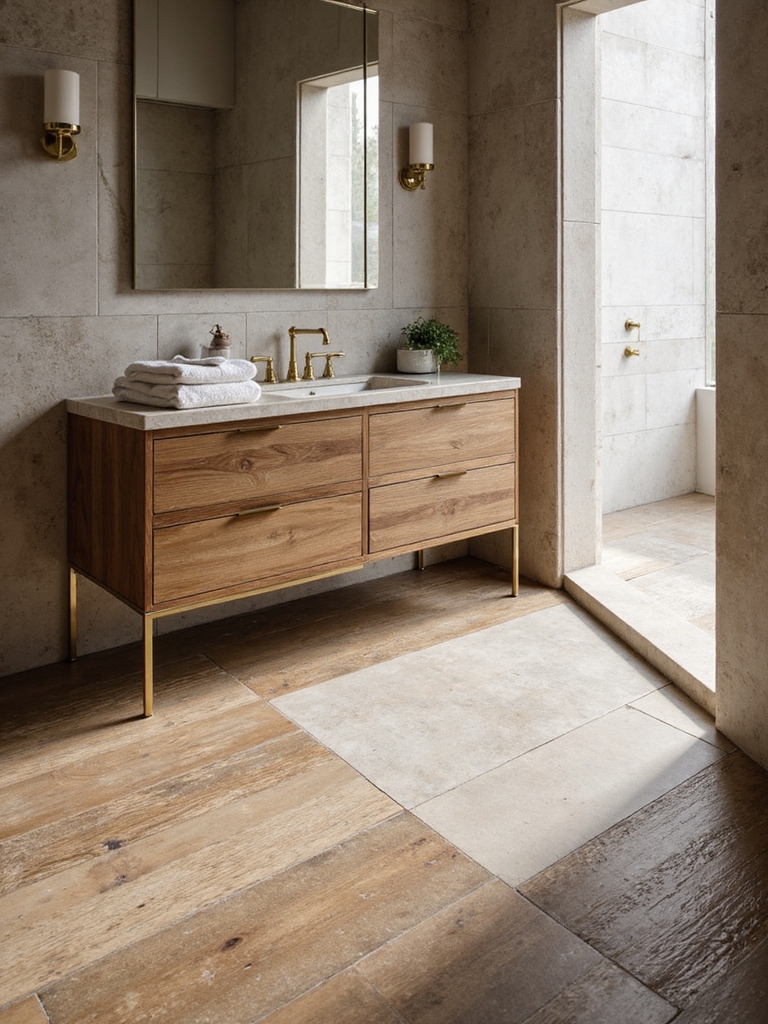
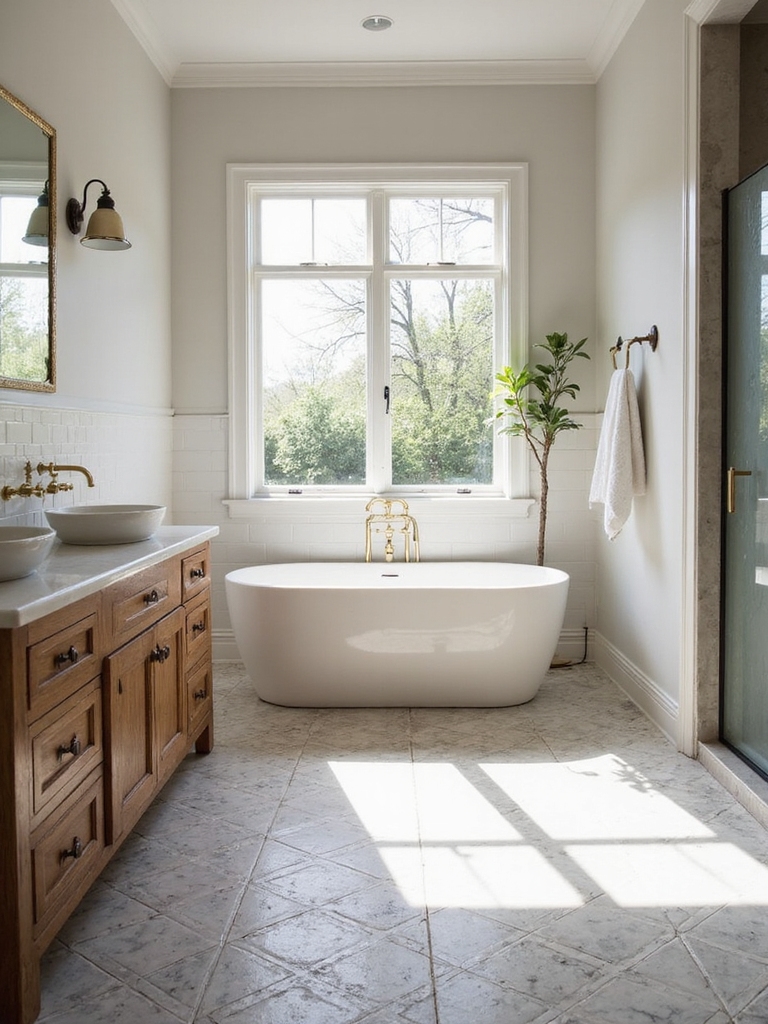
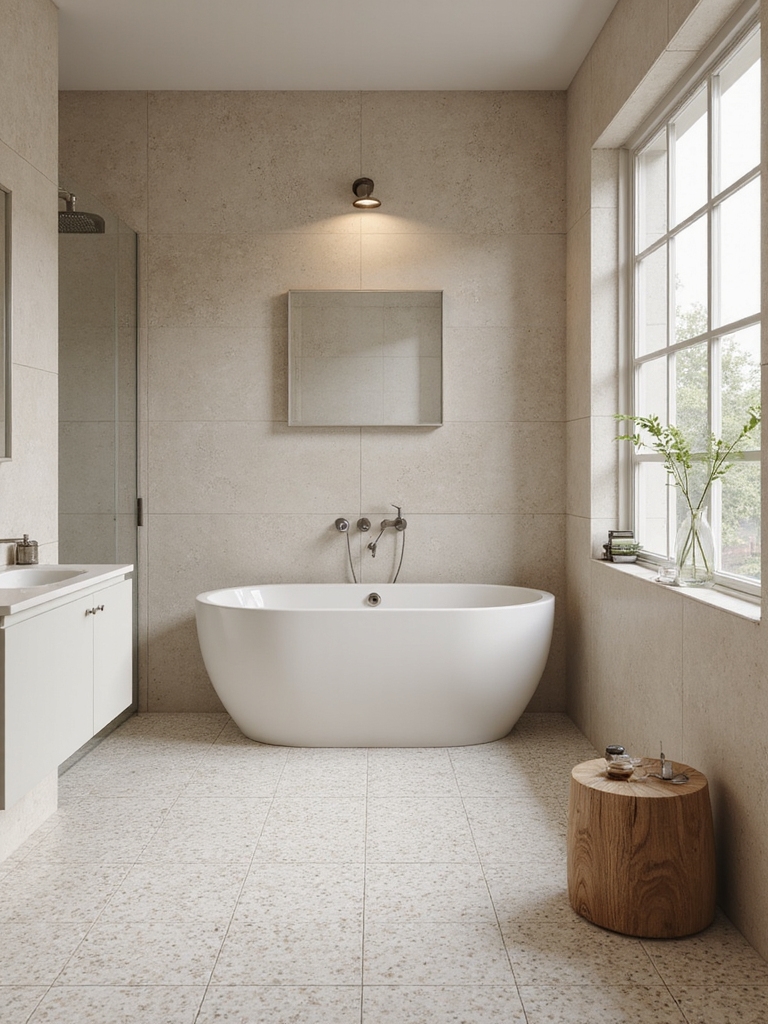
Wood-look and stone-look porcelain is how you get warmth and organic texture in a room that would punish real wood or porous stone. The good ones are convincing now, from long planks with a matte, slightly ridged surface to slabs with veining that actually shifts from tile to tile.
The cheap ones give themselves away fast, usually with a too-glossy face or a grain that loops every fourth plank like wallpaper. Run your hand over a sample before you trust your eyes, because texture is what separates the believable from the obvious. I love a long wood-look plank for a bathroom that opens onto a bedroom, since it carries the same warmth straight across the doorway.
- Check the variation. Quality wood-look comes in eight or more face patterns so the grain does not obviously repeat every few planks.
- Run wood-look planks toward the longest wall in one direction to stretch the room, the same move real flooring uses.
- For stone-look, pick a textured matte finish over polish. It looks more authentic and gives bare feet something to hold on a wet morning. Pair it with a styled, uncluttered vanity and the whole floor feels intentional.
Slip Resistance and the Number Worth Checking
The least glamorous spec on the box is the one to read first. A wet bathroom floor needs traction, and the measure for it is the DCOF rating. Aim for 0.42 or higher on any floor that gets wet. Polished tiles often land below that, which is exactly why their natural home is the wall, not underfoot.
Texture buys grip honestly. Matte glazes, fine ridges, and smaller tiles with more grout line all give bare feet something to catch. If kids or aging parents share the bathroom, treat slip resistance as a baseline you plan around, and I always ask the showroom for the DCOF number before a finish wins me over. This is one corner where water and footing tip into safety, so lean conservative.
On a shower floor, drop to smaller tiles or a mosaic on purpose. The extra grout lines turn into extra grip exactly where water pools and bare feet move the most, which is why so many beautiful baths pair big calm slabs across the room with a tighter, grippier tile inside the shower itself.
Grout, Sealing, and What Upkeep Honestly Looks Like
Tile itself is close to indestructible. What I tell anyone nervous about upkeep is that the work lives almost entirely in the grout, and it is lighter than they fear. Resealing the grout in a small bathroom runs about twenty minutes once a year, and the routine shifts with the grout you pick, so settle that on install day before the first stain sets.
- Seal cement grout once it stops beading water, usually around nine to twelve months in a busy bath, then top it up yearly. Epoxy grout skips this step almost entirely.
- Keep a soft brush and a pH-neutral cleaner under the sink. Acidic cleaners etch natural stone and dull some glazes over time.
- Wipe standing water off natural stone after a bath, because it is porous and will spot, while porcelain barely notices. That gap is why many tile lovers go porcelain underfoot and save the marble for a wall niche.
- When grout finally looks tired after several years, you can often regrout just the surface or use a grout refresh stain instead of tearing out tile. It is a cheap weekend job that buys a floor a few more good years before any real demolition.
Layouts and Small-Bath Tricks
The same tile can feel calm or busy depending purely on how it is laid, and in a small bathroom the layout does more work than the tile itself. A handful of planning moves stretch a tight floor and hide the awkward cuts that give a rushed job away, and they cost nothing but forethought.
- Run a large tile or wide planks along the longest sightline with thin grout lines to make a small floor feel open and calm.
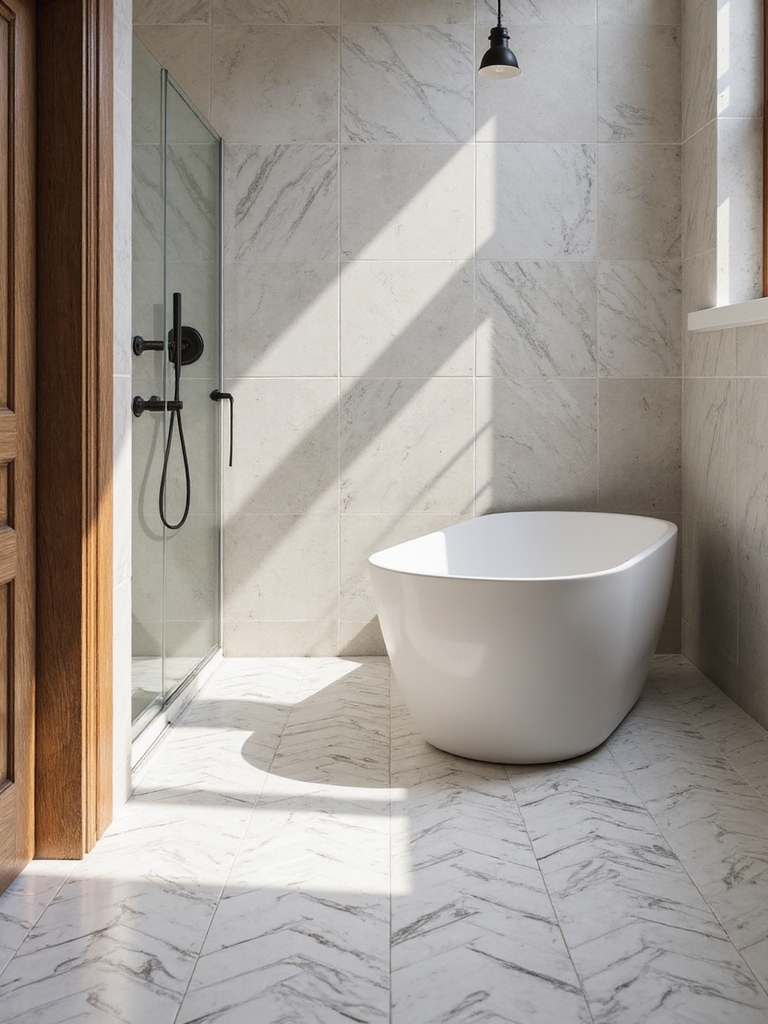
- Bring out herringbone or a checkerboard where you want real movement, but know they multiply cuts and waste, so order 10 to 15 percent extra.
- Mind the doorway transition. A slim metal threshold or a clean tile-to-tile seam keeps the floor from looking unfinished where it meets the hallway or the carpet next door.
- If tile starts to feel like too much commitment, a good waterproof vinyl floor mimics the look with softer underfoot warmth and far less upkeep.
Bathroom Tile Floor Questions, Answered
?Can you put new tile over an existing bathroom floor?
Sometimes, if the subfloor is sound and level, but most pros pull the old layer to add a proper waterproof membrane underneath. For any radiant heat or electrical work, bring in a licensed installer; that part is not a DIY corner to cut.
?What size tile is best for a small bathroom?
Larger tiles with thin grout lines, counterintuitively. They make a small floor feel bigger and calmer because the eye meets fewer interruptions across it. Save tiny mosaics for the shower pan, where the extra grout lines turn into the grip you actually want underfoot.
?Is porcelain or ceramic better underfoot?
Porcelain. It is denser, absorbs less water, and handles a wet floor better than standard ceramic, though it costs a little more and is harder to cut, so factor that into a DIY plan or your installer quote. For a floor that sees daily showers, the extra density is worth the small premium.
?How do I keep grout from looking dirty?
Use epoxy grout in the wettest zones, pick a mid-tone color instead of bright white, and seal any cement grout once water stops beading on its surface. A quick wipe-down after long baths does more to keep it bright than any deep clean later.
?Do wood-look tiles actually look real?
The good ones do, especially long planks with rectified edges and a matte, textured finish. Cheap versions repeat the same grain photo every few tiles, so look for at least eight different face patterns before you buy.
The Floor Outlasts Every Trend Above It
Here is what tile lovers understand that the vanity-first crowd misses: the floor is the longest commitment in the room. Towels change, paint changes, even the organizing systems change, but the tile underfoot stays for a decade or more. That is exactly why it deserves the obsession, and the homework on grip and grout.
So before the prettiest sample talks you into it, picture a wet Tuesday morning five years from now. If you want the freshest looks first, scan what is trending in bathroom tile, then come back to the real question: which of these floors would still make you happy under bare feet, long after the trend that sold it has moved on?
Related Reads