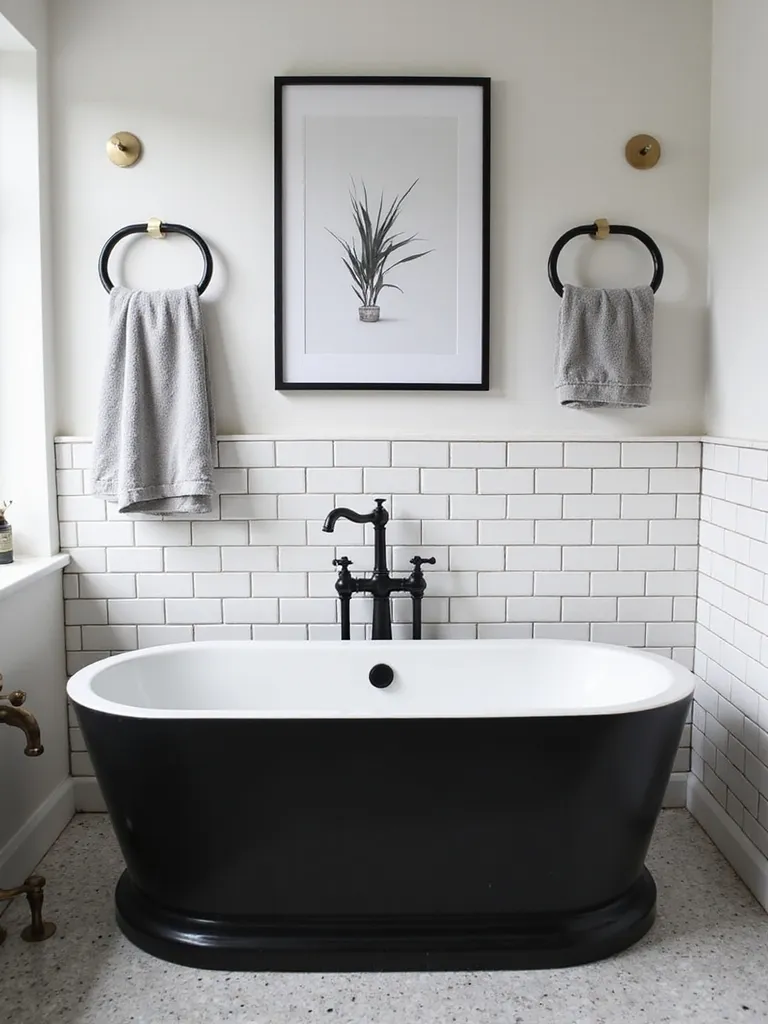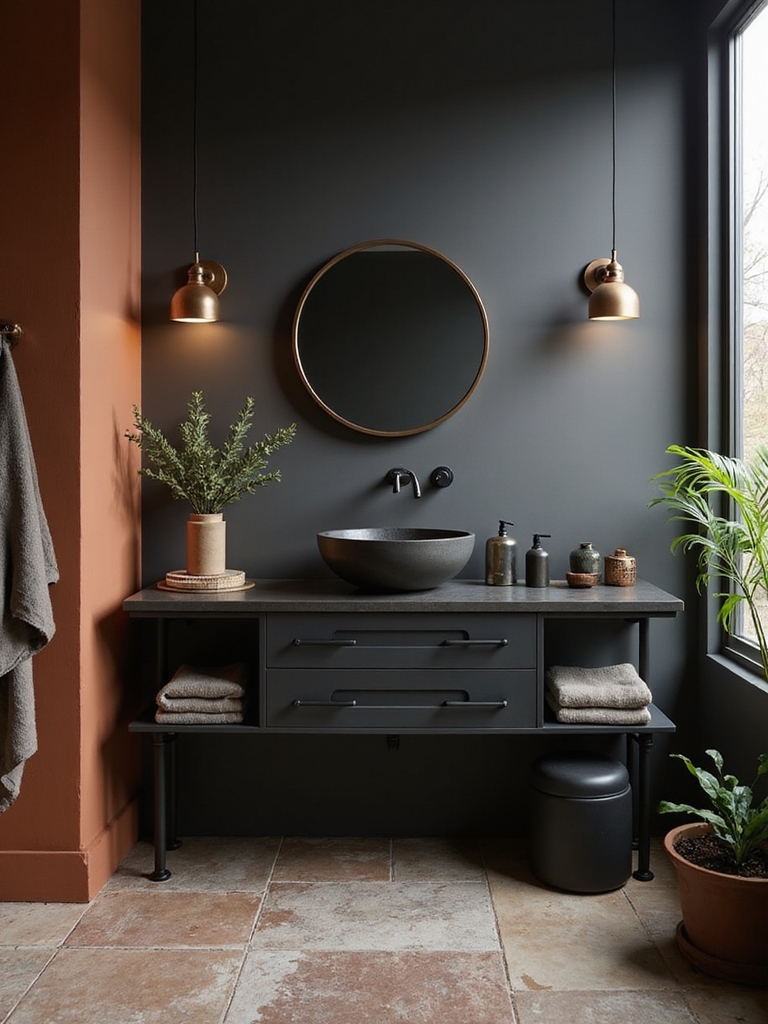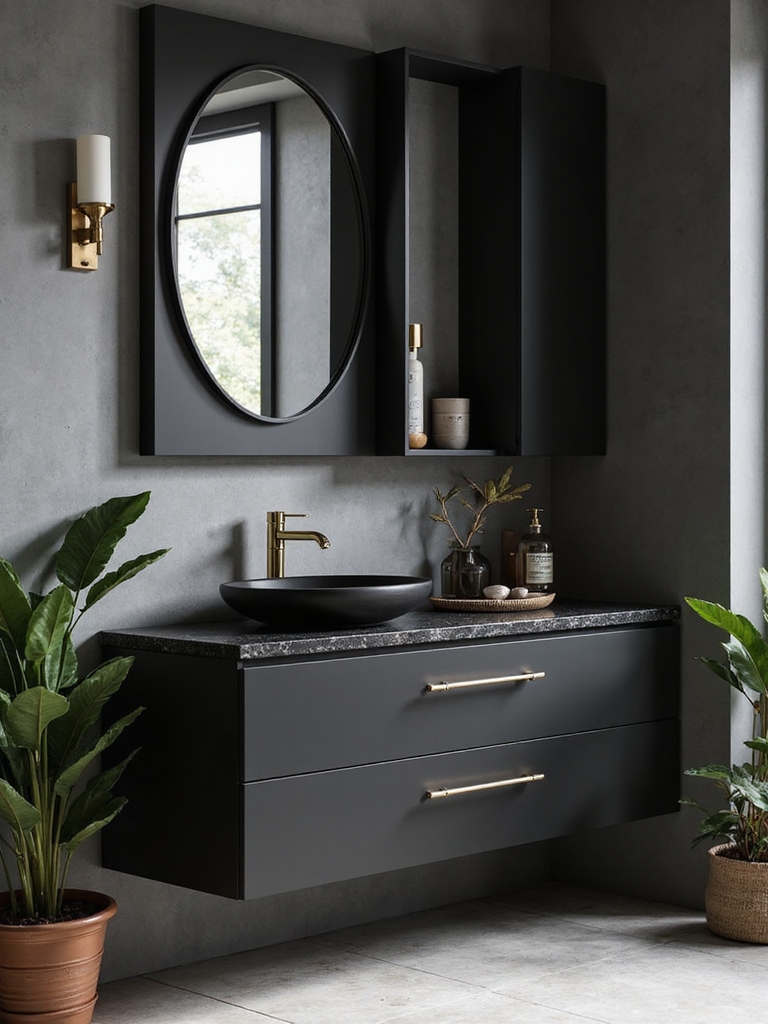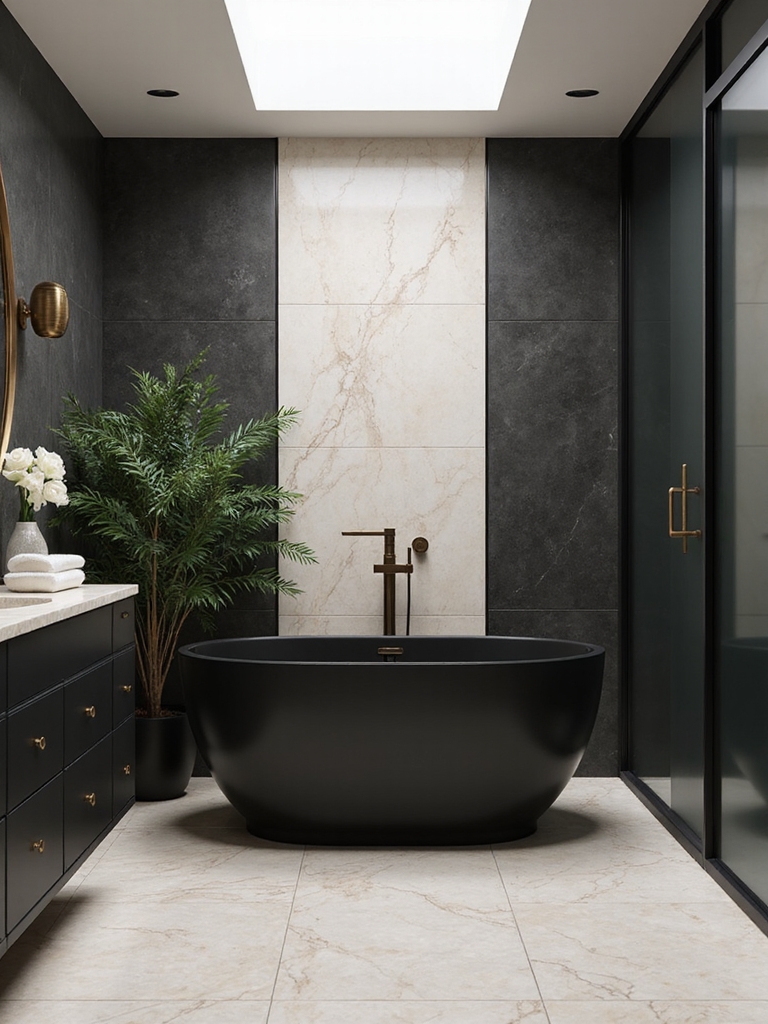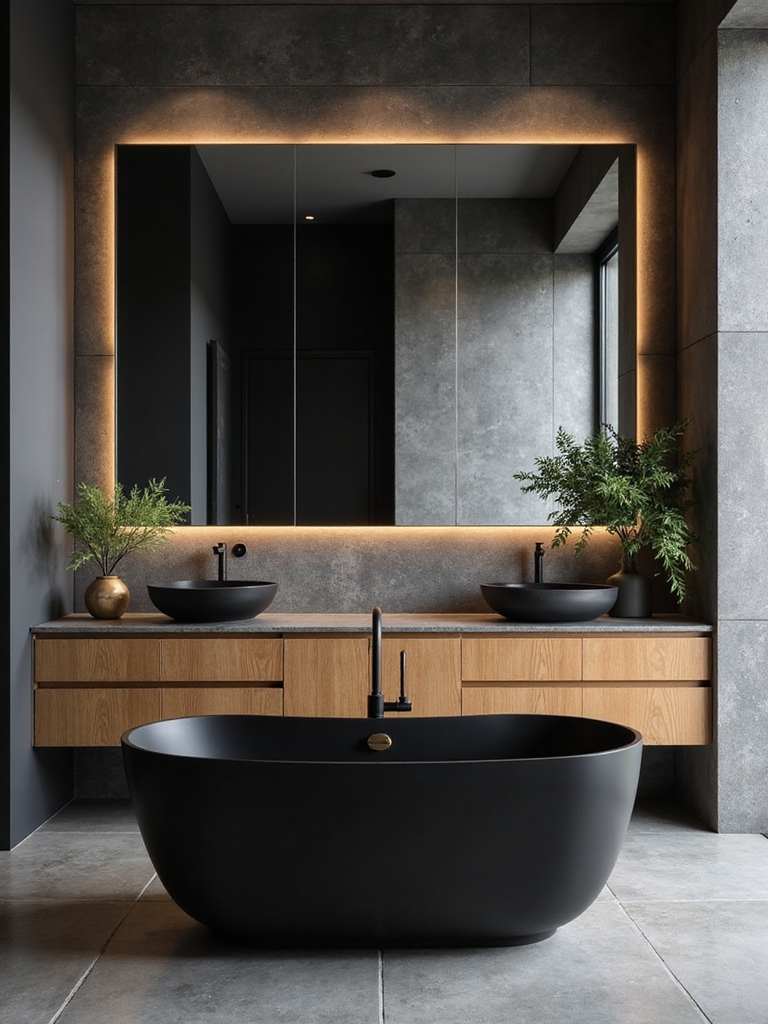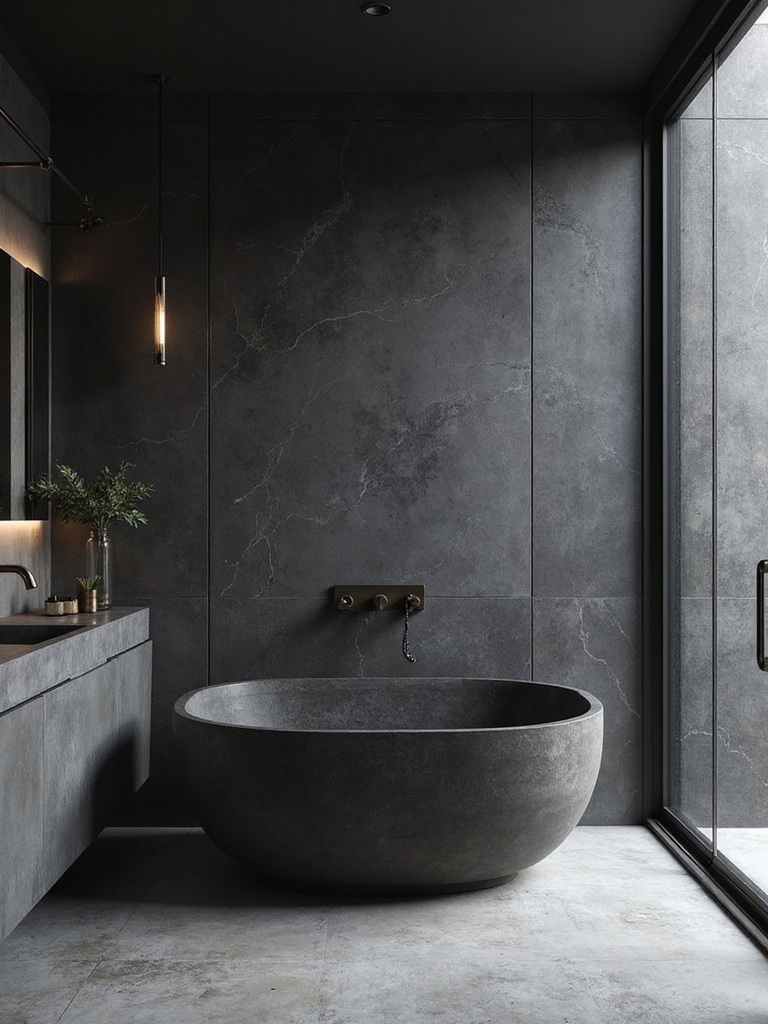

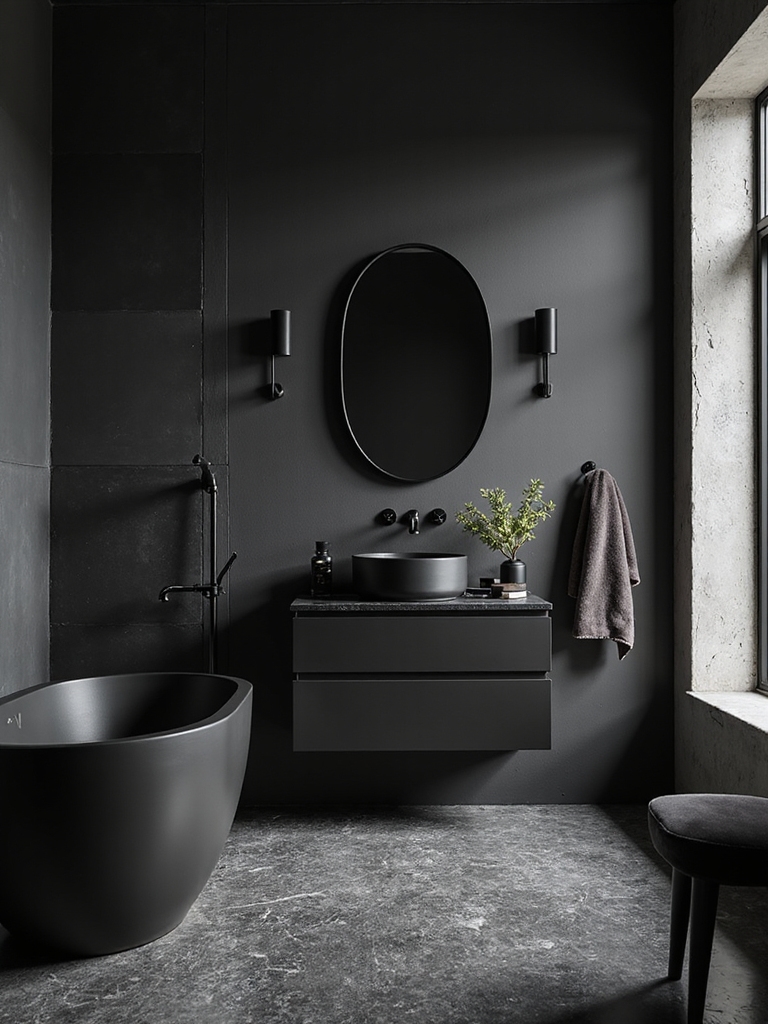
An all-black bathroom is the boldest room a nervous client ever asks me to talk them out of. I never do. Done with a little planning, all-black bathroom ideas turn the smallest, most overlooked room in the house into the one people remember, the one with depth and mood the rest of the floor plan can only envy.
The catch is that black punishes lazy choices. Flat paint over flat lighting gives you a cave, and the wrong finish shows every water spot by Tuesday. These seventeen ideas walk through the parts that actually decide whether dark reads rich or just dim, from the foundation up through the finishes that catch the light this season.
Quick Answers
Will an all-black bathroom feel small and dark? Only if the lighting is flat. Layered light and a few reflective finishes keep it deep instead of dim.
What does it cost to go all-black? A paint-and-fixtures refresh runs $200 to $600; a full tiled redo climbs into the thousands.
How hard is it to keep clean? Matte black hides water spots; glossy and metal show them, so plan a quick weekly wipe.
Why a Bold, Intentional Black Bath Works
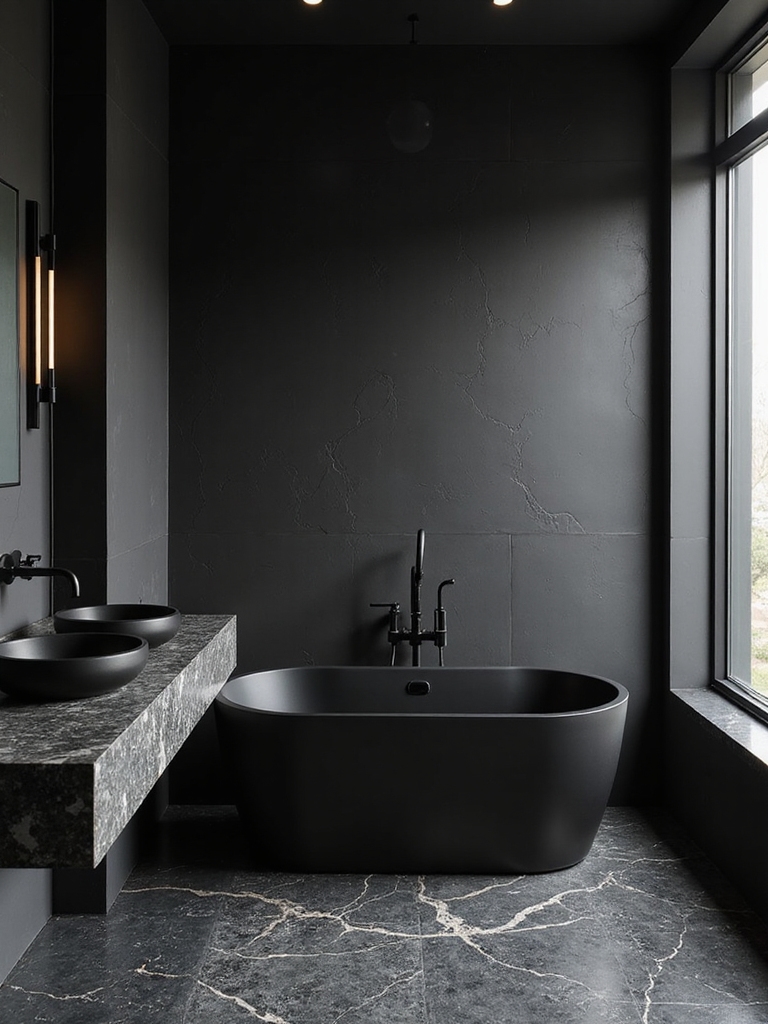
Black works in a bathroom because it does something no pale color can: it makes the walls disappear and pushes everything else forward. Brass taps, a marble vanity, the line of a freestanding tub, all of it gains weight against a dark backdrop. The room stops feeling like a utility space and starts feeling considered.
The first all-black bath I styled was a windowless powder room, the kind most people paint white and apologize for. We went the other way. With deep charcoal walls and three warm light sources, that tiny room became the one guests commented on all night.
Lay a Solid Black Foundation in Tile and Paint
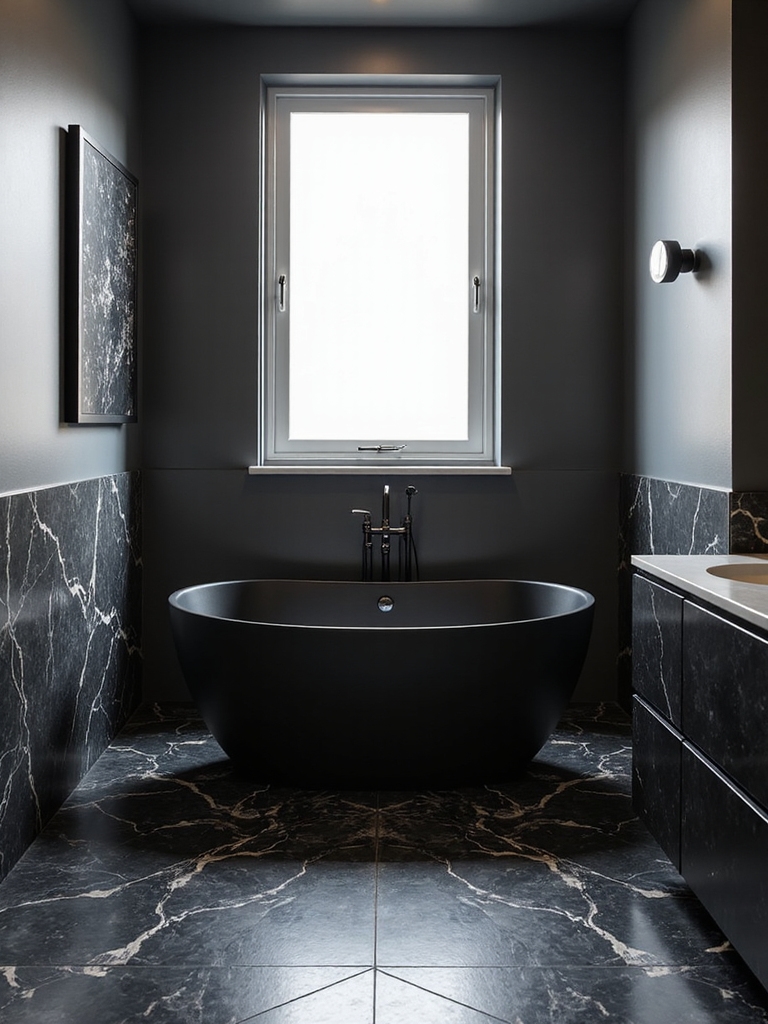
Everything else rides on the foundation, so get the base black right before you shop for anything shiny. Matte tile on the floor, a slightly warmer black on the walls, and a paint with a hint of brown or blue keeps the room from going dead and gray.
Test the Undertone First
I always test black paint on two walls and live with it for a day. Black shifts hard under different bulbs, going green in cool light and almost soft and inky under warm. A statement dark scheme is a gentler way in if true black feels like too much.
Keep grout in a tone close to the tile so the floor holds together as one dark plane. Wide pale grout lines chop the look into a grid and steal the drama you paid for.
Which black are you drawn to? Your answer points to the finish that will suit you.
🎯Soft, inky, and warm
A black with a brown undertone in matte paint; cozy and forgiving.
🎯Crisp, cool, and graphic
A true black in honed stone or glossy tile; bold and high-contrast.
Bold Contrasts and Clean Lines Anchor the Room
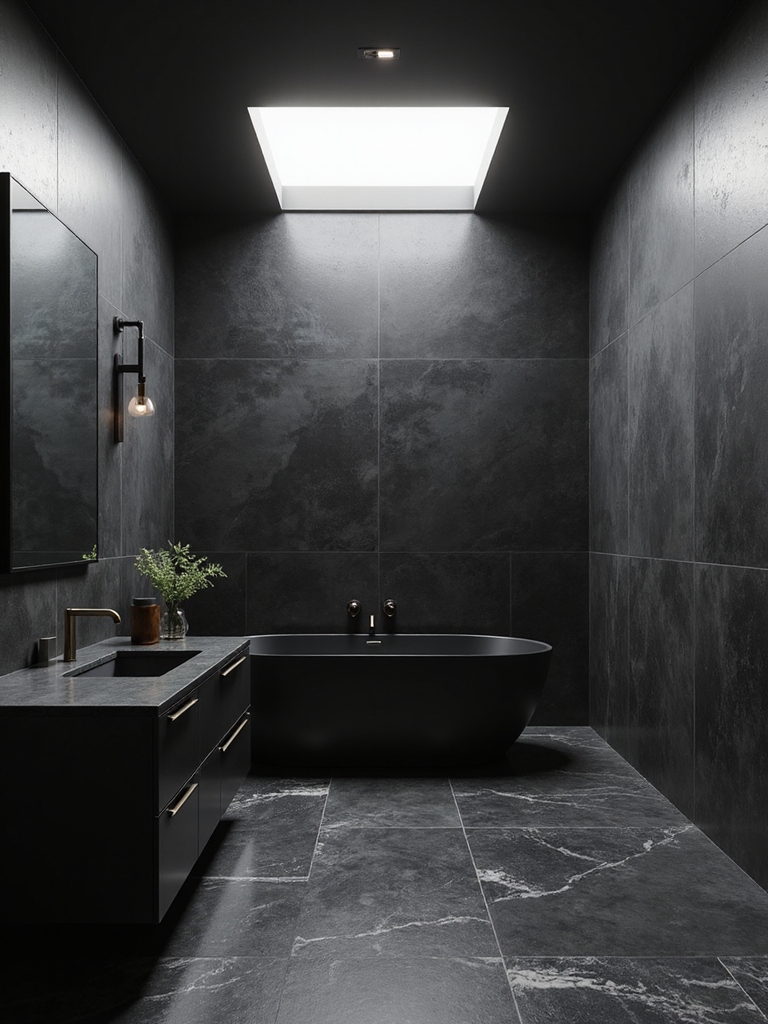
A solid black room needs a few crisp counterpoints or the eye has nowhere to land. White stone, a pale wood stool, a single arched mirror, these give the darkness its shape. The trick is restraint. Two or three light moments, placed where they do the most work, will out-style a dozen scattered ones every time.
Clean lines matter more in a dark room than a bright one. Clutter that vanishes against white shows up as a busy silhouette against black, so the simpler the layout, the richer the result.
- Anchor with one white element, like a stone basin or a marble shelf.
- Keep hardware to a single metal so the contrast looks chosen.
- Leave open negative space; black needs room to breathe.
Pair Bold Textures for Real Contrast
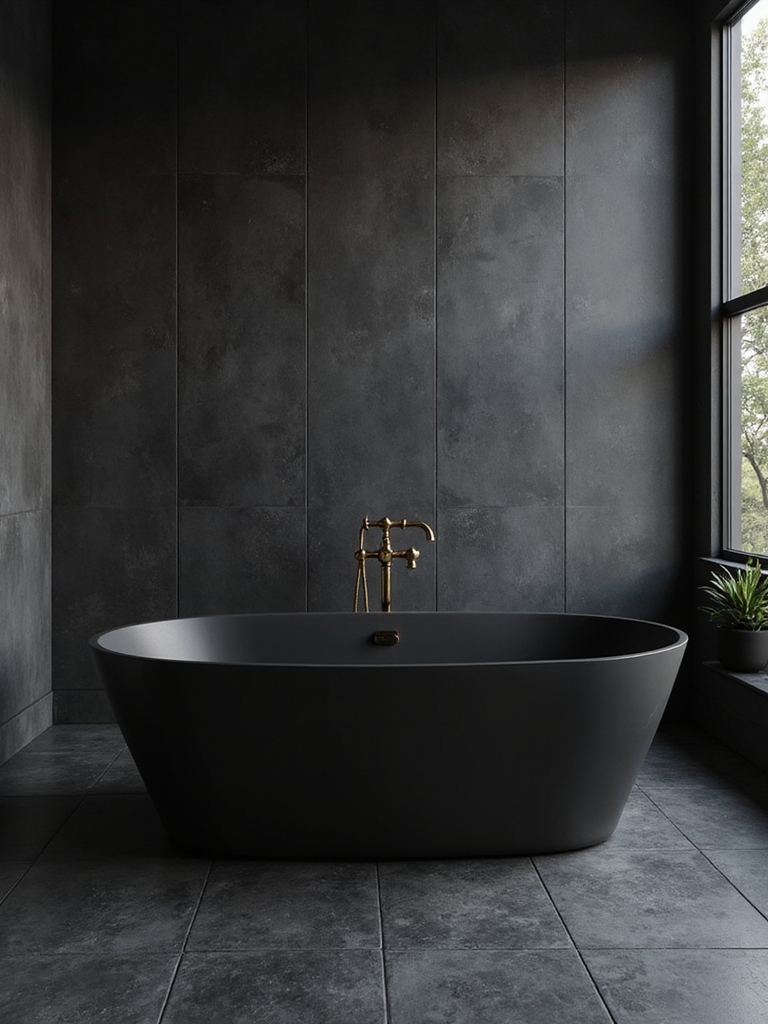
When everything is one color, texture does all the talking. The all-black rooms that fall flat are usually the ones where every surface has the same finish, so the light hits it and dies. Mix a matte wall with a honed stone counter and a few glossy tiles, and the same black suddenly has three moods.
- Matte walls absorb light for depth and a calm base.
- Honed or veined marble adds a quiet pattern up close.
- A run of glossy or fluted tile catches light and adds shine.
A black bathroom is not about the absence of color. It is about giving light something worth chasing.
Elegant Texture Combinations You Can Feel
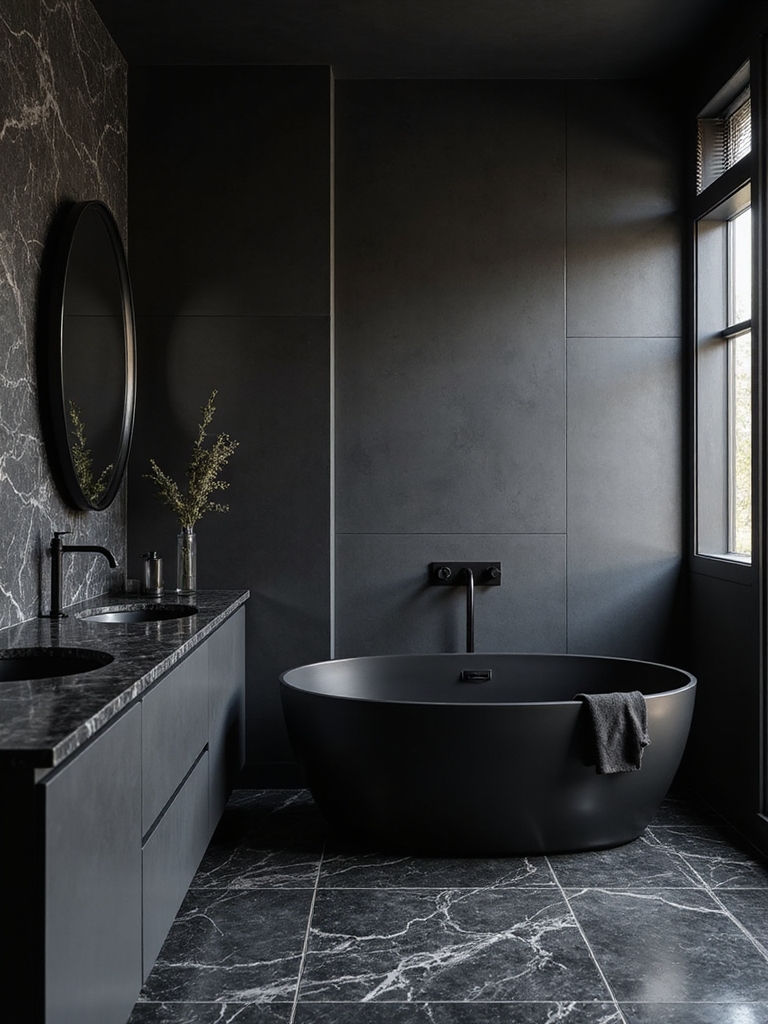
Where the last idea was about how textures catch the light, this one is about your hands. The black baths that feel expensive are the ones where every surface you touch has been chosen: a warm wood handle, a cool stone ledge, a thick waffle towel. Your fingers register quality before your eyes finish the room.
A natural stone vanity top, even a small remnant slab at $150 to $400, is the single tactile upgrade I push hardest in a dark bath. A marble-led palette translates straight into black, swapping pale stone for a deep, dramatic vein.
- A stone or concrete basin your hand meets first thing each morning.
- A real wood handle or knob, warm where everything else is cool.
- A thick, low-pile towel that feels like a hotel, around $15 to $30 each.
Layer the Lighting for Depth and Drama
Lighting is the single thing that decides whether your black bath looks rich or grim. It is the budget line I never trim. One harsh ceiling fixture flattens everything into a shadow box, and no amount of pretty tile recovers from a room lit like an interrogation.
Build it in layers instead. A warm overhead for general light, sconces at mirror height so faces are lit well, and a small accent or backlit niche for mood after dark. Put them on separate switches, ideally a dimmer, so the room shifts from morning-bright to evening-soft.
Warm bulbs in the 2700K range flatter both skin and black surfaces. Cool daylight bulbs turn a sophisticated black into a cold, hard slate, so I steer clients warm almost every time.
Add Reflective Surfaces to Bounce Light
Reflection is how you keep a dark room from closing in. A large mirror, a few polished metal fittings, and a glossy accent tile each grab what light you have and pass it around the room. In a small black bath, an oversized mirror, often $40 to $150, is the cheapest way to double the sense of space.
Polished brass and chrome both work, though I lean brass in black rooms for the warmth it throws. A navy luxe approach uses the same reflective trick if you want the depth of dark without committing to full black.
Choose Fixtures and Fittings That Stand Out
Against black, fixtures become the jewelry of the room, so this is where I tell clients to spend. A brass faucet, an aged-bronze towel bar, or matte black taps with a knurled handle all carry real weight when the background is dark and quiet.
Pick one metal and hold it across the whole room, taps, lights, hooks, and frame. Mixing three finishes in a pale bath looks playful; in an all-black room it just looks unplanned, because every fitting is on full display.
Plan Ventilation for a Dark, Damp Room
Dark surfaces show mineral haze and mildew faster than pale ones, so airflow matters more here than in any white bath. Run a quality extractor fan during and after every shower, and crack a window when you can, to keep steam from settling into the grout.
If the fan is original to the house and struggling, an upgrade is worth it for the surfaces alone. Any new wiring is a job for a licensed electrician, not a weekend project, so price that into a full redo.
Let One Color Pop Against the Black
Black is the perfect stage for a single, confident color. One accent, repeated two or three times, lifts the whole room without breaking the noir. This season I am seeing a lot of deep green and oxblood playing this part, both of which sit beautifully against charcoal.
- Repeat the accent in a towel, a plant pot, and one piece of art.
- Stay in one color family so it looks deliberate.
- Keep it small; black should still own at least 80 percent of the room.
Make the Shower Enclosure a Statement
The shower is the biggest single surface in most bathrooms, so a black enclosure makes the loudest statement for the money. Matte black framing on clear glass draws a crisp grid that feels architectural, and it hides water marks far better than chrome.
A black-framed enclosure runs roughly $300 to $800 installed, less if you reframe an existing clear panel. Inside, run the same dark tile floor to ceiling for a deep, enveloping effect, then break it with one band of textured or glossy tile at eye level. That single line keeps a tall black box from feeling like a closet.
Warm It Up With Wood and Stone
Pure black can tip cold, and warm natural materials are the fix. A walnut vanity, a teak bath mat, or a stone basin brings in grain and warmth that keeps the room feeling like a sanctuary instead of a server room. Wood also ages well in a space that sees a lot of steam, as long as it is sealed.
I usually bring in two warm materials and stop there. One wood tone and one stone is plenty; pile on more and the calm, collected mood starts to scatter.
Is an All-Black Bath Right for Your Space?
Small and windowless is not the dealbreaker people assume; some of the best black baths I have done were tiny powder rooms where the dark made them feel like a jewel box. What matters more is light, both natural and added, and your tolerance for the upkeep.
If the room is your only full bath and gets brutal morning use, consider a soft grey scheme for most of it and save the full black for a powder room or an ensuite. You get the drama where it counts and an easier daily clean everywhere else.
Keep Black Surfaces Looking Clean
Black rewards a light, regular touch far more than a deep monthly scrub. A quick wipe of the glossy and metal surfaces two or three times a week keeps the haze from building, and a microfiber cloth pulls spots without leaving lint behind. A moody blue-gray look forgives a bit more between cleans if low-maintenance is your priority.
- Use a microfiber cloth; paper towels leave fibers on dark surfaces.
- Skip abrasive cleaners on matte paint; they leave shiny scuffs.
- Wipe glass and metal weekly, matte tile monthly.
Common Mistakes to Avoid
The mistake I see most is treating black as a paint color and stopping there. A black room without layered light, texture, and one or two pale anchors collapses into a flat, gloomy box, and that is the version that scares everyone off the look.
The second is forgetting the upkeep before committing every surface. If you know you will resent a weekly wipe-down, keep the high-touch zones in a more forgiving finish and let the walls carry the drama. Plan the maintenance into the design and the room stays beautiful for years.
All-Black Bathroom Questions
?Can I do an all-black bathroom myself, or do I need a pro?
Paint, hardware swaps, a new mirror, and textiles are all weekend DIY jobs. Bring in a pro only for tiling, a new shower enclosure, or any wiring, which a licensed electrician should handle.
?What sheen of black paint is best for bathroom walls?
A matte or eggshell hides water spots and imperfections best on walls, while a satin or semi-gloss wears better on trim and doors where you wipe often.
?Will a black bathroom feel dated in a few years?
A deep, warm black reads more timeless than a trend color. Keep the bones black and let cheaper accents carry any of-the-moment color, so updates stay quick and low-cost.
?How do I keep a black bathroom from feeling cold?
Bring in warm light around 2700K, one or two natural materials like wood or stone, and warm metal such as brass. Those three moves keep the room feeling calm and inviting.
Commit to the Dark, With a Plan
An all-black bathroom is one of the few looks that turns a small, plain room into the best one in the house, as long as you treat it as a layered design and not a single coat of paint. Light it well, vary the textures, anchor it with one pale moment, and keep one metal consistent.
Start with the paint and the lighting before you tile anything. Those two choices decide eighty percent of whether your dark room feels rich or grim, and both are easy to test before you commit the budget.