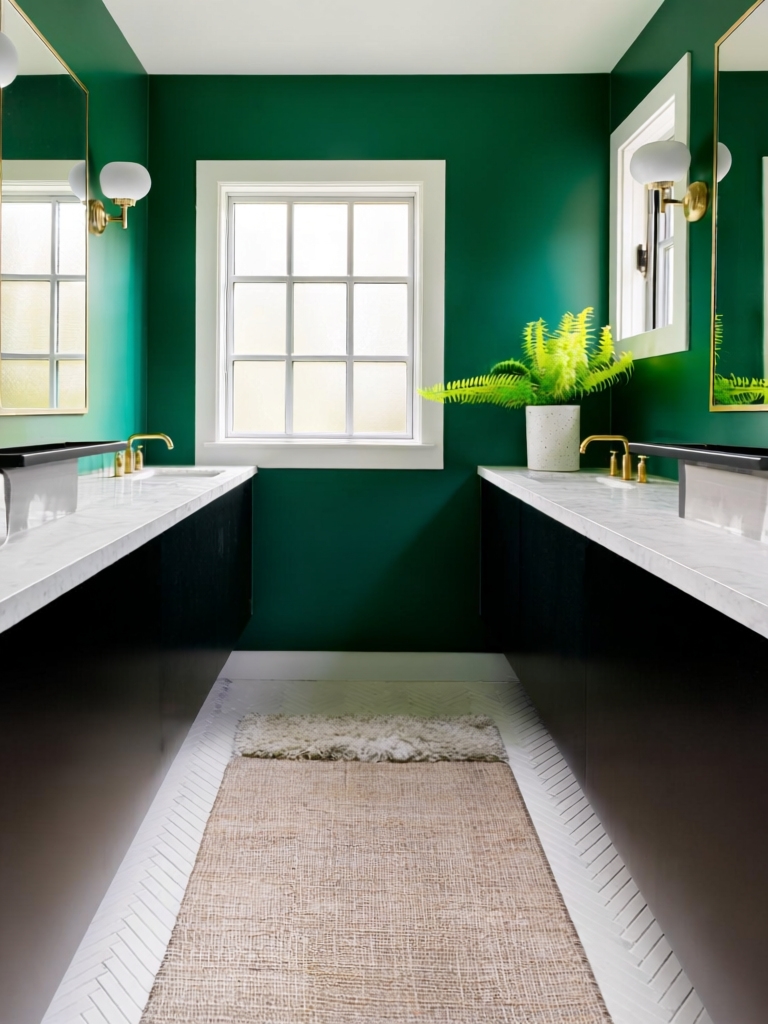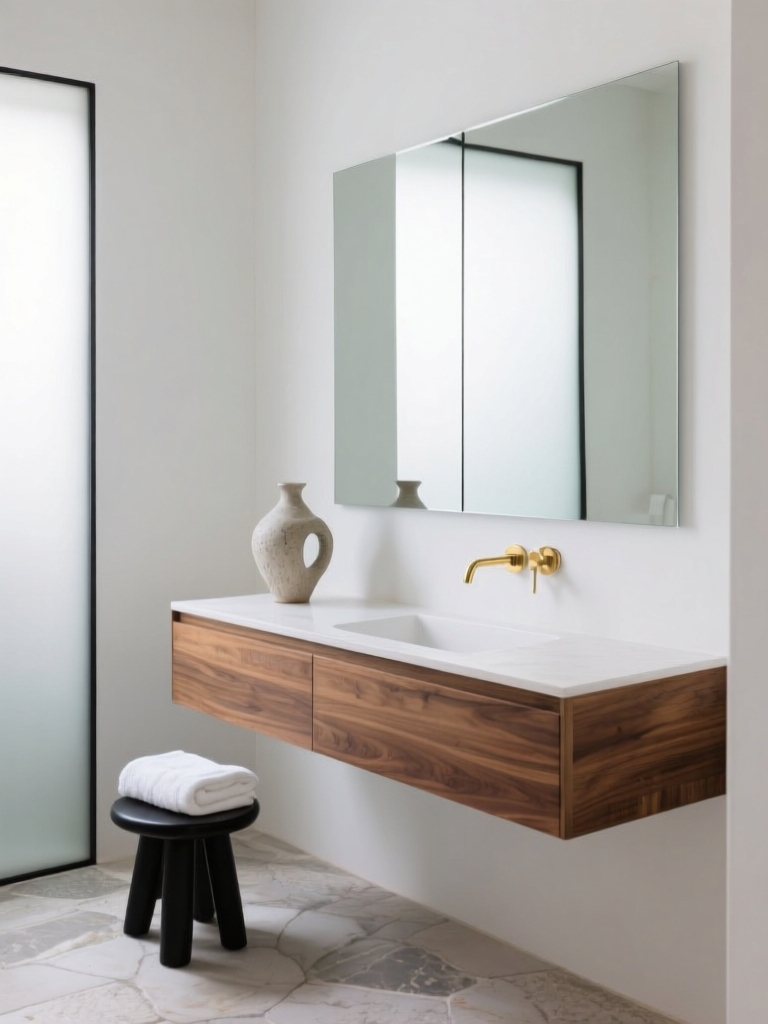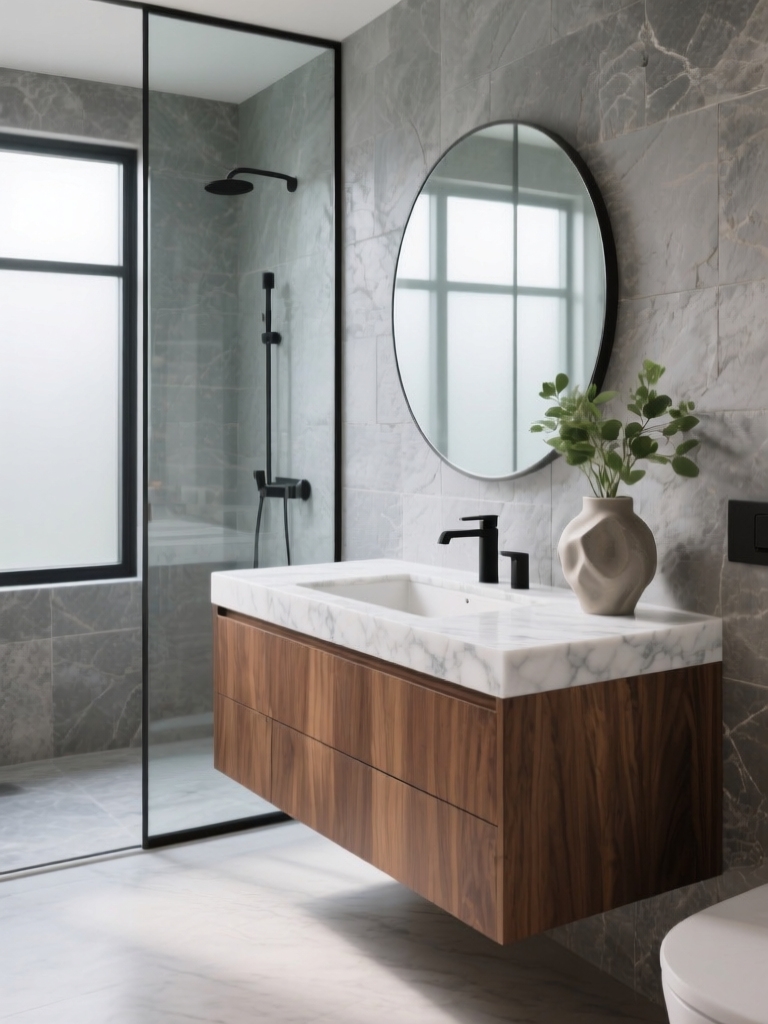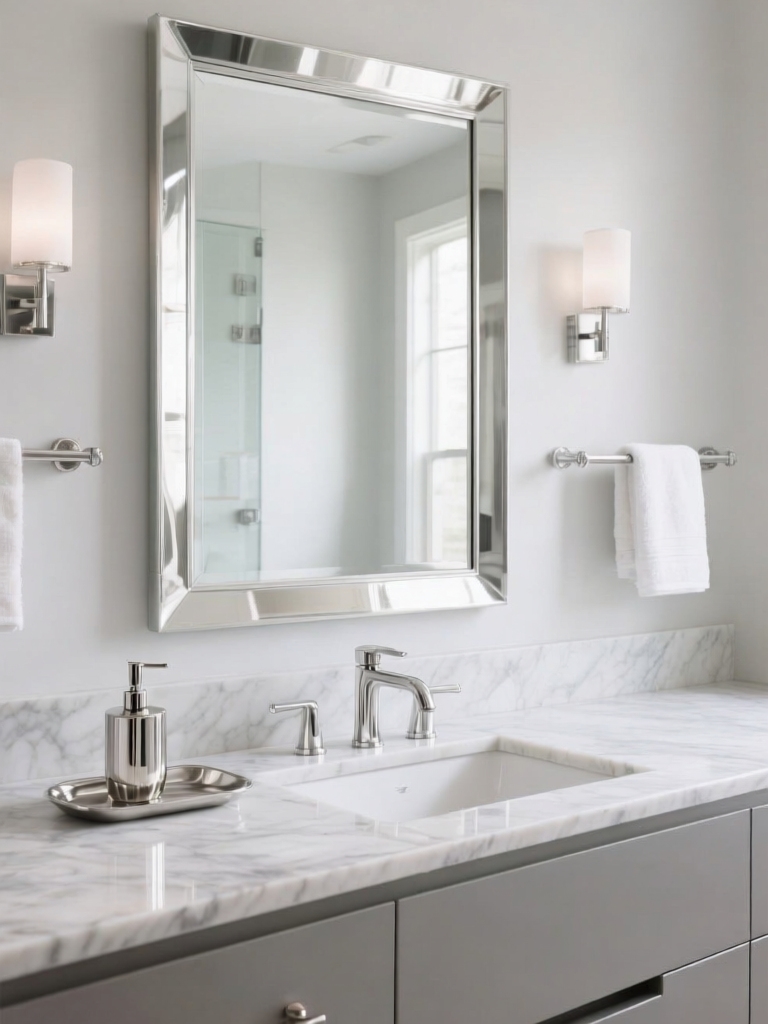
Why do some bathrooms look like a five-star hotel and others look like a builder special, even when the budgets are close? After years of styling both, I can tell you it comes down to a handful of design moves the eye registers as luxury. It comes down to a few design principles: cohesion, restraint, scale, and good light. Once you know them, you can fake the high-end look almost anywhere.
These 17 bathroom decor ideas are the designer elements I lean on to make any space look expensive. Below you will find the five that do the heavy lifting, a timeless palette, restrained metallics, layered texture and light, and an oversized mirror, plus the quiet principles that tie them together. For the budget-by-budget shopping side, pair this with these expensive-look decor ideas; this one is about the design itself.
The Designer Elements, in Short
| Element | What it does | Budget version |
|---|---|---|
| Timeless palette | Cohesion that never dates | Two warm neutrals plus white |
| Oversized mirror | Scale and bounced light | A large frameless mirror, $80 to $250 |
| Layered light and texture | Depth and a hotel glow | Warm bulbs plus plush textiles |
Timeless Luxury Bathroom Design Principles
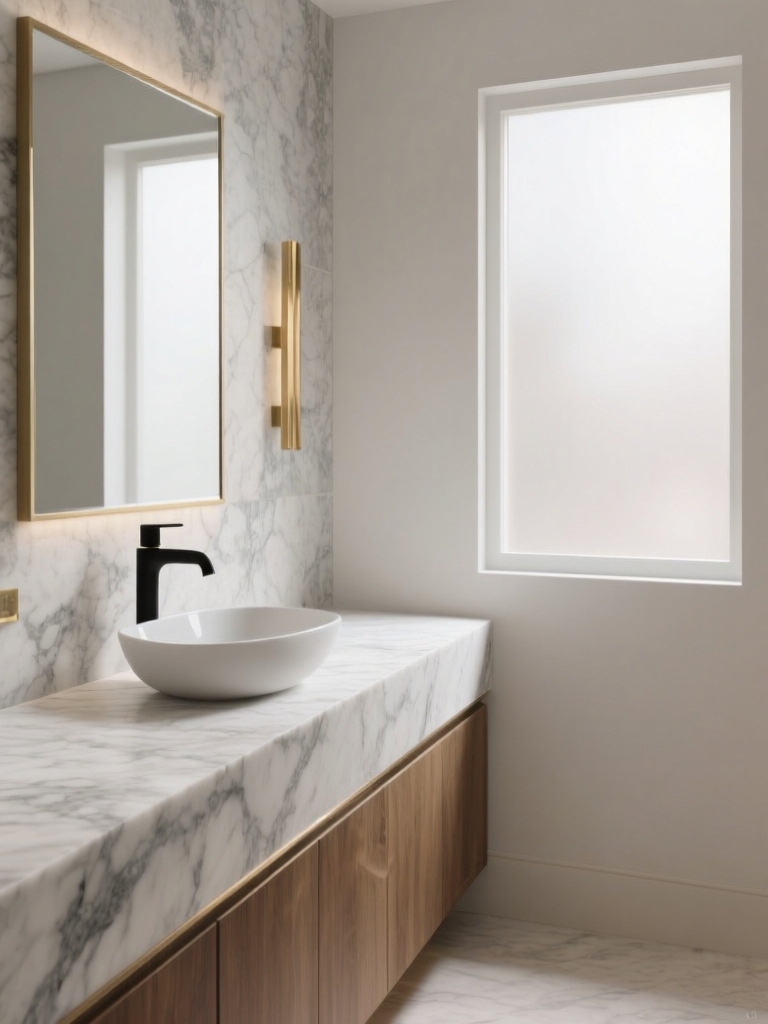
Expensive-looking bathrooms almost always follow the same quiet rules, and none of them cost money. The materials can be modest; the discipline is what makes the room feel custom. These are the principles I check first on every project:
- Cohesion: a tight palette and one repeated metal make the room feel planned and intentional.
- Scale: one generous element, usually the mirror, signals confidence and quality.
- Restraint: clear surfaces and negative space are the quiet hallmark of a luxury room.
Luxe Neutrals and Metallic Accents
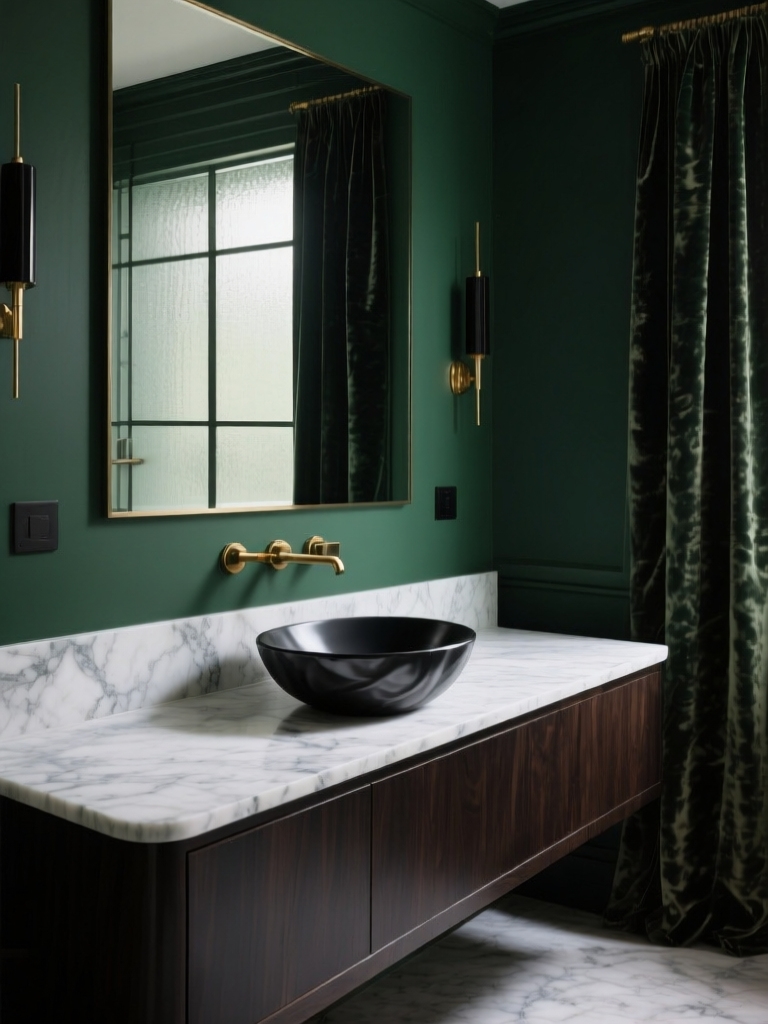
A sophisticated neutral palette is the foundation of nearly every high-end bathroom, because warm, quiet color feels considered and never goes out of style. I build on greige, soft white, and taupe, then let one warm metal add the glint of luxury. The palette stays calm, and the metal does the talking.
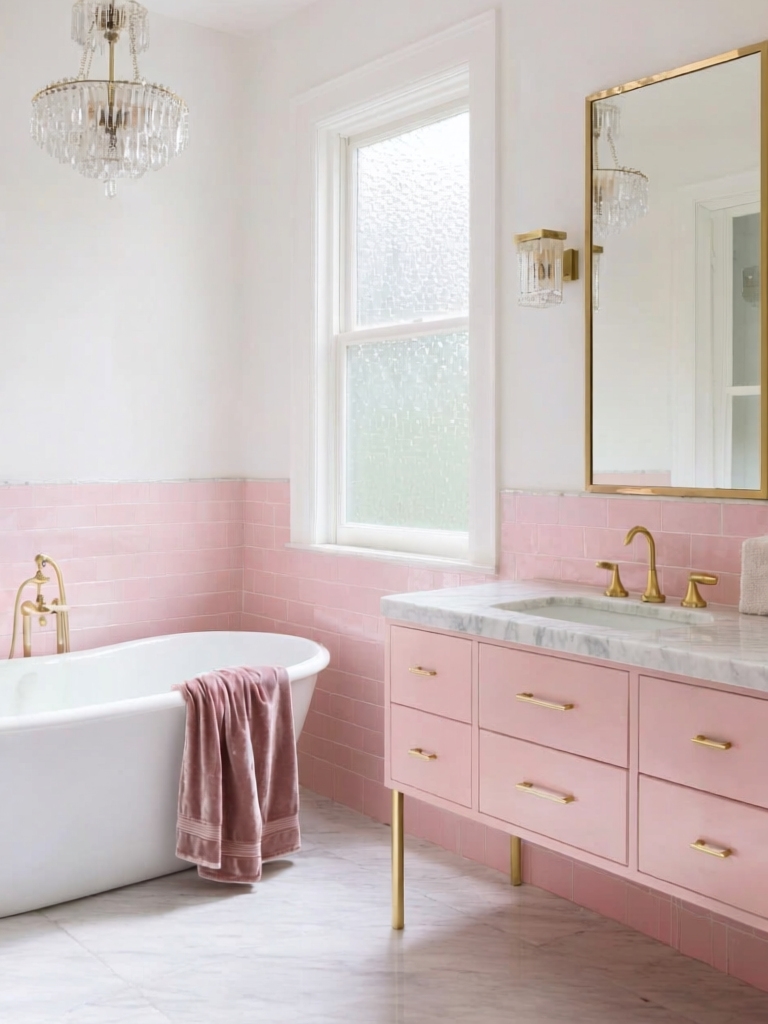
Metallics are where most people either underdo or overdo it. The move is one finish, repeated, so brass or bronze on the faucet, the hardware, and the mirror frame ties the whole room together. A single consistent metal looks intentional and rich; three competing ones look like an accident. Plan the color story the way you would any color-by-mood scheme.
- Build on warm neutrals like greige, taupe, and soft white for a timeless base.
- Choose one warm metal and repeat it across faucet, hardware, and frame.
- Keep the metal to accents so the glint feels deliberate and refined.
Two designer ideas worth knowing:
📖Negative space
The empty, uncluttered areas around objects; luxury rooms protect it instead of filling it.
📖Continuity
Carrying one material or color across surfaces so a room feels designed as a single whole.
Textured Layers That Add Depth
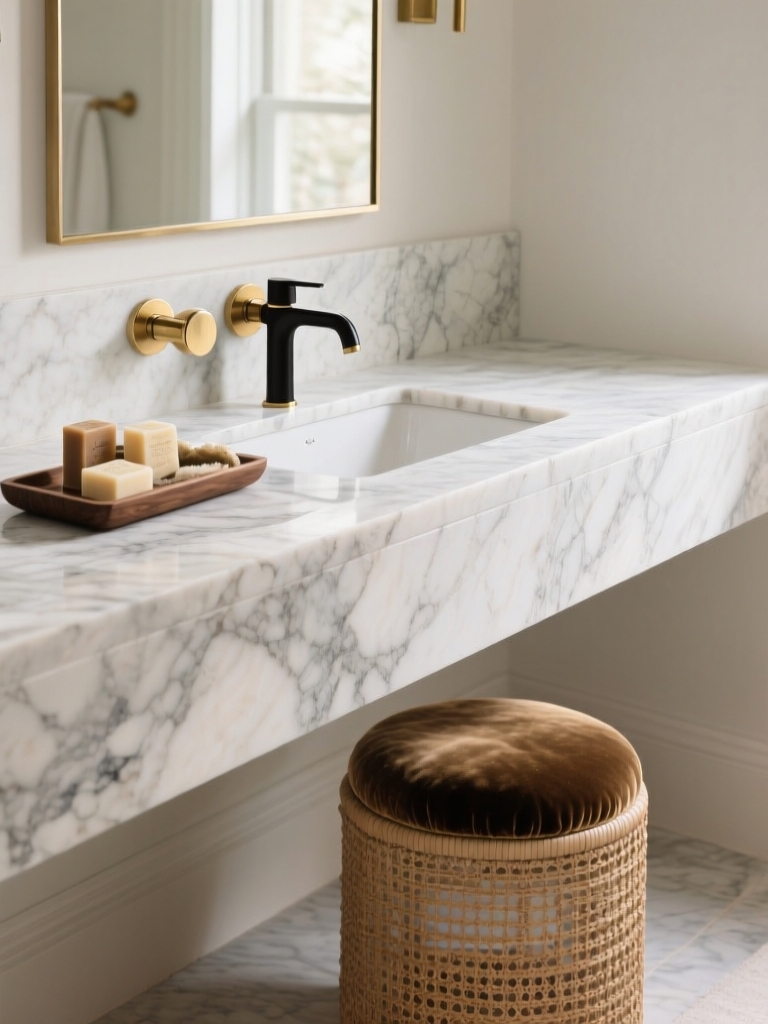
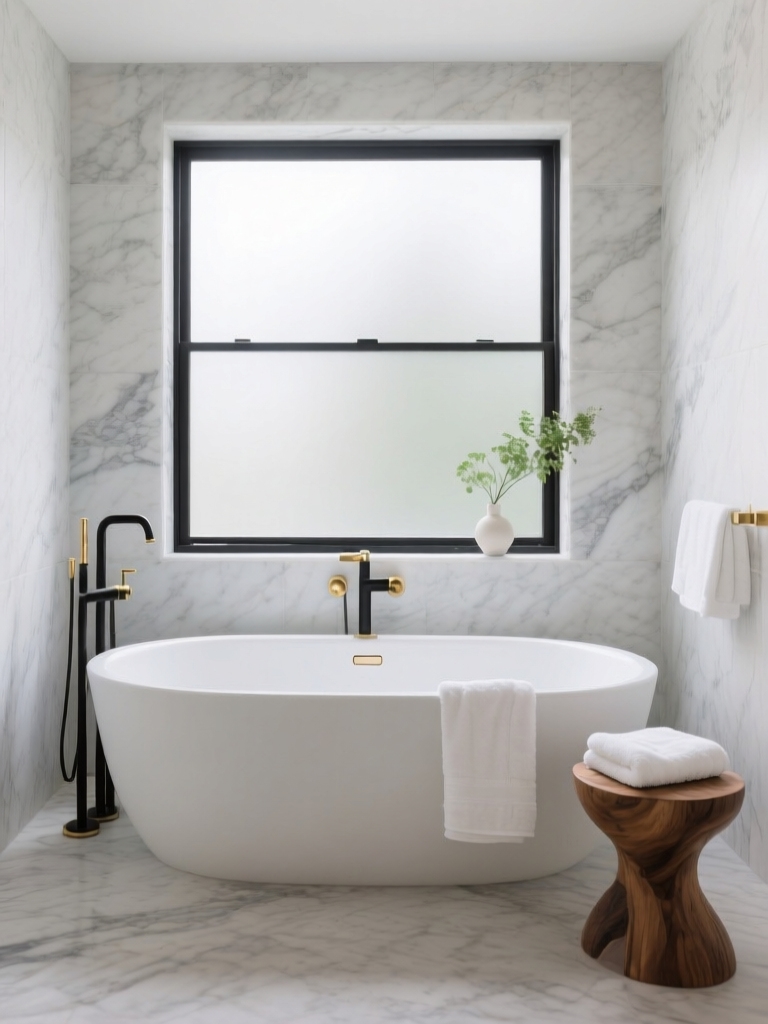
Texture is the element that separates a flat budget bath from a rich-feeling one, and it is almost free. When a room is all smooth tile and glossy surfaces, it falls flat. Layering materials that feel different, a nubby linen towel, a wood stool, a stone tray, a woven basket, gives the eye depth to travel across even in a quiet palette.
Contrast the Finish, Not the Color
The move designers use is contrasting the finish rather than the color. A honed stone tray on a lacquered vanity, a coarse linen towel beside a polished faucet, a soft wool rug underfoot. Those quiet finish contrasts are what make a monochrome room feel layered and expensive.
Bring in one natural material to warm the whole thing. Wood, rattan, stone, or a living plant adds organic texture that hard bathroom surfaces lack. When a plain white bath needs to feel custom, adding two or three textures is almost always my first answer.
Layered Illumination for Ambiance
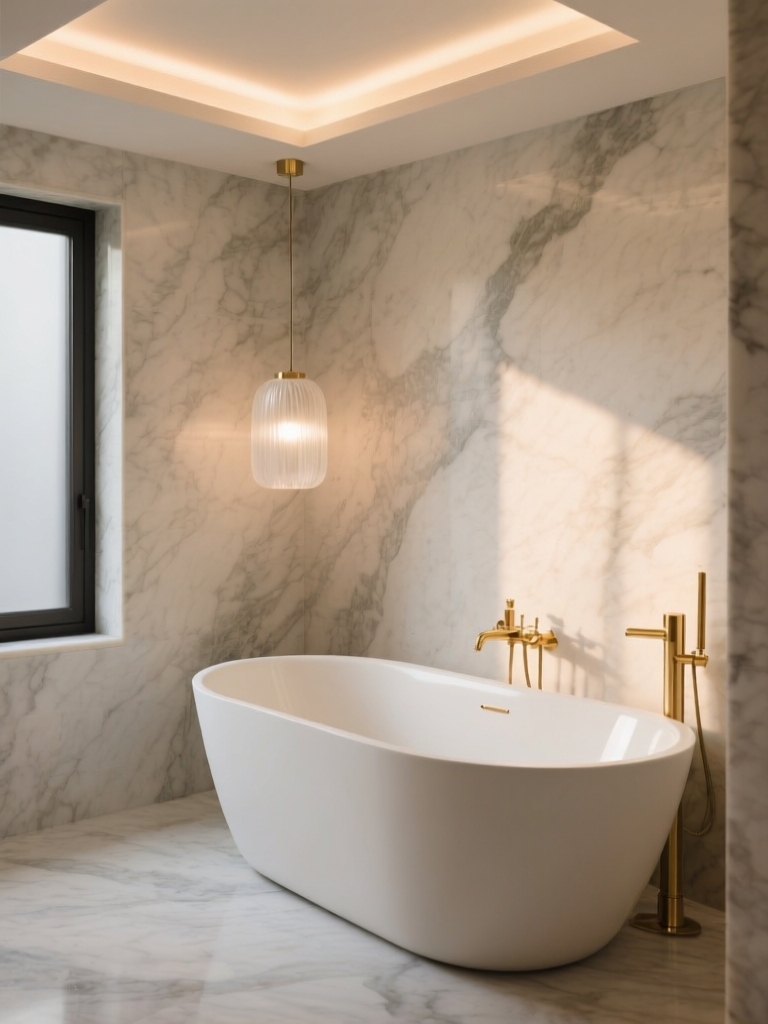
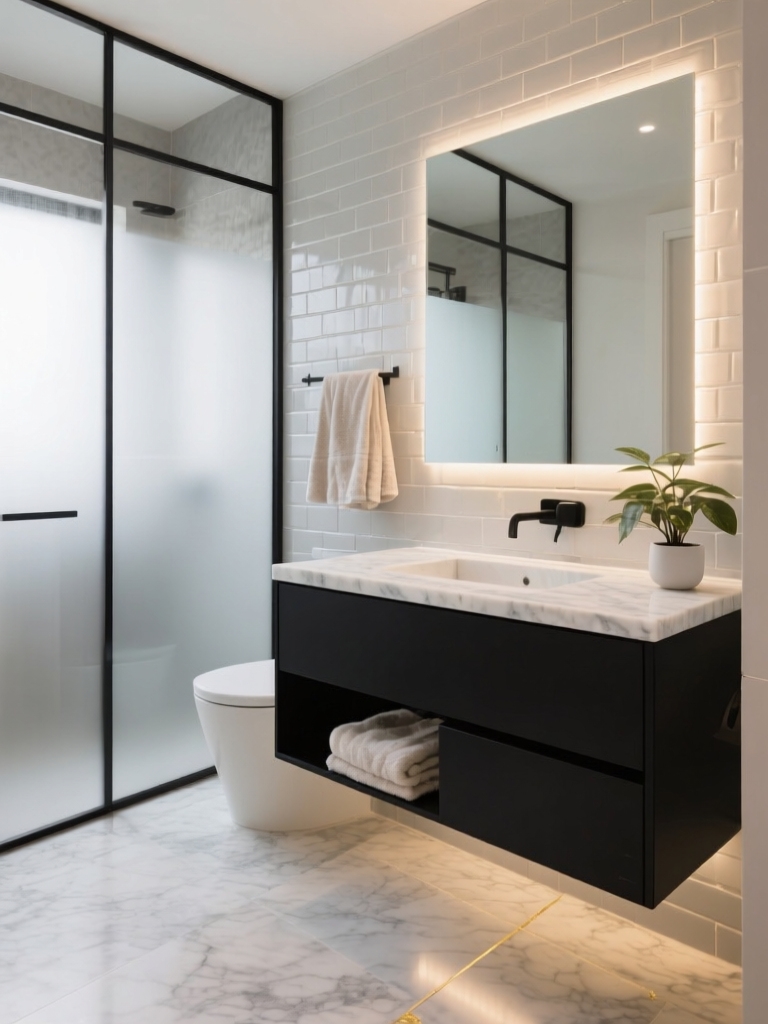
Lighting is the element that fakes luxury fastest, because expensive rooms are never lit by a single cold fixture. Designers layer three jobs, ambient, task, and accent, and keep the color warm so every finish glows. The same bathroom feels twice as costly the moment you swap a cool overhead for warm, layered light.
Warmth and control do the work. I spec warm 2700K to 3000K bulbs and put them on a dimmer, so the room can go bright for a morning routine and low for a spa-like soak. That flexibility is exactly what a luxury hotel bathroom gives you. Sort the fixtures by lighting tone before you buy so the warmth stays consistent.
- Layer ambient, task, and accent light instead of one flat overhead.
- Use warm 2700K to 3000K bulbs so every metal and surface glows.
- Add a dimmer for hotel-style control from bright to candlelit.
🅰️Oversized mirror
The single biggest fake-luxury move. Adds scale, bounces light, and makes a small bath feel grand. Best first spend at $80 to $250.
🅱️New faucet
A close second. The jewelry of the sink, and a warm-metal one upgrades the whole vanity. Costs more, $80 to $200, and takes a little plumbing.
Mirror Size and Placement That Impress
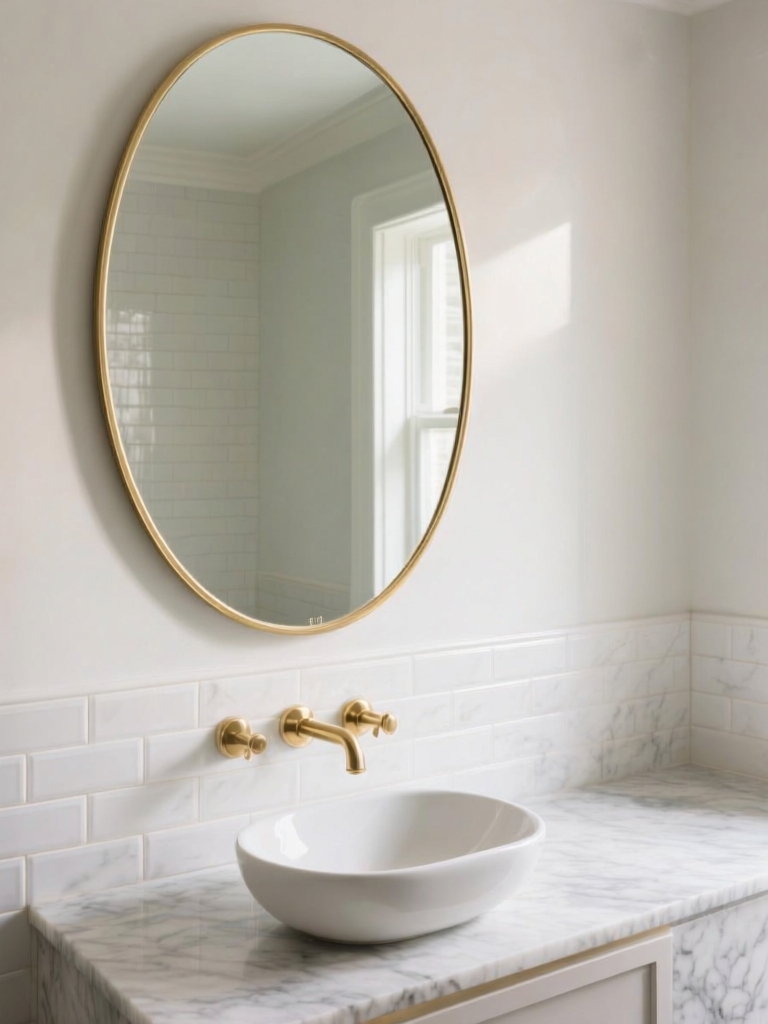
If I could change only one thing in a budget bathroom, it would be the mirror, because nothing fakes luxury like scale. A small builder mirror shrinks a room, while one oversized mirror, going nearly wall to wall or floating large above the vanity, instantly makes the space feel grander and more designed. A big frameless mirror runs just $80 to $250.
Go Bigger Than Feels Safe
Placement multiplies the effect. Hang the mirror opposite your best light source so it bounces brightness deep into the room and doubles the sense of space. In a windowless bath, a big mirror set across from the light is the best way to fake daylight, and it makes the whole room feel more open and costly.
Frame choice sets the tone. A warm-metal frame adds a jewelry-like accent, while frameless keeps a small room airy and modern. Either way, go bigger than feels safe, since an undersized mirror is the fastest giveaway of a budget bath. Steal a few mirror ideas worth copying for placement.
Symmetry and Negative Space
Two invisible principles do more for a luxe look than any single object: symmetry and negative space. The eye finds symmetry calming and expensive, so I pair sconces on either side of the mirror, center the art, and balance the vanity. That order is what makes high-end rooms feel serene the moment you walk in.
Negative space is the harder one to honor, because the instinct is to fill every surface. Luxury rooms leave room to breathe. A clear counter with one beautiful object on it looks far more expensive than the same counter crowded with bottles. Empty space signals confidence.
I tell every client that editing is free and powerful. Pulling half the items off a vanity and grouping the rest on a tray costs nothing and instantly upgrades the room. The discipline to stop adding is, honestly, the cheapest luxury move there is.
Continuity: One Material, Carried Through
Continuity is the quiet move that makes a bathroom look custom and intentional. When one material or color flows from the floor up a wall, or the same tile wraps the shower and the niche, the room feels designed as a whole. Random breaks and switches make a space feel choppy and cheap. Designers carry one element through to create that smooth, intentional feel.
You can build continuity from small repeats. Use the same brass on the faucet, the sconce, and a shelf bracket, or echo one stone tone across the counter and a floating shelf. That repetition is what makes a room feel like a designed whole rather than parts assembled one purchase at a time.
- Carry one tile or color across two surfaces for a custom, flowing look.
- Paint wall and ceiling the same tone to blur edges and add height.
- Repeat your accent color in three spots so the room feels tied together.
Hotel-Style Finishing Touches
The last few percent of the luxe look is the finishing, the small hotel touches that signal someone cares. A stack of thick white towels folded or rolled neatly, a tray for the daily essentials, a single orchid or a trailing plant, and a softly scented candle all say five-star for very little. These touches cost almost nothing and land instantly.
Decanting is the easy upgrade people skip. Pouring soap and lotion into matching glass or ceramic pumps hides the loud drugstore labels and makes the counter look curated. A row of matched bottles is one of the most expensive-looking, least expensive tricks in the book.
Keep the finishing edited and consistent. Three beautiful touches beat ten random ones, and a single repeated metal across them keeps it cohesive. Style the surfaces with the same restraint you would bring to any vanity counter and stop while it still feels calm.
Keep the Expensive Look Sharp
A luxe look only holds if it stays clean and edited, since grime and clutter are the quickest things to cheapen a room. The upkeep is small. I give the metals and the mirror a quick wipe twice a week so they stay bright and spot-free, because hard-water marks dull a faucet fast and show most on a polished finish.
Protect the order daily. A one-minute nightly reset, putting the few stray things back on their tray, keeps the negative space you worked for and stops the counter from creeping back to chaos. That tiny habit is what makes the styled look hold for months on end.
Refresh the soft pieces on a slow rhythm. Wash the towels gently so they stay plush, swap a tired mat once a year, and refresh caulk when it yellows. A little maintenance is the cheapest way to keep a budget bathroom looking like a five-star one season after season.
What to Expect
Set expectations and you will know where the effort pays off. The free principles, cohesion, restraint, symmetry, and editing, cost nothing and deliver the biggest jump in how expensive a bathroom feels. Start there, because they make every other dollar you spend look better.
The small investments, a bigger mirror, warm bulbs, plush towels, and decanted bottles, run a few hundred dollars total and complete the look. None of it is a renovation, and most of it is a weekend. Layer the free principles with a few smart buys and almost any bathroom can feel like a hotel suite.
Look-Expensive Bathroom Questions, Answered
?What is the one change that makes a bathroom look most expensive?
An oversized mirror. Swapping a small builder mirror for a large one adds scale, bounces light, and makes the whole room feel grander and more designed. At $80 to $250 it is the highest-impact, lowest-effort upgrade, especially in a small or windowless bath.
?How do I make a bathroom look expensive without renovating?
Lean on the free design principles first: a tight palette, one repeated metal, symmetry, and a cleared, edited counter. Then add a few small buys, a bigger mirror, warm bulbs, plush towels, and decanted bottles. Cohesion and restraint do more than any pricey material.
?Why does my bathroom look cheap even though it is clean?
Usually cool lighting, mismatched metals, an undersized mirror, or a busy mix of colors. Even a spotless room looks budget with those four. Switch to warm light, pick one metal finish, go bigger on the mirror, and tighten the palette to fix it fast.
?What colors make a bathroom look high-end?
Warm, restrained neutrals, greige, taupe, soft white, with one quiet accent, almost always look the most expensive. Sophisticated, low-contrast palettes feel considered and timeless, while many competing bright colors feel accidental. Add richness with one warm metal rather than more color.
?How much does it cost to make a bathroom look expensive?
The free principles cost nothing, and a complete small-buy upgrade, mirror, bulbs, towels, hardware, and decanted bottles, runs roughly $150 to $400. That is far less than a renovation and usually a single weekend of work for a hotel-level result.
Luxury Is Cohesion, Not Cost
Making a bathroom look expensive is mostly about design discipline, and barely about budget at all. Hold to a timeless palette, repeat one warm metal, layer texture and warm light, hang a mirror bigger than feels safe, and honor symmetry and negative space. Those moves make the eye register luxury whether the tile cost five dollars a square foot or fifty.
Start with the free principles tonight by editing and rebalancing what you already own, then add the oversized mirror and warm light as the budget allows. The more you lean on cohesion and restraint, the more expensive the room looks for less. Pick one element and begin; the rest will follow.