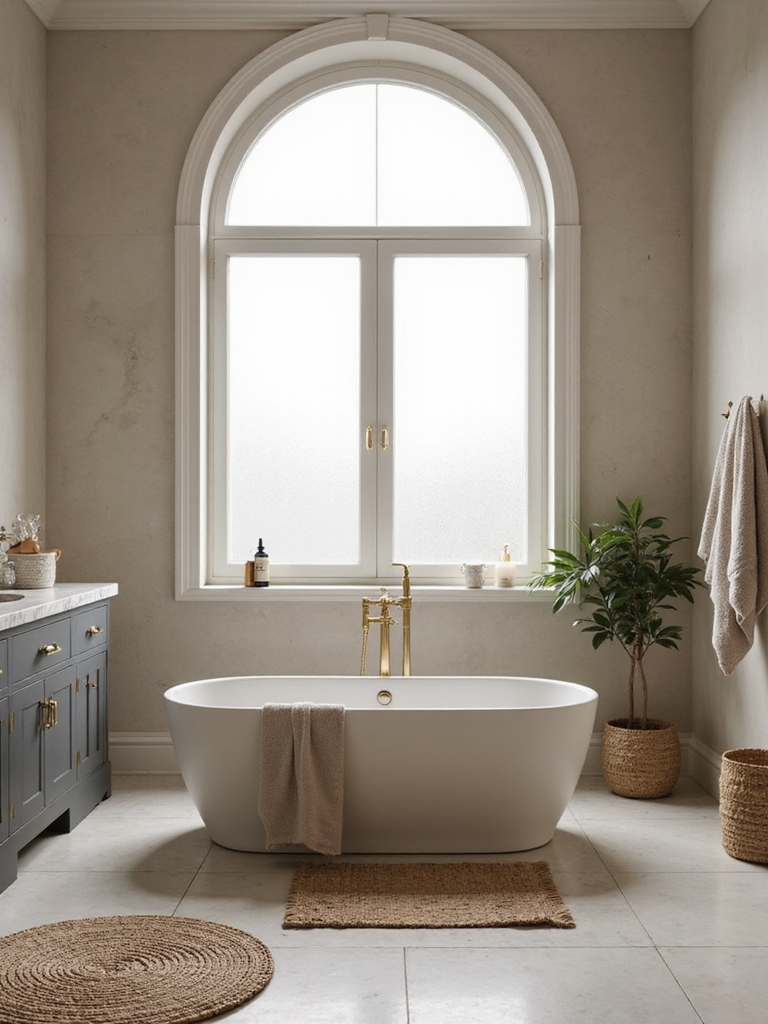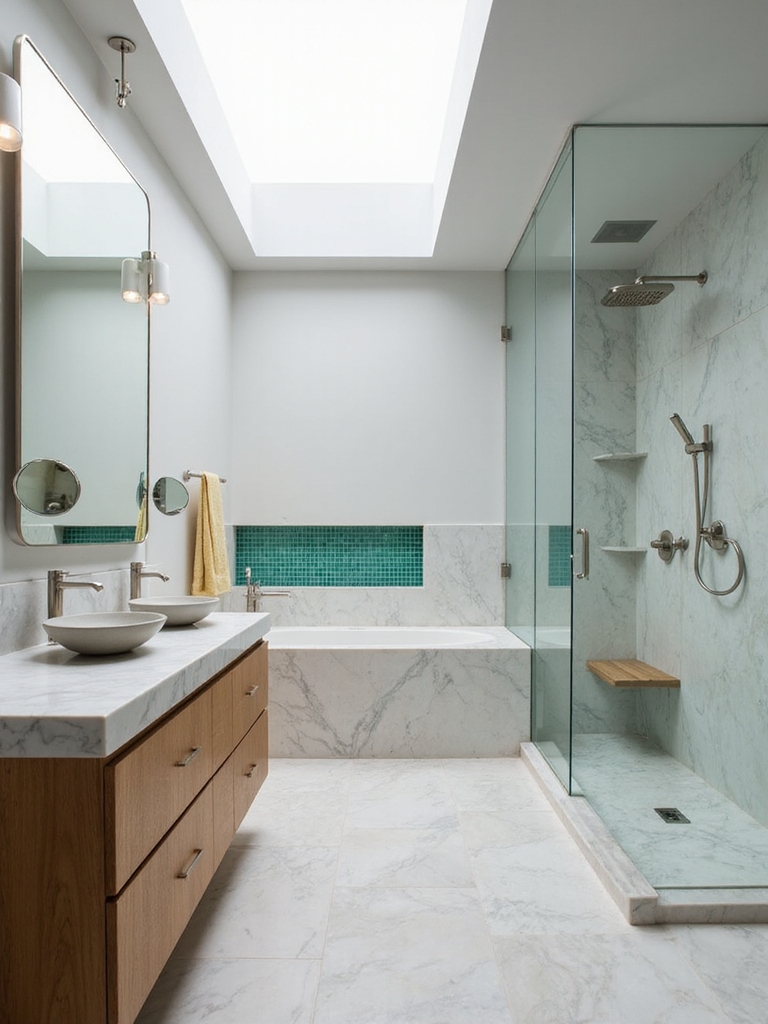

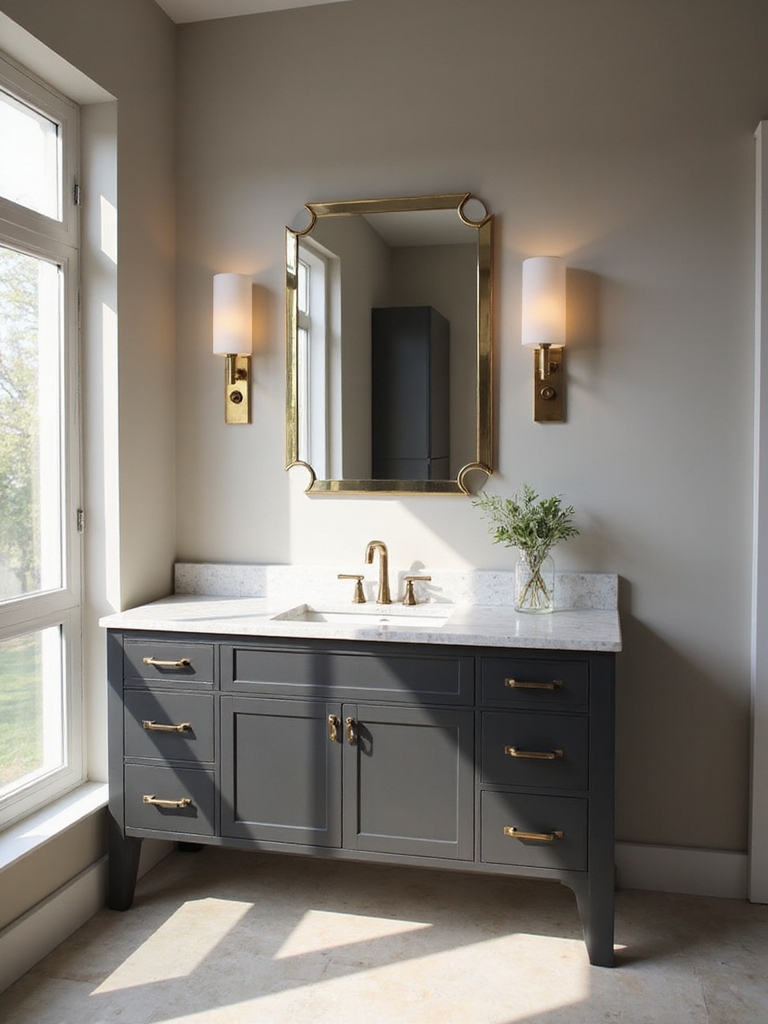
What turns a bathroom cabinet from a box on the wall into the piece that makes the whole room look designed? After styling dozens of baths, my answer is rarely the storage inside; it is the door, the finish, and one or two smart touches you feel every morning. A cabinet can hold the same towels and still look either builder-basic or boutique, depending on choices that cost surprisingly little.
This is the look-and-feel side of cabinetry, the part that sets a room’s whole tone. Below are 20 smart, stylish bathroom cabinet ideas, from floating silhouettes and glass fronts to mirrored cabinets that charge your toothbrush, with honest costs and the trade-offs I share with clients. If you want the organizing-the-inside half, that lives in these storage-obsessed cabinet ideas.
Smart and Stylish, in Short
- Style lives in the door style, finish, and hardware far more than in the storage itself.
- Floating and glass-front cabinets are the two fastest looks for a modern, open bathroom.
- Smart touches like integrated lighting, soft-close, and built-in charging cost little and you feel them daily.
- Match the cabinet’s finish to one thing already in the room so it looks planned, not added on.
What Makes a Cabinet Both Smart and Stylish
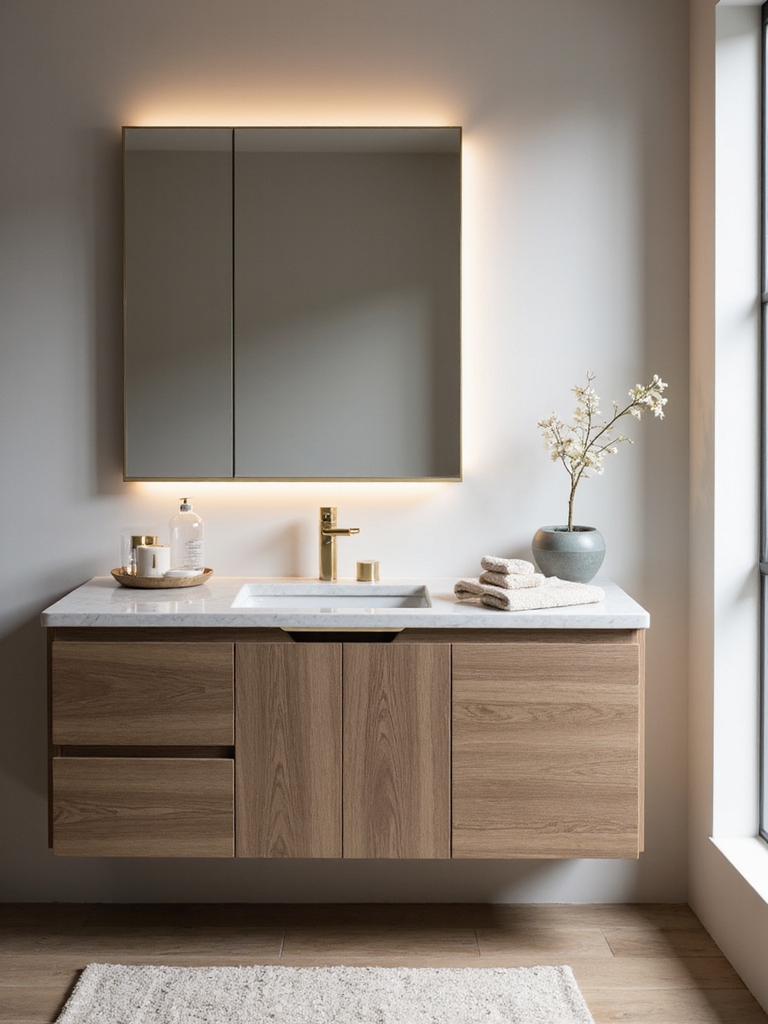
A cabinet earns the word stylish when its look does real work, and it earns smart when its function disappears into that look. The two are not separate goals. The best ones I specify hide their cleverness, so a mirrored door simply looks like a mirror until you notice the outlet tucked inside, and a floating cabinet just looks light until you realize how much it holds.
Three Levers: Door, Finish, Hardware
Style comes down to three levers you control: the door style, the finish, and the hardware. Change any one and the same cabinet shifts mood entirely. A flat slab door in a matte color feels modern, a shaker in soft sage feels classic, and swapping knobs for long brass pulls can update a tired vanity for the price of dinner.
Smart is the quieter half, and it is mostly about the details you touch daily. Soft-close hinges, a light that comes on when you open the door, a charging spot that ends the cord on the counter. None of it shouts, and all of it makes the room feel considered.
Thoughtful Hidden Storage That Disappears
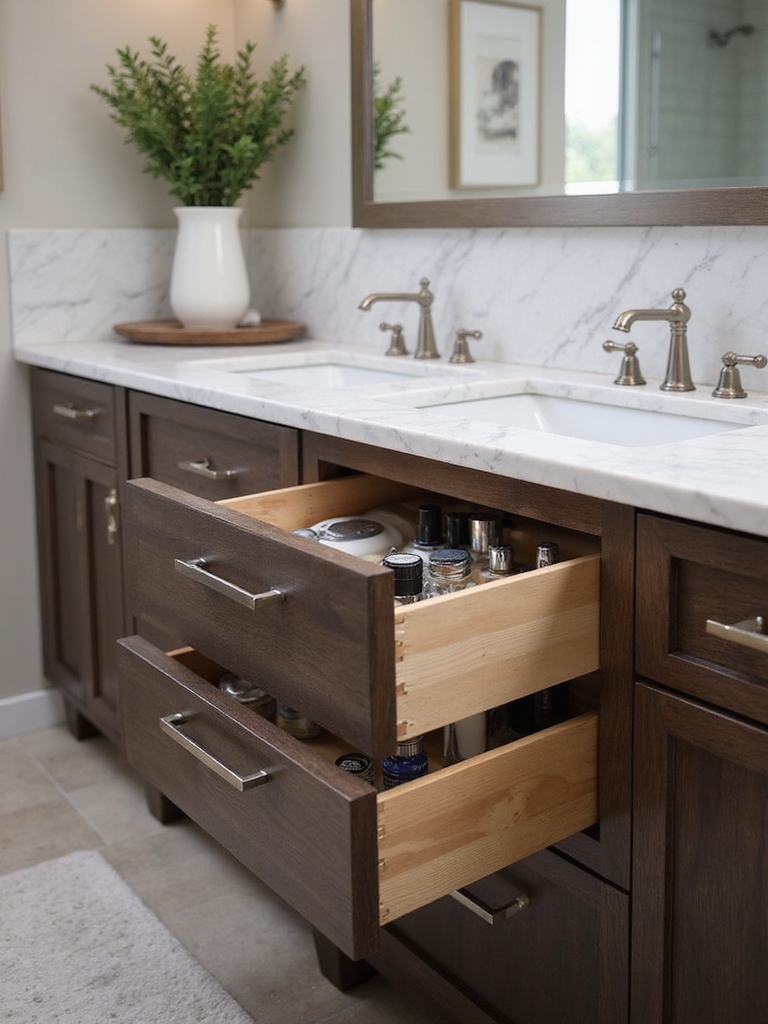
The most stylish storage is the storage you cannot see. When the clutter vanishes behind a clean front, the eye relaxes, and that calm is what makes a small bathroom feel expensive. I favor cabinets with handleless push-to-open fronts and integrated finger pulls, because uninterrupted lines are what give a room that quiet, gallery-clean look.
The styling payoff is immediate. With nothing projecting from the face of the cabinet, the wall looks like one smooth plane, and your eye moves to the things you actually want seen, like a single plant or a beautiful faucet. Style the open surfaces the way you would any vanity counter and keep the rest behind the door.
- Choose push-to-open or finger-pull fronts for an uninterrupted, handle-free face.
- Match the cabinet front to the wall color to make it recede and feel built-in.
- Keep one curated object on top so the clean lines have a focal point.
Not sure which cabinet style fits? Start here:
🎯Small or windowless bath
Go recessed and mirrored to save floor space and bounce light.
🎯Want a modern, open feel
Float the cabinet with hidden hardware so the floor reads clear.
🎯Love to display pretty things
Choose a glass front, but only if you will keep it tidy.
Mirrored Cabinets With Built-In Charging
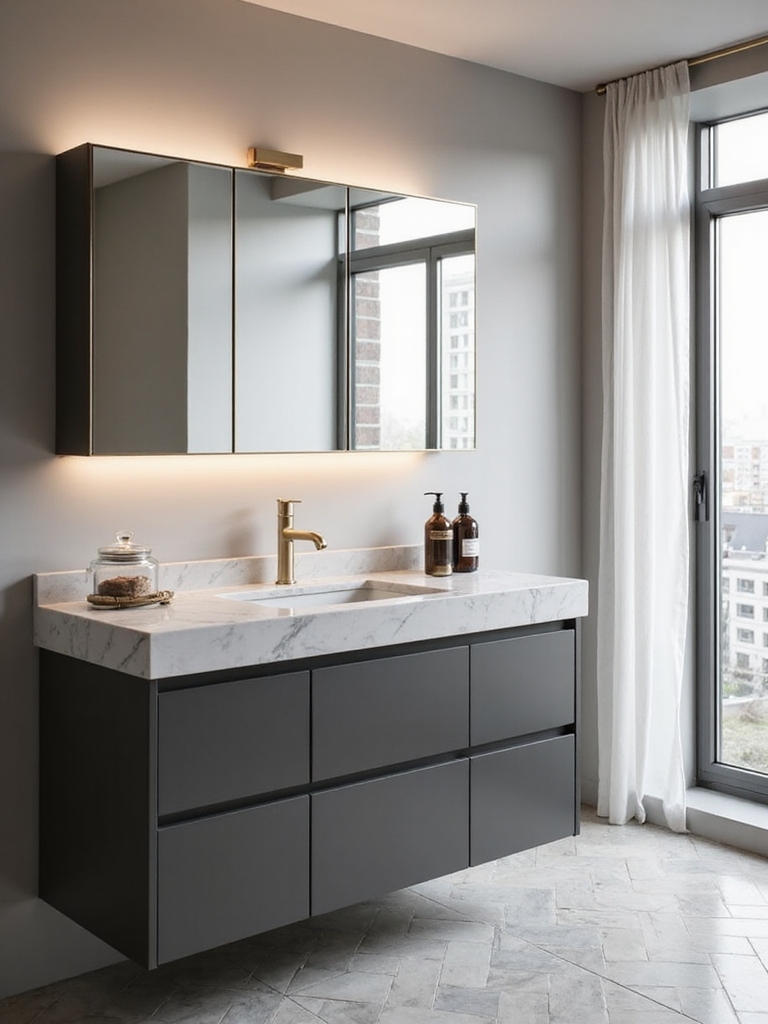
This is my favorite smart upgrade because it solves two problems with one piece. A mirrored cabinet gives you a full mirror, hidden storage, and an interior outlet, so your electric toothbrush, razor, and trimmer charge out of sight instead of cluttering the counter. Versions with built-in charging and lighting run $150 to $500, and they instantly modernize a dated vanity wall.
- Look for an interior outlet or USB so devices charge inside, off the counter.
- Choose front-lit or backlit glass for even, shadow-free light at the mirror.
- Anti-fog and dimmable options are worth the small upcharge for daily comfort.
Recessed Cabinets That Save Floor Space
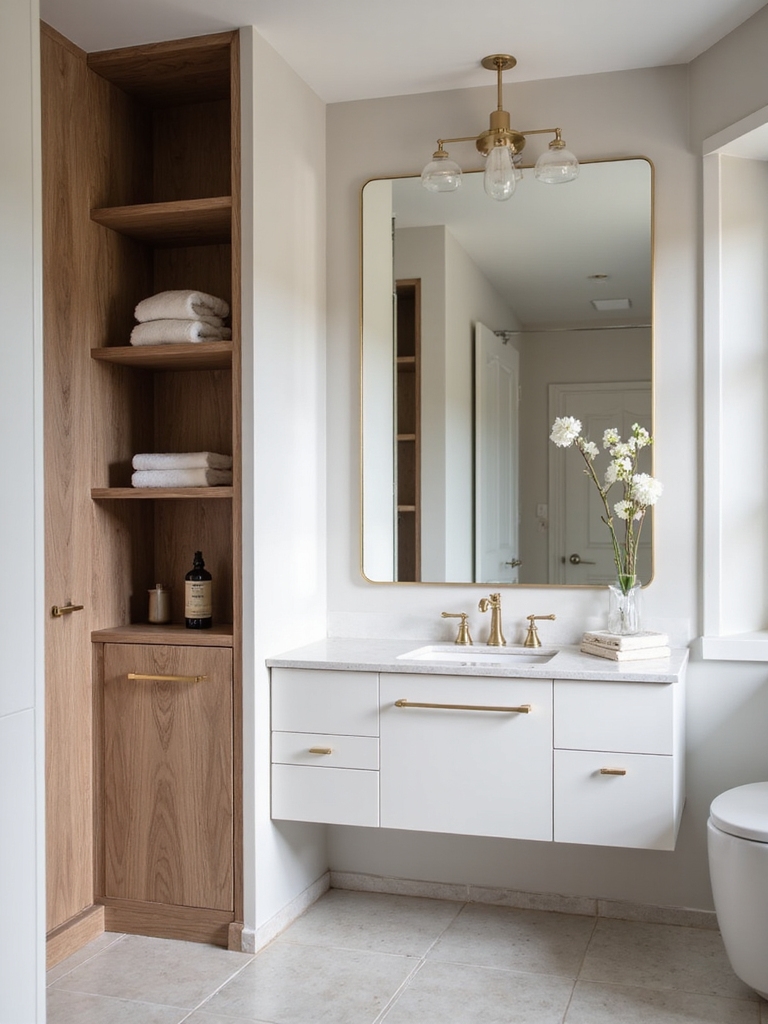
Recessed cabinetry is the stylist’s trick for a tight room, because it sets the storage into the wall and keeps the floor and the sightlines open. A surface-mounted box can feel bulky in a small bath, while a recessed one sits flush and looks architectural, like it was always part of the house. Most run $80 to $300 depending on size and lighting.
The look rewards a little planning. Set at eye level with a mirrored door, a recessed cabinet doubles your light and keeps daily essentials at hand without a single inch of projection. One honest caution: recessing means opening a wall, so confirm there is no plumbing or wiring in the bay first, and bring in a pro if you are not sure.
- Install at eye level so the cabinet works without crowding the counter.
- Pick a mirrored or soft matte front to bounce light in a windowless bath.
- Plan interior shelves around your daily routine before you buy.
The cabinet clients notice first is almost never the one with the most storage. It is the one with the right door and a finish that talks to the rest of the room.
Corner Cabinets for Awkward Nooks
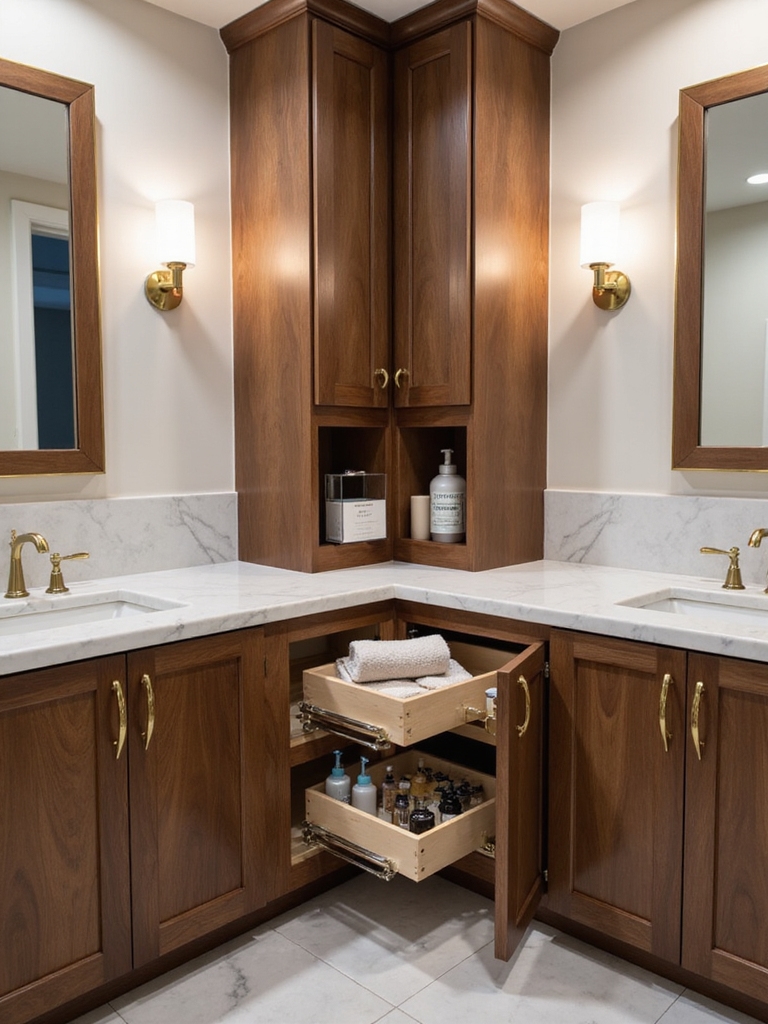
Corners are usually wasted, and a well-chosen corner cabinet turns that dead angle into a stylish feature. The key is fittings that make the depth usable, so nothing vanishes into the back. My go-to setups, easiest to most custom:
- A corner vanity with a curved front softens a tight powder room and frees the walkway.
- A tall, slim corner tower draws the eye up and stores backups out of the main sightline.
- An interior lazy Susan or pull-out tray keeps the angled depth reachable all the way to the back.
Floating and Glass-Front Cabinets for a Modern Look
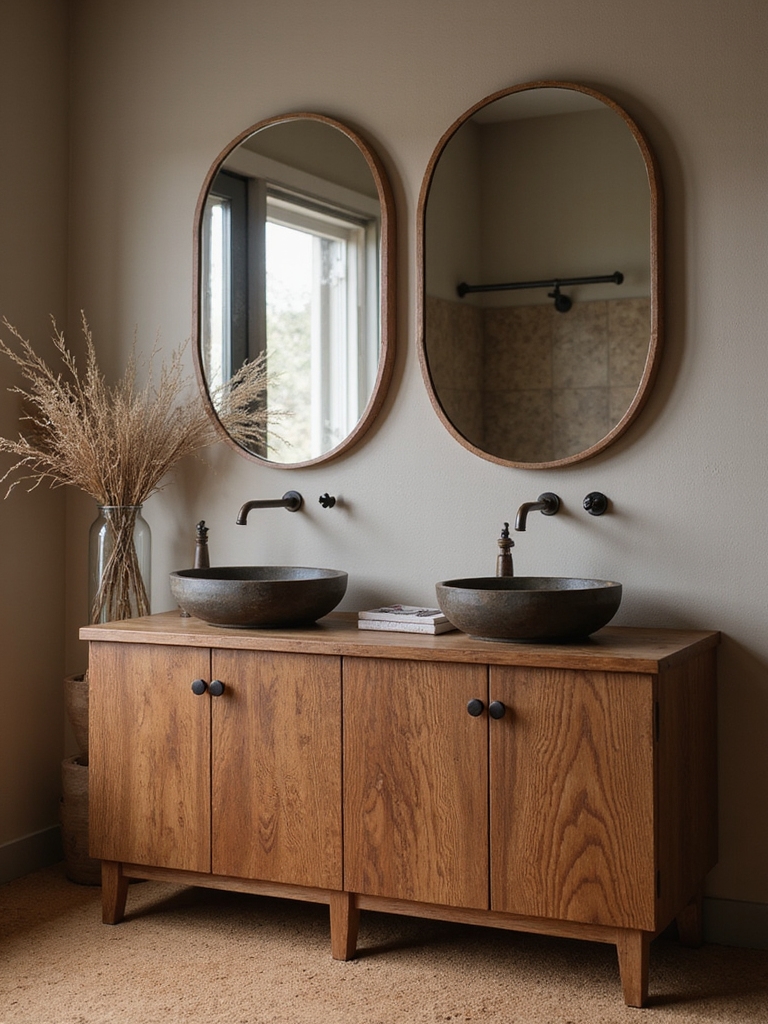
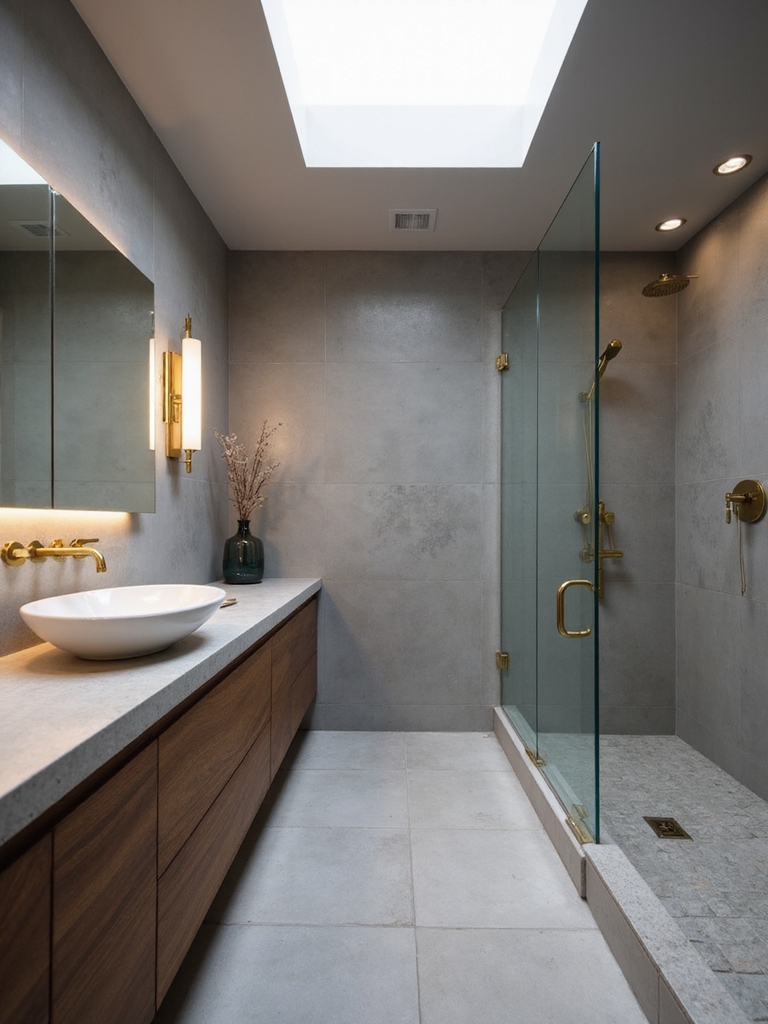
If you want one move that reads instantly modern, float the cabinet. Mounting it off the floor with hidden brackets opens up the space beneath, which makes a small bathroom feel larger and turns mopping into a quick job. A floating vanity runs $300 to $1,200, and pairing it with hidden hardware and warm metals keeps the whole look clean and intentional.
Glass fronts are the other style statement, and they ask a real question of you: display or conceal. Clear or fluted glass shows off pretty bottles and folded linens, which only works if you will keep it tidy, so I steer it toward people who actually enjoy the upkeep. For everyone else, frosted or reeded glass hides the daily mess while still catching light.
The two pair beautifully together. A floating cabinet with a fluted glass front gives you lightness, storage, and a soft glow all at once. Keep the surrounding palette quiet so the cabinet stays the quiet star, the way you would build any color-by-mood scheme.
Finishes, Color, and Hardware That Set the Style
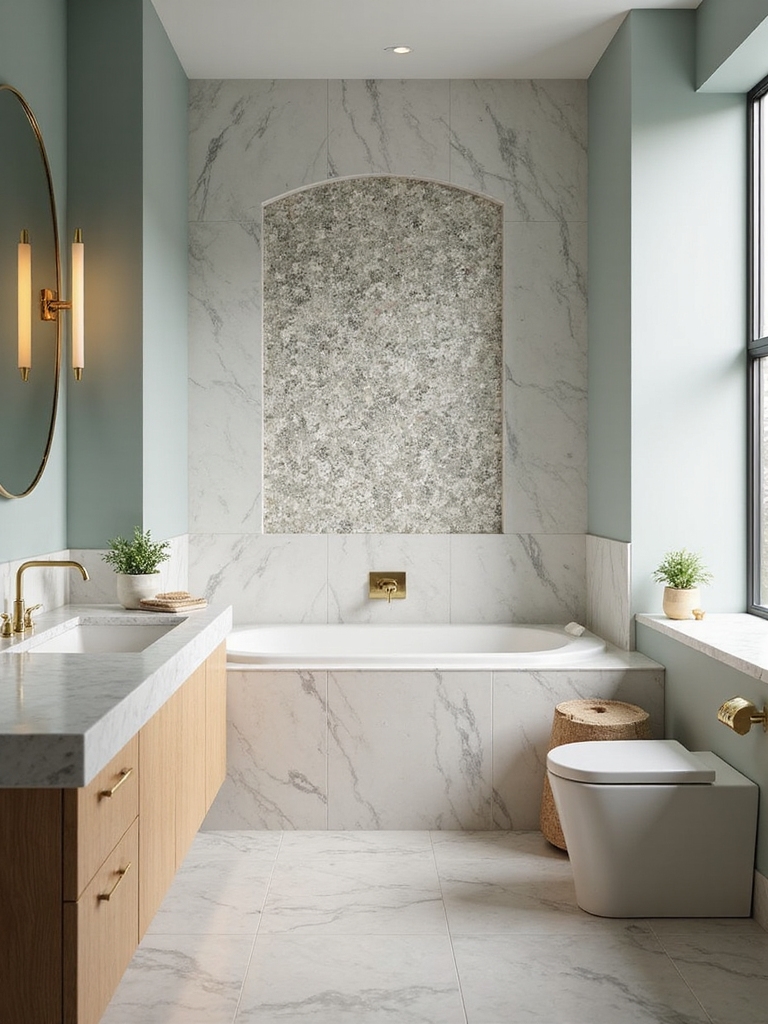
If you only change one thing on an existing cabinet, change the finish and the hardware. A coat of cabinet-grade paint in a moody green or warm greige can transform a builder-basic vanity for under fifty dollars, and a fresh set of pulls finishes the thought. I do it on almost every project. It is the cheapest, highest-impact stylish upgrade in the whole room.
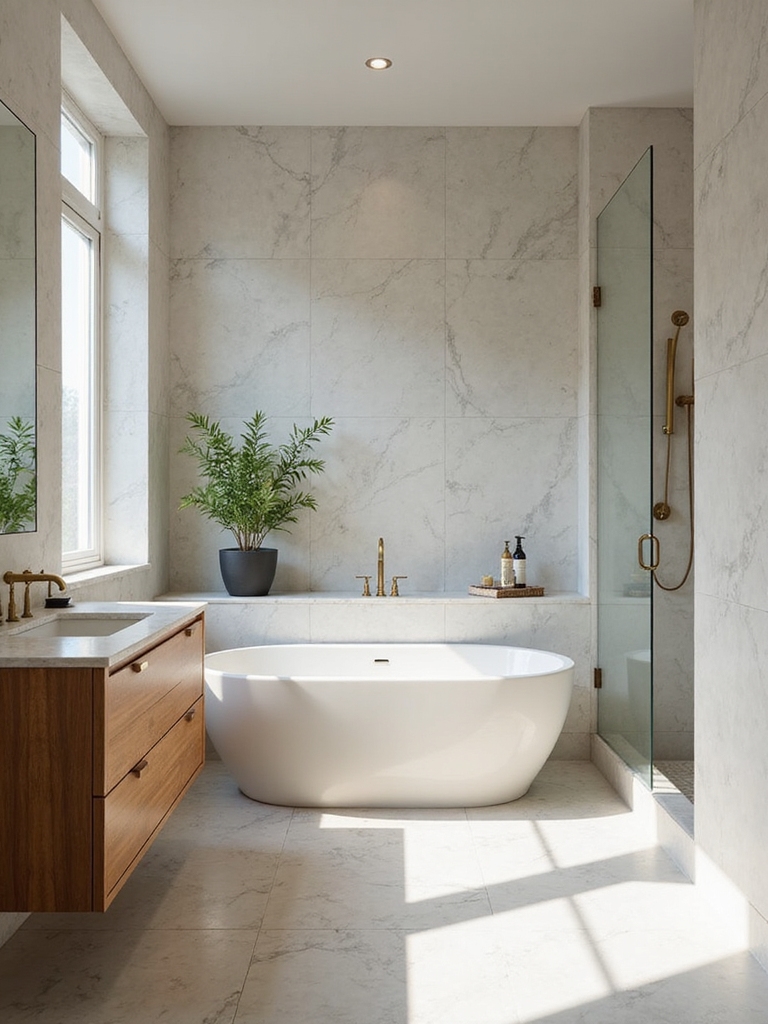
Hardware is the jewelry, so I treat it that way. Picking one metal and repeating it across the pulls, faucet, and light fixtures is what makes a bathroom look pulled together, like one deliberate choice. Warm brass flatters wood and color; matte black sharpens a white or pale palette.
- Repaint a tired vanity in a saturated color for a near-free style reset.
- Commit to one metal finish across hardware, faucet, and lighting.
- Swap knobs for long pulls to instantly modernize a flat or shaker door.
Integrated Lighting and Soft-Close Details
The smartest cabinet details are the ones you stop noticing because they just work. Integrated lighting tops my list: a strip inside the cabinet or under a floating vanity throws a soft glow that flatters faces and doubles as a night light. Warm bulbs in the 2700K to 3000K range keep it cozy, and a motion or door-triggered switch means you never fumble in the dark.
Soft-close hardware is the other detail worth every penny. Hinges and slides that catch and ease shut protect the cabinet from years of slamming, and at $5 to $15 a hinge they are an easy retrofit on cabinets you already own. The quiet is a small luxury you feel every single day.
Sort your fixtures by warmth before you commit, because mismatched color temperatures undo all of it. A quick pass to coordinate lighting by tone keeps the integrated glow flattering instead of clinical.
What These Upgrades Cost and How Long They Take
Here is the realistic picture, because budget and time decide what you actually do. The cheap, fast wins come first. A finish-and-hardware refresh is a single afternoon and under fifty dollars, and retrofitting soft-close hinges takes me about an hour for a typical vanity with a screwdriver and nothing else.
The mid-tier moves want a bit more. A mirrored charging cabinet is a quick swap once the old one is down, usually a morning’s work, while a recessed unit means opening the wall and is closer to a one-day pro job. I always price the wall-opening ones with a pro quote first, since surprises behind drywall are common.
The big swing is the floating vanity, which is a weekend with a helper or a day for an installer, plus the cabinet cost. None of this is constant upkeep, either: a weekly wipe keeps finishes sharp, and that is the whole maintenance ask. Knowing the time and money up front is what keeps a stylish plan from stalling halfway.
How to Ask Your Stylist
If you are working with a designer or a cabinet maker, the right questions get you a smarter, more stylish result. I tell clients to lead with how they actually use the room. Describe your real morning out loud, and the right cabinet usually designs itself from there. Ask what door style suits your wall, which finish handles your humidity, and where charging and lighting can hide.
Then ask the honest cost questions early. What does soft-close add, is recessing possible in this wall, and where can we splurge versus save? A good pro will tell you which upgrades you will feel daily and which are just markup. For the mirror-and-storage combination specifically, these mirror cabinet ideas are a useful reference to bring to the conversation.
Let the Cabinet Set the Tone
A smart, stylish bathroom cabinet is mostly a matter of the choices people overlook: the door style, the finish, the one metal you repeat, and a couple of quiet smart touches you feel every morning. Get those right and the cabinet stops being storage and starts being the piece that makes the room look designed.
Start with the cheapest high-impact move, usually a fresh finish and new pulls, then build toward floating, glass, or a mirrored charging cabinet as the budget allows. Each step nudges the whole bathroom toward that calm, considered look, the kind that quietly tells everyone the room was planned, not just assembled.