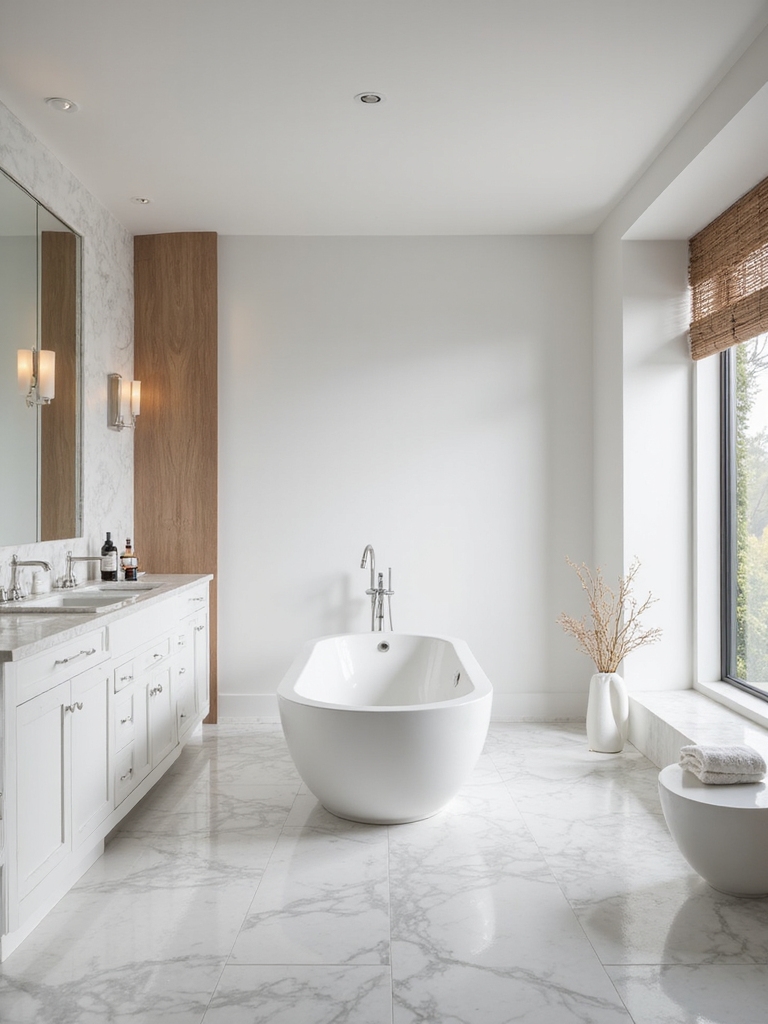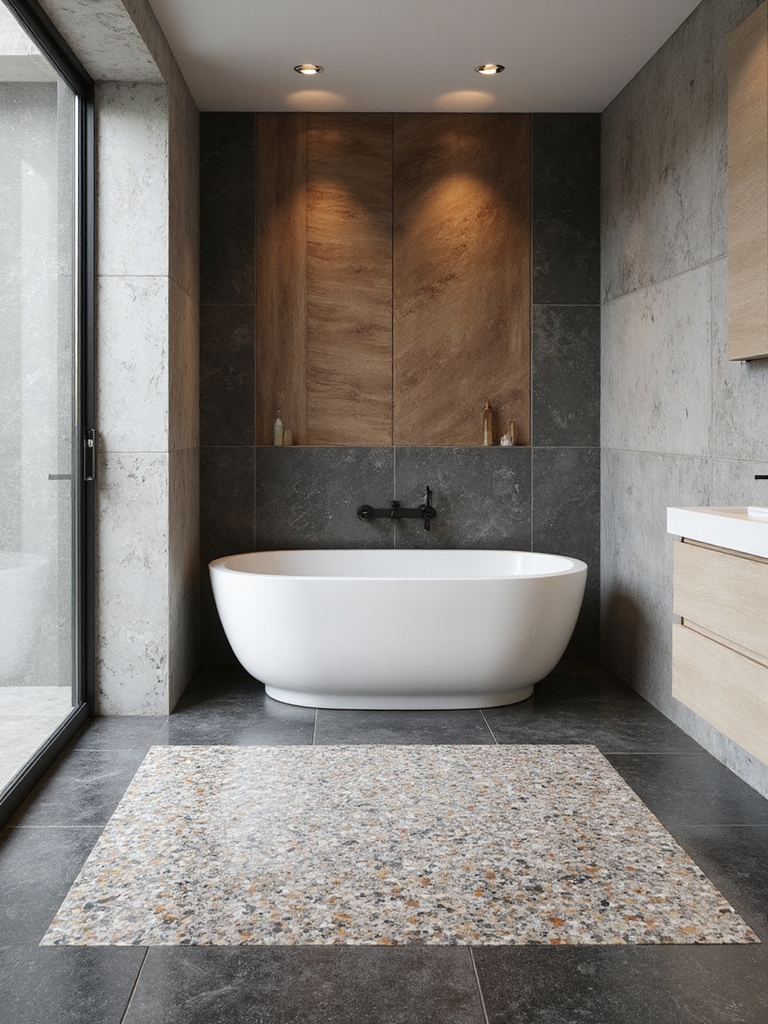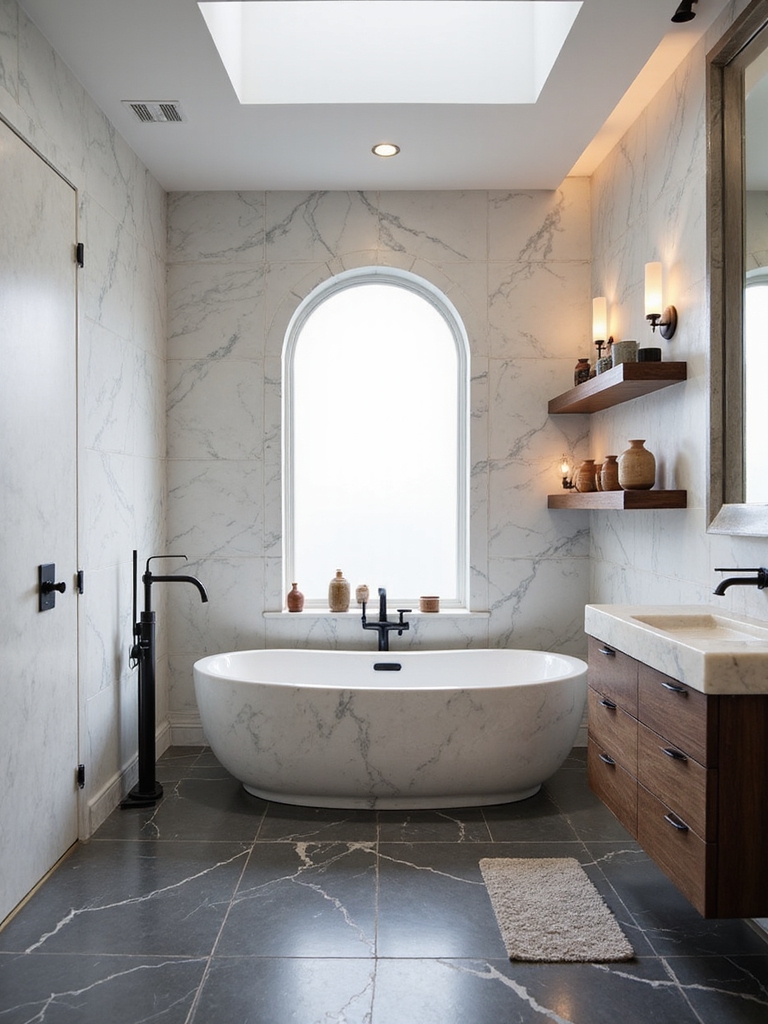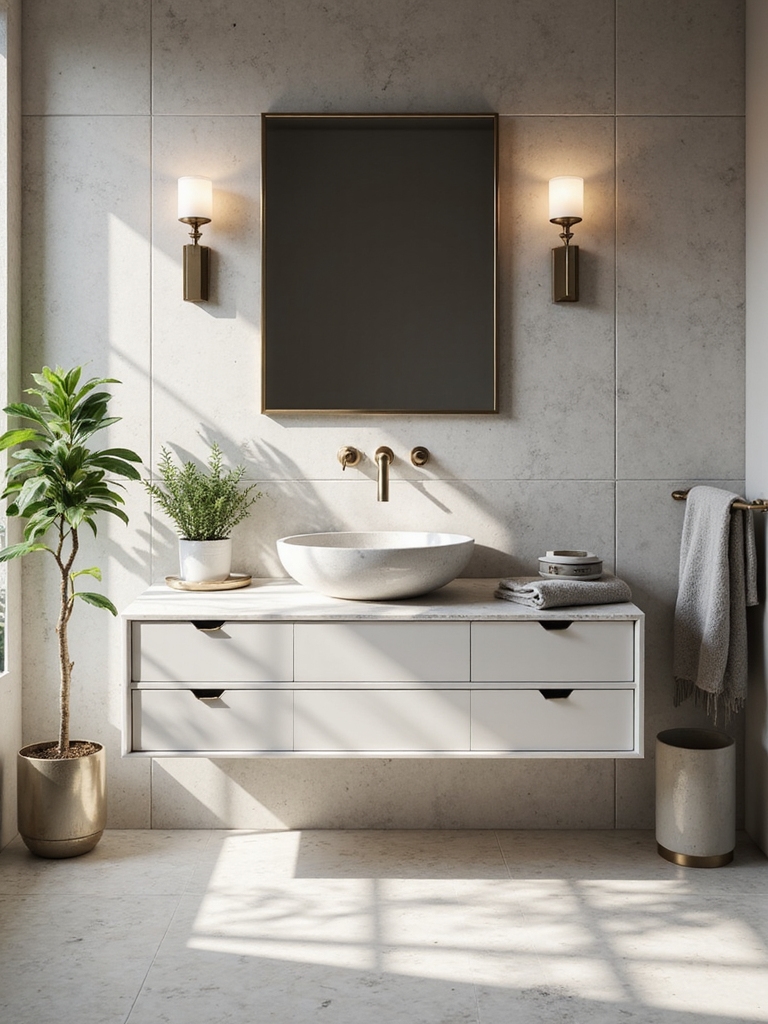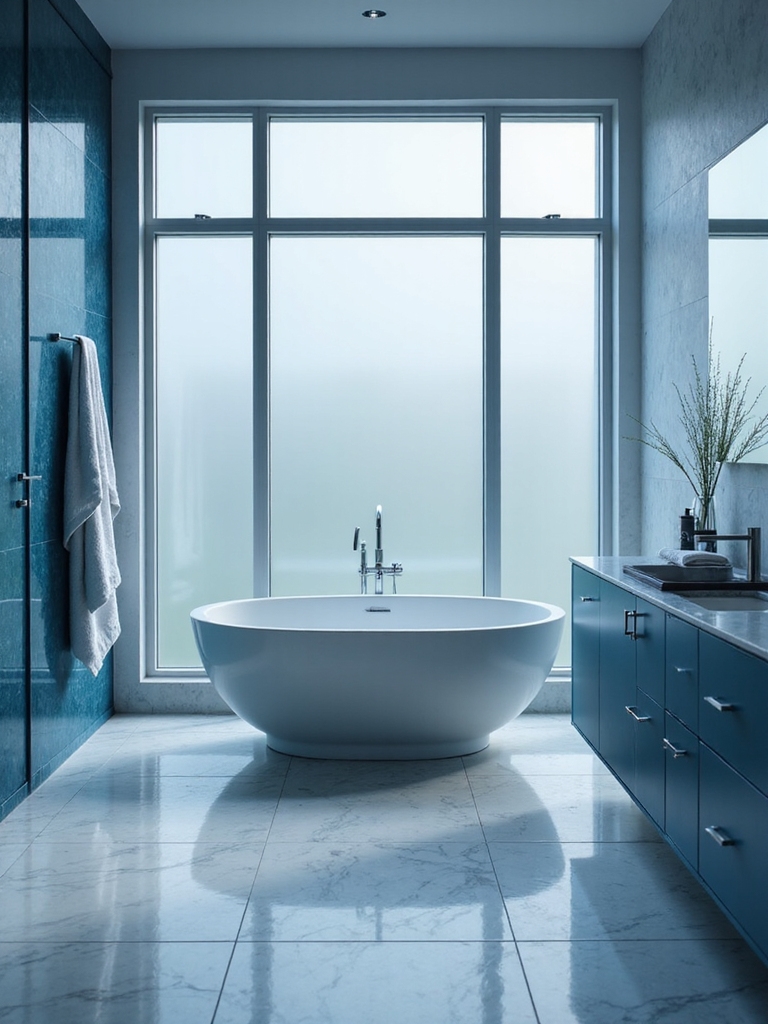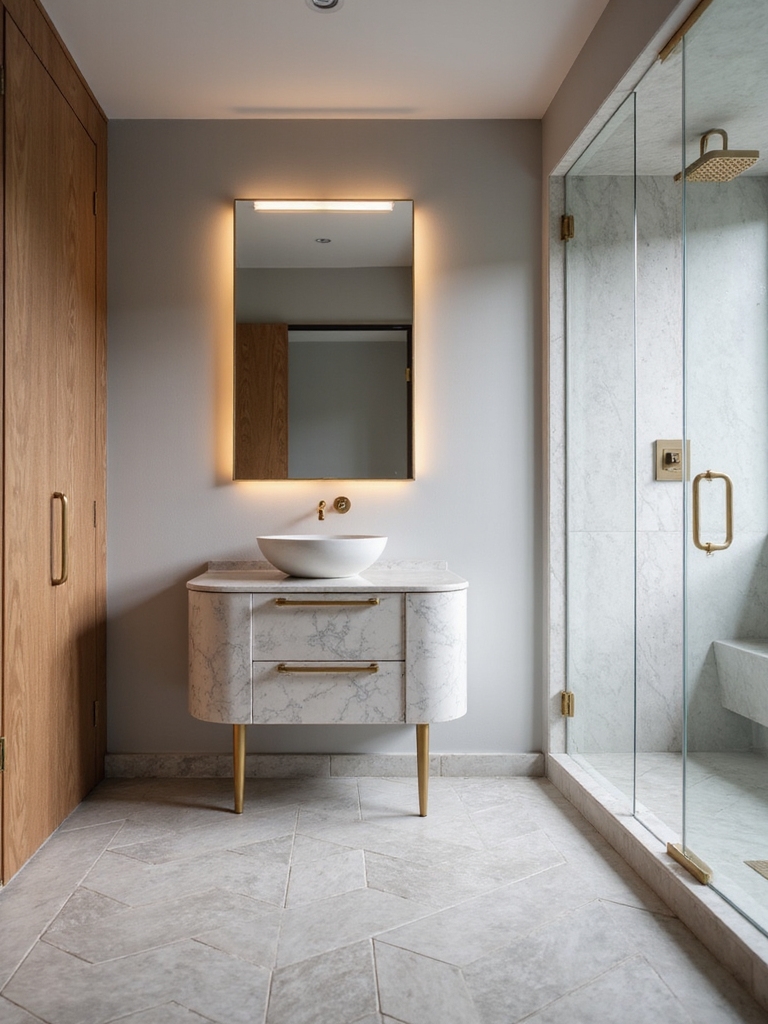

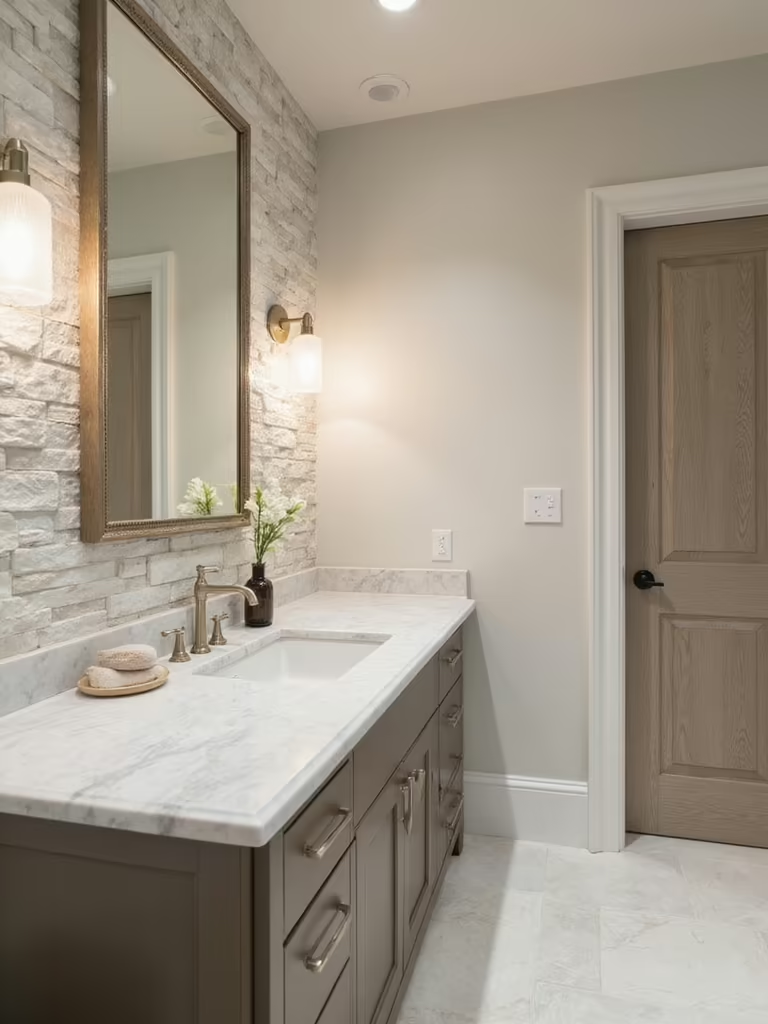
A client once told me her renovated bathroom still felt unfinished, and she could not say why. The fixtures were new, the paint was fresh, the vanity was beautiful on its own. The thing missing was four feet of wall behind the sink, bare and a little sad, where a backsplash should have been pulling everything together.
That strip is the most overlooked square footage in the room, and the most powerful for cohesion. Below are 19 bathroom backsplash ideas that tie the room together, sorted from the safest classics to the bolder statements, with honest costs so you can match the look to your budget and the rest of the space.
Backsplash Basics, Fast
- A backsplash exists to connect your vanity, tile, and fixtures into one look, so match it to what is already in the room.
- Costs swing wide: $2 to $7 a square foot for ceramic subway, up to $15 to $50 for natural stone and glass.
- In a wet zone, epoxy grout and a good seal matter as much as the tile you pick.
- Keep busy patterns to a small area; let a quiet material run longer.
How to Balance Style, Durability, and Budget
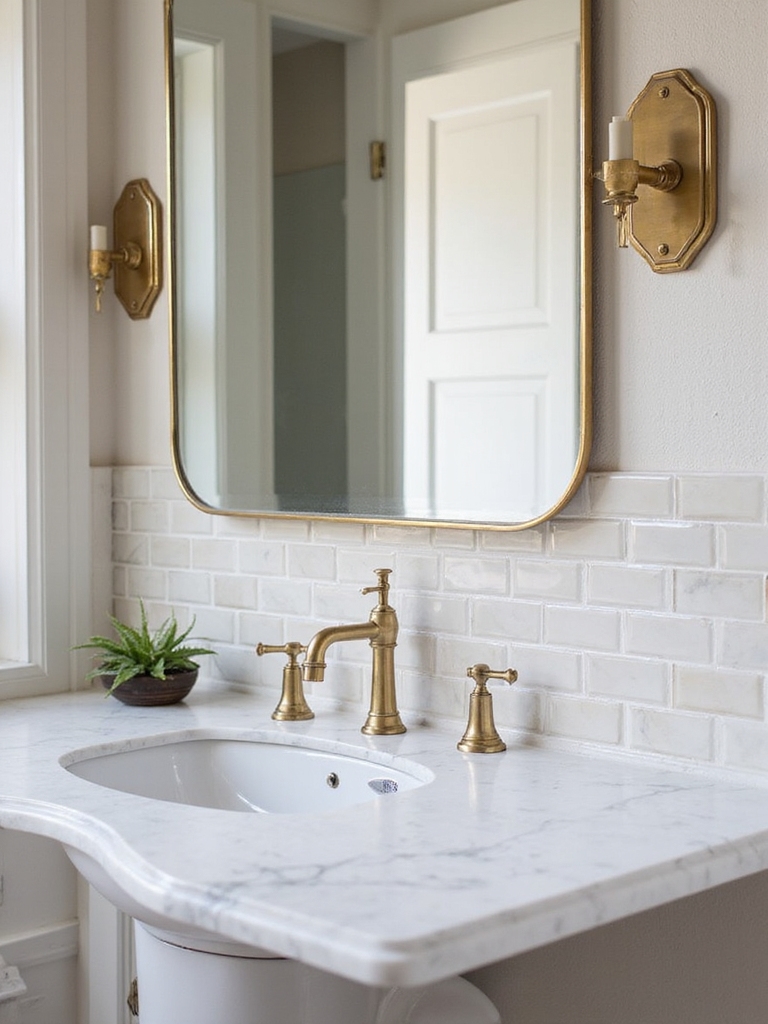
Before you fall for a tile, the backsplash has to earn its spot on three fronts at once. The look has to talk to your fixtures, the material has to survive splashes and humidity, and the price has to fit a wall that is usually small enough to splurge on. I walk every client through the same quick filter before we shop. It takes two minutes.
- Cohesion first. Pull a color or finish from your vanity, floor, or hardware so the backsplash feels planned, not added on.
- Then durability. Glazed porcelain, ceramic, and glass wipe clean; natural stone needs sealing to stay easy.
- Then budget. A backsplash is small, so a pricier tile here costs less than you fear and lands a big payoff.
Timeless Ceramic Tile Patterns That Last
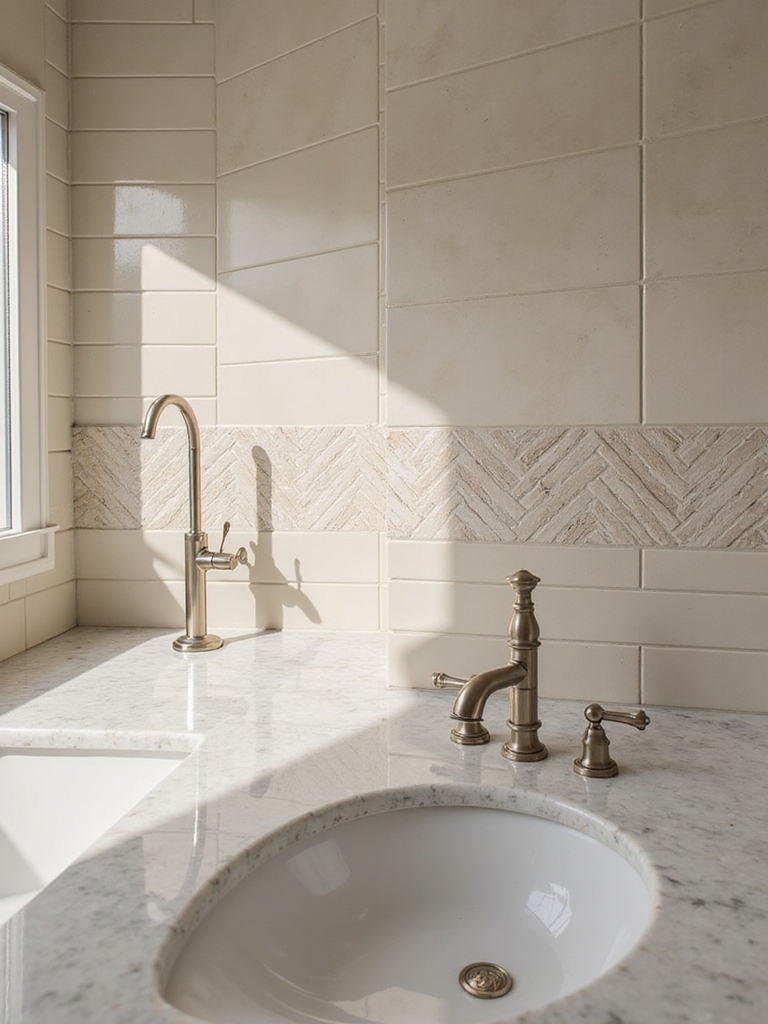
Ceramic is the workhorse I come back to most, because it survives daily splashing and almost never dates. The magic is less in the tile than in the layout. A simple grid feels clean and architectural, a herringbone adds movement without color, and a stacked vertical run quietly stretches a low wall taller.
Grout Color Makes or Breaks It
Cost is the other reason ceramic wins. At $2 to $7 a square foot, it is the friendliest option here, which frees up budget for the rest of the room. A handy homeowner can even set a small backsplash over a weekend with the right notched trowel and spacers.
Where people go wrong is the grout, not the tile. A grout color that fights the tile chops the wall into a grid of lines, while a close-toned grout lets the pattern settle into one calm surface. Match it to the room’s color-by-mood scheme and the whole wall settles.
📋Before You Buy Backsplash Tile
- ✓Pull a color or finish from a fixture already in the room
- ✓Confirm the material handles splashes and wipes clean
- ✓Buy 10% extra for cuts, breakage, and future repairs
Subway Tile: Modern or Traditional
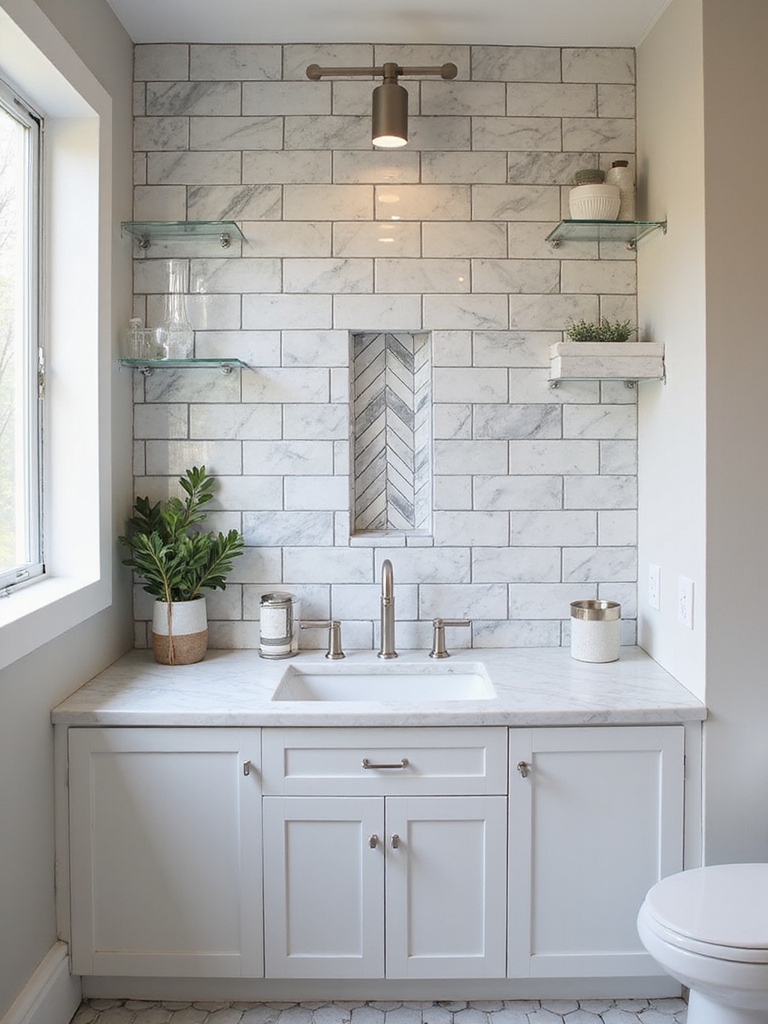
Subway tile is the chameleon of backsplashes, and the same little rectangle can look crisp and modern or soft and traditional depending on three choices: the grout, the layout, and the finish. A classic offset brick with white grout is timeless and safe. Stack the same tiles in a straight vertical grid with a gray grout and it suddenly looks current and design-forward.
Finish does the rest of the talking. A handmade, slightly wavy glaze brings warmth and an old-world feel, while a flat, glossy machine tile keeps things sharp and contemporary. When a client cannot decide, I point them to subway, because it is the one tile that flatters almost any vanity and survives every trend cycle I have watched come and go.
Textured Surfaces That Catch the Light
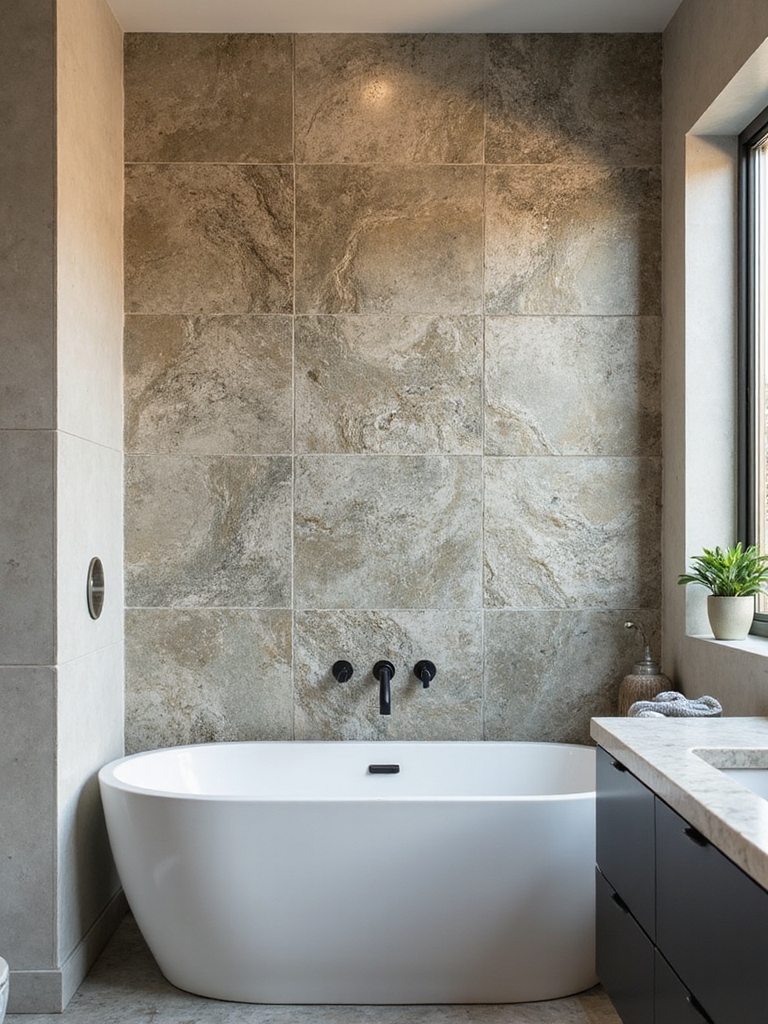
When a room feels flat, texture is the fix, because a dimensional backsplash plays with shadow all day and gives a small bathroom something to look at. These are the textured looks I keep on my shortlist, from subtle to bold:
- Fluted or ribbed tile that catches side light and throws soft vertical shadows, my favorite for a calm focal wall.
- A handmade glaze with gentle waves, which adds craft and warmth without any pattern at all.
- A pearlescent or satin finish that shifts as you move past it, delivering shine without a hard mirror glare.
“The mistake I see most is choosing the backsplash in isolation, on a showroom wall under perfect light. Bring home a sample and tape it up next to your actual vanity and floor for a day. A tile that dazzles in the store can clash the moment it meets what you already own.”
Reflective Glass Accents for a Brighter Wall
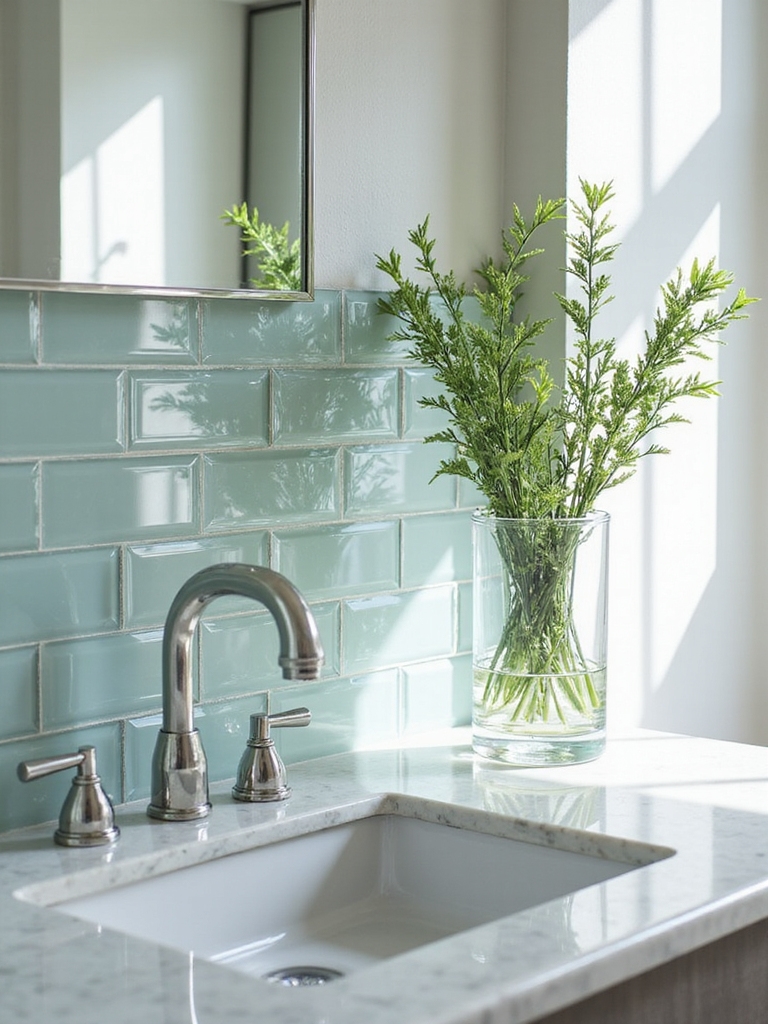
Glass earns its keep in a dim or windowless bath, since it bounces every bit of light around the room and makes a tight space feel more open. A glass-tile backsplash shimmers gently, hides water spots well, and wipes clean in seconds, which is why I love it over a sink. Expect $7 to $30 a square foot depending on whether it is basic or handmade.
Mirror and glossy accents can push it further, though restraint matters here. One mirrored band or a run of glass mosaic does the brightening. Cover the whole wall in mirror and it tips from spa into disco. Borrow placement cues from these mirror ideas worth copying so the reflection works for you.
- Use glass mosaic for a low-light bath that needs every photon it can get.
- Keep grout tight-toned so the glass reads as a smooth sheet of color.
- Pair reflective tile with a warm bulb; sort fixtures by lighting tone so the shimmer stays flattering.
Marble-Look Luxury Without the Overwhelm
Everyone wants the marble backsplash; far fewer want the upkeep of real marble in a wet, busy bathroom. This is where marble-look porcelain and quartz quietly win. You get the veining and the quiet drama at $5 to $15 a square foot, with a surface that shrugs off water, toothpaste, and time.
The styling trick is restraint. High-contrast veining on a calm, warm-white field looks rich; the same slab surrounded by competing patterns looks chaotic. I let the marble be the star and keep everything around it simple, pulling the veining’s undertone into the hardware so the room feels intentional.
Scale changes the mood, too. A large slab-look panel feels serene and modern, while small marble-look tiles add texture and a more classic feel. If you love the stone look, these luxe tile ideas prove how convincing today’s porcelain can be.
Peel-and-Stick and Budget Backsplash Options
Not every backsplash needs a contractor or a permit, and for renters or first-timers, peel-and-stick is a real answer. Today’s versions are water-resistant, mimic tile and stone convincingly, and run $8 to $15 a square foot. Behind a sink, away from direct shower spray, a good one holds up far better than its reputation suggests.
The key is honest expectations and clean prep. Peel-and-stick wins on speed, cost, and reversibility, which makes it perfect for a rental you cannot retile. It is not a forever surface in a soaking-wet zone, so I keep it to the splash area and seal the edges well.
- Measure twice and pick a pattern that hides seams, like a busy mosaic over a clean grid.
- Clean and dry the wall completely first, since adhesive fails on a greasy or damp surface.
- Use it behind the sink, not inside the shower, and run a bead of caulk along the counter.
Size, Scale, and Statement Color
Matching tile size to your wall is the quiet decision that makes a backsplash feel custom. Small mosaics suit a narrow niche or a powder-room nook where detail shows up close, while larger tiles keep a wide wall calm with fewer grout lines. Vertical layouts stretch a low ceiling, and a classic subway run brings an easy rhythm anywhere.
Color is where you decide how loud to be. A bold backsplash can anchor a whole bathroom, but I treat it like seasoning: one statement hue, balanced by neutral fixtures and plenty of breathing room. Pull that color from something already in the space, like the floor tile, so it feels connected.
When in doubt, I pick the boldest tile I love and use the smallest amount of it. A vivid four-foot strip behind the vanity delivers all the personality and none of the regret, and it ties back to the floor tile without taking over.
Metallic and Natural Stone Accents for Warmth
When a backsplash feels a touch cold, metal warms it up fast. A thin pencil trim or an inlaid band of brass, bronze, or copper adds a line of glow that ties straight back to your faucet and hardware. The move I love most is matching the accent metal to the fixtures already in the room, so the wall and the tap clearly belong together.
Keep it to one metal. Mixed metals can look layered in skilled hands, but in a small bath, a single repeated finish almost always looks cleaner. A little shine goes a long way here.
Natural stone is the other warmth play, trading shine for organic texture. Slate, travertine, and honed marble bring veining and depth that no print fully copies, usually at $15 to $50 a square foot. The trade-off is honest: stone needs sealing once or twice a year to stay stain-resistant, so I save it for clients who like a little ritual with their materials.
Maintenance & Care
A backsplash only keeps tying the room together if it stays clean, and the routine is short. I wipe glazed tile and glass with a microfiber cloth as part of normal cleaning, hit grout lines with a soft brush and mild soap every few weeks, and reseal natural stone and unglazed grout a couple of times a year to keep moisture out.
The two failure points to watch are grout and caulk. Grout that goes gray or porous makes a fresh wall look tired, and caulk that cracks at the counter line lets water behind the tile. Both are cheap, twenty-minute fixes when you catch them early, which is the whole secret to a backsplash that still looks new in five years.
Let the Backsplash Do the Connecting
If you remember one thing, make it this: the backsplash is not a standalone decoration, it is the connective tissue that pulls your vanity, fixtures, and floor into a single, finished room. Choose it to echo something already there, and the whole bathroom suddenly looks intentional.
Start by holding a sample against what you own, in your own light, before you commit to a single box. Whether you land on safe ceramic, brightening glass, or a marble-look splurge, the right strip behind the sink is the small move that finally makes the room feel done.