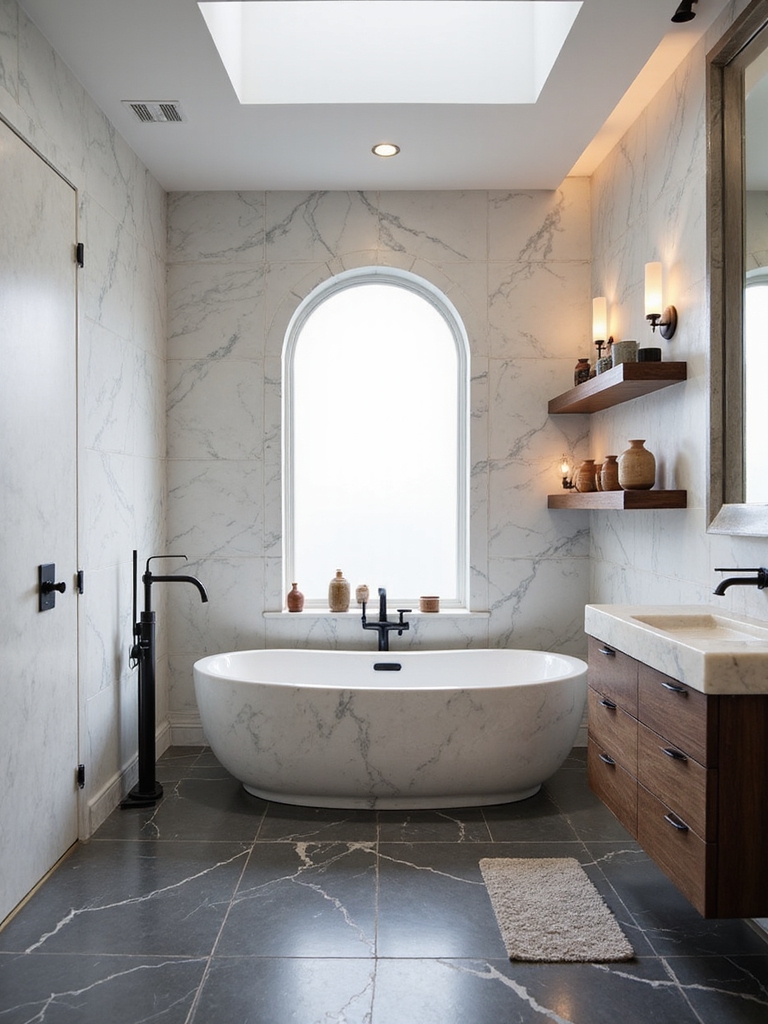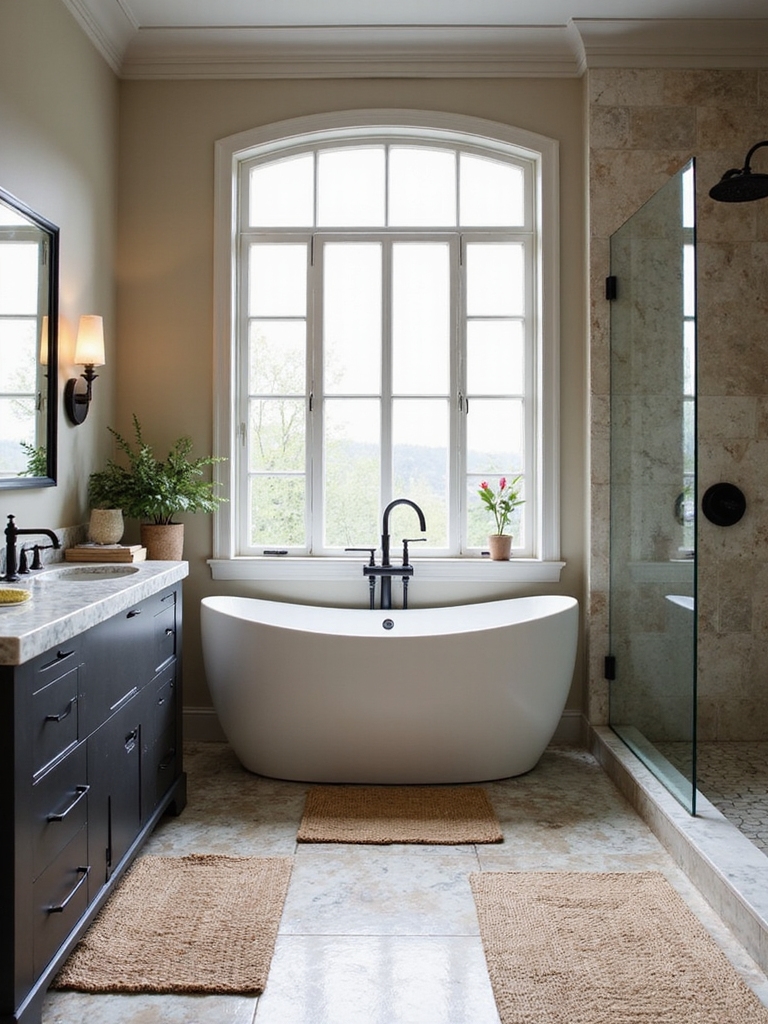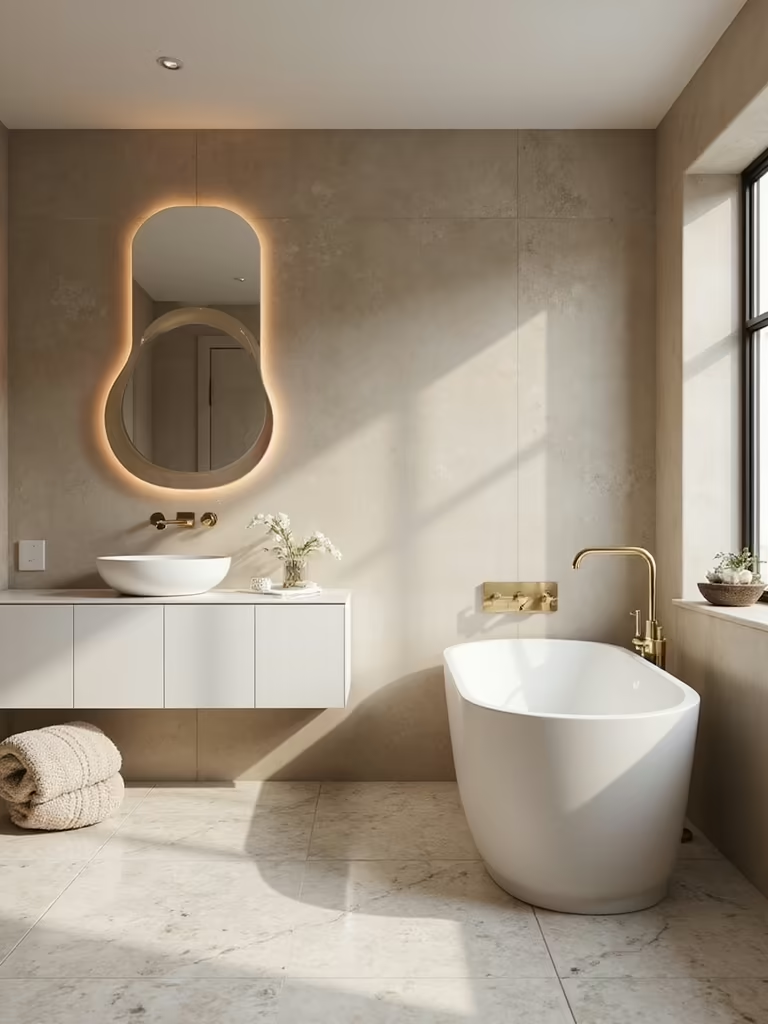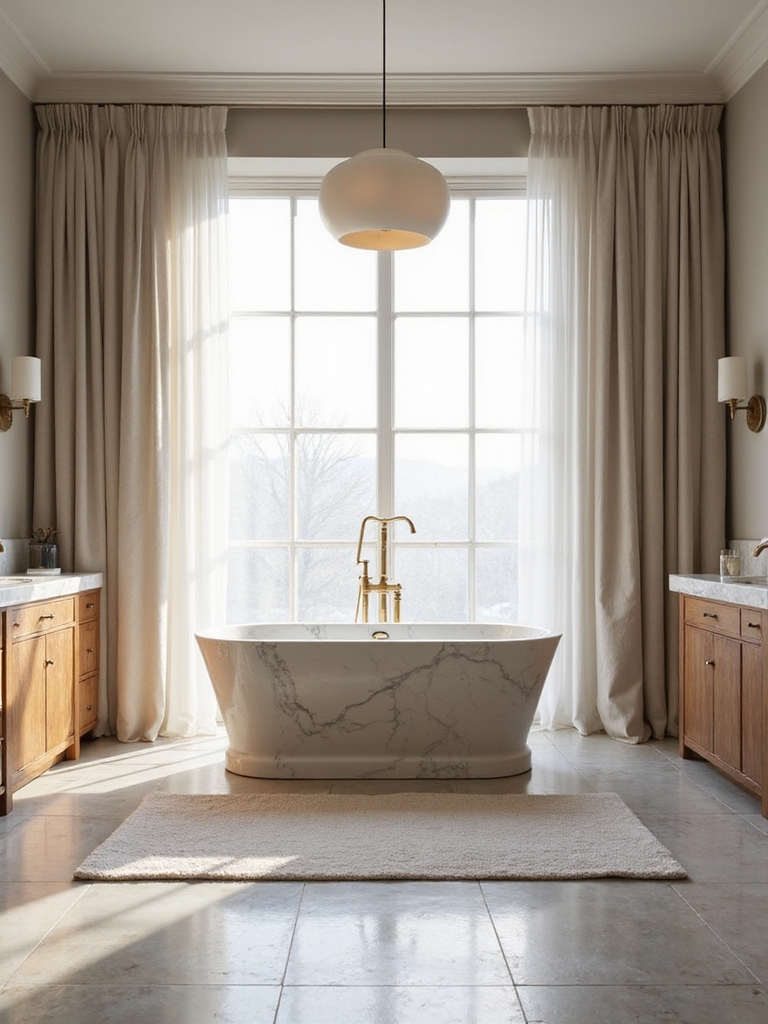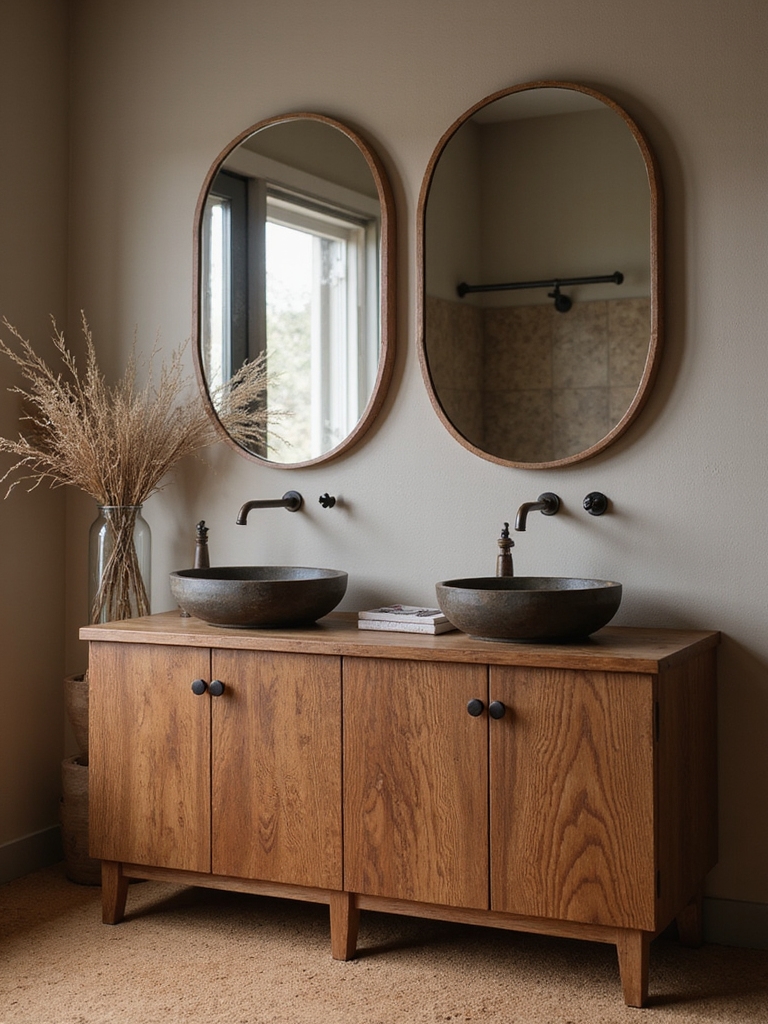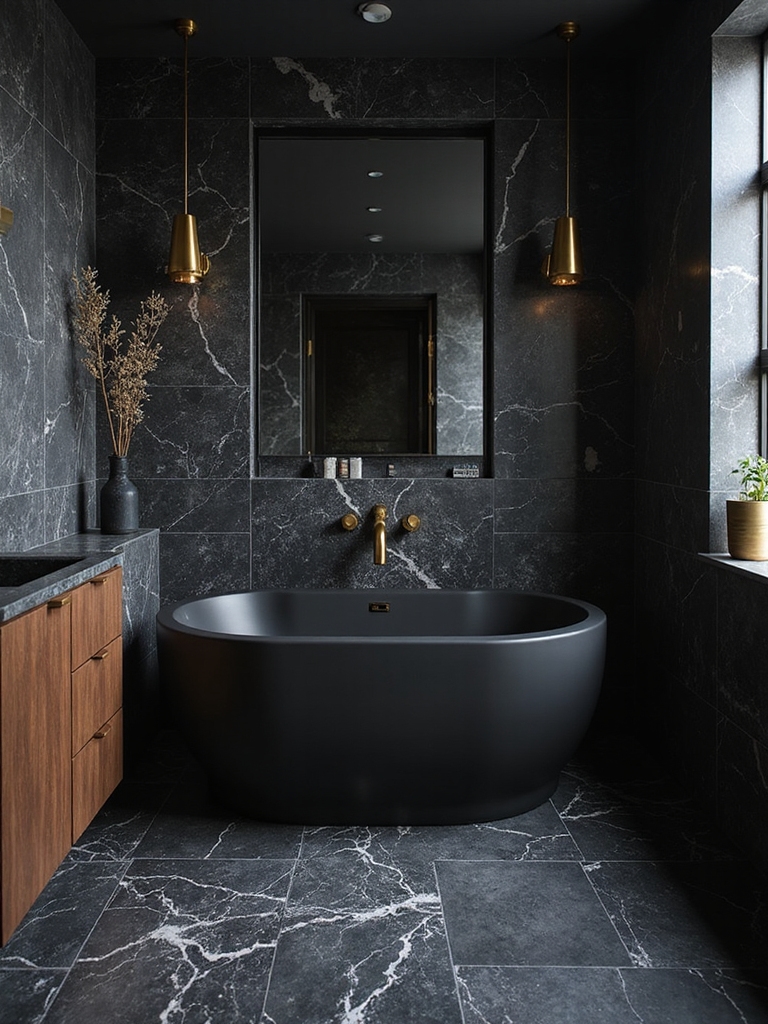

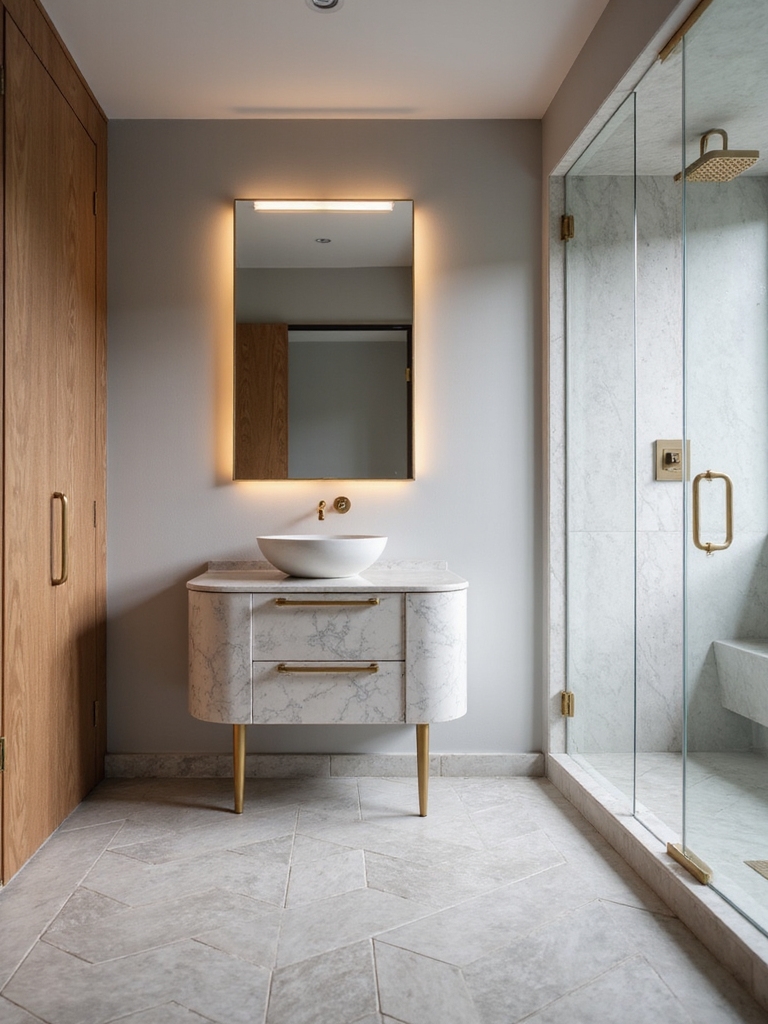
A basement bathroom does not have to feel like a basement. The rooms that come across as bright and polished down there are the ones styled to bounce, stretch, and warm the little light they have. I have turned a windowless concrete box into a room clients call their favorite in the house, and almost none of it was structural.
The work happens in color, reflection, lighting, and scale. Below are 20 basement bathroom ideas that feel bright and polished, built to fight the three things every below-grade bath struggles with: no daylight, low ceilings, and a hard concrete shell. Right now the look people want is warm and gallery-clean, the calm kind you would never guess sits below grade.
Bright Basement Bath, in Brief
| The problem | The fix | Why it works |
|---|---|---|
| No daylight | Warm 2700K-3000K layered lighting plus mirrors | Mimics and multiplies real light |
| Low ceiling | Vertical lines, tall mirrors, light walls | Draws the eye up and adds height |
| Hard, cold shell | Light wood, glass, soft textiles | Warms the room without crowding it |
Basement Realities: Light, Comfort, and Durability
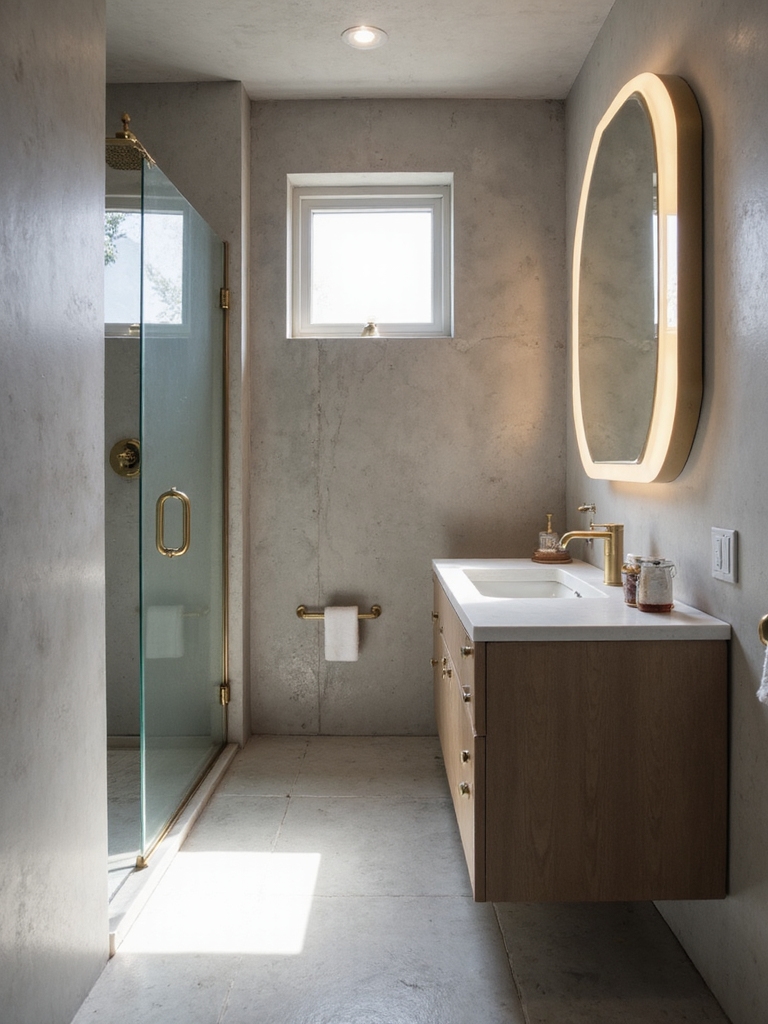
Before the pretty part, you have to make peace with three facts. A basement bath is dark, damp, and built on concrete, and the rooms that succeed plan around those facts from the very start. Here is how I frame it for every client:
- Light is manufactured here. With no windows, your fixtures and mirrors do the entire job daylight does upstairs.
- Moisture is constant. Choose damp-rated finishes and run a fan, so the polish you add actually lasts.
- The shell is hard and cold. Warm wood, soft textiles, and a rug keep concrete from setting the mood.
Bright, Cozy Color Palettes for a Low Room
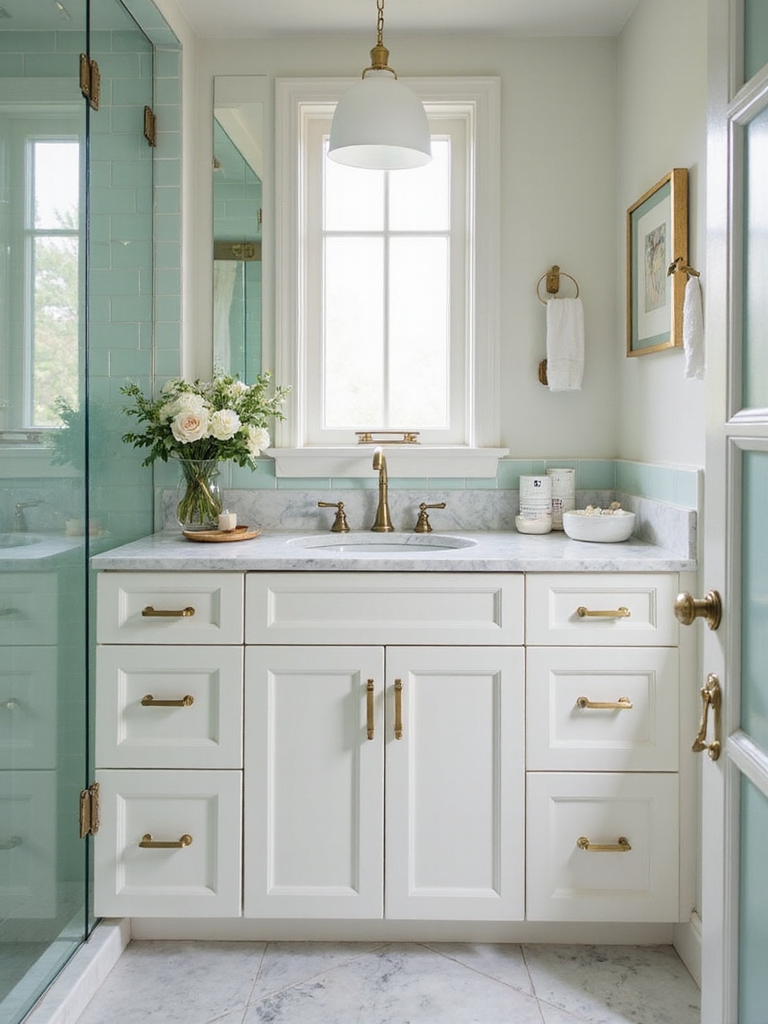
Color carries more weight in a basement than anywhere else, because it has to fake the light you do not have. I build the palette on warm whites and soft greiges, since a true bright white turns gray and gloomy under artificial light. Warm neutrals stay luminous after dark, which is when most basement baths actually get used.
Then I add one quiet color so the room does not feel like a hallway. A sage vanity, a clay-toned towel set, a single moody accent wall by the tub. The base stays light and reflective; the accent gives it a pulse. Plan the relationship the way you would any color-by-mood scheme before you commit.
- Lead with warm white or soft greige on walls and ceiling to keep things luminous.
- Limit yourself to one accent color so a small room stays calm.
- Test paint at night under your real bulbs, since that is when the room lives.
👍Why a basement bath is worth the effort
- +Adds real resale value and a guest-ready bath
- +A blank, windowless room is easy to fully control
- +Most of the work is cosmetic, not structural
👎What to plan for
- –Moisture demands damp-rated finishes and a fan
- –No daylight means lighting is your whole budget priority
- –Low ceilings need vertical tricks to feel open
Reflective Surfaces That Expand the Space
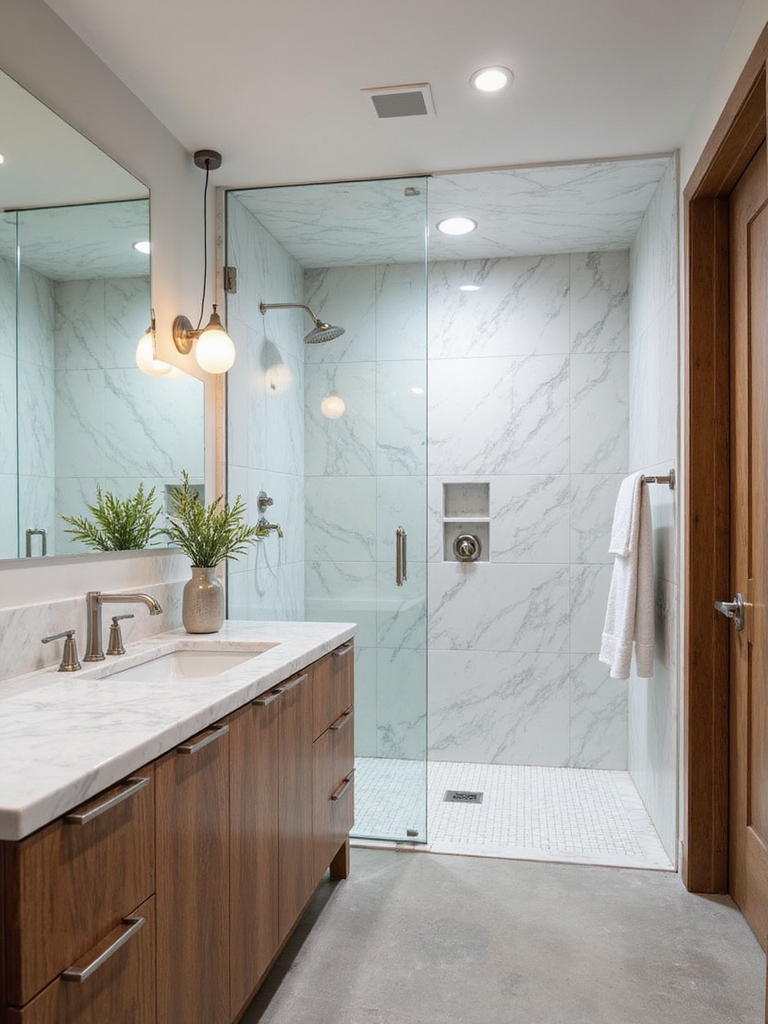
Reflection is the cheapest square footage you will ever buy. Every glossy or mirrored surface throws light back into the room and tricks the eye into seeing more space, which is exactly what a tight basement needs. I lean on a big mirror first, then add glass and a few polished finishes to keep the bounce going.
Put the Big Mirror Opposite the Light
The trick is balance. Too many shiny surfaces and the room feels busy and hard, so I pair the reflective pieces with one or two matte textures to settle them. A glossy tile wall behind a matte stone vanity, say, or a mirror framed in warm wood.
Placement is everything. One large mirror opposite your brightest fixture does the work of three small ones scattered around. Steal a few mirror ideas worth copying and position for the bounce, not just the view.
Layered Lighting for Day and Night
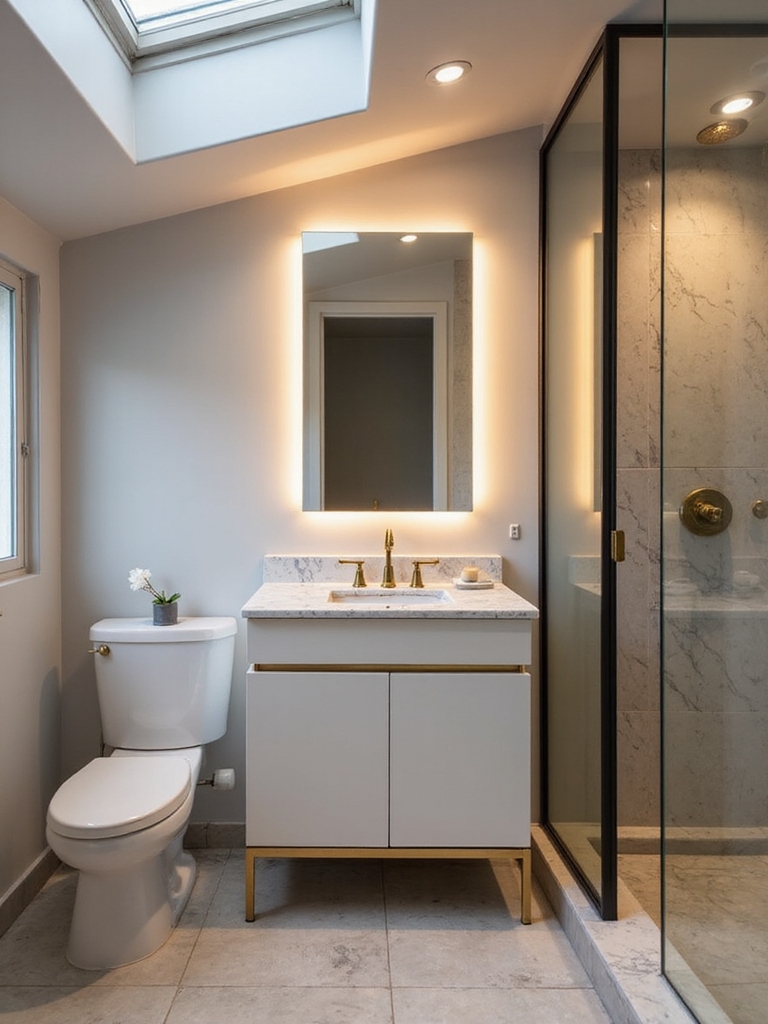
If you fix only one thing in a basement bath, fix the lighting. A single overhead fixture is what makes these rooms feel like a bunker, and the cure is layers. I build three: a warm ceiling source for general light, task lighting at the mirror for faces, and a low accent or night light for after dark.
Never Rely on One Overhead
Warmth is non-negotiable down here. I spec 2700K to 3000K bulbs everywhere, because cool light reads clinical in a windowless room and turns every finish slightly sad. A dimmer ties it together, letting the same space go bright for a morning routine and low for a soak.
Recessed cans plus a vanity light usually cover it, and an LED mirror at $150 to $400 earns its price by lighting faces without shadows. Sort your fixtures by lighting tone before you buy, since mismatched color temperatures undo all the warmth.
A few terms worth knowing before you shop:
📖Large-format tile
Tiles 15 inches or larger on a side; fewer grout lines, calmer and easier to clean.
📖Color temperature (K)
How warm or cool a bulb reads; 2700K-3000K is the warm range that flatters a basement.
📖Frameless glass
A shower enclosure with minimal hardware, so it visually disappears and opens the room.
The Spa-Like, Polished Bathroom Look
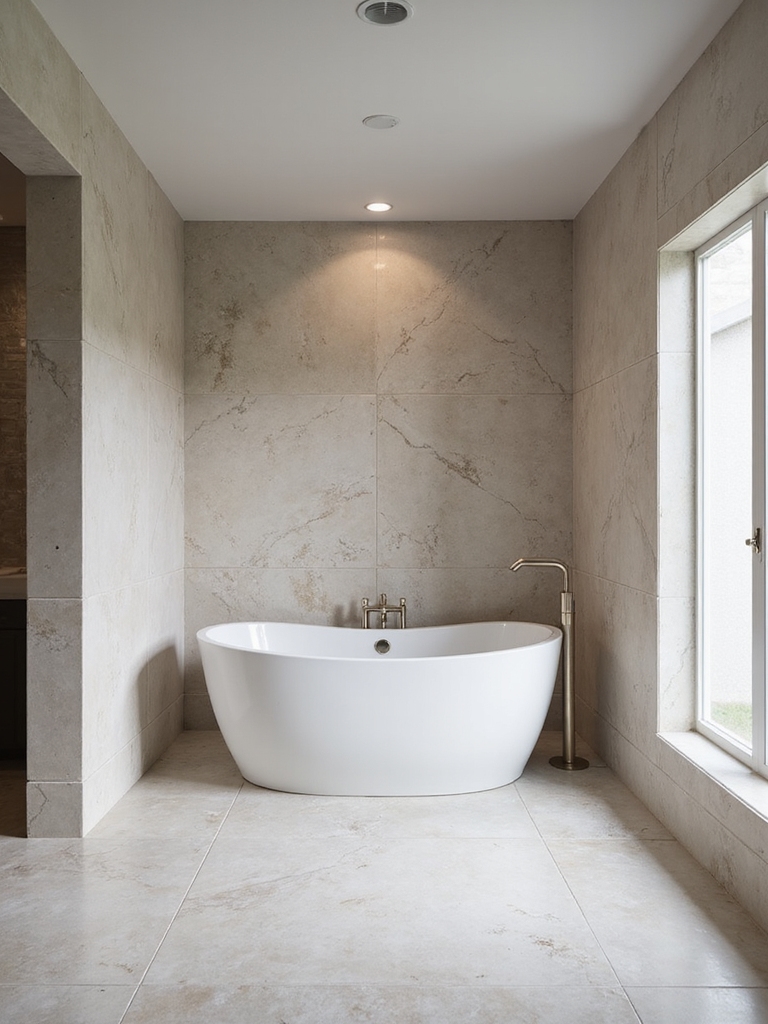
Polish in a basement comes from continuity, and large-format tile is the fastest way to get it. Fewer grout lines make a small room feel calmer and bigger, and they cut cleaning time in a damp space where grout is the first thing to grime up. I choose a neutral with soft veining at roughly $5 to $12 a square foot, run it in long uninterrupted lines, and let it carry the whole wall.
From there, the spa feeling is just restraint plus warmth. A glass shower panel, a stack of thick towels, one plant that tolerates low light, and consistent metal finishes. If you want the look to feel expensive, borrow from these luxe tile ideas and keep everything else quiet around them.
Glass Showers and Vertical Tricks That Add Height
Low ceilings are the basement complaint I hear most, and glass is the answer that keeps coming back. A frameless or slim-framed glass shower removes the visual wall a curtain creates, so the eye travels the full length of the room and it feels larger instantly. Expect $300 to $800 for a fixed glass panel, which is the single best spend for openness.
Then I cheat the ceiling taller with vertical lines. Vertical tile, tall narrow mirrors, and floor-to-near-ceiling shelving all pull the eye up and make a seven-foot ceiling feel friendlier. A single tall element does more than a dozen short ones fighting for attention.
Keep hardware slim and lines clean while you are at it. Bulky fixtures eat a small room. Slim ones give it room to breathe. This is where a polished basement bath quietly starts to feel like an upstairs one.
Compact Fixtures and Storage That Hide the Clutter
A bright room dies the second it fills with clutter, so storage is part of the polish, not separate from it. I size fixtures to the room first, choosing a compact vanity and a narrower toilet so the floor stays open and light keeps moving. Proportion is what separates a styled small bath from a cramped one.
Then I hide the daily mess. Closed vanity storage, a mirrored cabinet that pulls double duty, and a couple of baskets keep counters clear, and clear counters are what photograph and live bright. Borrow a few small-space storage tricks to claim every inch.
- Choose a compact or wall-hung vanity to keep floor and light open.
- Use a mirrored medicine cabinet so storage and reflection share one footprint.
- Keep counters to three items or fewer; the rest goes behind a door.
Light Woods and Warm Metals for a Finished Feel
The detail that tips a basement bath from functional to finished is warmth in the materials. Against all that concrete and glass, I bring in light wood, pale oak on a vanity, a teak stool, a wood-framed mirror, to soften the hard surfaces and add a little life. Matte finishes avoid glare under direct light, so I default to them here.
Metals do the last ten percent. Picking one finish and repeating it across the faucet, hardware, towel bar, and light fixtures is what makes a room look designed, like someone actually planned it. Warm brass flatters the neutral palette; brushed nickel keeps it crisp. Just commit to one.
I keep a strict hand here because a basement punishes excess. Two or three materials, repeated, are all a small room can hold. The restraint is the polish.
Damp-Rated Finishes That Still Look High-End
The fear with a basement bath is that practical and polished cannot coexist, and that simply is not true anymore. Damp-rated materials have caught up, so you can have surfaces that survive humidity and still look expensive. Porcelain and quartz handle moisture beautifully, sealed marble-look porcelain gives you the veining without the upkeep, and resin or epoxy coatings deliver a smooth, high-end finish that water cannot touch.
Hardware is where people quietly lose the look. In a damp room, cheap finishes spot and rust within a year, so I spend a little more on damp-rated, rust-resistant fixtures in brass or stainless. They hold their polish far longer, which matters when there is no daylight to hide wear.
The honest budget note: these finishes cost more upfront but earn it back in a room this hostile to materials. I would rather put one quality damp-rated surface in than replace a bargain one twice in three years. Down here, durability and polish are the same purchase.
Styling Tips
With the bones handled, styling is what makes the room feel cared for. Group the counter on a tray, add one low-light plant like a pothos or ZZ for life, hang a piece of art at eye level, and fold the towels instead of crumpling them on a bar. These are five-minute moves with an outsized payoff.
The mistake I see most is stopping at function and forgetting the human touches. A scent, a stack of folded towels, a warm-toned bulb in a small lamp. Those are the things that make a guest forget they walked downstairs to a basement at all.
Bright Basement Bathroom Questions, Answered
?How do I make a windowless basement bathroom feel bright?
Manufacture and multiply light. Use warm 2700K to 3000K layered lighting instead of one overhead, place a large mirror opposite your brightest fixture, and keep walls a warm white or soft greige. Glossy tile and glass bounce that light further, which fakes the daylight the room is missing.
?What is the best paint color for a dark basement bathroom?
Warm whites and soft greiges win, because stark cool whites turn gray and gloomy under artificial light. Choose a shade with a warm undertone and test it at night under your actual bulbs. Add a single accent color through textiles or a vanity so the bright room still has personality.
?How can I make a low basement ceiling feel taller?
Lean on vertical lines and reflection. Vertical tile, tall narrow mirrors, and high shelving draw the eye up, while a frameless glass shower removes the visual wall a curtain creates. Keeping walls and ceiling the same light color also blurs where they meet, which reads as more height.
?Do I need to waterproof a basement bathroom before decorating?
Yes, the moisture control and any subfloor sealing come first, and active water issues are pro territory. Once the room is dry and properly ventilated, the bright, polished finishes here will actually last instead of peeling or growing mold behind the pretty surfaces.
Light It, Reflect It, Warm It
A bright, polished basement bathroom is mostly an illusion you build on purpose. Warm, layered light fakes the sun, mirrors and glass stretch the walls, vertical lines lift the ceiling, and a little wood and color keep the whole thing from feeling like a basement. None of it needs a permit, and most of it fits a weekend.
Look at your own room and ask which problem is loudest first, the dark or the low ceiling, then start there. Once you stop fighting the basement and start styling around it, that windowless box turns into the calm, quiet retreat the rest of the house wishes it had.