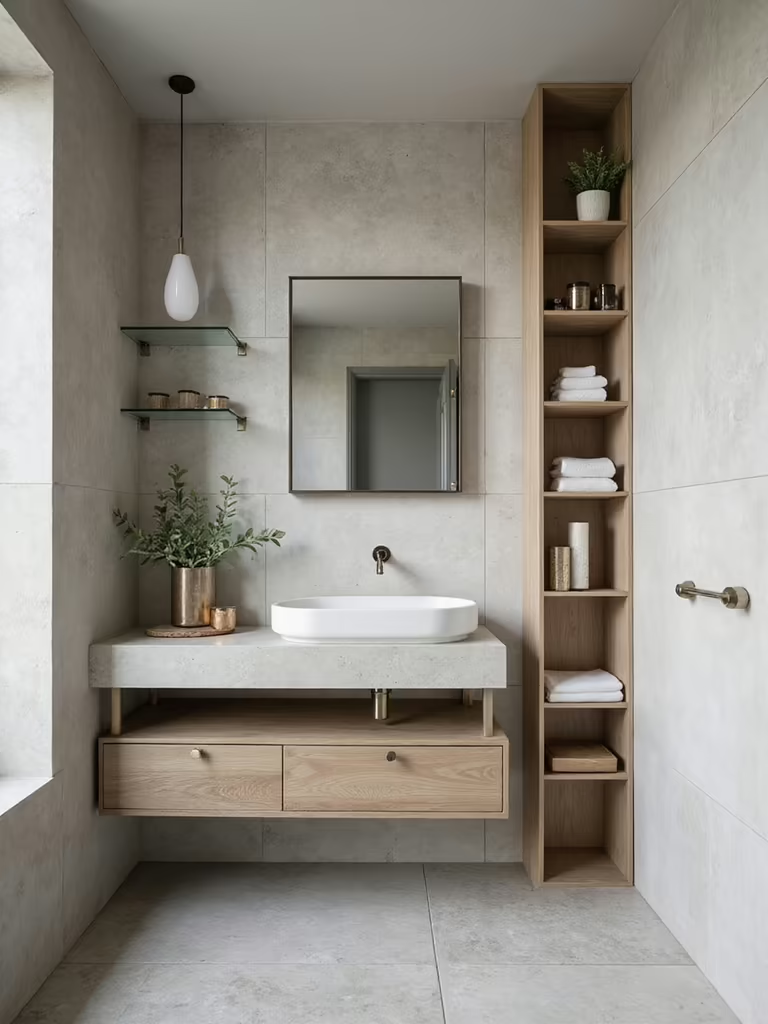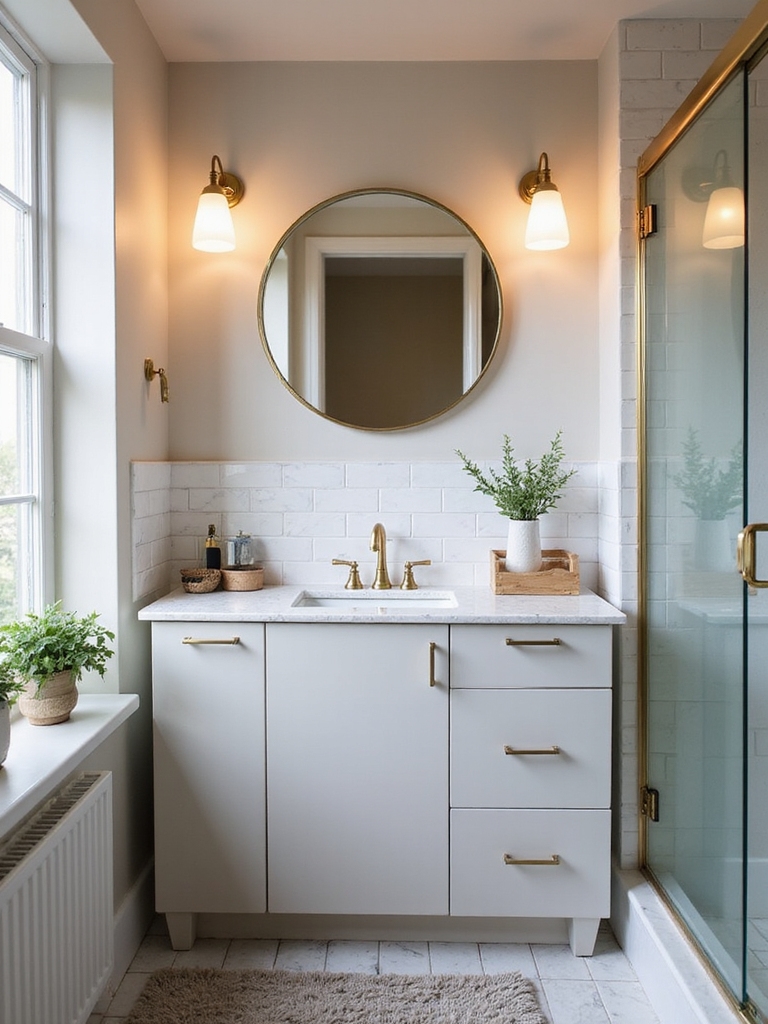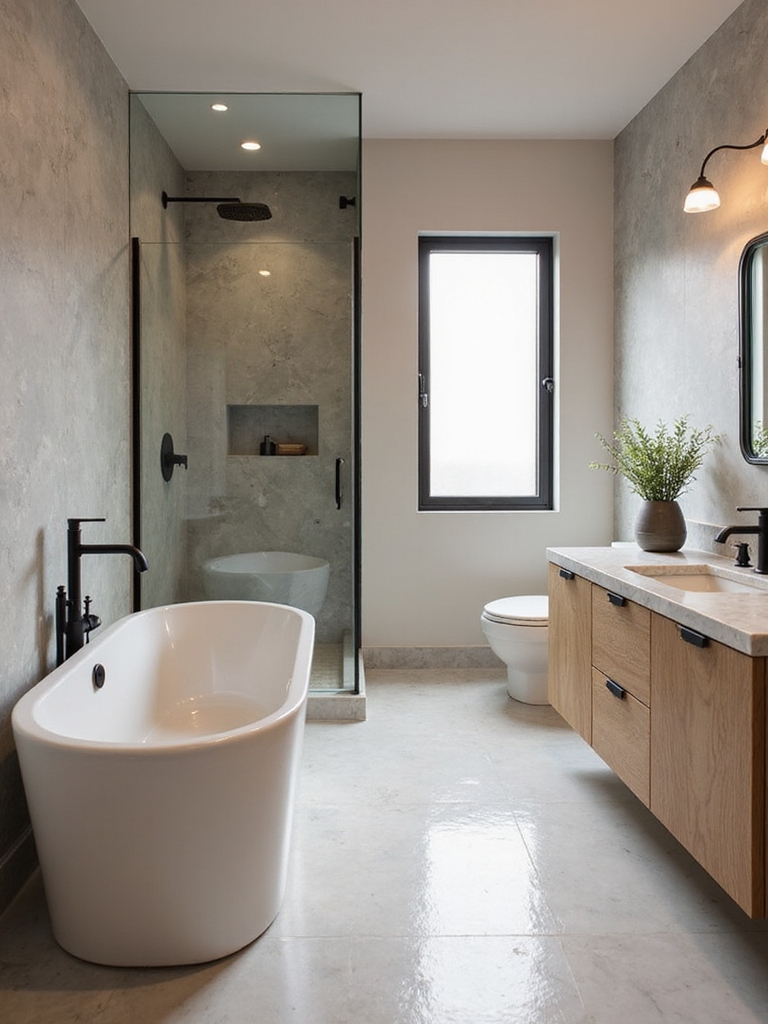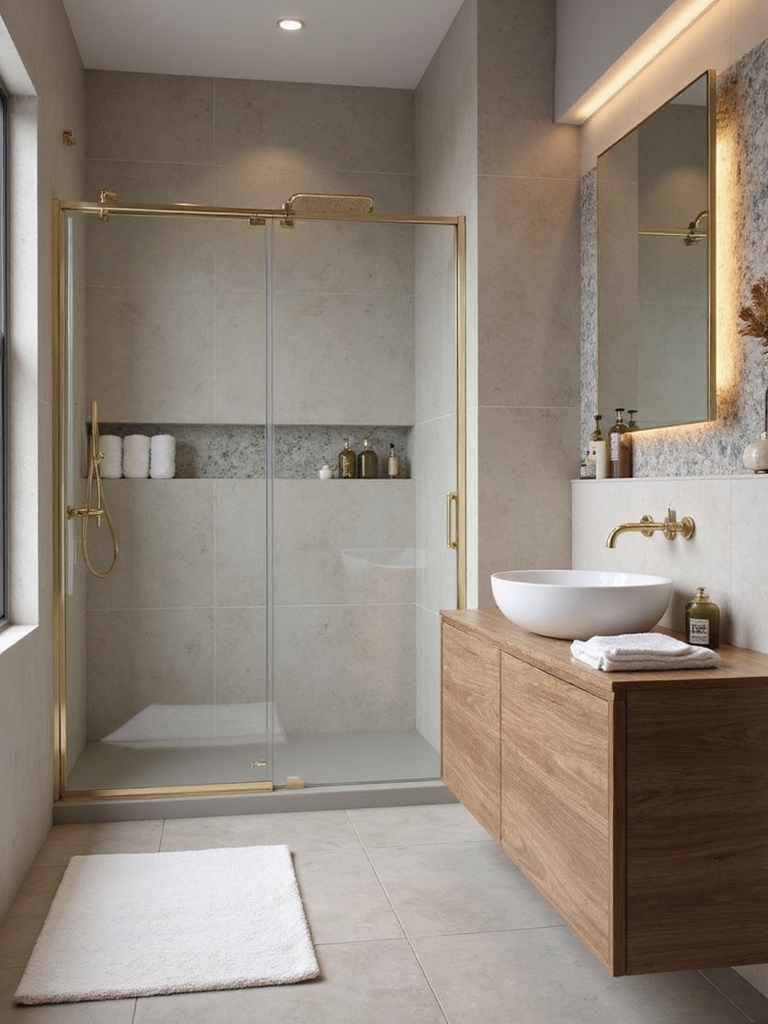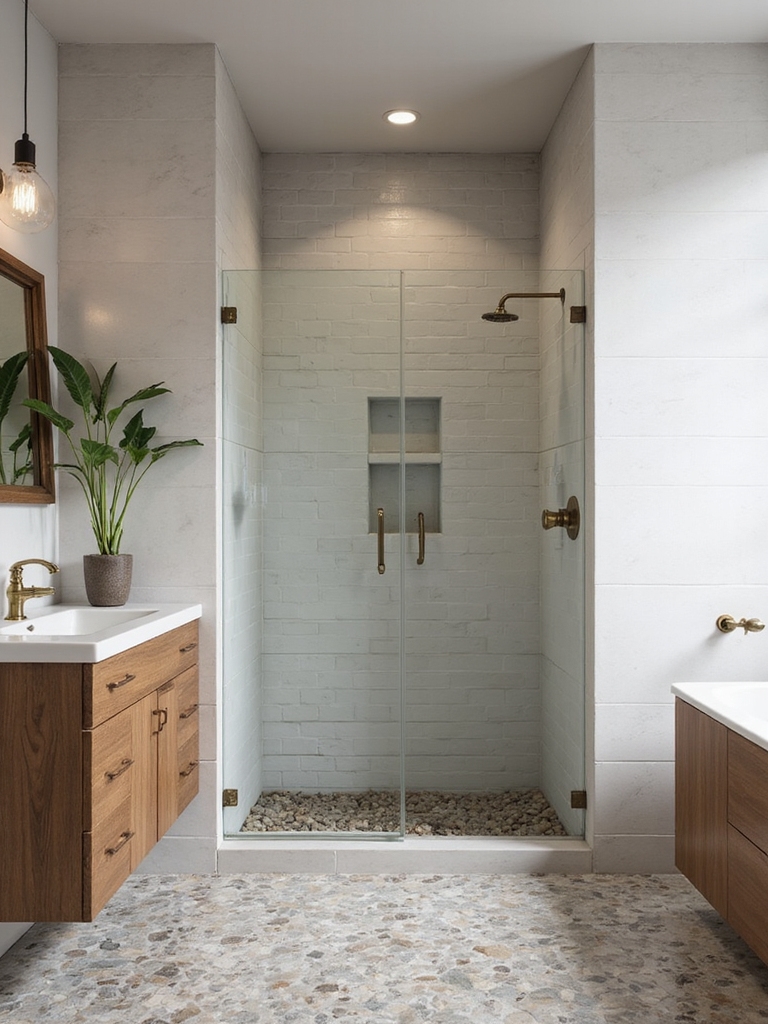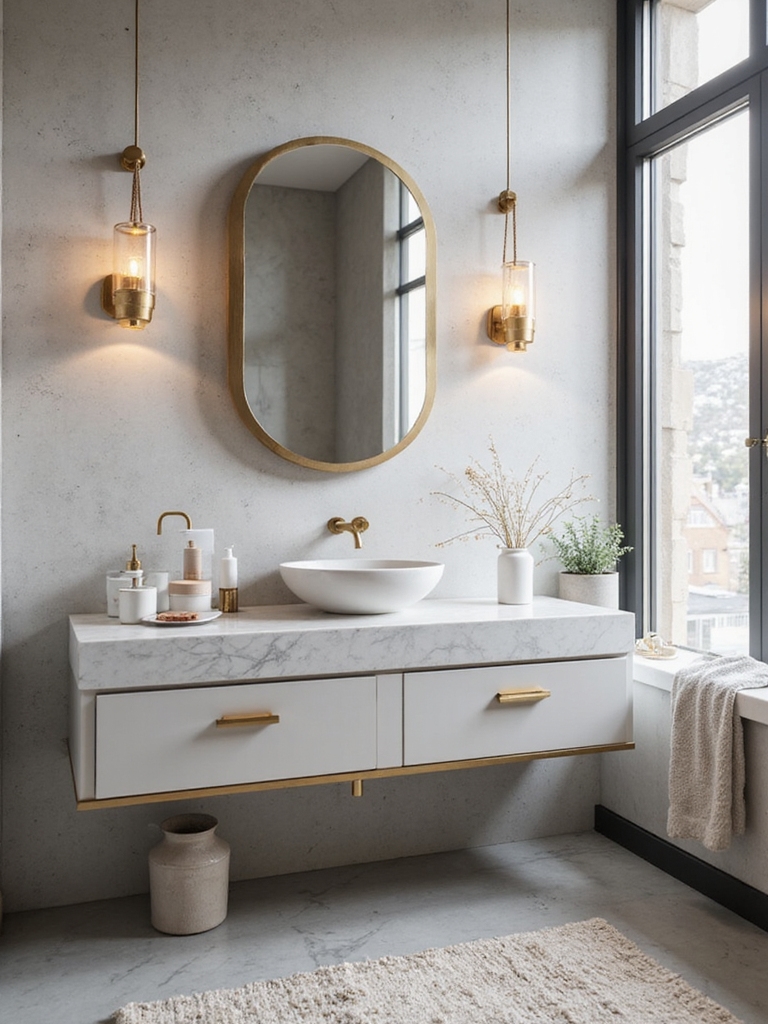
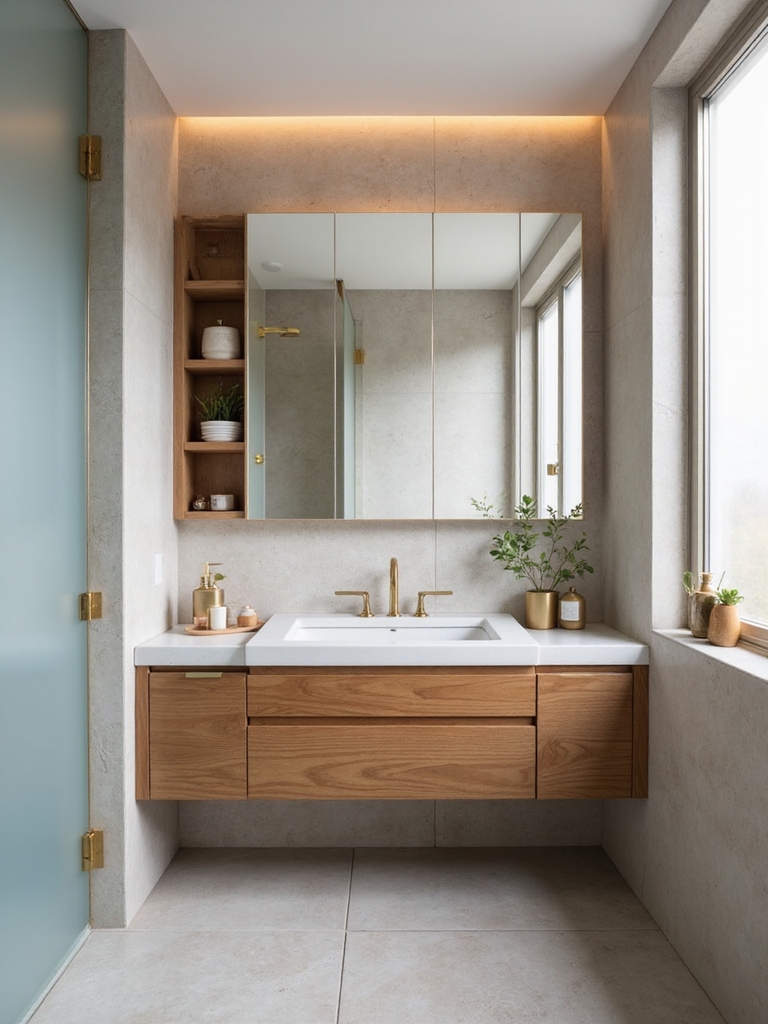
I’ll share 15 tiny bathroom color ideas that visually open up space by leaning into light neutrals, reflective surfaces, and purposeful accents. Start with airy neutrals that recede walls, then pair glossy fixtures with matte walls for a balanced glow. White-on-white schemes amplify light, while soft pastels keep corners airy. Use mirrors, glass shelves, and lighter tiles to bounce brightness. Mix warm neutrals with restrained accents for depth, and let color shifts define zones. If you keep exploring, you’ll uncover more growth-friendly tricks.
Open Up a Tiny Bath: Core Color Rules That Work
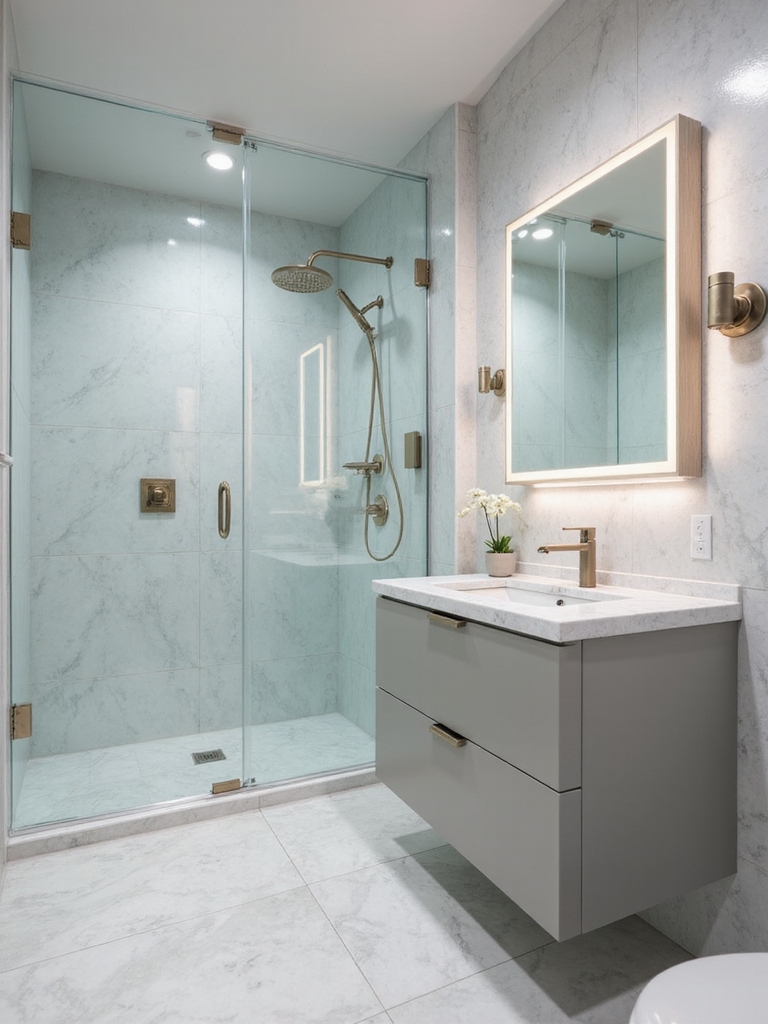
When you’re working with a tiny bath, color choice should feel intentional and practical.
I choose light neutrals to bounce light and keep lines clean, then layer texture for depth. I avoid busy patterns, keep fixtures seamless, and let mirrors multiply space.
Subtle contrast in trim or cabinetry adds polish without visual clutter, guiding the eye thoughtfully.
Incorporating black and white bathroom designs can create a modern and bold look while visually expanding the space.
Finish Matters: Glossy vs Matte for Brightness
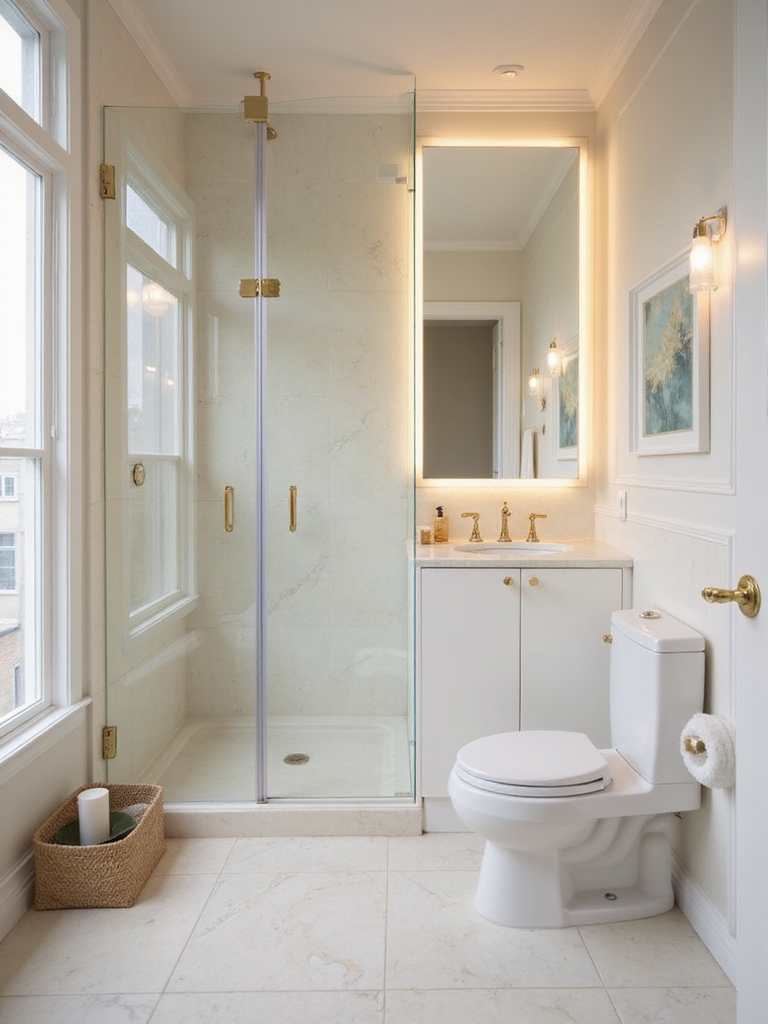
Glossy finishes give me a brightness boost I can see instantly, while matte tones diffuse light for softer, more even illumination.
I’ll weigh the durability tradeoffs too, since glossy resists moisture and stains but shows fingerprints, and matte is more forgiving yet can scour slower.
Let’s compare how each finish affects space perception, maintenance, and overall bathroom vibe.
Design experts often recommend incorporating small bathroom design tips to maximize both style and functionality in tight spaces.
Glossy Brightness Boost
Glossy finishes bounce more light around the room, making a small bathroom feel brighter and more open.
I choose glossy surfaces to maximize reflection where geometry and fixtures create shadows.
Keep balance in mind: pair high-sheen with simple shapes, and avoid clutter that cancels the glow.
Use glass, porcelain, or enamel for practical, chic brightness that lasts.
Matte Light Diffusion
Matte finishes diffuse light softly, creating a calmer, more even glow that helps a tiny bathroom feel cozy without shouting brightness.
I prefer matte for walls and cabinetry because its muted reflection hides splashes and fingerprints, keeping surfaces looking pristine.
Subtle diffusion makes shadows softer, enhancing perceived space. It pairs beautifully with natural tones, delivering a chic, practical, low-maintenance vibe.
Finish Durability Tradeoffs
Bright finishes can lift a tiny bathroom’s brightness, but they trade durability for that glow, so I weigh glossy versus matte realistically.
Glossy surfaces feel spacious and reflect light, yet show scratches and water spots quickly.
Matte hides flaws and stays chic, but can dull brightness.
I recommend a balanced approach: glossy accents, matte walls, durable sealant, easy-clean routines.
Start With Light Neutrals That Recede Walls
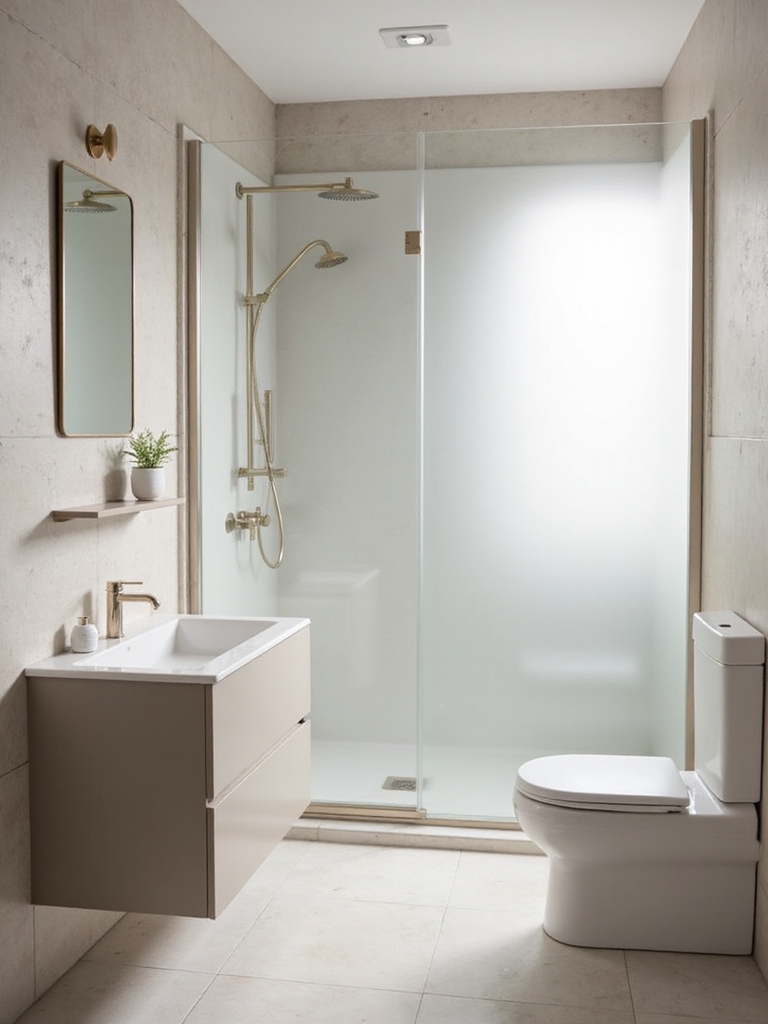
I start with a light neutral backdrop to keep the space feeling open.
These soft shades subtly push the walls back, making the tiny bath feel roomier.
I’ll show you how to use calm neutrals that recede rather than compete with fixtures and accents.
Incorporating grey and white bathroom ideas creates a modern and minimal aesthetic that enhances the sense of space.
Light Neutral Backdrop
A light neutral backdrop lets the room breathe, so you’ll want walls in soft ivory, warm greige, or pale sand hues that recede rather than shout.
I choose these neutrals to reflect natural light and set a clean stage for clever storage. Pair with crisp white accents, matte textures, and subtle contrast to keep the space practical, inviting, and visually expansive.
Recede Walls Subtly
Starting with light neutrals softens the room from the moment you walk in, helping walls recede rather than shout.
I pick airy whites, warm beiges, and pale taupes to set a calm backdrop, then keep accents minimal.
White-on-White: Reflective Surfaces for Space Perception
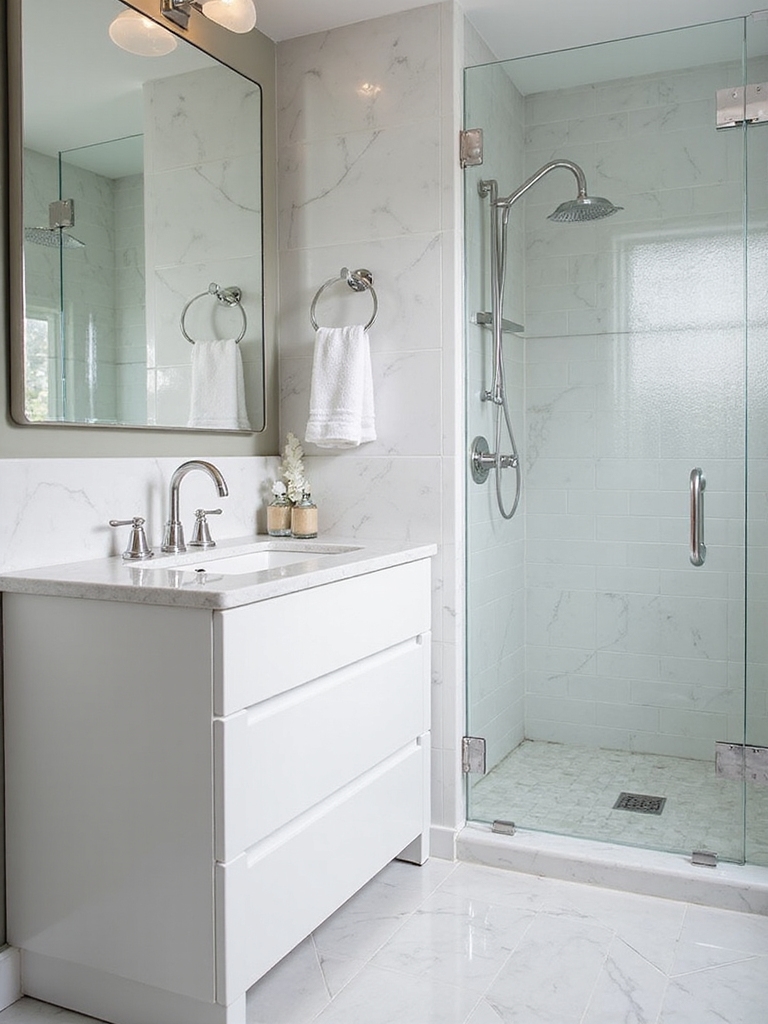
White-on-white isn’t bland when you lean into reflective surfaces.
I pair glossy tiles with polished countertops to bounce light from every angle, making the room feel larger.
Mirrors, glass shelves, and brass accents amplify brightness without shouting.
Keep cabinetry light and minimal to preserve airiness.
Practical tip: clean surfaces daily to maintain that crisp, expansive vibe.
Incorporating innovative ideas can help maximize every inch of your tiny bathroom space effectively.
Soft Pastels for Airy Corners and Gentle Profiles
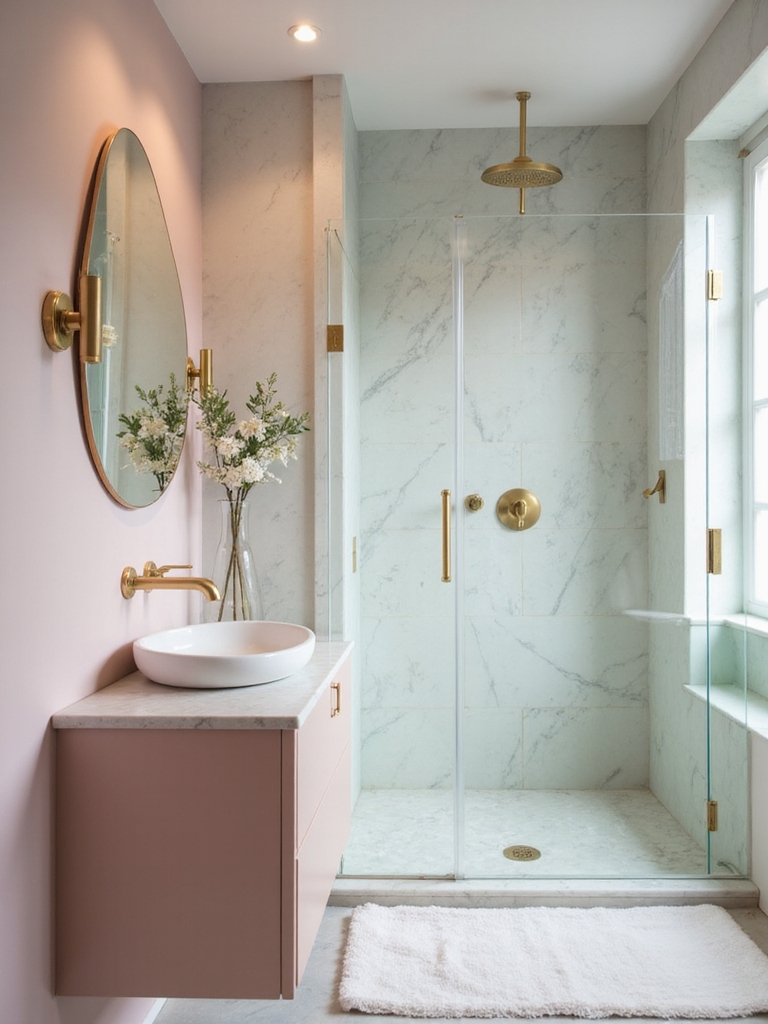
I love soft pastels for tiny bathrooms because they create an airy feel without shouting.
I’ll show you how gentle hues calm corners, highlight architectural lines, and keep spaces practical to use daily.
Let’s explore soft pastel ambiance, airy corner accents, and gentle profile surfaces that work together in harmony.
Incorporating clever decor tips for maximizing every inch ensures even the smallest spaces feel open and inviting.
Soft Pastel Ambiance
Soft pastels create an airy bathroom mood by softening lines and harmonizing textures, so corners feel open and profiles stay gentle.
I choose pale blues, blush pinks, and whisper greens to reflect light without overpowering space.
The palette guides practical choices—matte surfaces, compact storage, and minimal hardware.
I keep contrast subtle, ensuring cohesion, calm, and a chic, functional oasis.
Airy Corner Accents
From here, I lean into airy corners with soft pastel accents that keep profiles gentle and space feeling open.
I choose pale pinks, misty blues, and warm neutrals to brighten nooks without crowding them. Subtle color blocks mirror light, while matte finishes reduce glare.
Practical, chic touches—small shelves, soft textiles, and hidden storage—enhance calm, functional corners.
Gentle Profile Surfaces
- Choose matte finishes for walls and shelves to avoid glare.
- Use rounded edges on vanities and mirrors for softness.
- Pair pale neutrals with subtle blush accents to widen the space.
Pale Blues and Greens to Add Subtle Depth
Pale blues and greens can add subtle depth to a tiny bathroom without overwhelming the space.
I mix muted tones with crisp whites, keeping fixtures light and reflections intentional. A matte wall in sage or powder blue pairs with glossy accents to visually expand corners.
Use textiles sparingly, and let color breathe, highlighting cleanliness, calm, and practical daily rituals.
Incorporating serene modern neutral elements enhances the relaxing atmosphere while maintaining a sophisticated look.
Pale Warm Tads: Create Flow Across the Room
To create flow across a tiny bathroom, use pale warm tones that tie the space together from sink to shower.
I’ll keep harmony obvious with subtle shifts and consistent undertones.
- Use warm whites for walls
- Introduce soft beige accents
- Match fixtures to a single brass or brushed-nickel theme
For a refreshing touch, consider incorporating radiant color palettes that brighten and enliven the guest bathroom space.
Define Zones With Subtle Color Shifts
I like to define zones with subtle color shifts, using space-defining tone changes to guide your eye without shouting.
A soft gradation from warm to cool or a slightly deeper hue at the tub edge can separate areas while keeping the room cohesive.
Let’s discuss how these quiet shifts can create distinct zones that feel calm, intentional, and easy to live with.
Incorporating modern bathroom decor ideas enhances these subtle transitions, making small spaces feel sleek and stunning.
Subtle Color Zoning
I guide you to feel the balance, not overpower. Each zone reads as purposeful, not busy.
- Paint a lighter ceiling for height
- Use slightly warmer walls near storage
- Accent with a cool tile border
These choices softly separate functions while keeping calm cohesion.
Space-Defining Tone Shifts
I choose a calm palette, letting lighter walls guide the eye and darker accents define zones like shower, vanity, and toilet.
You’ll notice subtle shifts—tint, saturation, warmth—so space reads organized, modern, and serene, without clutter or distraction.
Practical elegance, every day.
Accent Walls That Don’t Shrink the Room
Accent walls can punch up a small bathroom without making the space feel crowded.
I choose colors and textures that recede visually while adding depth, so the room stays airy.
Here are practical ideas:
- Paint the back wall a soft, matte neutral
- Use a glossy, light-framed tile on one accent strip
- Add a subtle wallpaper with a large-scale, airy pattern
Wallpaper can transform your guest bathroom with stunning wallpaper ideas that enhance the space without overwhelming it.
Swatches and Samples: Read Color in Your Lighting
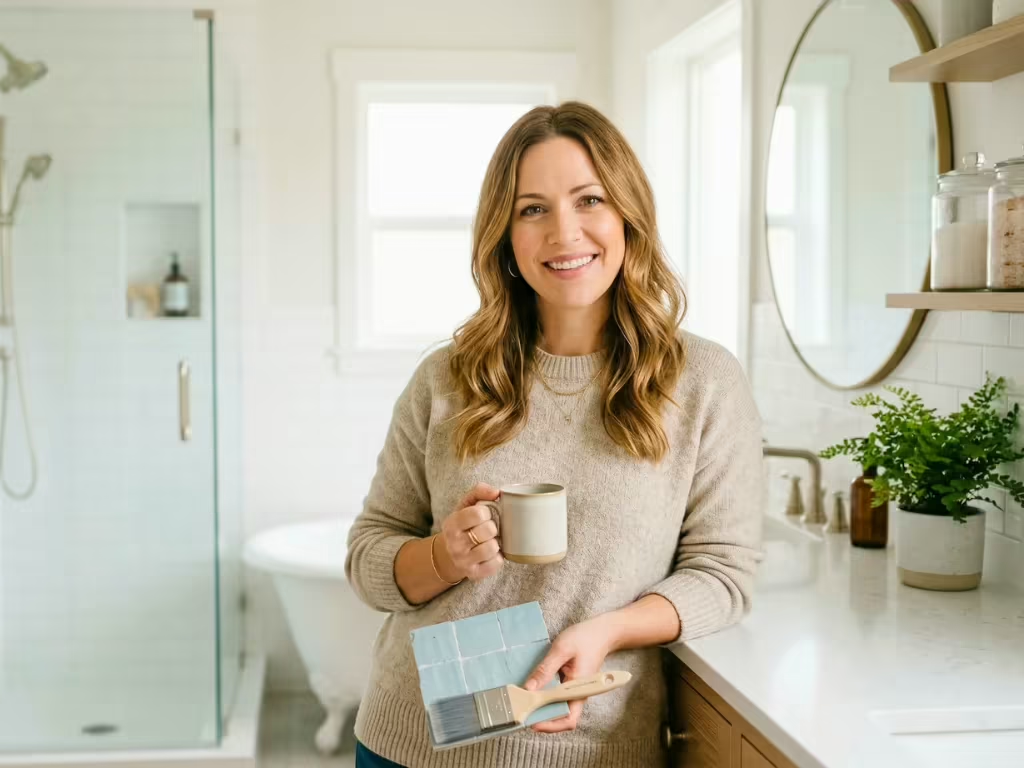
Swatches and samples show what a color really looks like when you’re under your lighting.
I test shades in the bathroom’s own glow, noting warmth, brightness, and depth.
Don’t trust a quick chip at the store; bring it home, view at different times, and compare with fixtures.
Pick tones that stay calm and clean, regardless of the bulb.
Consider vibrant color schemes to make your guest bathroom feel lively and inviting, which can also help open up small spaces with color contrast.
Tile and Paint Pairings to Amplify Space
Tile and paint pairings can instantly expand a tiny bathroom when you choose neutrals with a touch of texture and keep patterns restrained.
I guide you to calm, cohesive combos that feel airy, not busy.
- Use matte neutrals with a subtle texture
- Pair lighter wall tiles with slightly darker trim
- Limit accent color to accessories that echo the tile tone
Mirror and Fixture Colors: Tie the Look Together
Mirror and fixture colors can unify a tiny bath without shouting for attention.
I choose finishes that echo wall or tile tones, keeping hardware cohesive and low-contrast. Satin brass, matte black, or chrome can anchor metals without stealing the scene.
Consistency matters: repeat the accent hue in a mirror frame or faucet handle for a polished, practical look.
Mood-Boosting Colors for Small Baths
Mood-boosting colors can transform a small bathroom from claustrophobic to inviting, even on a tight budget.
I choose hues that feel airy, balanced, and mood-lifting, then pair them with crisp accents. You’ll notice space opens, while still feeling deliberate and calm.
1) Soft greens for freshness
2) Warm neutrals with contrast
3) Bold accents sparingly used
Test With Lighting: Practical Sampling and Setup
Testing lighting is the practical next step, so I set up a simple sampling game plan you can copy.
I compare a neutral base with tiny swatches, then observe under daylight, lamps, and chrome fixtures. I record reflections, warmth, and contrast in a notebook.
Clean light reads true; warm light softens edges. I adjust until the palette feels spacious, cohesive, and calm.
Quick-Win Palettes for Instant Brightness
Quick-win palettes brighten a tiny bathroom fast by pairing high-contrast neutrals with crisp whites and a pop of color.
I share simple swaps you can apply now to lift mood and space.
- Charcoal walls with white accents
- Sand grout, ivory fixtures, teal towels
- Slate floor, bright white vanity, coral decor
Conclusion
I’ve tested the theory that tiny bathrooms feel bigger when color acts like a quiet whisper. The truth is simple: light neutrals and glossy finishes bounce more light, while soft pastels keep corners feeling open. I mix reflective whites with tiny hints of color, then test with practical lighting setups. The result isn’t dramatic, it’s deliberate—spaces breathe, contours read clean, and you move through a room that feels larger because color behaves, not overwhelms.