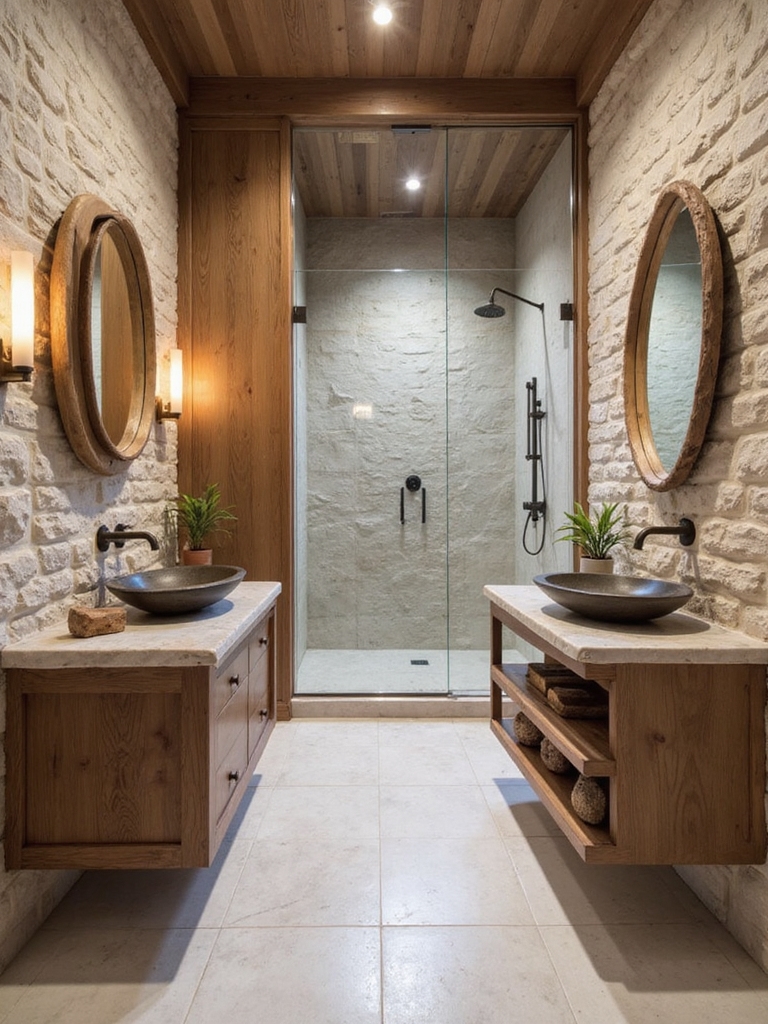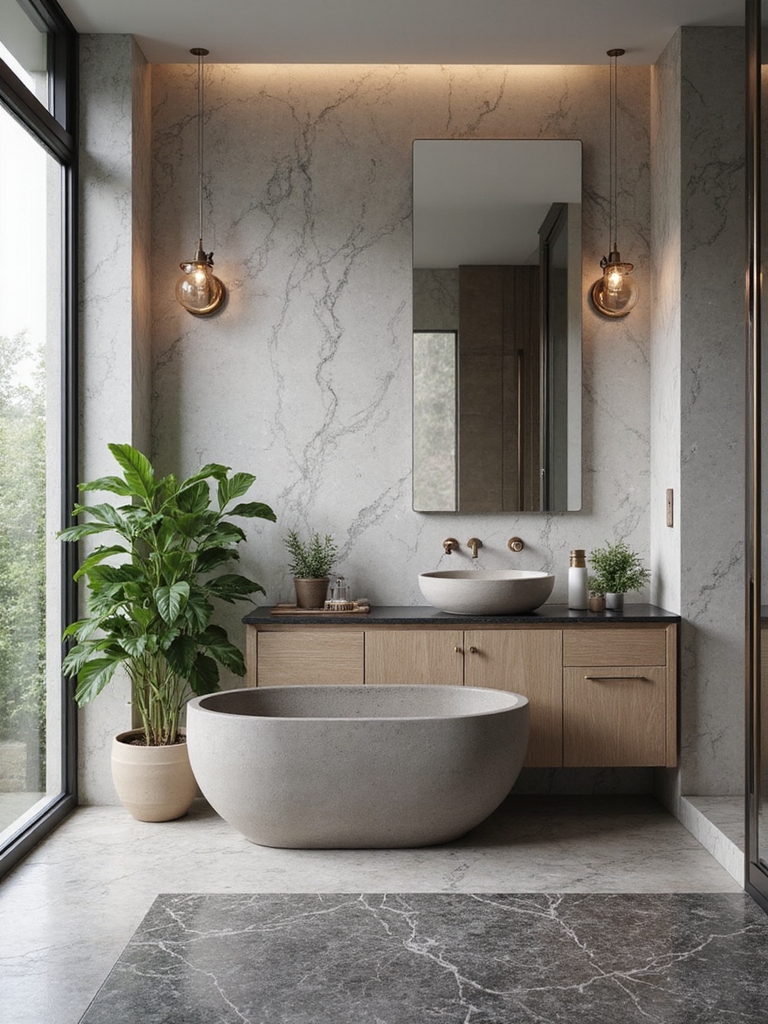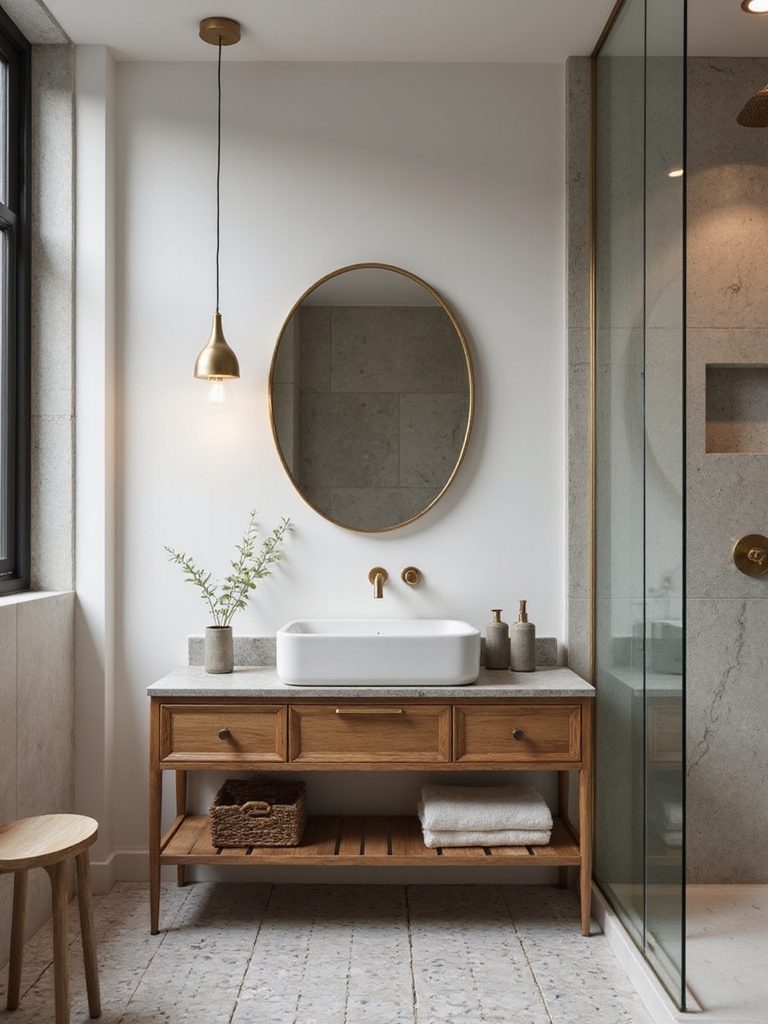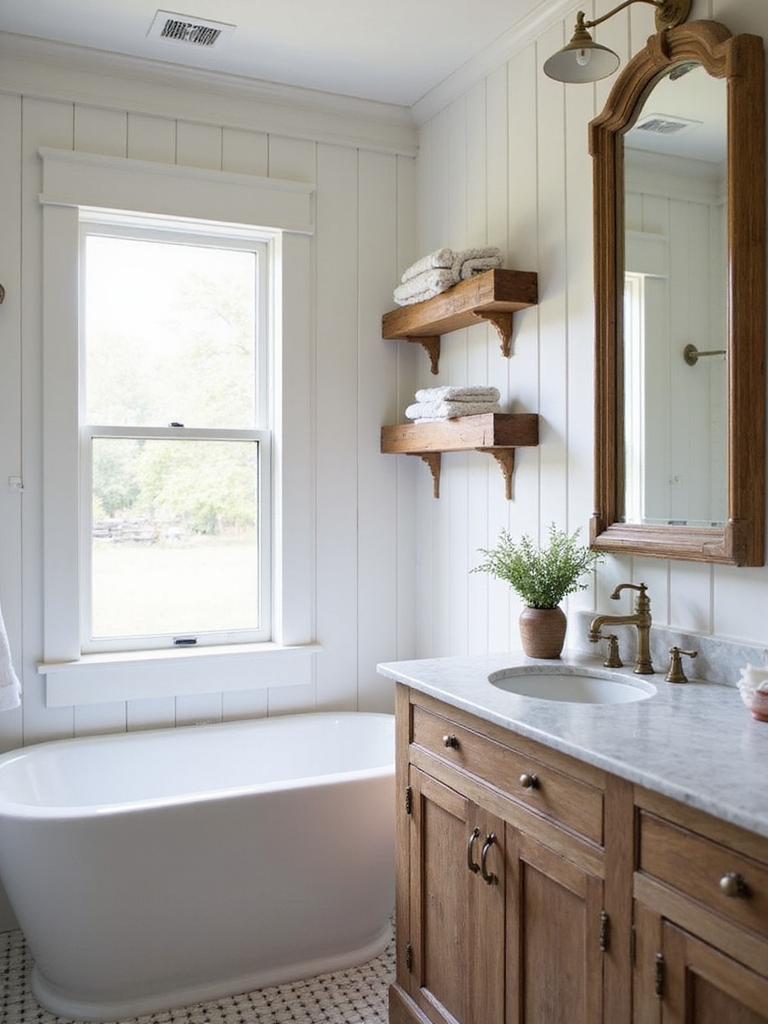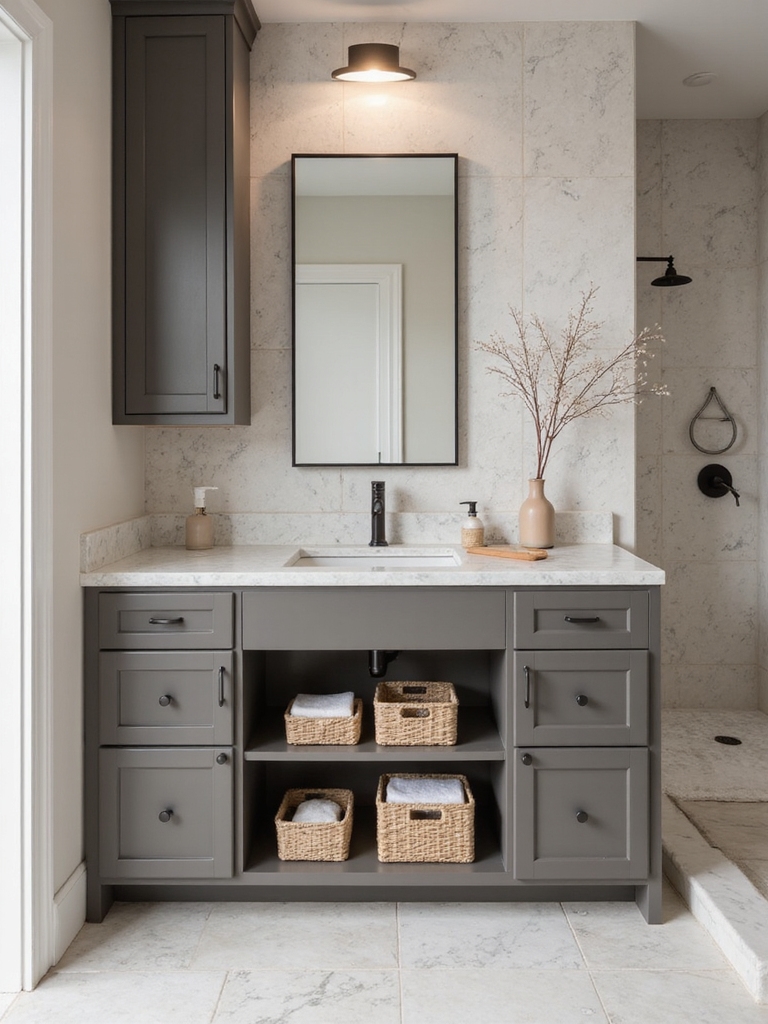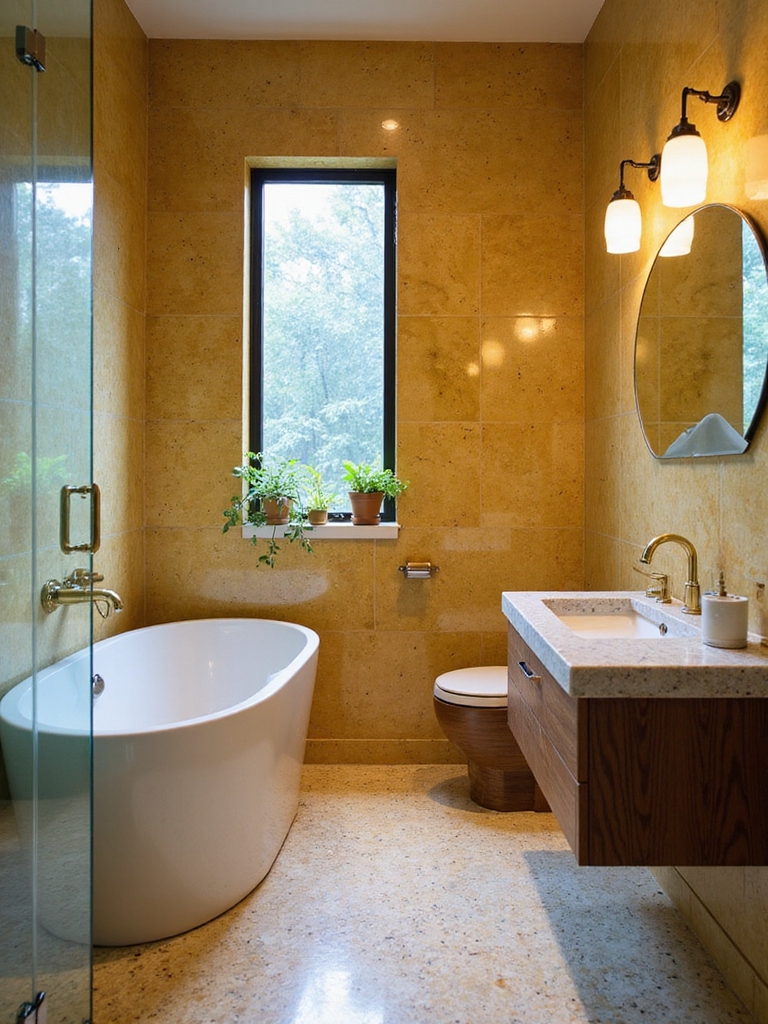
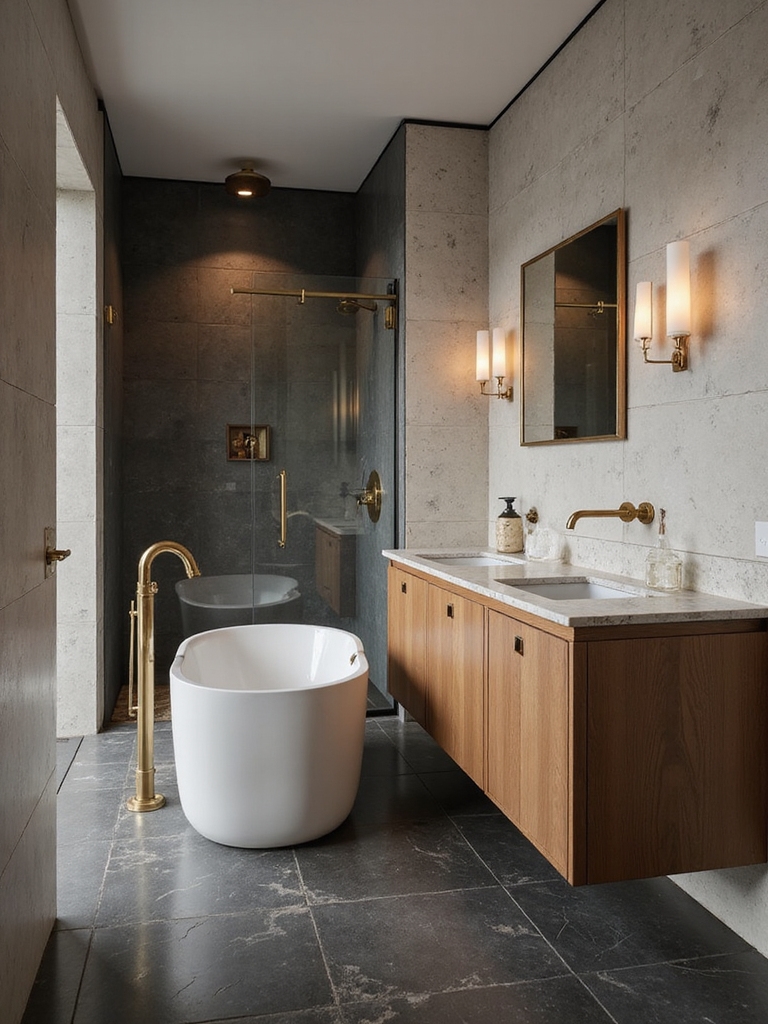
I’ve packed 20 practical, stylish hacks for tiny full bathrooms into one guide to boost space, light, and flow without breaking the bank. You’ll discover space optimization, like pocket doors and smart storage, plus aesthetic touches such as reflective surfaces and large mirrors. I cover functional choices, from floating vanities to slim shelving, and planning tips that keep routes clear. You’ll also find a simple 20-minute makeover plan and a before-and-after checklist to verify gains—more tips await as you continue.
What Makes a Small Full Bath Feel Spacious
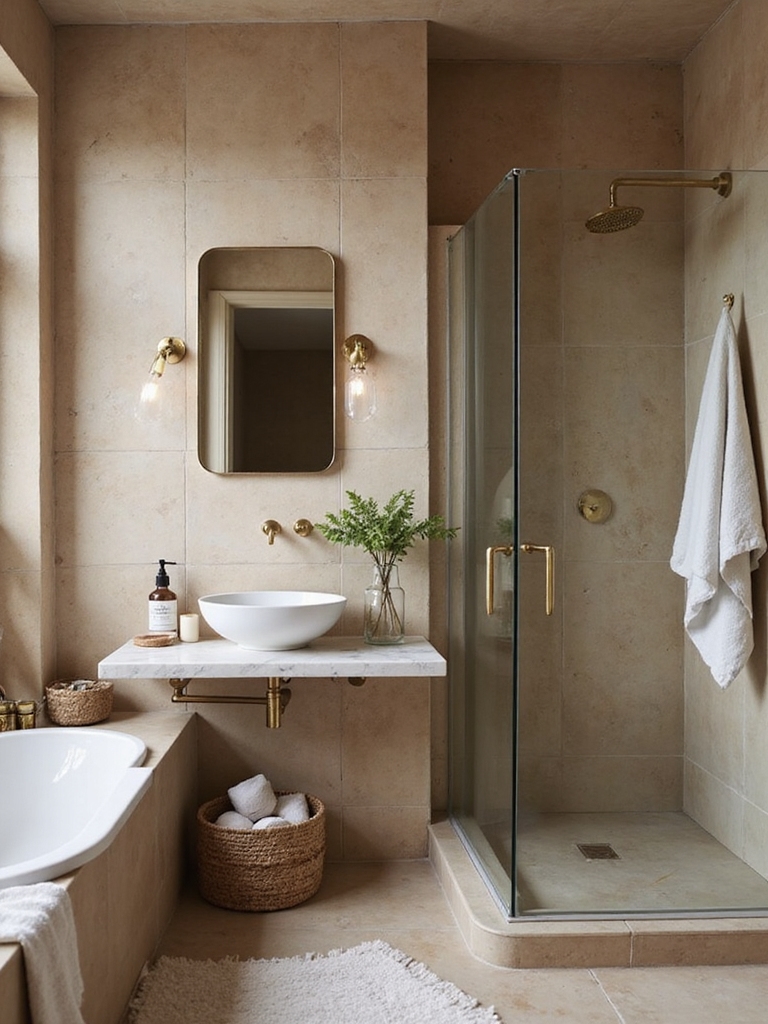
A small full bath can feel spacious when I focus on layout and light.
I choose horizontal sightlines, reflectors, and minimal clutter to expand perceived space.
I pair a narrow vanity with wall-mounted storage, keep fixtures slim, and emphasize clean edges.
Natural light brightens corners; mirrors double the view.
Incorporating smart storage solutions maximizes functionality without crowding the space.
Budget-Friendly Plan: Floating Vanity Layout
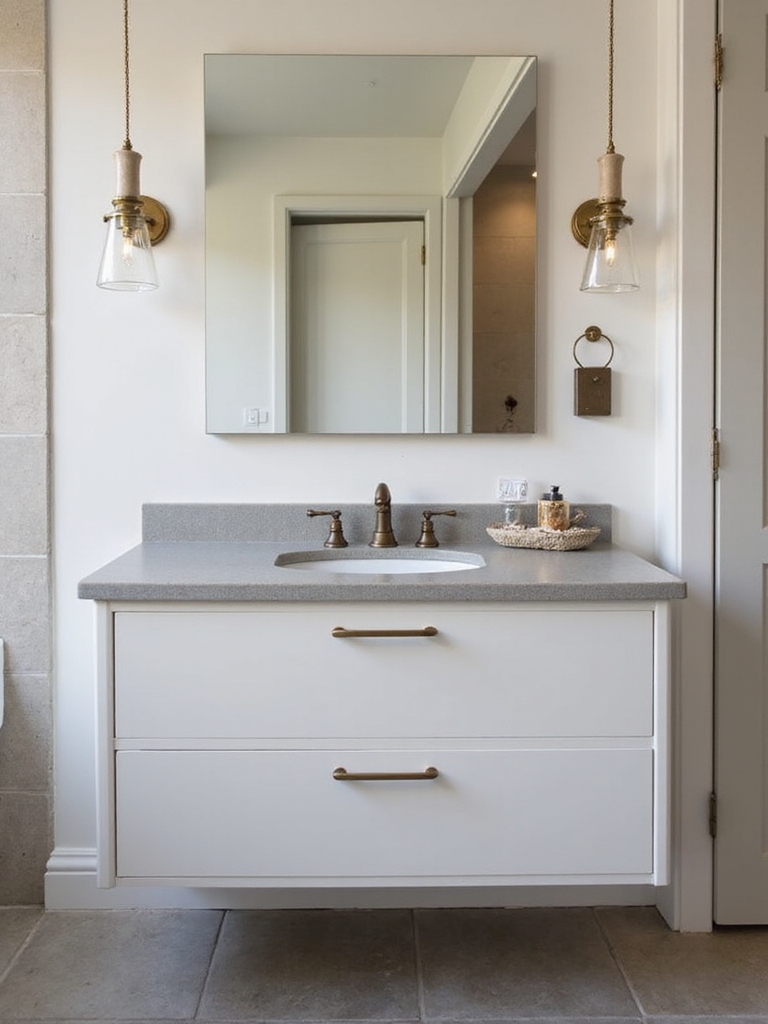
A floating vanity can free floor space and make a small bath feel airier, which I know you’ll appreciate.
I’ll walk you through its benefits, share space-saving aesthetics tips, and outline a budget-friendly install plan so you can keep the project simple and smart.
Let’s explore how this layout balances function, style, and cost without sacrificing polish.
Incorporating innovative ideas can help you defy all limits when maximizing your tiny bathroom space.
Floating Vanity Benefits
Floating vanities offer a clean, open feel that makes a small bathroom feel bigger and brighter.
I’ve found that the floating design improves sightlines, eases cleaning, and adds a sense of airiness without sacrificing storage.
You’ll enjoy flexible plumbing access, customizable heights, and a streamlined look that reduces visual clutter.
It’s budget-friendly, practical, and adaptable to varied styles.
Space-Saving Aesthetics Tips
When space is tight, a floating vanity helps you gain floor area and visual breathing room, making the entire bathroom feel larger.
With a budget-friendly approach, I opt for a compact, wall-mounted piece, clear glass accents, and minimal hardware.
I keep lines clean, avoid clutter, and choose shallow storage solutions that preserve openness without sacrificing function or style.
Budget-Friendly Install Guide
If you’re aiming to fit a functional vanity into a tight space without breaking the bank, start with a compact wall-mounted unit and plan for clearances that keep the room feeling open.
I outline a floating vanity plan: choose standard sizes, install sturdy brackets, and add a slim medicine cabinet.
Opt vinyl flooring, concealed plumbing, and a simple hardware kit for a sleek finish.
Pocket Doors to Save Wall Space in a Small Bathroom
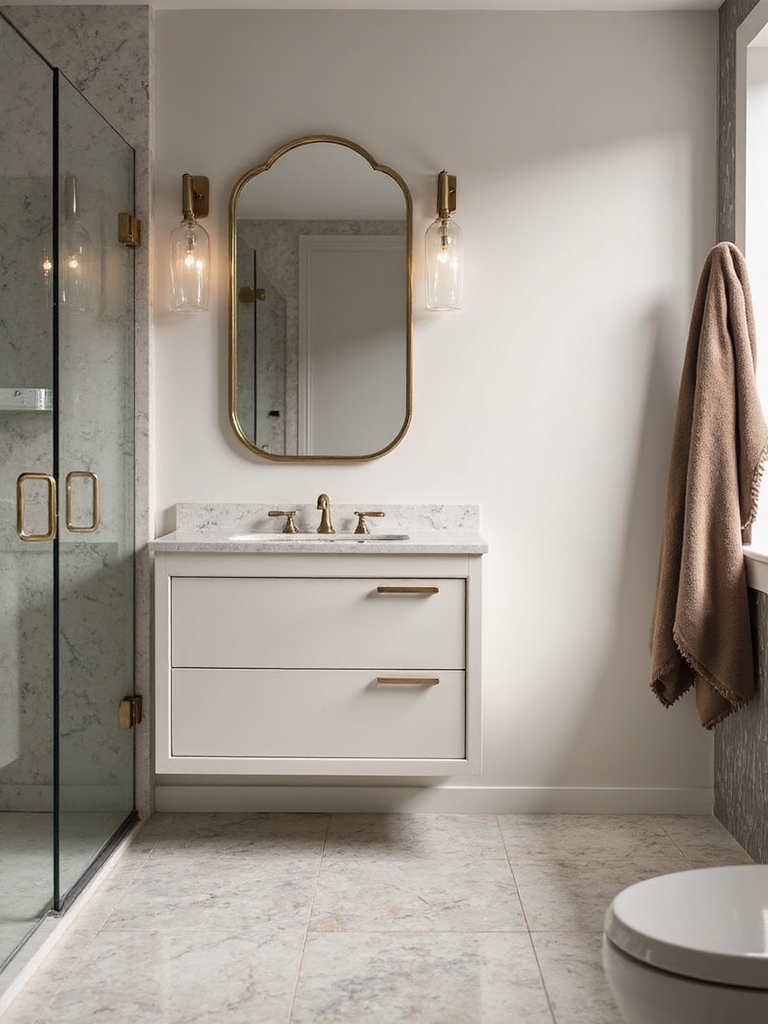
I’m exploring how space-saving pocket doors can open up a small bathroom without crowding the hall or the tub.
They blend with the wall for a seamless look, so you gain wall space for storage or art while keeping a clean line.
We’ll also weigh door clearance and practicalities to guarantee the system fits your layout and daily routine.
Additionally, incorporating creative solutions can further maximize your half bathroom space and enhance functionality.
Space-Saving Pocket Doors
Pocket doors can transform a small bathroom by reclaiming wall space without sacrificing style.
I love how they glide open, keeping traffic clear and surfaces uncluttered.
Here’s how they help:
- Save floor area for a wider vanity
- Minimize door swing conflicts with fixtures
- Offer clean lines that read as deliberate design
This approach feels timeless, finished, and practical.
Seamless Wall Integration
I favor this approach because it preserves sightlines, reduces clutter, and maximizes usable floor area.
The mechanism operates smoothly, with hidden tracks and careful framing preventing snagging.
You gain flexibility: a more open feel without sacrificing privacy or style.
Door Clearance Considerations
Door clearance plays a pivotal role when you’re installing pocket doors in a tight bathroom.
I’ll guide you to efficient space use and safe operation without sacrificing style or function.
- Measure opening height precisely to prevent door snag.
- Plan for a soft-close, reducing slams and wear.
- Verify track alignment stays level for smooth travel.
Corner Layouts That Maximize Floor Area
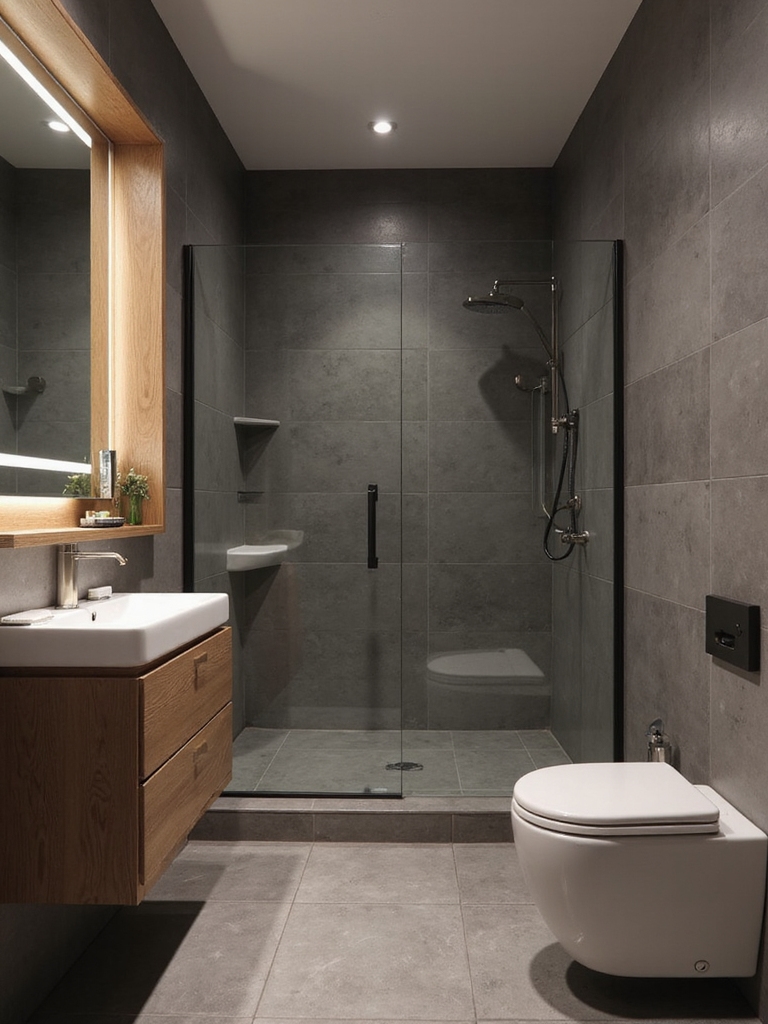
Corner layouts can make a surprising difference in a small full bathroom, letting you reclaim wasted space and create a clear, efficient flow.
I tour the room, choosing compact fixtures and smart nooks that tuck into corners without crowding.
You’ll notice easier access, smoother traffic patterns, and practical storage, all while keeping a timeless, polished feel that suits any style.
Incorporating creative solutions specifically designed for small space bathrooms can further enhance functionality and style without sacrificing comfort.
Reflective Surfaces to Widen a Small Bath
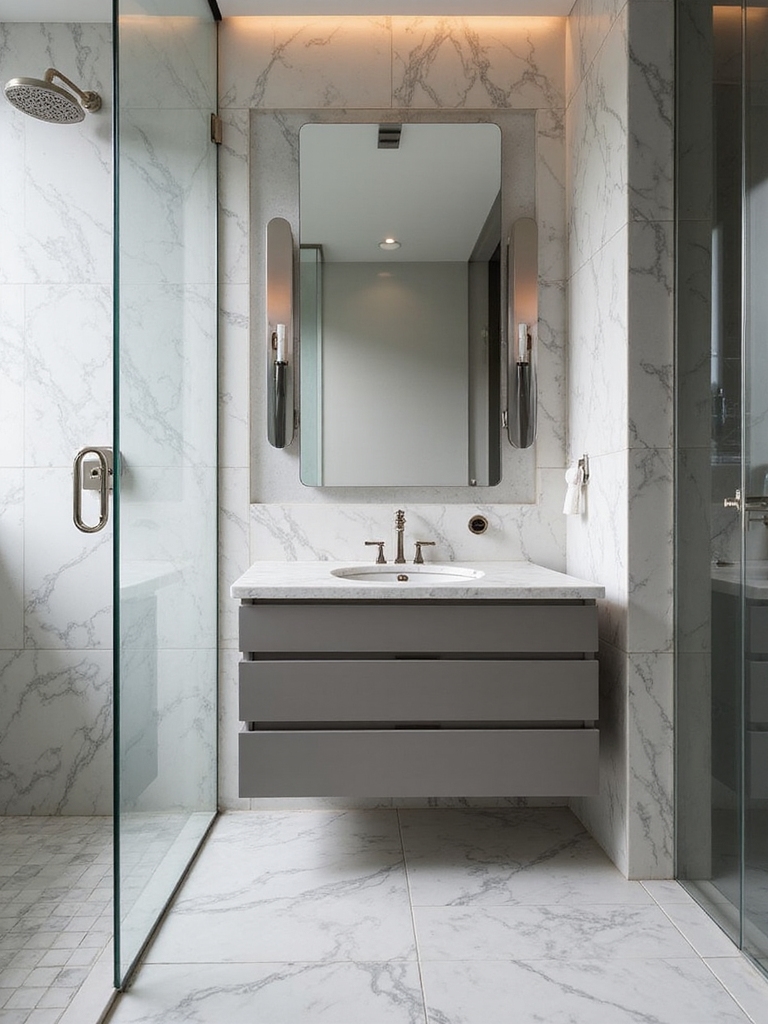
Mirrors and other reflective surfaces can dramatically expand the feel of a small bath, turning cramped corners into a sense of airiness.
I share simple choices that work for any style:
- choose a large mirror
- install glossy tiles diagonally
- add a glass shower door
These elements subtly bounce light, widening space without clutter. Using small bathroom floor tile ideas like light-colored or reflective tiles can further maximize the sense of openness in your layout.
Tall, Slim Storage to Climb the Vertical Plane
Tall, slim storage is my go-to when a bathroom must climb the vertical plane without crowding the floor.
I choose tall A-line cabinets and narrow wall units that hold essentials yet feel breathable.
I favor adjustable shelves and hidden drawers to conceal clutter.
Like-minded readers gain function without crowding space, preserving open sightlines and a calm, polished vibe.
Incorporating smart storage solutions designed specifically for small bathrooms can maximize every inch of vertical space efficiently.
Recessed Corner Shelving for Quiet Storage
I’m drawn to recessed corner shelving because it keeps quiet clutter tucked away without sacrificing style.
I’ll explore how corner shelving styles blend with the room’s lines, while highlighting quiet storage benefits and practical space-saving techniques.
Let’s consider simple layouts and smart materials that make every inch count.
Incorporating clever storage solutions can transform even the smallest bathroom into a functional and stylish space.
Quiet Storage Benefits
Recessed corner shelving quietly elevates a small bathroom by adding storage without crowding the room.
I’ve seen how it declutters surfaces, keeps essentials accessible, and preserves floor space.
- Maximizes vertical utility
- Reduces countertop clutter
- Maintains open sightlines
This approach feels refined, practical, and quietly transformative for daily routines.
Corner Shelving Styles
I design recessed shelves to vanish into corners, keeping counters clear and noise minimal. You’ll notice cleaner lines and calmer spaces when items tuck away neatly.
I favor slim, frosted glass or stone shelves, anchored firmly, with soft interiors for easy reach.
Quiet storage becomes effortless, elegant, and practical.
Space-Saving Techniques
Hidden storage can be both practical and discreet, especially when shelves tuck neatly into the corners.
I spotlight recessed corner shelves to free countertop real estate and keep essentials within reach. They feel unobtrusive yet elevate organization.
- Install in unused corners
- Use moisture-resistant materials
- Group items by daily routine for quick access
Niche Shower Design for Streamlined Storage
Niches in the shower simplify storage without crowding the space, and I’ll show you how to design one that’s both practical and discreet.
Choose recessed or slim vertical shelves to minimize bulk, then position at reachable heights for soaps, razors, and daily essentials.
Use water-resistant materials, a soft-close door, and a neutral grout to maintain a clean, timeless aesthetic.
Incorporating stylish small bathroom design tips ensures your niche complements the overall look while maximizing functionality.
Compact Tub vs. Shower: Which Fits a Small Bath?
Choosing between a compact tub and a shower in a small bath comes down to how you use the space daily and what you value most in your routine.
I suggest weighing priorities carefully:
- Daily comfort
- Cleaning ease
- Visual impact
A tub offers soak serenity; a shower saves footprint.
Your choice shapes flow, storage, and budget—without sacrificing style.
Incorporating elements from modern luxury bathroom design can elevate even the smallest space to a high-end retreat.
Dual-Purpose Fixtures for Multi-Use Spaces
Dual-purpose fixtures can transform a small bath by maximizing function without crowding the space.
I favor a wall-mounted vanity with a shallow depth, paired with a recessed medicine cabinet for hidden storage.
A combined towel rack and robe hook keeps drama minimal, while a fold-down counter offers prep space when needed.
Simplicity, durability, and thoughtful placement define smart multi-use design.
Incorporating stylish solutions ensures your compact bathroom remains modern yet functional.
Layered Lighting to Brighten a Tiny Bathroom
Layered lighting is your best ally in a tiny bathroom, since a thoughtful mix of ambient, task, and accent sources can make the space feel larger and more welcoming.
I guide you to:
1) layer fixtures strategically
2) choose glare-free bulbs
3) place mirrors for reflection and depth
This approach yields clarity, poise, and a brighter everyday routine.
Wall-Mounted Toilets for Open Sightlines
Wall-mounted toilets create open sightlines that make a small bathroom feel airier and more spacious.
I prefer them for a clean, uninterrupted floor, easier cleaning, and flexible placement. They converse with compact vanities without crowding.
You gain a streamlined profile and minimal clutter, yet still enjoy solid comfort and performance.
If plumbing allows, this upgrade elevates the entire space.
Monochrome Palettes to Minimize Visual Clutter
I find that a monochrome palette can simplify every detail, from cabinet lines to wall tones.
I’ll show how understated cabinet details, restrained wall colorways, and subtle textural balance work together to minimize clutter.
Let’s explore how small touches—like matchy hardware and soft textures—create a cohesive, calm space.
Monochrome Cabinet Details
I choose clean lines, matching hardware, and recessed pulls to reduce visual noise while maximizing storage.
- Pair light countertops with glossy doors for reflection
- Use single-handle faucets to maintain streamlined surfaces
- Conceal the inside with uniform interiors for a tidy reveal
Minimal Wall Colorways
I favor a restrained palette—soft whites, warm grays, and near-neutrals—so fixtures and storage shine without distraction.
Subtle contrast, clever trim, and matte finishes keep depth without visual clutter.
You’ll notice cleaner lines, calmer spaces, and easier maintenance.
Simplicity enhances usability and timeless appeal.
Textural Balance Techniques
Texture does the heavy lifting in a small bathroom, especially when you’re using a monochrome palette to keep clutter at bay.
I’ll share balanced textures that stay calm and cohesive.
- I mix matte tiles with gloss accents for depth without noise.
- I layer soft textiles against hard surfaces to soften edges.
- I select uniform fixtures to preserve a seamless, clean line.
Clear Glass Enclosures to Extend Sightlines
Clear glass enclosures are a simple, effective way to extend sightlines in a small full bathroom.
I choose frameless panels to minimize visual clutter and reflect light, creating an airy feel. You’ll notice fewer shadows and a more open floor plan.
Clean lines deter grout chaos, while consistent hardware keeps the space cohesive and polished.
Sit, relax, admire the clarity.
Vertical Towel Storage to Free Vanity Space
Vertical towel storage can free up valuable vanity space without compromising style.
I’ll share simple, practical moves you can implement now:
- Install wall-mounted racks near the shower for easy access.
- Use slim, vertical bars with matching finish to keep towels tidy.
- Choose a compact, stacked unit to maximize floor space while maintaining elegance.
Hidden Storage Ideas That Don’t Crowd the Room
Hidden storage can make a small bath feel bigger by using every inch thoughtfully.
I choose recessed niches, slim medicine cabinets, and under-sink organizers to keep essentials accessible yet out of sight.
I favor furniture with shallow depth, stackable baskets, and mirror-fronted doors to reflect light.
Each option preserves floor space while delivering calm, uncluttered surfaces readers can enjoy daily.
Smart Humidity and Ventilation for Tiny Baths
Smart humidity control is essential in a tiny bath, where steam can quickly accumulate and mold can creep in.
I’ll guide you through reliable, low-profile moves:
- Install a compact exhaust fan with a timer.
- Use a humidity-sensing switch to run when needed.
- Seal joints and vents to prevent moisture intrusion.
This keeps your space calm, clean, and inviting.
One-Entry vs. Two-Entry Flow: What Works Best?
When designing a small full bathroom, the flow matters as much as the fixtures. I weigh one-entry versus two-entry layouts by how traffic circulates, door swing, and privacy.
One-entry keeps sightlines clean and feels roomy; two-entry enhances convenience for shared spaces but can crowd the core zone.
I prioritize clear pathways, minimal eddies, and balanced focal points for comfort.
20-Minute DIY Makeover Ideas for Small Baths
I share simple shifts you can do this weekend, without gutting walls. Here are practical steps:
- Swap hardware for brushed nickel and tactile pulls
- Add a slim mirror with anti-fog edge
- Repaint with a light, airy tint for instant brightness
Before-and-After Checklist to Verify Gains
I’ll start with Verify Before Gains to set a clear baseline for what’s changed.
Next, I’ll walk you through Track Layout Improvements so you can see how the space actually works now.
Finally, I’ll confirm Final Results and invite you to compare what you gained against your goals.
Verify Before Gains
Before you plunge into renovating a small full bathroom, a quick “Verify Before Gains” checklist helps you map scope, priorities, and expected outcomes.
I confirm goals, budget, and timeline to stay crisp and credible.
- Define must-haves versus nice-to-haves
- Verify measurements, loads, and clearance
- Align fixtures, finishes, and storage with the budget and plan
Track Layout Improvements
To keep a small full bathroom on track, I start with a precise track layout—mapping how the space will move and function after the changes.
My before-and-after checklist confirms door swings, clearance, and fixture spacing, preventing bottlenecks. I visualize circulation, guarantee storage aligns with traffic, and verify width tolerances.
Clear milestones keep momentum, guiding decisions without guesswork or regretful missteps.
Confirm Final Results
Now that the plan’s in place, I run a final confirm-and-compare check to verify gains. I compare color, layout, and function, ensuring each change delivers value and comfort.
I focus on tight milestones and measurable results.
- Record before-and-after dimensions
- Verify storage and flow improvements
- Confirm accessibility and ease of use
Conclusion
A small bathroom can feel surprisingly spacious with simple moves. I love this stat: most owners report a 20–30% perceived space gain after embracing floating vanities and reflective surfaces. By prioritizing one-entry flow and pocket doors, you’ll trim wasted hallway traffic and reveal floor area you didn’t know existed. With a quick 20-minute makeover mindset and a practical checklist, you’ll finish confident that every inch serves you—beautifully, efficiently, and within reach.