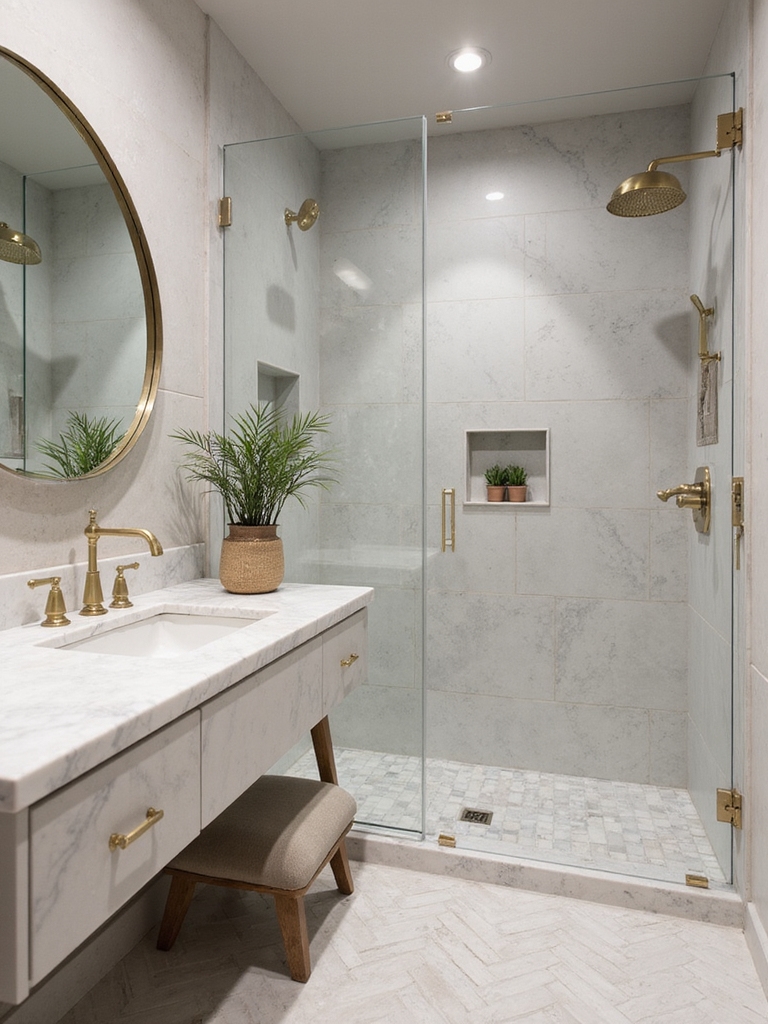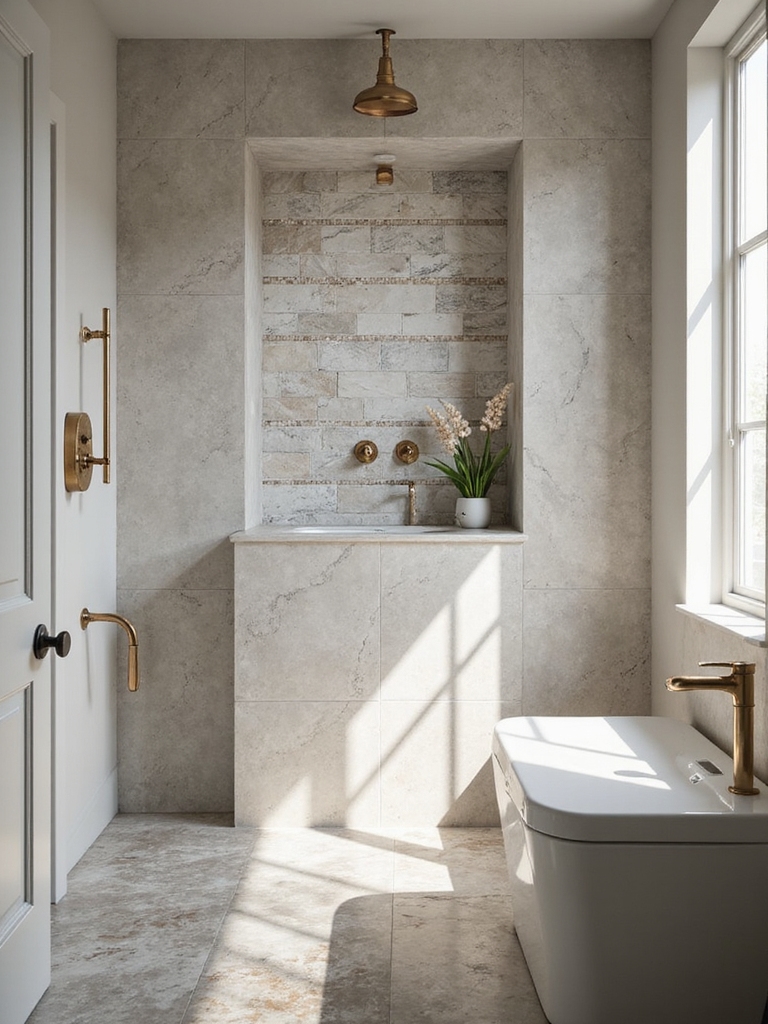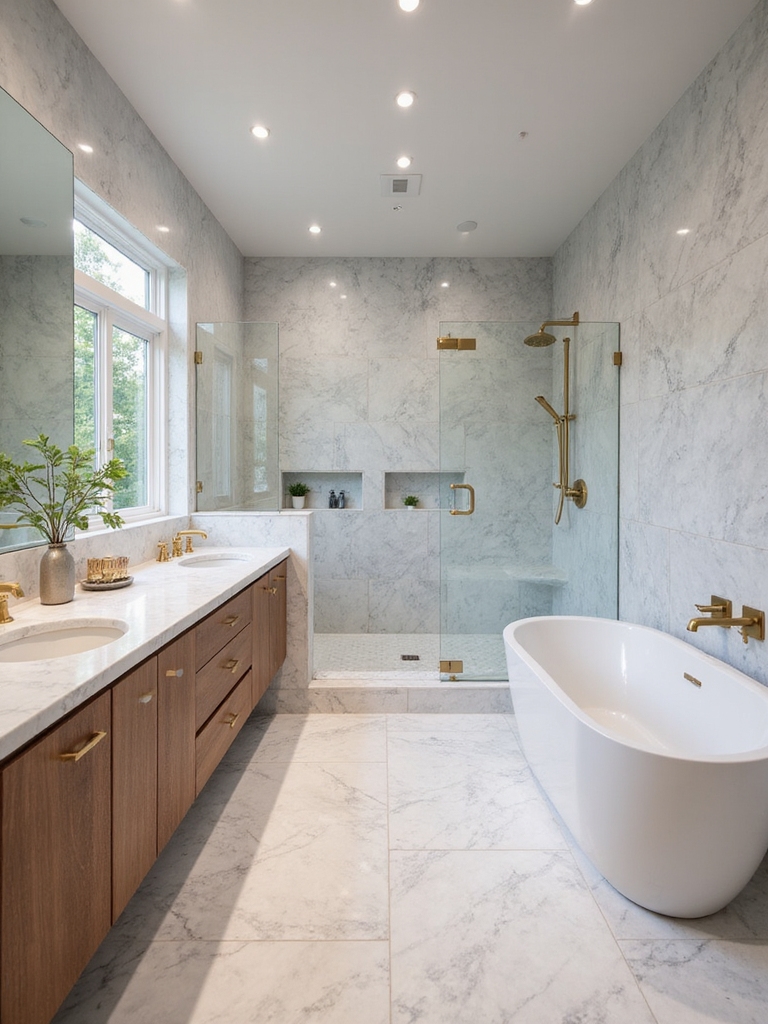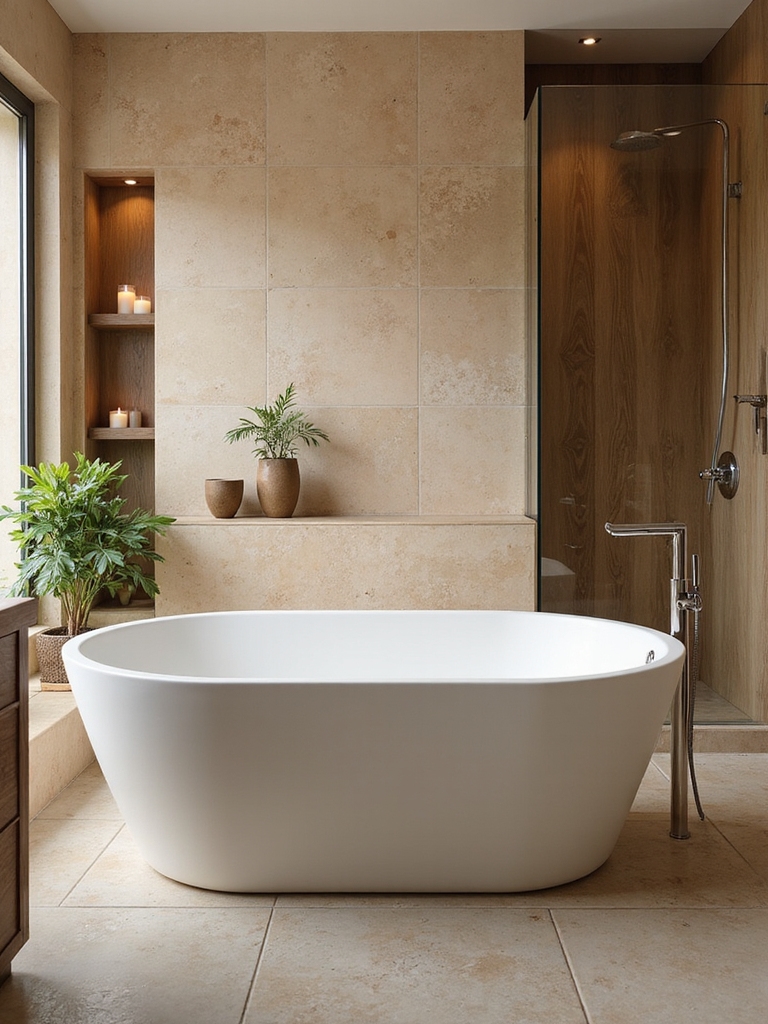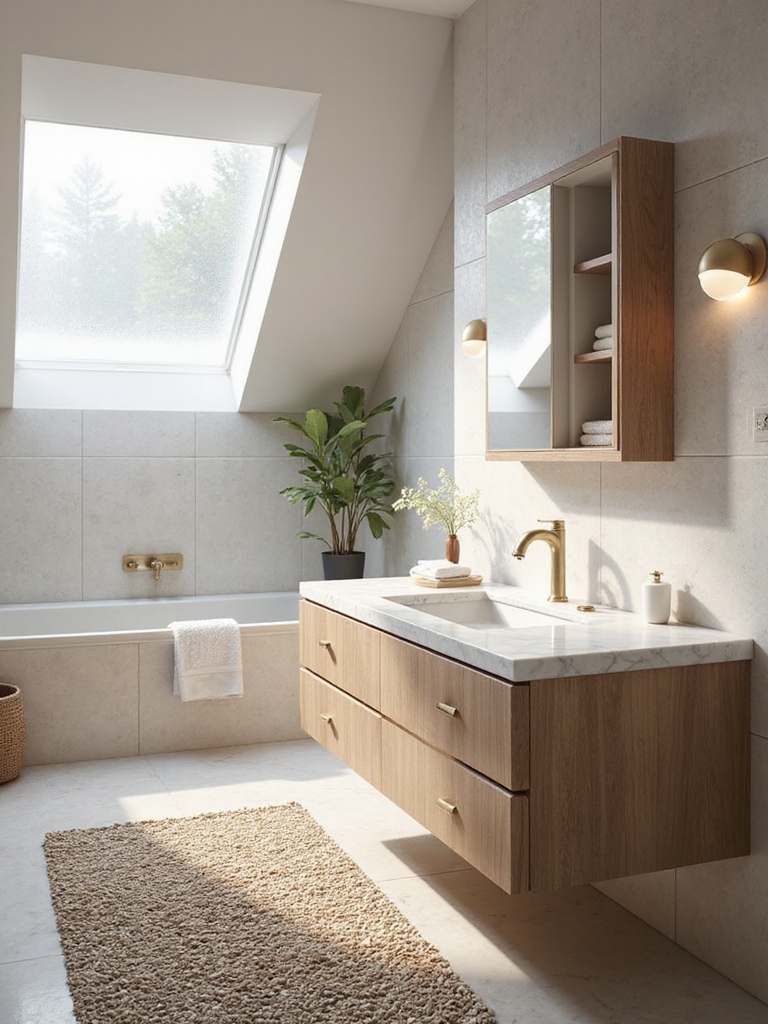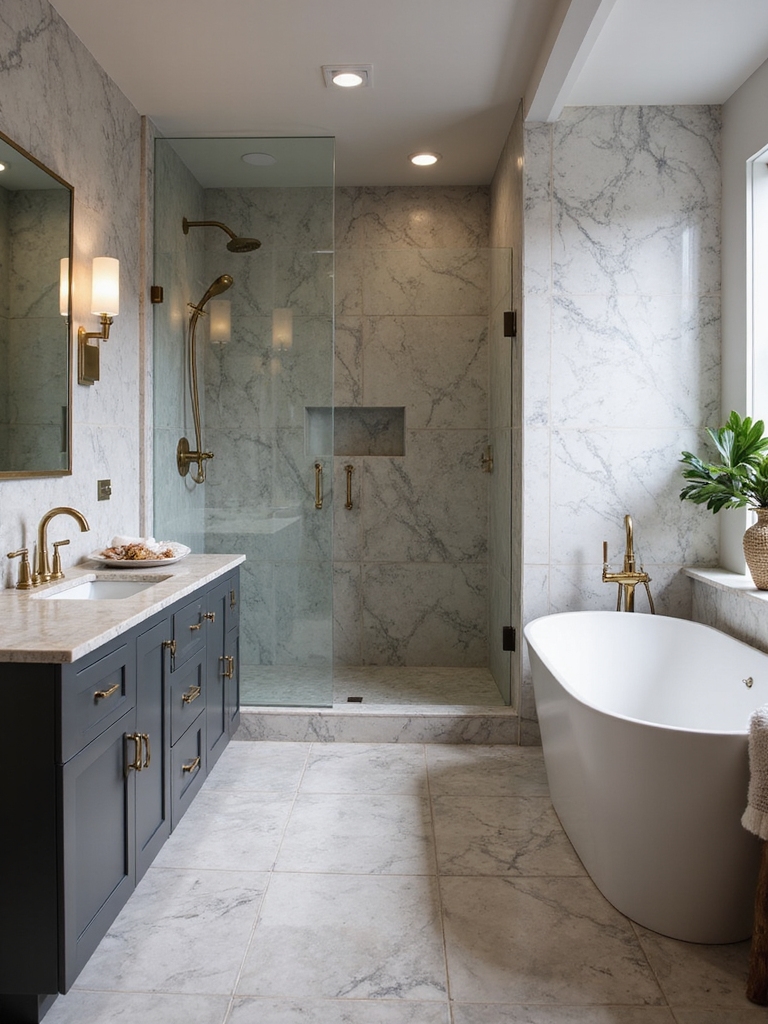
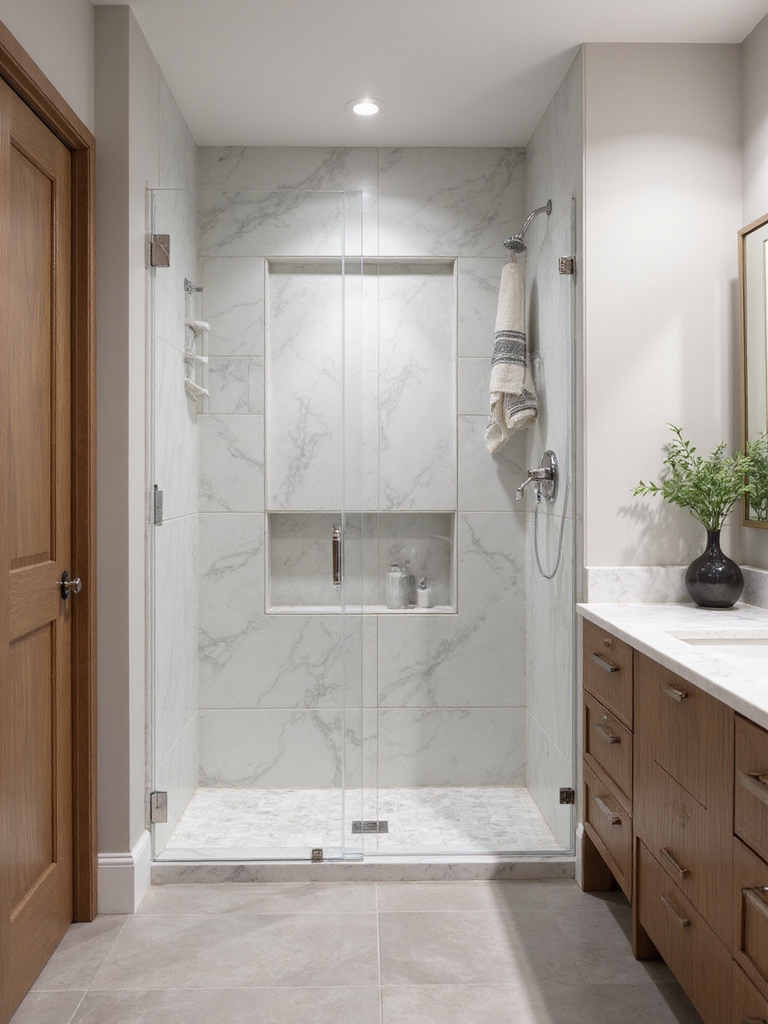
I’m sharing 19 simple ideas to transform a small master bath with a walk-in shower that feels bigger and easier to maintain. Think frameless glass for bright sightlines, smart tile patterns that add length, and corner niches or recessed shelves to reclaim space. I’ll also cover low-threshold entries, built-in benches, and budget-friendly upgrades that boost function without clutter. Curious how to measure for fit and plan a smooth install? You’ll get practical steps next.
Why Walk-In Showers Fit Small Master Baths
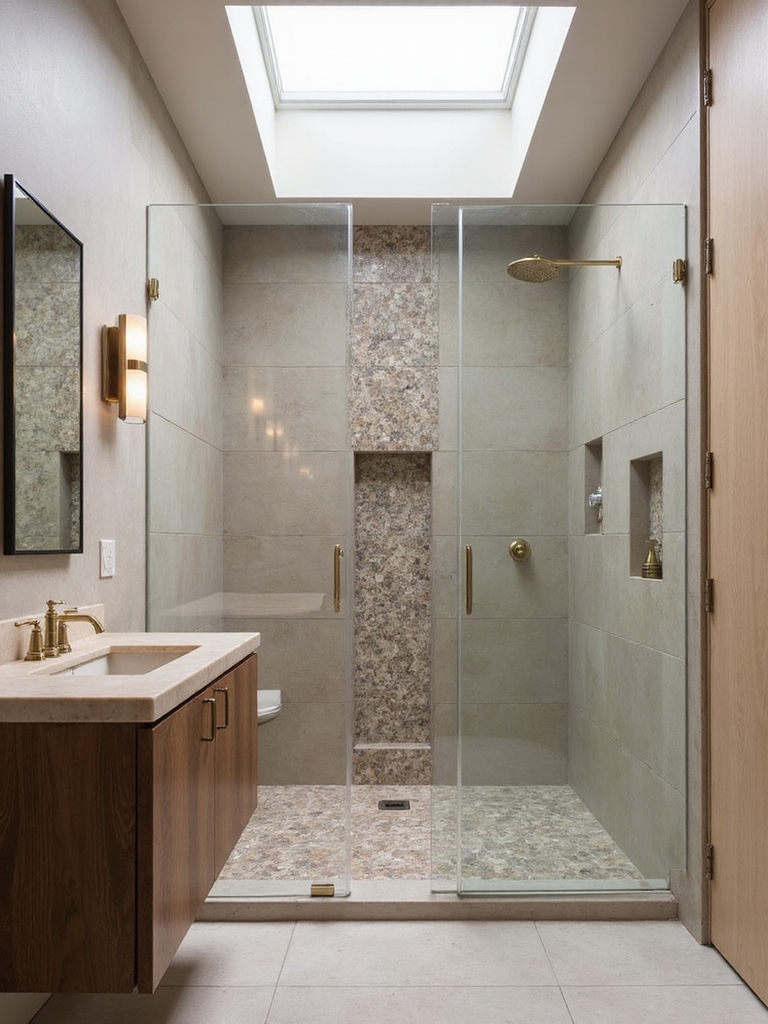
Walk-in showers are a smart fit for small master baths because they open up floor space and feel instantly larger.
I’m glad you asked why they work here. They remove bulky doors, reduce clutter, and create clean sightlines that visually expand the room.
With one doorway and fewer seams, maintenance stays simple, and daily routines stay fast and efficient.
Incorporating a walk-in shower pony wall can further enhance privacy and style without compromising space.
How to Measure Space and Door Clearance for a Walk-In Shower
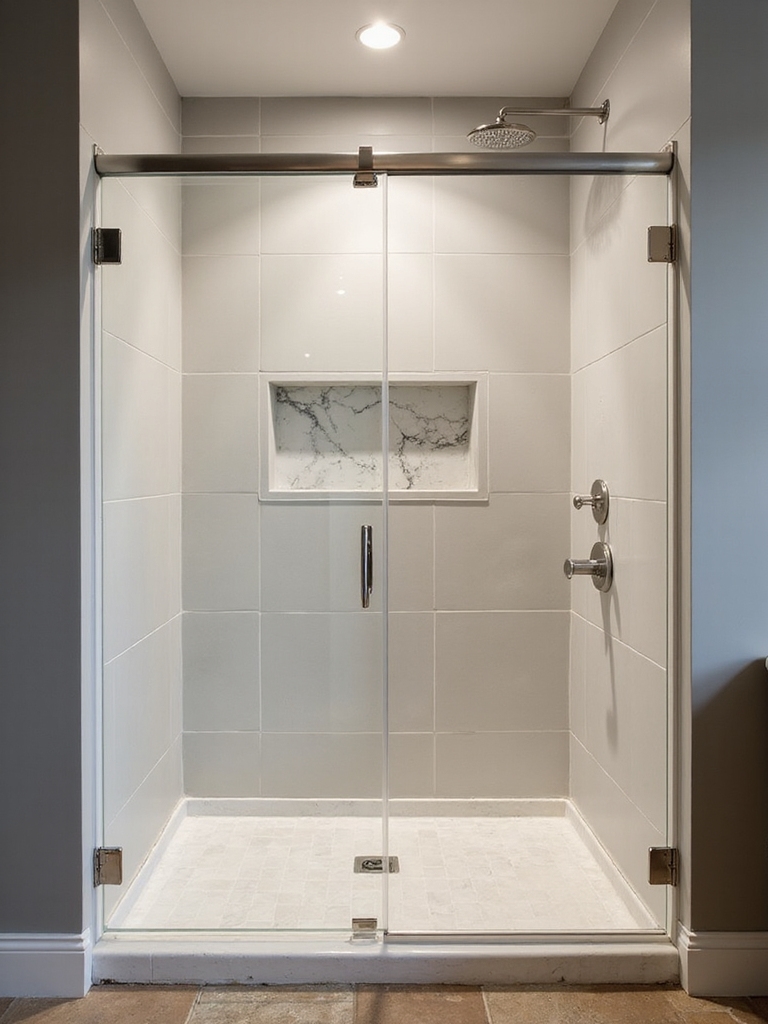
Now that we’ve seen why walk-in showers open up small baths, the next step is getting the measurements right.
I’ll guide you through practical sizing, door clearance, and space planning so your layout fits beautifully without surprises.
- Measure overall footprint, including any niches or benches.
- Add door swing radius and clearance for easy entry.
- Verify existing plumbing distances align with your new layout.
Incorporating smart solutions can help maximize every inch of your compact ensuite bathroom efficiently.
Frameless Glass Enclosures for Open Sightlines in Tight Spaces
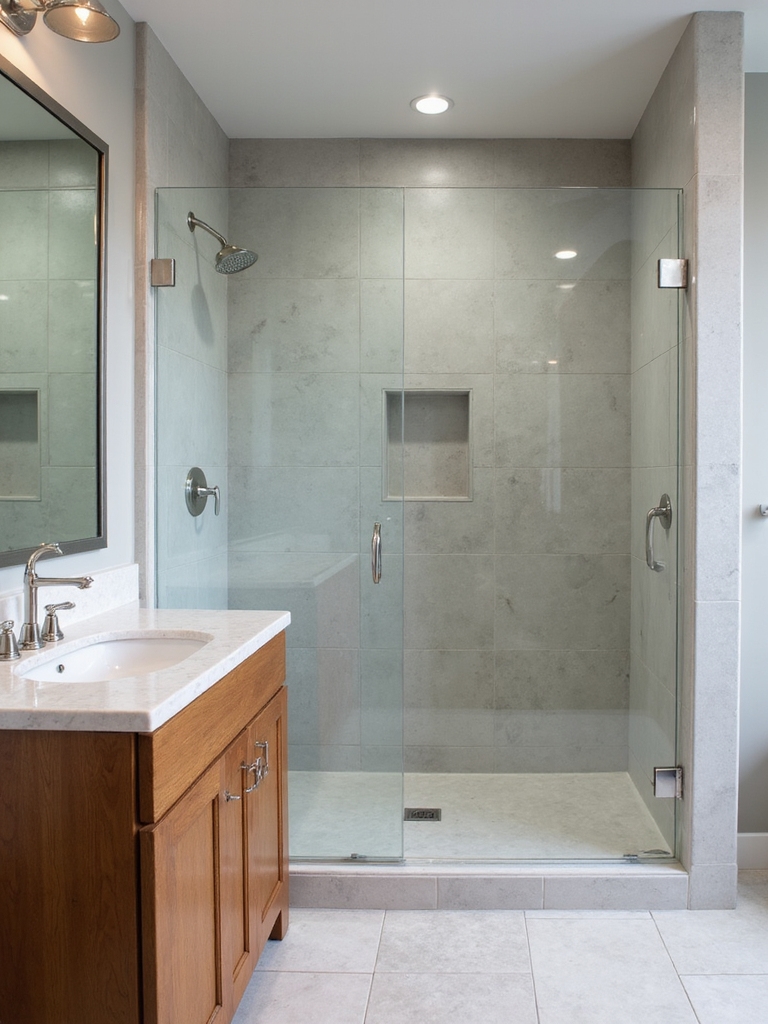
Frameless glass keeps the space feeling open and bright, with no heavy frames interrupting sightlines.
I’ll show you how solid glass integrity and careful hardware mean you get a clean, leak-resistant enclosure that visually expands a tight bath.
Let’s explore how open sightlines can make your small bathroom feel bigger without sacrificing function.
Incorporating stunning walk-in shower ideas can truly transform your bathroom remodel into a stylish and functional space.
Frameless Glass Integrity
Shiny, seamless glass can transform a tight bathroom by keeping sightlines open and the space feeling larger, even when you’ve got limited room to work with.
I’ll share Frameless Glass Integrity tips that keep openings safe, leak-free, and visually continuous.
- Seal quality matters, choose gasket-free or minimal seams for cleaner lines.
- Hardware should be corrosion-resistant to avoid wobbly, brittle fittings.
- Regular checks prevent micro-leaks, preserving clarity and confidence.
Open Sightlines Benefits
Open sightlines in a tight bathroom start with frameless glass that visually expands the room while keeping water and steam contained.
I love how clear panels minimize clutter, reflect light, and trick the eye into spaciousness.
No bulky frames mean easier cleaning, safer shifts, and a seamless look.
You gain openness without sacrificing privacy or performance—practical, stylish, simple.
Tile Patterns That Visually Expand a Small Shower
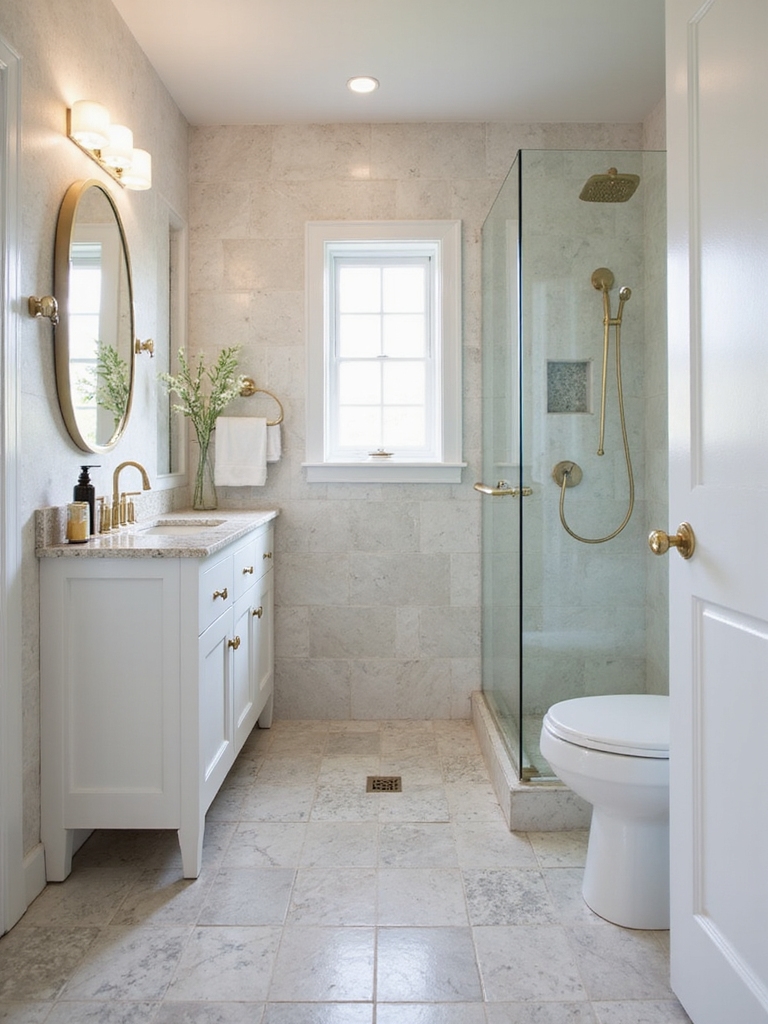
When you’re working with a small shower, choosing the right tile pattern can make the space feel noticeably larger.
I guide you toward patterns that create length, depth, and flow without clutter.
- Straight lay with vertical runs to draw the eye upward
- Herringbone or brick patterns for dynamic movement
- Large-format tiles minimize grout lines and expand perceived space
Additionally, incorporating trendy bathroom tile flooring can enhance both style and the sense of openness in your small shower.
Corner Niches and Recessed Shelves to Save Shower Space
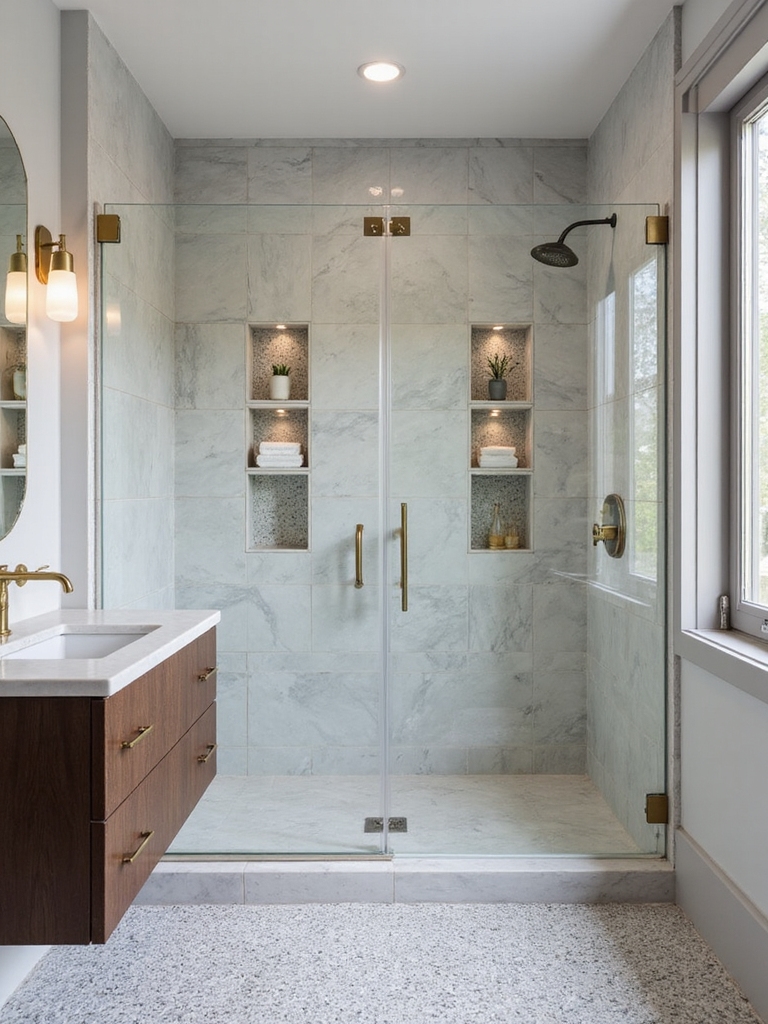
I’m excited to show how corner niches and recessed shelves can free up shower space without sacrificing storage.
By using a corner niche for soaps and tools and integrating recessed shelves into the tile wall, you gain practical storage that stays out of the way.
Let’s explore simple layouts that maximize accessibility and keep the look clean and open.
These clever bathroom storage solutions for tiny spaces provide both functionality and style, making the most of limited areas with innovative storage ideas.
Corner Niche Efficiency
Corner niches and recessed shelves are small moves with big impact in a tight shower.
I focus on efficiency: placement, size, and edge protection, so every product has a home without clutter.
Here are three practical tweaks:
1) Corner height placement for easy reach
2) Narrow, shallow bins to minimize overhang
3) Waterproofed edges to reduce maintenance
Recessed Shelves Integration
Recessed shelves are a natural next step after sharpening corner niches, because they keep shower clutter tucked away without stealing space.
I design them where they’re easy to reach, not in the way of a shower door, and I keep materials simple and water-resistant.
With precise placement, routine finds become quick, tidy, and consistently accessible for daily use.
Built-In Benches and Seating Options for Compact Baths
Built-in benches can transform a small bathroom from functional to inviting, offering seating without stealing square footage.
I choose compact options that fit shower alcoves or corners, blending storage and comfort. You’ll gain practicality with hidden niches and water-friendly finishes.
- Corner shower bench with towel rack
- Floating seat over a cabinet
- Recessed bench with built-in shelves
Incorporating built-in benches is one of the small full bathroom ideas to maximize every inch efficiently.
Low-Profile Thresholds for Seamless, Accessible Entry
I love how low-profile thresholds create a seamless, accessible entry that feels almost invisible as you move from room to room.
I’ll share practical tips on achieving seamless entry, from precise floor planning to choosing the right materials and edge details.
Let’s explore how these low-profile edges improve safety and flow without sacrificing style.
These simple ideas can transform your small bathroom remodel without the mess, making the process smoother and more efficient with small bathroom ideas.
Seamless Entry Thresholds
- Pick a flush, waterproof substrate
- Use a single-color grout line
- Guarantee slip-resistant, seamless surface continuity
Low-Profile Floor Planing
Low-profile thresholds make every bathroom feel bigger and safer.
I’m sharing planning tips I use with clients: choose a single-slope approach, keep changes minimal, and guarantee wired-for-water layouts stay clear.
I measure door clears, grout lines, and baseboard heights to avoid trips.
With careful planning, the entry stays seamless, functional, and visually streamlined for daily use.
Accessible Shower Edges
- Choose a 1/2-inch threshold with a gentle ramp.
- Use continuous tile or micro-creases for seamless shifts.
- Seal carefully to prevent seepage and maintain grip.
Creating a Wet-Room Vibe in a Compact Master Bath
A wet-room vibe can transform a compact master bath from functional to luxurious, and the key is smart zoning that keeps water where it belongs while still feeling open.
I swap dry zones for seamless lines, install curbless thresholds, and choose moisture-friendly finishes.
With thoughtful storage, ventilation, and glass, you gain spa-like calm without sacrificing practicality or space.
Incorporating simple DIY ideas can make this transformation both affordable and achievable for anyone.
Pebble vs. Large-Format Tile: Pros, Cons, and Best Uses
Pebble and large-format tile each bring a distinct feel to a small bathroom, so choosing between them comes down to texture, maintenance, and the look you want.
I’ll share concise, practical insights you can use now:
- Pebble: warm texture, grippy, requires sealing.
- Large-format: seamless, easy cleaning, fewer grout lines.
- Best uses: showers, floors, accessibly stylish outcomes.
For a truly elegant master bath, consider how your flooring choice complements other stylish bathroom flooring ideas.
Clear vs. Frosted Glass: Balancing Privacy and Openness
Clear or frosted glass can dramatically shape a small bathroom’s feel, balancing privacy with openness.
I’ve weighed options for you: clear panels maximize light and make the space seem larger, while frosted glass softens visibility and adds subtle privacy.
My tip: combine with framed doors or partial dividers. You’ll enjoy brighter mornings without sacrificing modesty or style.
Practical, inviting, affordable choices.
Top stylists often recommend incorporating inspiring bathroom decor ideas to enhance both function and aesthetic in small remodels.
Accessibility-Friendly Design Touches for a Master Suite
Even in a master suite, accessibility doesn’t have to feel clinical; it should feel thoughtful and welcoming.
I share practical touches that smooth daily routines without sacrificing style, guiding you toward calm, usable spaces.
- Lowered switches and dimmable lighting for easy visibility
- Grab bars near shower, tub, and toilet for confident support
- Zero-threshold entry and wider doors to accommodate mobility aids
Finishes That Pop: Matte Black and Brushed-Metal Fixtures for Contrast
Switching from accessible features to bold finishes, matte black and brushed-metal fixtures instantly wake up a small bathroom without adding clutter.
I love how these finishes contrast with light walls and white tile, creating depth without shouting.
Pick controlled doses: a faucet, towel bars, and a shower niche topper.
They’re modern, durable, and easy to wipe, keeping the space feeling intentional and calm.
Hidden Storage Ideas That Stay Minimal and Practical
I’m excited to share slim wall nooks, hidden shelf tricks, and tidy cabinet hacks that keep your bathroom uncluttered.
These ideas hide storage in plain sight while staying minimal and practical, so you’ll always have what you need at hand.
Let’s explore simple, clear ways to maximize space without adding bulk.
Slim Wall Nooks
- Corner recess shelves maximize dead space without doors or handles.
- Shallow, sealed niches keep shampoo, soap, and razors within easy reach.
- Magnetic or recessed baskets add lightweight organization, no bulk.
Hidden Shelf Tricks
I share small, clever spots I love—behind a mirror, inside a shallow cabinet, or under a floating shelf.
I keep essentials accessible yet unseen, choosing slim baskets and labeled jars.
You’ll enjoy quick grabs, fewer clutters, and cleaner counter space.
Simple, practical storage boosts calm, bright mornings.
Tidy Cabinet Tricks
- Use pull-out shelves for easy access with no rummaging.
- Install magnetic strips for metal tools and tiny items.
- Add clear, labeled containers to see everything at a glance.
Lighting and Color Strategies to Brighten a Small Shower
To brighten a small shower, start with smart lighting and color choices that make the space feel expansive.
I favor bright, neutral walls, reflective tiles, and a crisp white ceiling to bounce light.
Use layered lighting—soft ambient, task, and accent—to erase shadows.
Add a glass door, metallic accents, and a cool palette for a fresh, roomy vibe.
Maintenance-Friendly Materials That Resist Grime
A smart, low-maintenance bathroom starts with the right materials that stay clean with minimal effort.
I focus on grout and surfaces that resist grime, making daily upkeep simple for your walk-in shower.
Here are options that work well in tight spaces:
1) Porcelain or ceramic tiles with enameled grout
2) Quartz countertops and shower panels
3) Solid-surface shower stalls with non-porous finishes
Budget-Friendly Upgrades That Transform a Small Shower
Small upgrades can make a big impact in a tight shower, and you don’t have to break the bank to get noticeable results.
I’ll focus on affordable choices that refresh without renovation chaos: peel-and-stick shelves, a smart showerhead, clear acrylic organizers, and simple toggles instead of tiling.
Small changes, bright results, everyday practicality, and less mess—you’ll feel the difference fast.
What to Expect: Installation Timeline for a Compact Walk-In
If you’re planning a compact walk-in, you’ll want a clear timeline you can trust, from planning through finish.
I’ll map it out simply so you’re never guessing the next step.
1) Planning and permits: quick approvals, clear scope.
2) Demo to enclosure: protect floors, set rough-in schedule.
3) Finishing touches: grout, glass, and cleanup finalization.
Before-and-After Ideas: Small Master Bath Walk-Ins
From planning a compact walk‑in to the finished space, small master bath walk-ins shine when you visualize the before and after.
I’m sharing simple, practical ideas that show real changes you can recreate: tiny tweaks, clever storage, and brighter finishes.
See how a few shifts—from shower door to tile pattern—transform daily routines into calm, functional moments you’ll actually love.
How to Choose the Right Contractor for a Compact Shower Remodel
Choosing the right contractor for a compact shower remodel can feel intimidating, but it doesn’t have to be. I’d prioritize clear timelines, transparent pricing, and solid references.
Here are essentials:
1) Verify licenses and insurance
2) Review past compact-shower projects
3) Request detailed, itemized proposals with a scope of work
Conclusion
If you’re dreaming of a larger-feeling master bath, a walk-in shower can do wonders without a huge footprint. I’ve seen this shift firsthand: a tight 5×8 layout opened up with frameless glass, a recessed niche, and bright tile that makes every inch count. Imagine this hypothetical case—a countdown of a weekend remodel turning a dated shower into a spa-like, accessible space. Bright ideas, practical tweaks, real results—your small bath can feel grand and inviting.