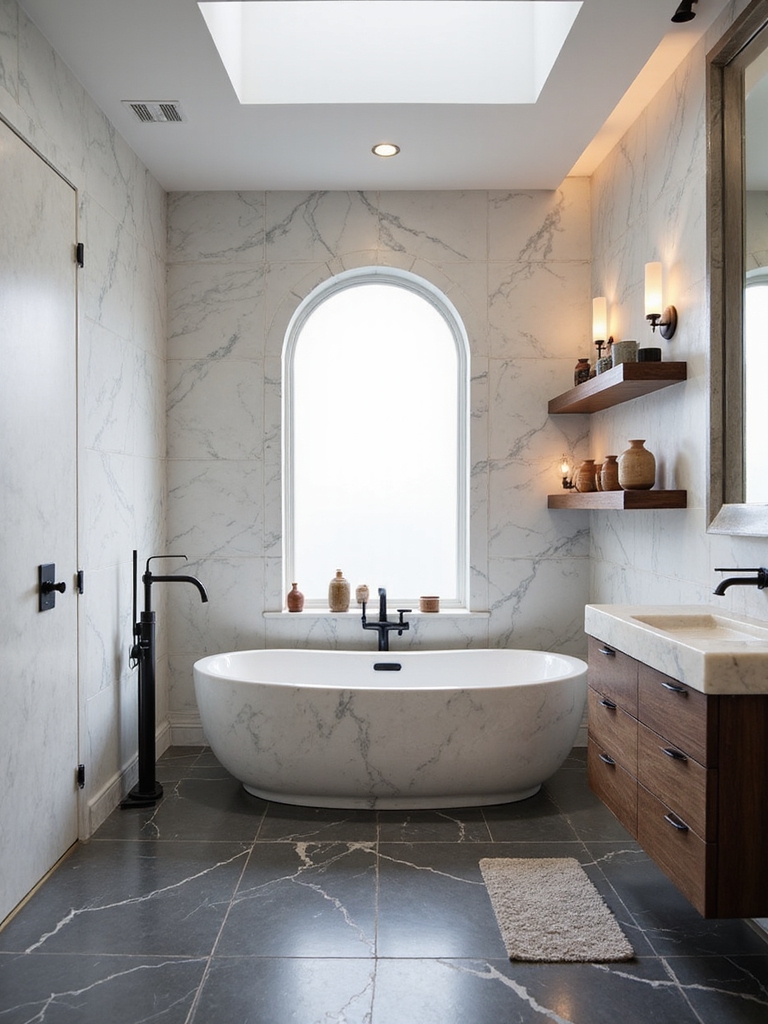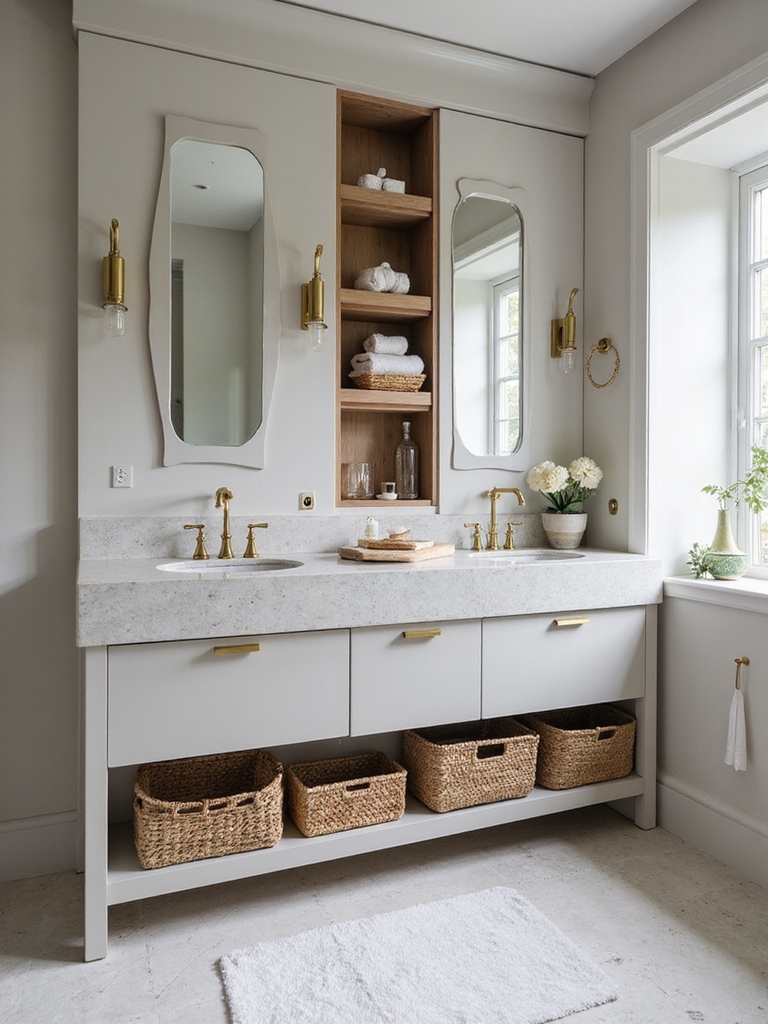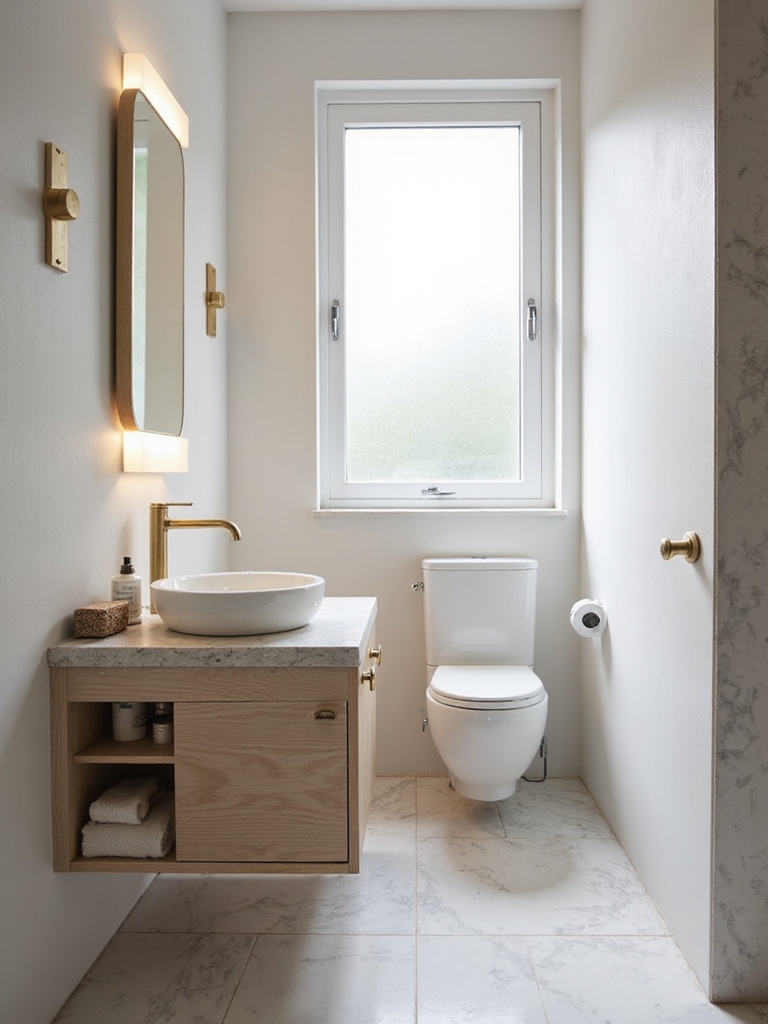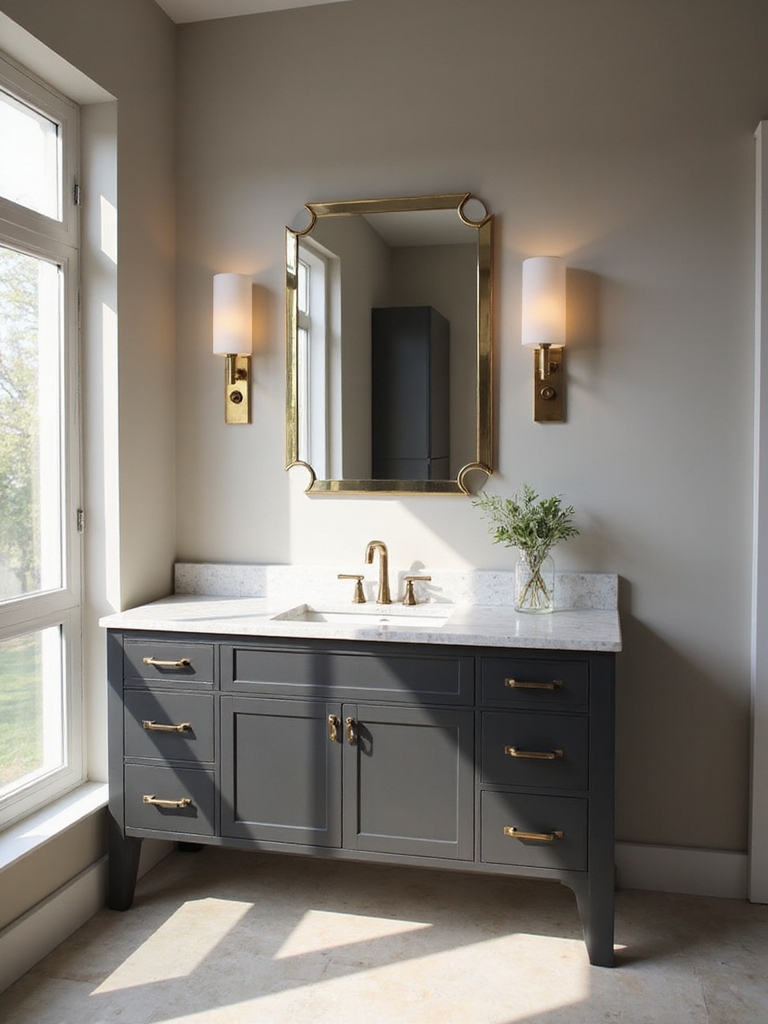
Most people think a cramped bathroom needs a bigger footprint. Often it just needs a better door. A standard door swings into the room and steals a four-foot arc of floor you cannot use for anything else. Swap that swing for a door that slides, folds, or tucks away, and a tiny bathroom suddenly has room to breathe, the same square footage finally usable because the floor a swinging door demanded is handed straight back to you.
These 19 bathroom door ideas save real floor space while still looking great. Below you will find sliding and pocket doors, bi-fold and accordion options, and a few clever fixes for the tightest rooms, with honest notes on cost and trade-offs. For door styles and finishes beyond the space question, pair this with these modern bathroom door ideas; this one is about reclaiming the floor.
Space-Saving Doors, in Short
How much space can a door save? A swinging door wastes a roughly 4-foot arc of floor. A sliding, pocket, or folding door reclaims almost all of it.
Which saves the most? A pocket door, since it vanishes into the wall. A bi-fold or accordion is the cheaper, no-construction option.
What is the budget pick? A bi-fold or accordion door at $30 to $150, installed in an afternoon with no wall work.
Space-Saving Bathroom Door Solutions
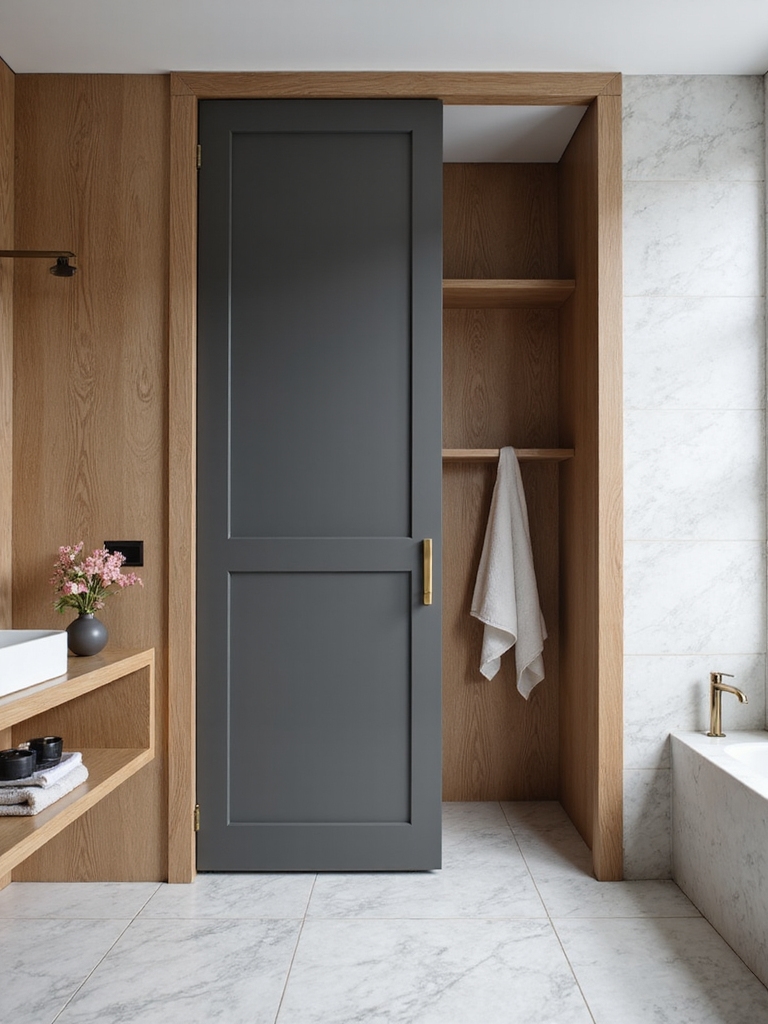
The whole point of a space-saving door is to stop the door from eating floor you need. A standard hinged door needs a clear arc to swing. In a small bath that arc collides with the toilet, the vanity, or the towel bar, wasting floor you could be standing on. Here are the door types that solve it, from cheapest to most involved:
- Bi-fold and accordion doors fold flat, save the most floor for the least money, and need no construction.
- Sliding and barn doors ride a track on the wall and free the whole swing arc.
- Pocket doors vanish into the wall for the cleanest result, with a bigger install.
Slim, Stylish Doors for Tight Spaces
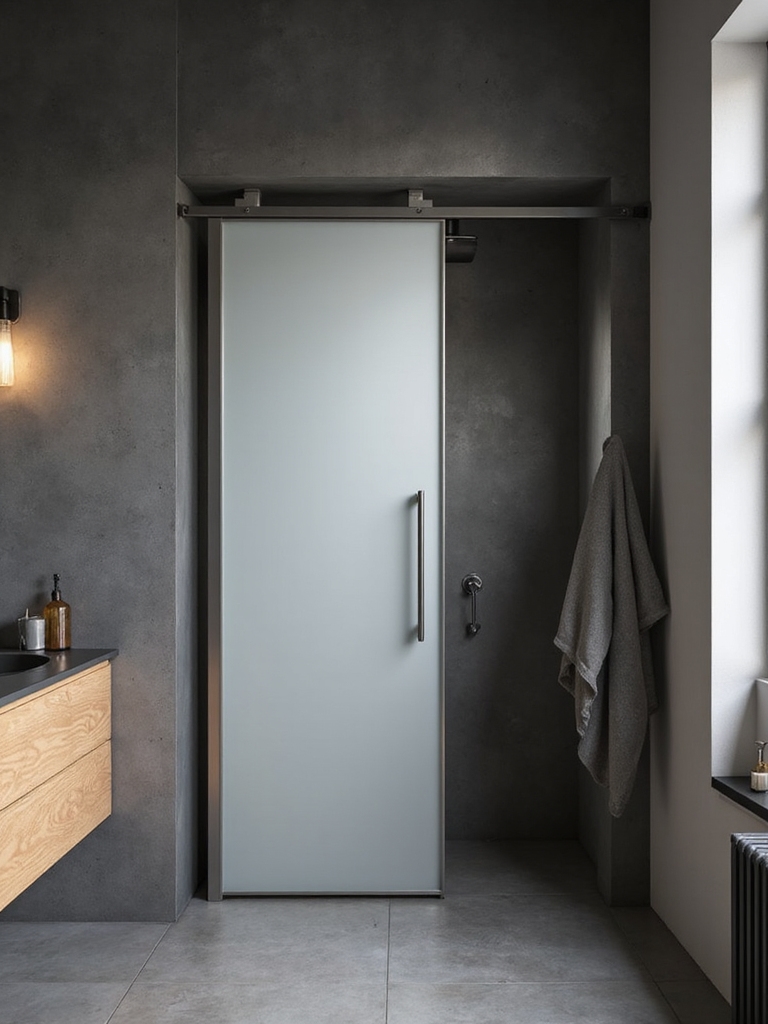
Sometimes the smartest space-saver is simply a slimmer or smarter-hung door. A narrower door leaf, hung on a reduced frame, can reclaim inches in a doorway that was wider than it needed to be. It is the quietest fix, and it suits a powder room where every inch counts.
Rehang It to Swing Outward First
Rehanging the door to swing the other way is the cheapest fix of all. If your door swings into a cramped bathroom, rehinging it to open outward into the hall frees the entire arc inside, often for the cost of nothing but an afternoon. I tell every client to check this before buying any new door.
A slim glass or louvered panel keeps a tight door from feeling heavy. Frosted glass borrows light into the room, and a slatted louver adds ventilation, both of which make a small bathroom feel less boxed in. Lean on a few small-space storage tricks to make the most of the floor you reclaim.
Two door terms worth knowing:
📖Swing arc
The quarter-circle of floor a hinged door needs to open; the space a space-saving door reclaims.
📖Pocket door
A door that slides into a hollow cavity inside the wall, taking zero floor or wall space when open.
Space-Saving Doors With Clean Looks
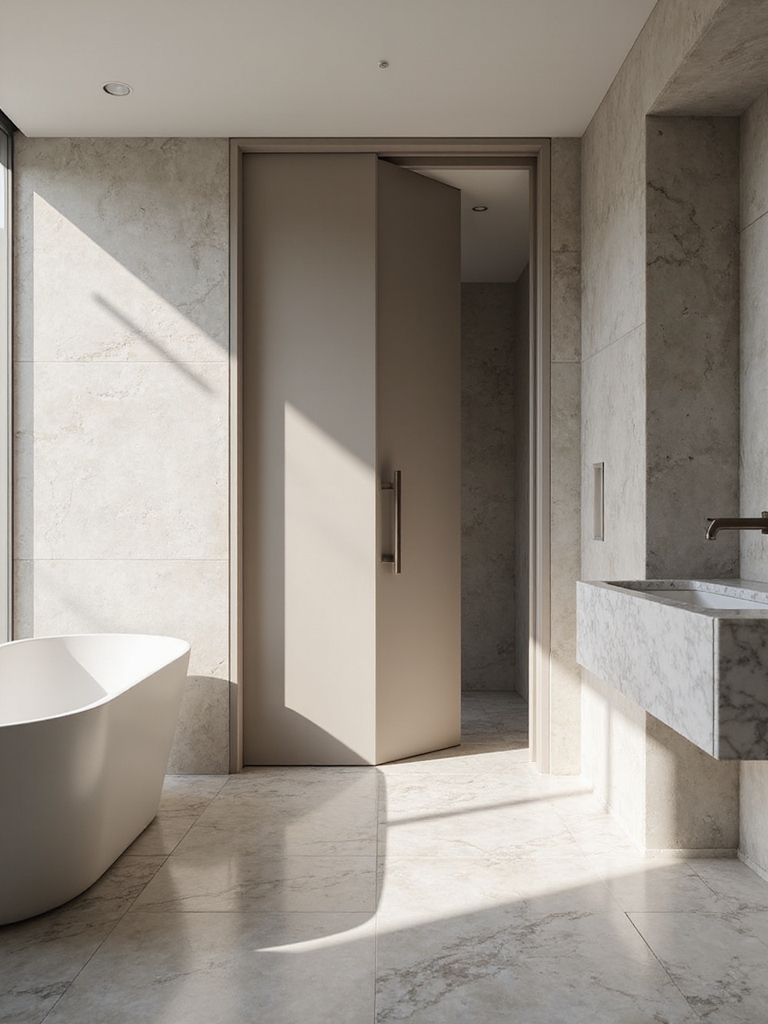
Saving space does not mean settling for an ugly door, and the modern versions look as good as they work. The answer is a clean-lined panel and sleek, low-profile hardware, so the space-saver comes across as a design choice. A flat slab, a fluted-glass panel, or a painted door on a slim track all look chic while quietly freeing the floor.
- Pick a flat or fluted panel in a matte finish for a current, clean look.
- Choose slim, low-profile tracks and pulls so the hardware disappears.
- Match the door color to the wall or trim so the space-saver blends in.
Bi-Fold Doors for Maximum Space
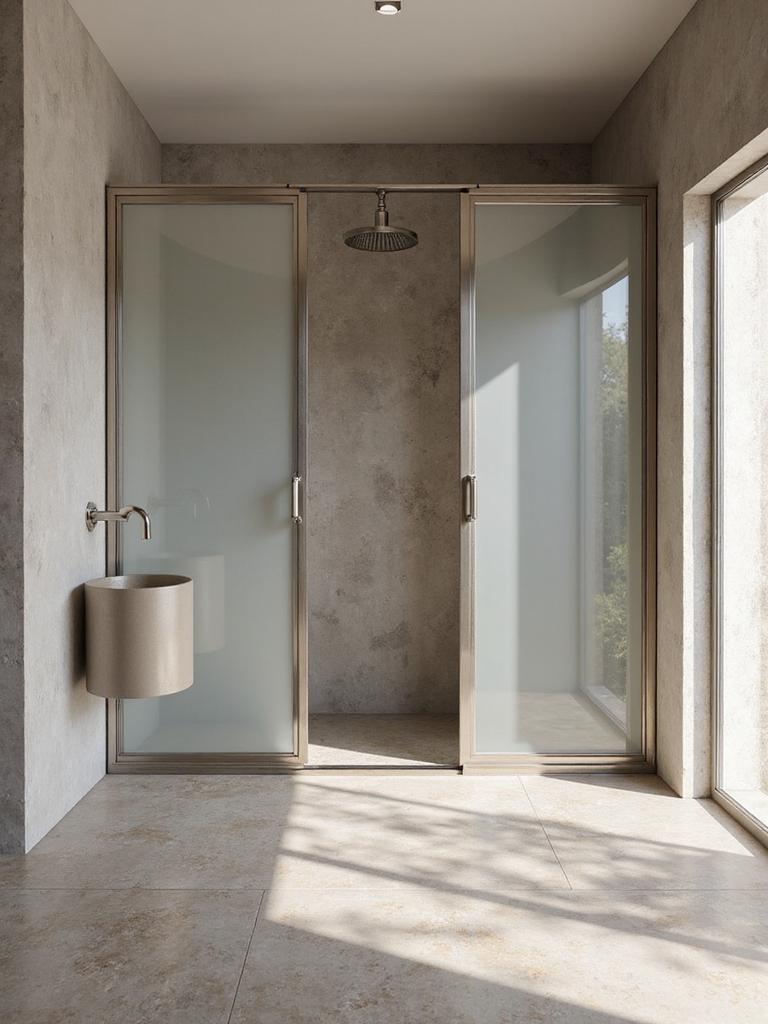
A bi-fold door folds in the middle and opens against itself, so it needs only a fraction of the clearance a swinging door does. Tiny rooms love it. It is one of the best space-savers going, and it installs in the existing frame with no wall work at all. At $50 to $150, it is also one of the cheapest fixes here. Here is how to use one well:
- Use a bi-fold where a swing arc collides with the toilet or vanity right inside the door.
- Choose a slim, modern panel rather than the dated hollow louver of decades past.
- Add a soft-close or magnetic catch so it stays shut and feels solid.
Good to Know
A standard 30-inch hinged door needs roughly 9 square feet of clear floor just to open, the size of a small shower. In a tight bathroom, that is often the single biggest chunk of wasted space, which is why changing the door does so much.
Budget-Friendly Accordion Doors
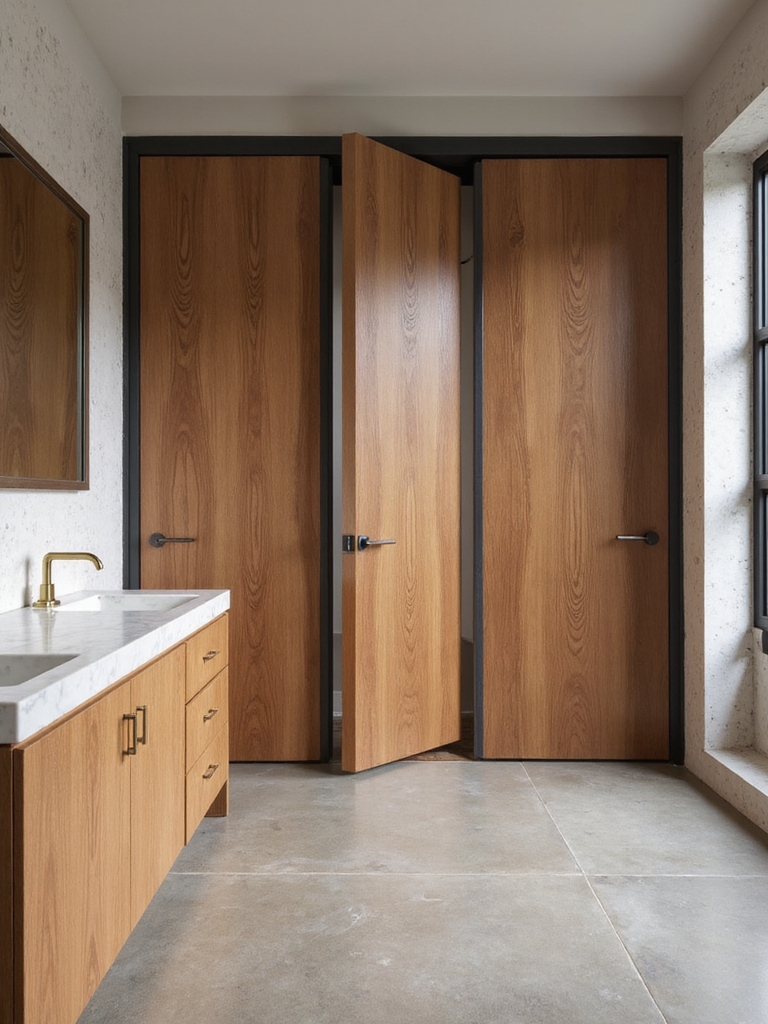
An accordion door is the most budget-friendly space-saver there is, folding into a slim stack against the frame for $30 to $100. It needs no construction, installs in an afternoon, and works where almost nothing else fits. For a closet-sized powder room or a rental you cannot renovate, it is a truly useful option.
The honest trade-off is that accordion doors look and seal cheaper than the alternatives. The modern fabric-and-frame versions are a big step up from the old vinyl ones, so choose a quality, fabric-faced model in a neutral color. It will not match a pocket door for polish, but it will reclaim the floor for almost nothing.
- Pick a quality fabric-faced accordion, not the dated vinyl version.
- Use it for a rental or a closet-sized room where construction is off the table.
- Keep the color neutral so the door recedes into the wall.
Sliding and Barn Doors for Open Floors
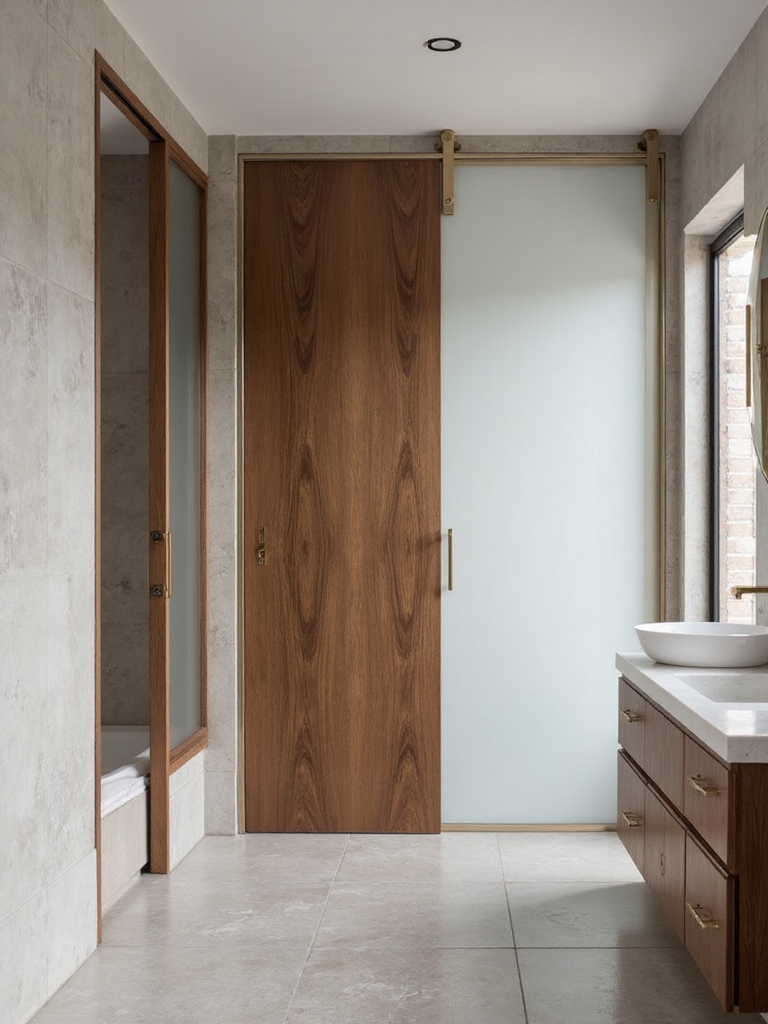
A sliding or barn door is the space-saver that also makes a style statement, riding a track on the wall instead of swinging into the room. It frees the entire swing arc, which is a real gift in a small bath, and the modern flat-panel versions look architectural rather than rustic. A complete barn door and hardware kit runs about $150 to $400.
The catch is wall space. A barn door slides across the wall beside the opening, so you need a clear stretch of wall there with nothing mounted on it. Measure that wall before you fall for the look, since a towel bar or a light switch in the slide path will stop the whole plan.
Sliding doors also seal less tightly than a hinged or pocket door, so they pass more sound and smell. That is fine for a bath down a hall and worth a second thought for a powder room off a living space. Clients ask me whether to slide or pocket, and the deciding factor is almost always the wall beside the door.
Pocket Doors: The Cleanest Space-Saver
A pocket door is the ultimate space-saver. It slides fully into the wall, so it takes zero floor or wall space when open. It seals better than a barn door and leaves the cleanest possible look, which makes it the choice when you want the door to all but disappear. The trade-off is the install, since a pocket door means opening up the wall and building a cavity, so it is a job for a pro.
Because of that, pocket doors suit a renovation or new build more than a quick weekend swap. If the wall is already coming apart for other work, it is the perfect time to add one. The result is worth it in a tight bathroom, where every reclaimed inch counts and the hidden door leaves a clean, unbroken wall that looks custom.
- Choose a pocket door when you want maximum space and the cleanest look.
- Budget for a pro install, since it means opening the wall.
- Add one during a renovation when the wall is already open.
Choosing the Right Space-Saver
With so many options, the right door comes down to three questions: your budget, your wall, and whether you can do construction. If you rent or want the cheapest fix, a bi-fold or accordion door reclaims the floor for under $150 and an afternoon. If you own and want polish, a pocket or barn door is worth the bigger investment.
Let the wall beside the opening decide between sliding and pocket. A clear, uninterrupted stretch of wall makes a barn door easy; a wall full of switches and towel bars points you toward a pocket door or a fold. The path your door currently swings, and what it bumps into, tells you exactly how much you stand to gain.
When in doubt, start with the free move. Rehang the existing door to swing outward and see how much floor that alone frees up. It costs nothing, takes an afternoon, and often solves enough of the problem that a new door becomes a want rather than a need.
Keep a Space-Saving Door Gliding
Sliding, folding, and pocket doors all rely on a track, and a track only stays smooth if you keep it clean. Dust builds up fast. Hair and grit collect in the channel and turn a quiet glide into a grinding stick within months. I run a quick vacuum and wipe of the track about every couple of weeks, which takes under a minute and keeps the door moving like new.
A little lubricant goes a long way. A drop of dry lube on a sticky roller or a squeaky hinge takes a minute and prevents the noise that makes any door feel cheap. Check the soft-close or catch on a bi-fold now and then so it still latches cleanly.
Watch the finish in the steam, too. Wipe glass and painted panels with a streak-free cloth weekly, and run the exhaust fan during showers so humidity does not warp the door or rust the track. When a sliding door starts to drag, the answer is almost always a track that needed two minutes of cleaning.
What to Expect
Set expectations by effort and the choice gets easy. Rehanging a door or hanging a bi-fold or accordion is a genuine DIY afternoon and well under $150. A barn door is a confident weekend project with a $150 to $400 kit. A pocket door is a pro job that belongs to a bigger renovation, with the cost to match.
Whatever you choose, the payoff is immediate and daily. Reclaiming that swing arc transforms how a small bathroom works the moment the new door is up, and the right modern panel makes it look better at the same time. Start with the cheapest move that fits your wall and your skills, and build up from there.
Space-Saving Door Questions, Answered
?What is the best space-saving door for a small bathroom?
A pocket door saves the most, sliding fully into the wall, but it needs a pro install. For a cheaper, no-construction fix, a bi-fold or accordion door reclaims almost as much floor for $30 to $150 and an afternoon. The best pick depends on your budget and whether you can open the wall.
?How much floor space does a swinging bathroom door waste?
A standard 30-inch hinged door needs roughly 9 square feet of clear floor to open, a quarter-circle arc that often collides with the toilet or vanity. In a small bathroom, that is usually the single biggest chunk of unusable space, which is why a space-saving door makes such a difference.
?Can I just rehang my bathroom door to swing the other way?
Often yes, and it is the cheapest fix of all. If your door swings into a cramped bathroom, rehinging it to open outward into the hall frees the entire arc inside for the cost of an afternoon. Check this before buying any new door, since it may solve the whole problem for free.
?Are accordion doors a good choice for bathrooms?
They are the most budget-friendly space-saver and work where little else fits, especially in a rental or a closet-sized powder room. Choose a quality fabric-faced model rather than the dated vinyl kind. They will not match a pocket door for polish or sealing, but they reclaim the floor for almost nothing.
?Do sliding barn doors work in small bathrooms?
Yes, if you have clear wall space beside the opening for the door to slide onto. A barn door frees the full swing arc and looks chic, but it seals less tightly than a hinged or pocket door, so it passes more sound. It is best for a bath down a hall rather than off a living area.
Change the Door, Find the Space
A space-saving door is the cheapest way to make a cramped bathroom feel bigger, because it gives back floor you already own but cannot use. Rehang the existing door to swing outward for free, fold the opening with a bi-fold or accordion on a budget, or slide and pocket your way to the cleanest look if you can invest more. Every one of them reclaims that wasted swing arc.
Look at your bathroom door tonight and watch where it swings and what it bumps into. That arc is the space you are about to win back. Start with the easiest fix that fits your wall, and a tiny bathroom suddenly works the way you always wished it did.