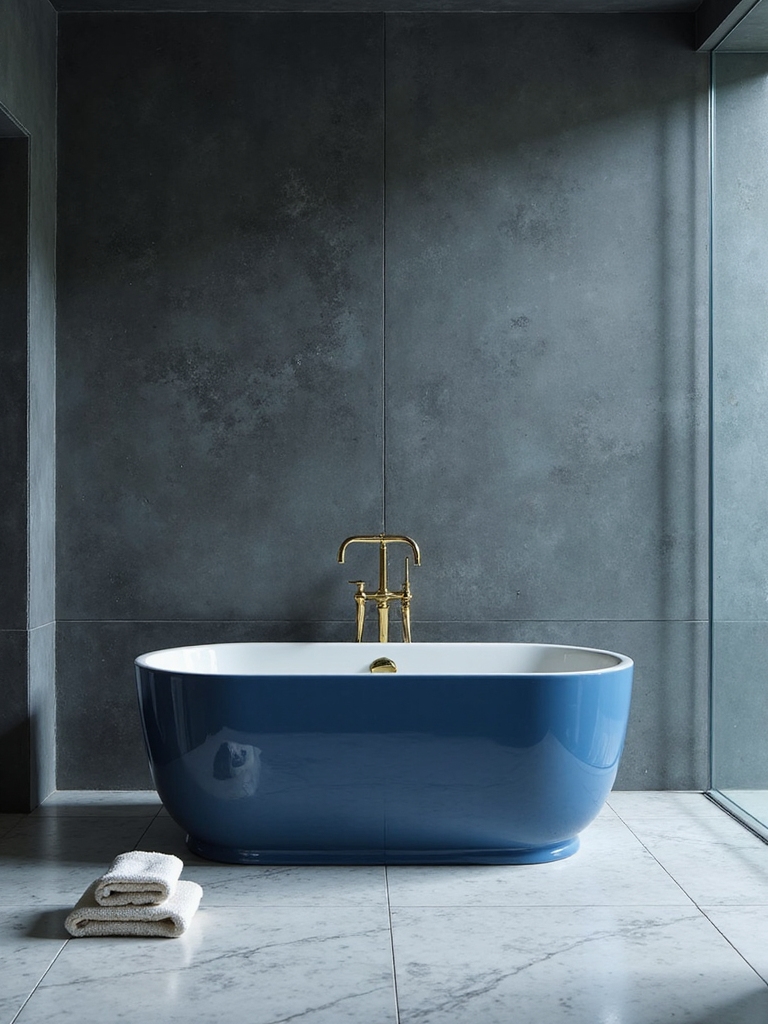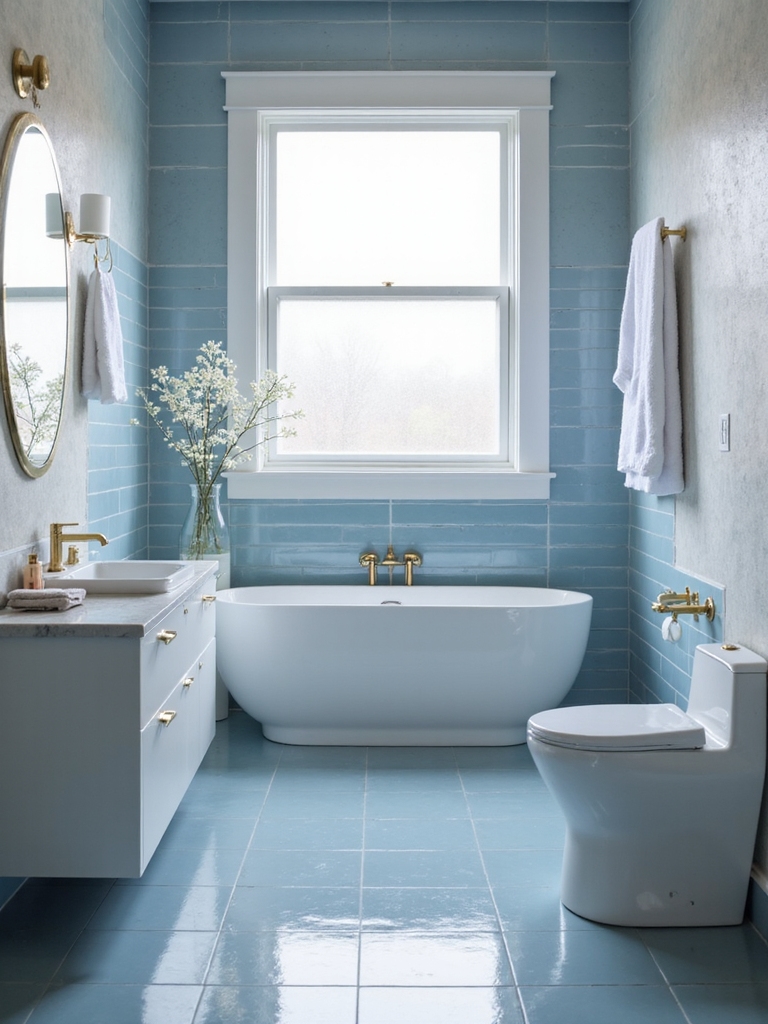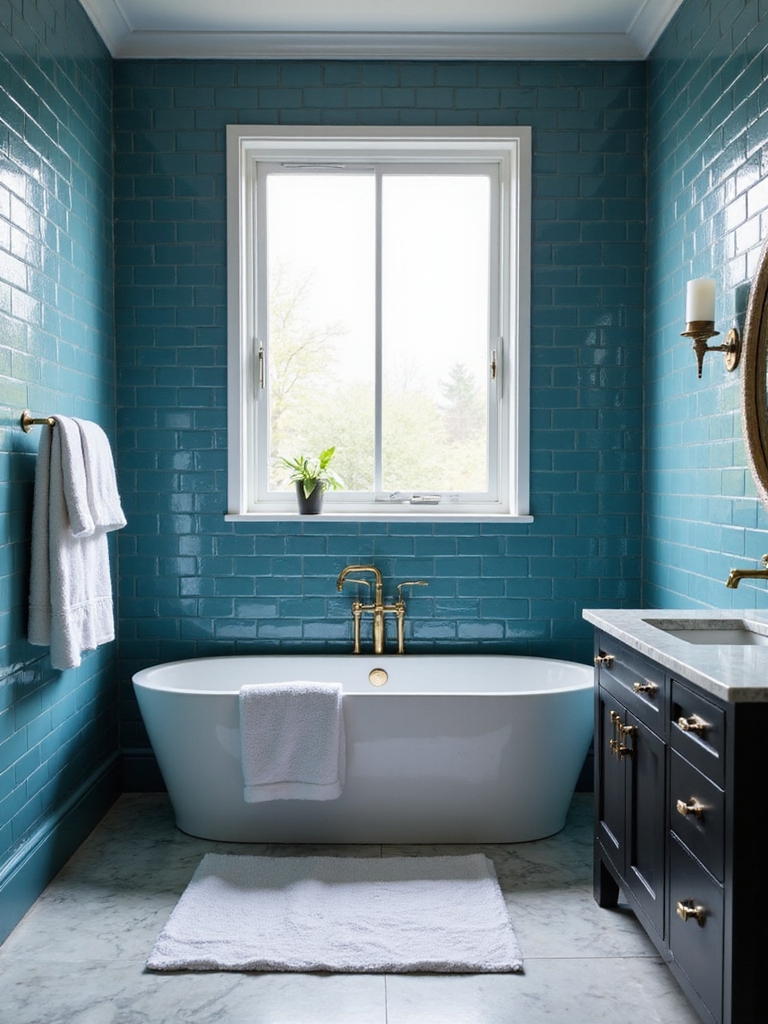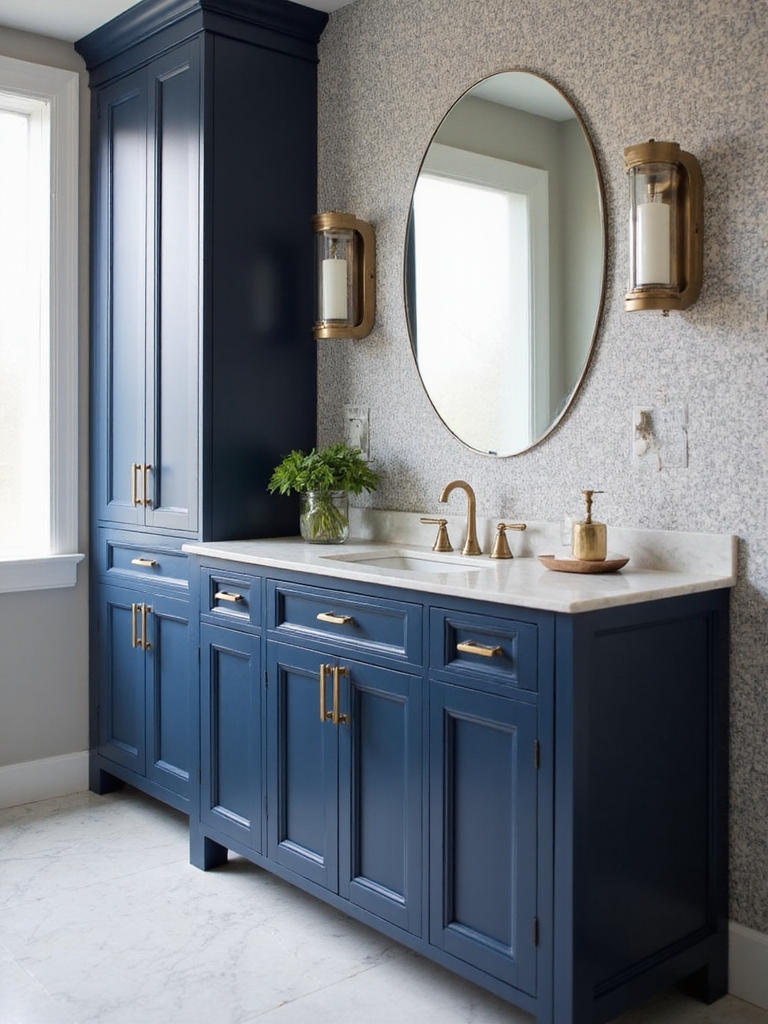
Baby blue is the one bathroom color almost nobody regrets. I have watched clients agonize over bolder shades, then settle on a soft sky-blue and exhale, because it does the calming work of a spa without the commitment of a statement wall. The shade looks gentle in the morning and turns dreamy at night, and it forgives the cheap white fixtures most bathrooms already have.
Below are 20 baby blue bathroom ideas pulled from real rooms I have styled, organized so you can build the look from the paint up. Right now the version everyone wants is the airy, slightly grayed sky-blue, paired with warm metals and a little greenery to keep it from feeling like a nursery.
What Makes Baby Blue Work
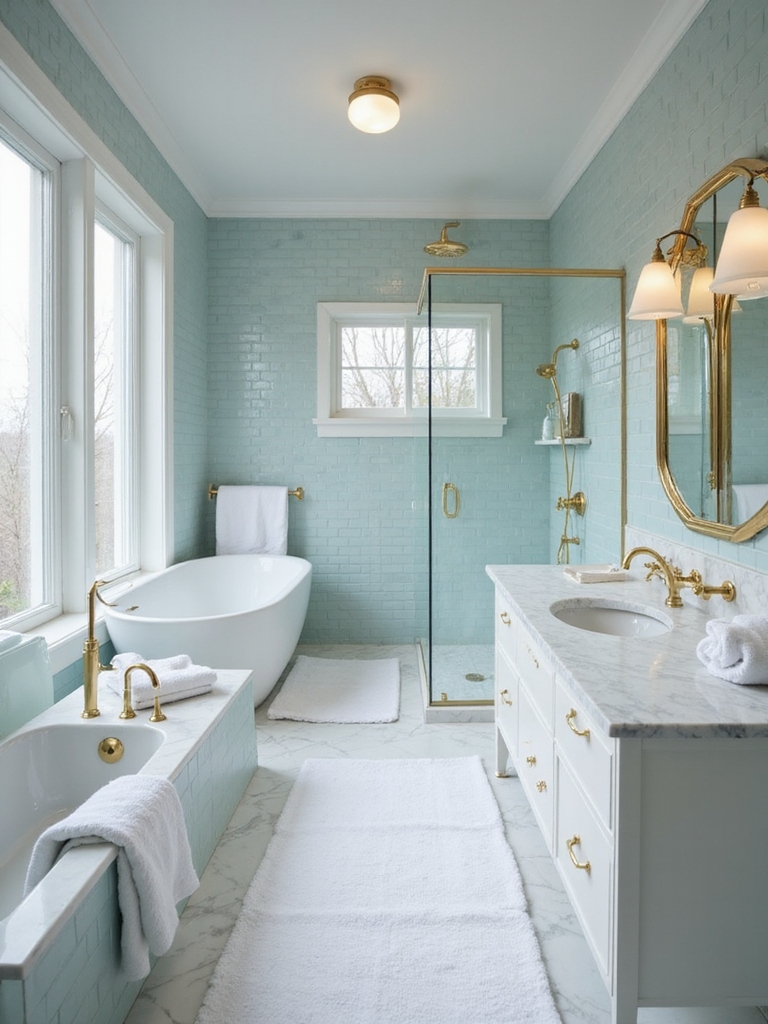
Baby blue succeeds when you control three things: the undertone of the shade, the warmth of your metals, and the amount of white you let it breathe against. Lean too cool and the room turns clinical; warm it with brushed nickel or unlacquered brass and a wood accent, and it softens into something restful.
You do not need a renovation to land it. Paint runs $30 to $50 a gallon, peel-and-stick tile lets renters borrow the look, and the right towels and a single plant carry a small powder room. Spend where it shows, keep the palette to roughly 70% blue and 30% white, and the dreamy effect takes care of itself.
Why Baby Blue Earns Its Place in a Bathroom
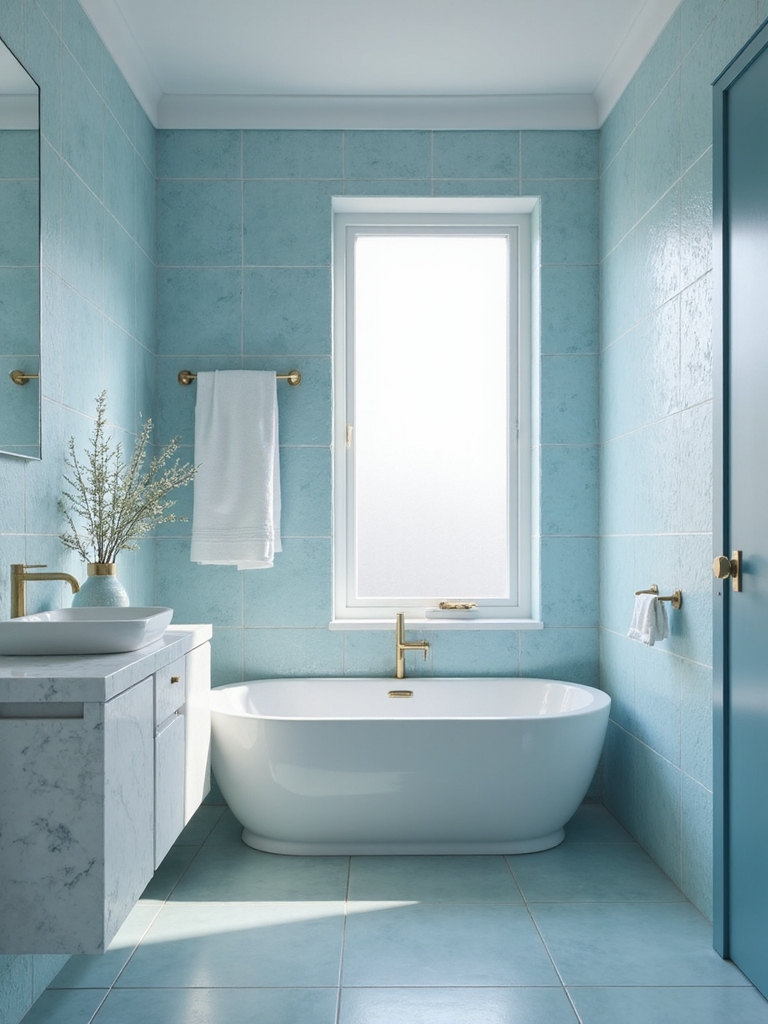
Baby blue works in a bathroom for a practical reason, not just a poetic one: it sits in the cool half of the color wheel, so it visually recedes and makes a small room feel like it has more air in it. Paired with white porcelain and chrome, it photographs and lives bright, which is exactly what a windowless box needs. The softness is what keeps it from feeling cold the way a true navy or steel-blue can.
I reach for it most when a client wants calm but is nervous about color. It gives them the payoff of a real palette with almost no risk, because baby blue plays nicely with the fixtures they already own. Keep the partnership going with a thoughtful color-by-mood plan before you commit to a gallon.
- It recedes visually, so a tight powder room feels larger and airier.
- It flatters standard white fixtures, so you avoid replacing tubs or sinks.
- It shifts beautifully with light, gentle by day and dreamy under warm bulbs at night.
How to Choose the Right Baby Blue Shade
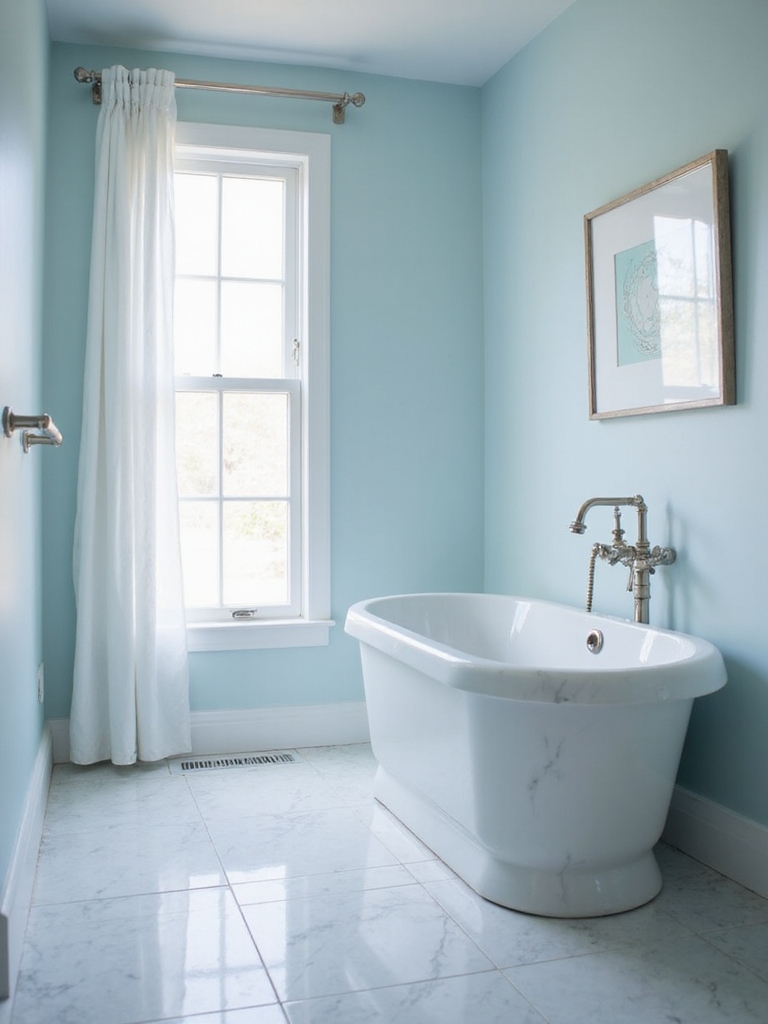
Picking the shade is where most baby blue bathrooms succeed or fall apart, because two swatches that look identical in the store can split into sky and seafoam on your wall. Light decides this, not the label. Here is the order I test, every time:
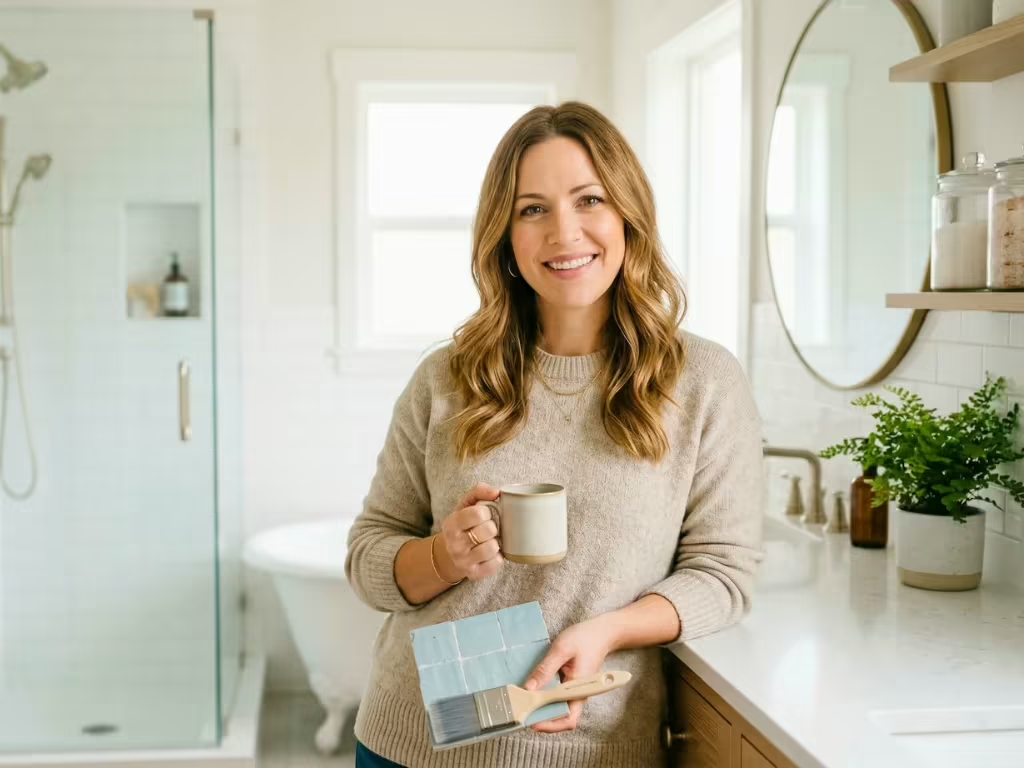
- Paint three large swatches on the wall that gets the least daylight, since that is where a blue goes gray or green first.
- Check them at 7 a.m., at noon, and under your lamp at night before you trust any of them.
- Match the undertone to your tile and metals: a green-leaning blue with warm brass, a truer sky-blue with cool nickel.
📋Build the Baby Blue Look
- ✓Test your shade on the darkest wall, morning and night
- ✓Keep the palette near 70% blue, 30% white
- ✓Warm it up with brass or nickel and one wood accent
Tile Combinations That Flatter Baby Blue
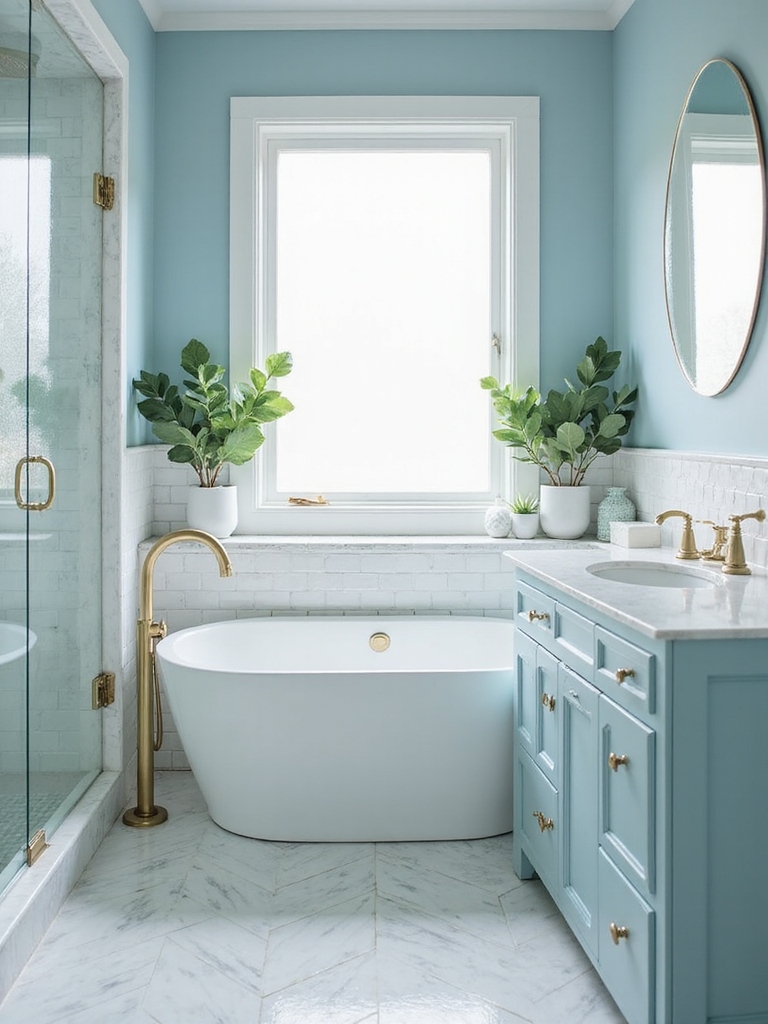
Tile is where baby blue gets its backbone, and the safest move is to let one material lead while the others support. My three go-to pairings each do a different job:
- White subway tile keeps things crisp and classic, letting the blue stay the star without competition.
- A marble or pale-gray mosaic adds quiet veining and a little luxury for roughly $12 to $25 a square foot.
- A hexagon floor in soft gray grounds the room and stops all that softness from floating away.
Textured Walls That Warm Up Baby Blue
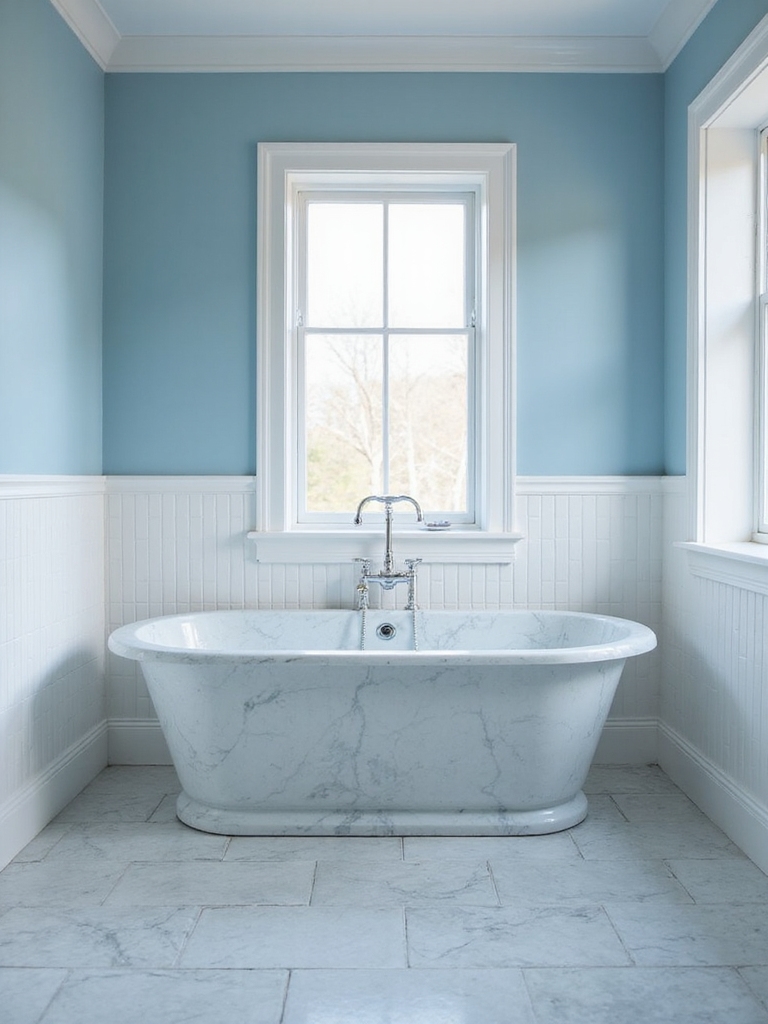
Flat paint plus flat tile is how a baby blue bathroom ends up looking like a hospital corridor. Texture is the antidote. The single easiest fix is matte beadboard painted in your blue up to chair-rail height, because the vertical grooves catch shadow and give the eye something to hold onto.
From there I layer finishes that disagree on purpose: glossy tile against matte walls, a nubby linen shower curtain, a woven basket for towels. That contrast in surface is what makes a soft color feel collected and intentional rather than washed out. You feel the depth before you can name it.
If you rent or hate paint fumes, peel-and-stick beadboard panels and grasscloth-look wallpaper get you most of the way there. They come off clean later, and they let you test how much texture the room actually wants. Pair the new surfaces with open-shelf styling so the texture has somewhere to live.
Stylist’s Note
Buy your tile and your paint chip together, in person, under the same light. A blue that sings next to white subway tile can fall flat against a gray mosaic, and you will not see it until they are side by side.
Patterned Layers in a Baby Blue Bathroom
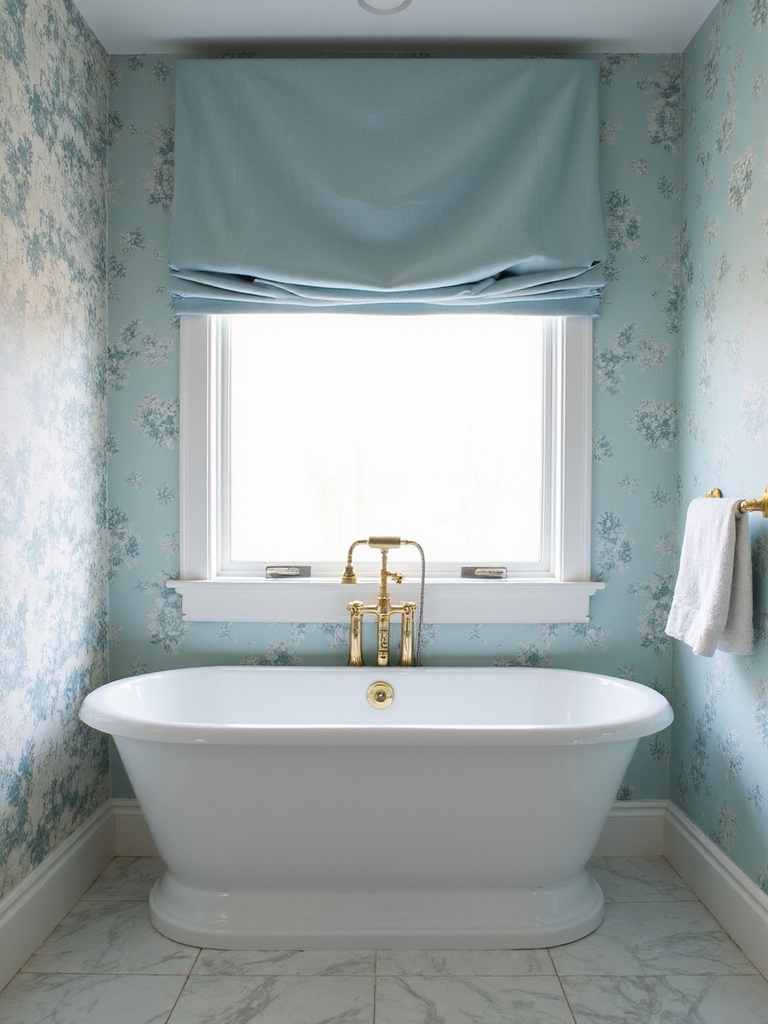
Pattern is where baby blue stops being sweet and starts being designed, but it has a trap: too many busy prints and the calm collapses. The rule I give clients is to vary the scale. Scale does the work. Anchor with one larger pattern, usually a tile or a wallpaper, then echo it in something smaller like a towel stripe or a rug.
Keep One Surface Quiet
A patterned cement-look tile on the floor feels bold without color risk, since it stays in the blue family. Above it, a small-scale wallpaper in the same hue keeps the room cohesive while adding interest at eye level. The trick is letting white space breathe between the patterns so nothing fights.
When a client is nervous, I start them with pattern only on the floor or only on one wall. It is the lowest-stakes way to test how much they actually like it, and it is easy to live with for a season before going further.
Baby Blue for Tiny Powder Rooms and Big Master Baths
Square footage changes the rules. The same color behaves differently depending on the room, so I style it two ways. In a tiny powder room, baby blue goes wall to wall because the enveloping effect actually makes the space feel bigger, not smaller. A single bold mirror and one sculptural sconce are all the room needs on top of the color.
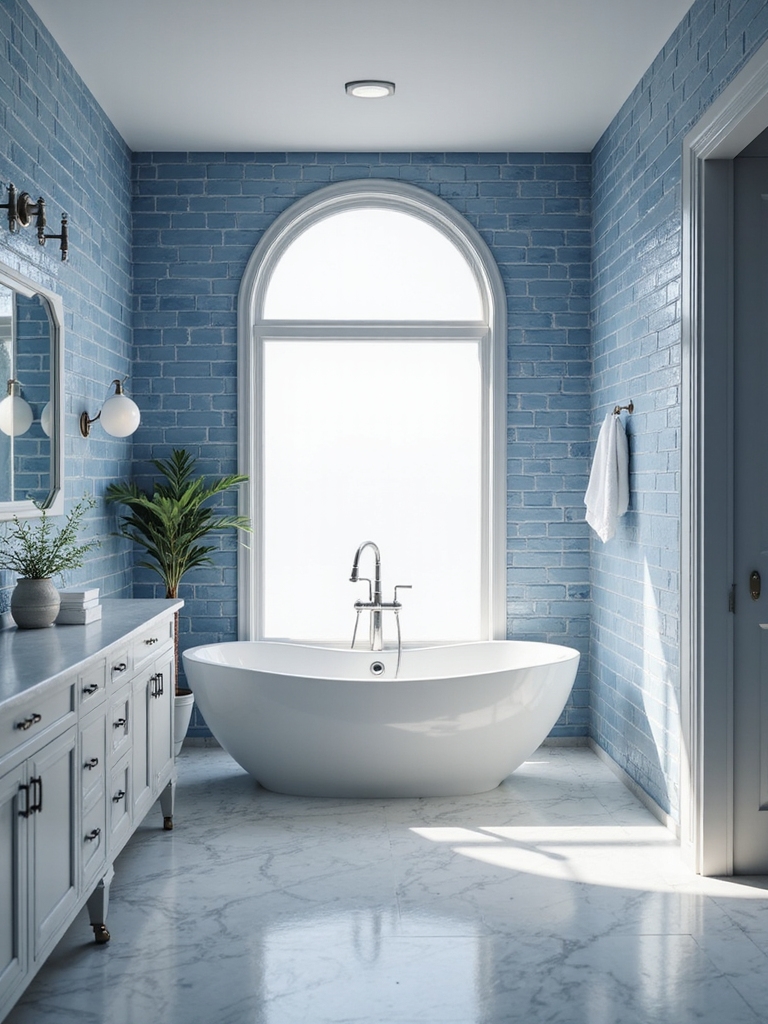
In a large master bath, baby blue works better as the supporting player. I keep walls mostly white or warm greige and let the blue arrive through a vanity, a freestanding tub, or a long run of cabinetry. That way the size of the room comes across as calm and considered, not cold or echoey.
Budget tells you where to put it, too. In a small room you can afford to tile a whole wall; in a big one, paint and cabinetry stretch your dollars further than tiling forty square feet ever could.
Lighting and Mirrors That Keep It Bright
Baby blue is only as good as the light you put it under. Cool bulbs ruin it. I switch to warm 2700K to 3000K bulbs and layer at least two sources: an overhead and something at face level by the mirror. That combination keeps skin tones flattering and the blue reading soft.
Mirrors do the heavy lifting in a small blue bath. A large mirror opposite the brightest light bounces it around and doubles the sense of space, while a soft silver or white frame keeps the palette coordinated.
- Add a dimmer so the room can go bright for routines and low for soak-in-the-tub nights.
- Choose an oversized mirror over several small ones to keep walls calm; see mirror ideas worth copying.
- Sort fixtures by warmth before you buy, the way you would lighting by tone in any room.
Keeping Baby Blue Looking Fresh
Soft colors show wear, so a little upkeep keeps baby blue from looking tired. I wipe walls and tile weekly with a gentle, non-abrasive cleaner, since harsh products can dull or discolor painted blue over time. A quick weekly pass is all it really takes.
Grout and caulk are the parts that age a pale bathroom fastest. I seal grout about every six months and replace caulk the moment it yellows or pulls away, because nothing undercuts a fresh palette like a gray, cracked seam at the tub. These are twenty-minute jobs, not weekend projects.
Style-wise, swap textiles seasonally to keep the room feeling current. Fresh towels and a new rug cost little and reset the whole space, which is far cheaper than repainting and just as effective at making it feel new again.
Easy Weekend Updates for a Baby Blue Bathroom
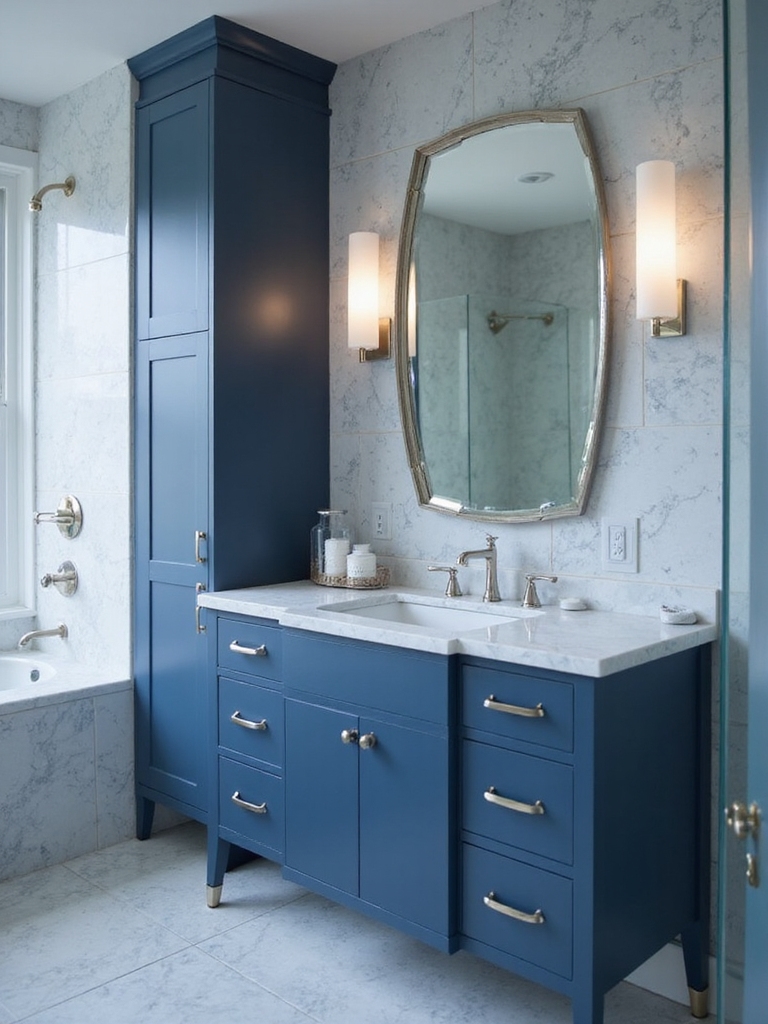
You do not need a contractor to land most of this. The highest-impact weekend project is repainting a tired vanity in your blue with cabinet-grade paint, then swapping the old hardware for brushed nickel or brass knobs at four to nine dollars each. That single change makes the whole room look deliberate for under fifty dollars and an afternoon of drying time.
After that, a peel-and-stick subway backsplash behind the sink takes about an hour and hides a dated wall without tile work or grout. I have done it in three different bathrooms, and it survives steam better than people expect when you smooth out every bubble as you go.
Finish with the soft stuff: a new shower curtain in your shade, folded towels in a basket, and a small floating shelf for a plant and a candle. None of it is permanent, all of it stacks, and together these little moves reset the entire feel of the room before Monday.
Styling Tips
Once the color and tile are set, styling is what tips a baby blue bathroom from pretty to finished. Group countertop items on a single tray so they read as intentional, add one trailing plant for life against all that cool blue, and keep metals consistent across the faucet, hardware, and towel bar so the room feels pulled together.
Restraint is the whole trick. Personal touches are what keep it from looking like a showroom. A stack of folded towels in a basket, a framed print with a hint of blue, a small dish for rings by the sink. Finish the vanity with the same restraint you would bring to any counter styling plan, and the dreamy look holds.
Baby Blue Bathroom Questions, Answered
?Does baby blue make a small bathroom look bigger or smaller?
Bigger, in most cases. Baby blue is a cool, light color, so it visually recedes and adds a sense of air to a tight room. The effect is strongest when you pair it with white fixtures and keep clutter off the counters so the eye reads open space.
?What metal finishes go best with baby blue?
Brushed nickel and chrome keep things crisp and cool, while brushed brass or unlacquered brass warms the blue and stops it from feeling clinical. Pick one and use it consistently across the faucet, hardware, and towel bar; mixing metals in a small bath usually reads as busy.
?Can I get a baby blue bathroom if I rent?
Yes. Peel-and-stick tile, removable wallpaper, baby blue towels, a rug, and a shade-matched shower curtain deliver the look with nothing permanent. If your lease allows paint, a single accent wall is reversible with a fresh coat of white at move-out.
?How do I keep baby blue from looking like a nursery?
Add warmth and contrast. Pair the blue with wood tones, brass, and a few black accents, choose a slightly grayed shade over a candy-bright one, and bring in adult textures like linen and stone. Greenery and a moodier metal instantly age the look up.
?How often should I reseal grout in a baby blue bathroom?
About every six months for sealing, and replace caulk as soon as it discolors or cracks. Pale color shows aging grout fast, so staying ahead of it is what keeps the whole room looking fresh rather than worn.
Build the Dreamy Version, One Layer at a Time
Baby blue rewards a slow build more than a single bold swing. Get the shade right under your own light, give it texture so it never goes flat, warm it with metal and wood, and let white and a little greenery keep it breathing. Do that and even a windowless rental bath turns into the softest room in the home.
Start with whichever layer feels easiest this season, whether that is a fresh coat of sky-blue or just new towels and a warmer bulb. The dreamy version is not one big decision; it is a handful of small ones that agree with each other.