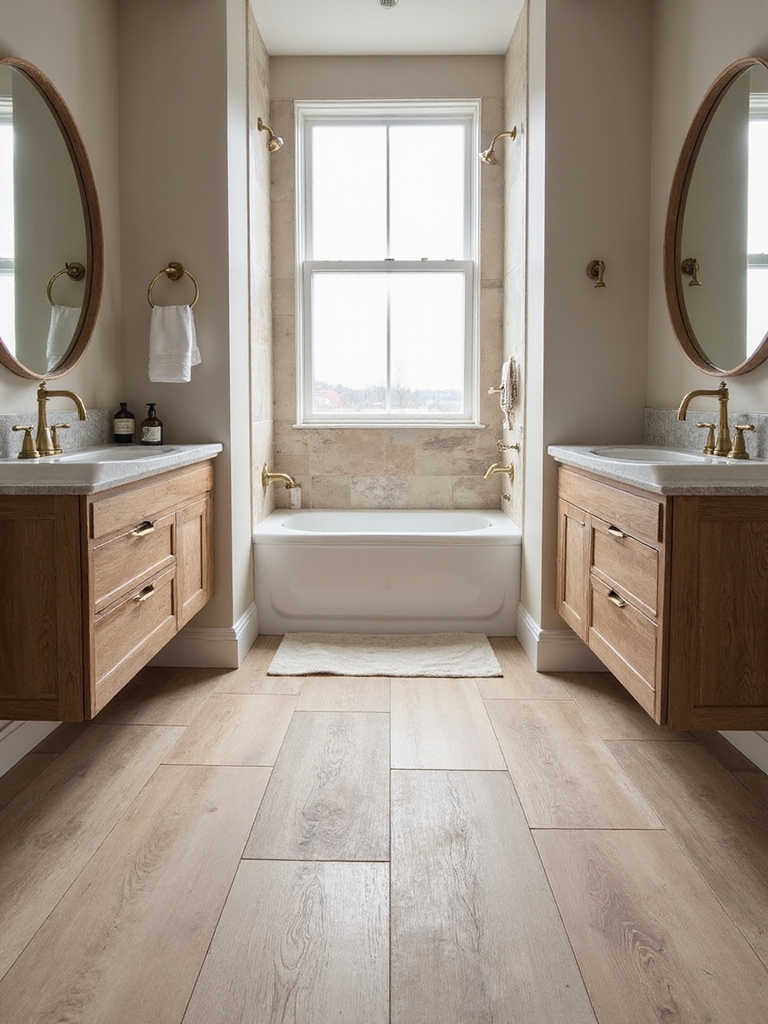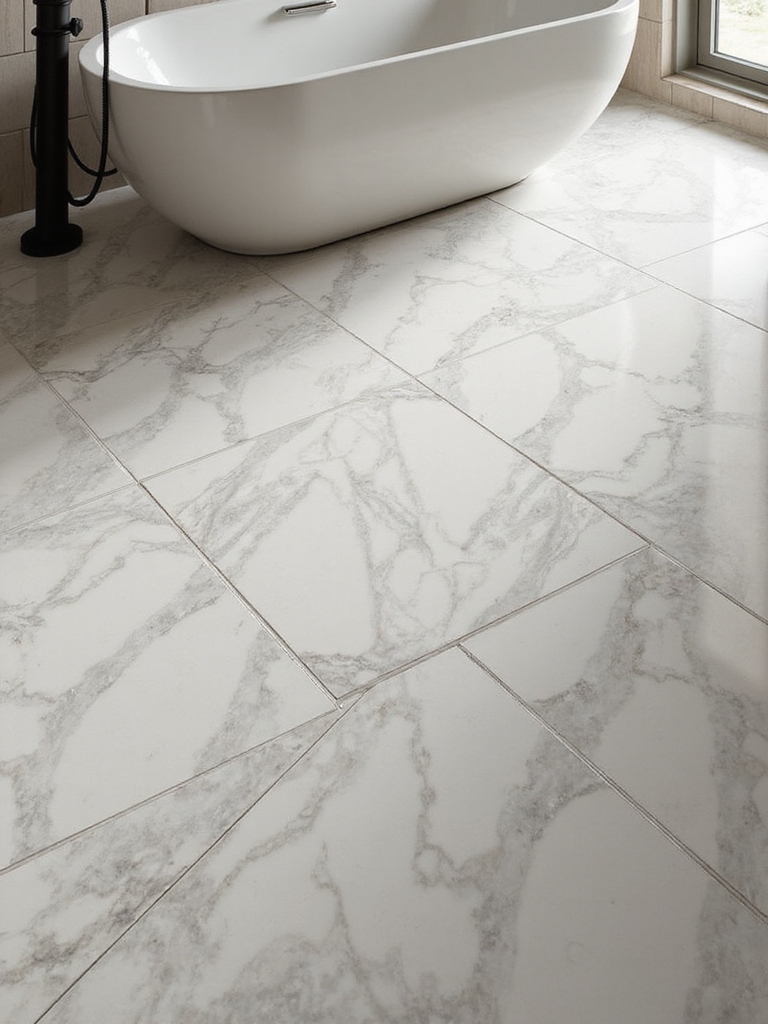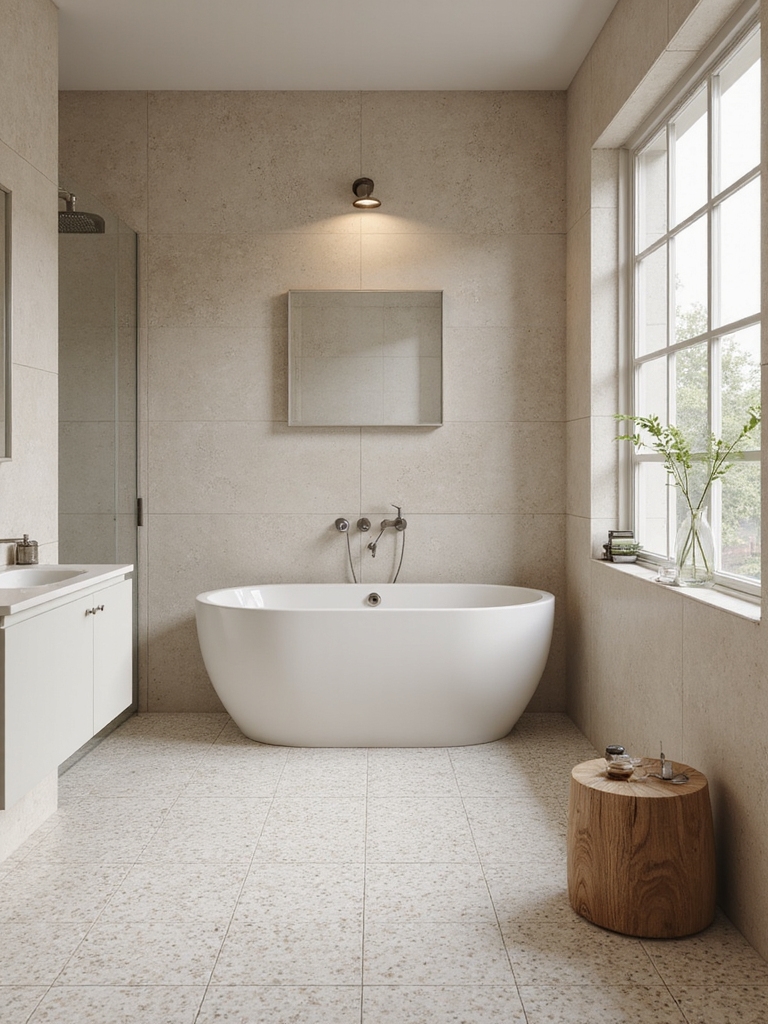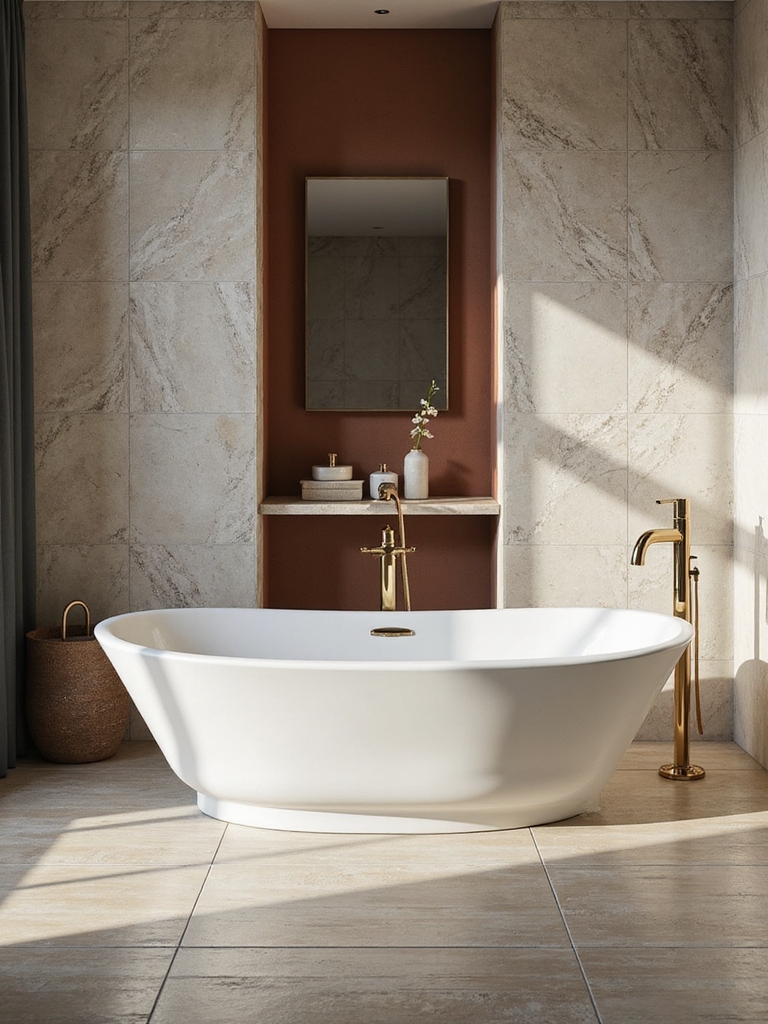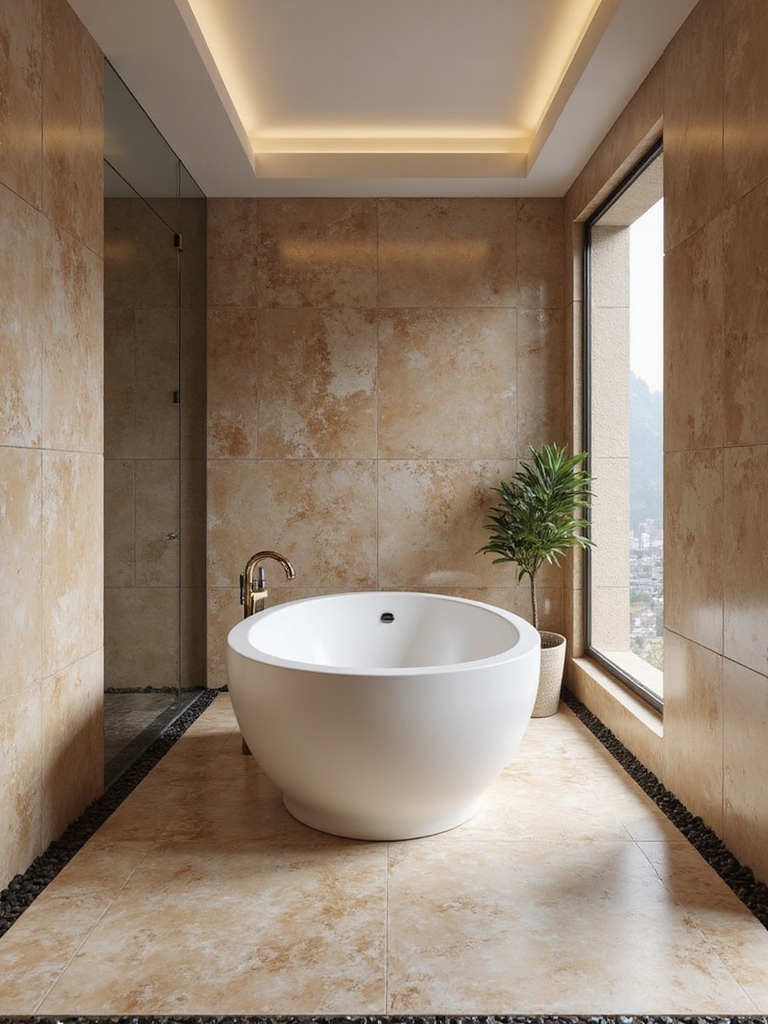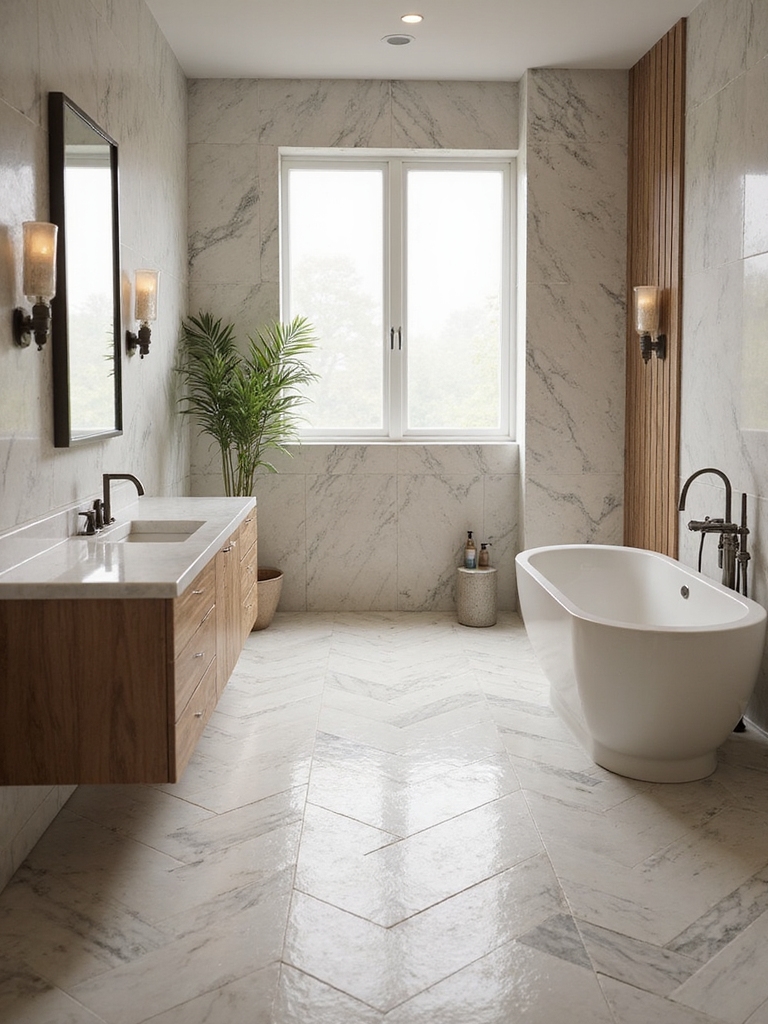
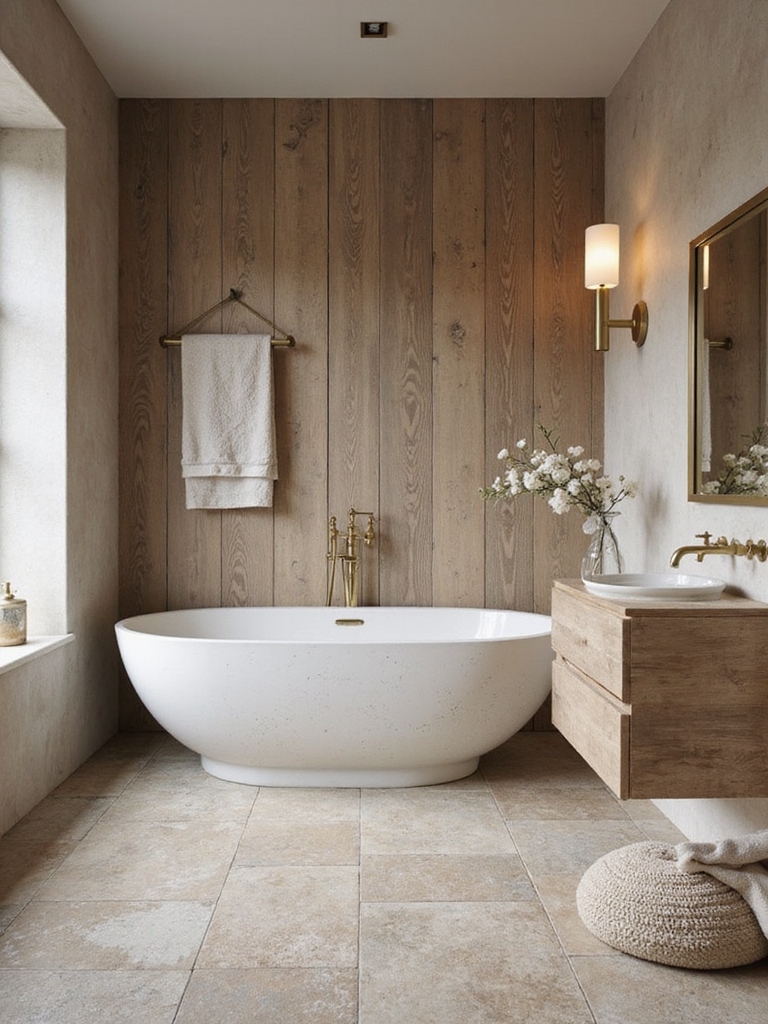
I’m sharing 20 rustic bathroom flooring ideas that feel cozy and durable, designed to warm the space without sacrificing practicality. Think warm wood planks that hide moisture, weathered textures, brick-inspired or earthy ceramic tiles, and even cork or pebble options for comfort underfoot. I’ll favor moisture resistance, underlayment, and radiant heating compatibility so you get long-lasting beauty. Sealed surfaces, slip resistance, and cohesive color palettes keep things calm. Stick with me to uncover more details and tips.
What Makes Rustic Bathroom Flooring Feel Cozy
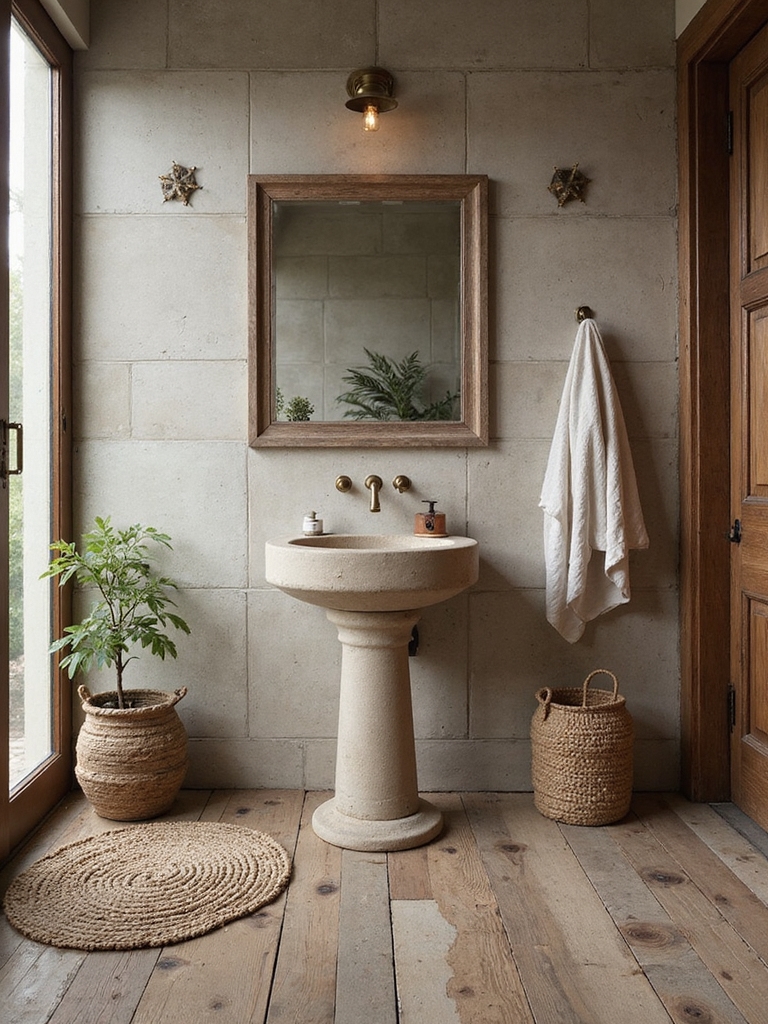
A cozy feel comes from the warmth of natural materials and how they interact with light and texture.
I notice how wood grains glow under soft lamps, and terracotta tiles soften edges with earthy undertones.
Even modest mats add comfort, reducing chill.
The key is simple contrasts—warm surfaces, cool grout, subtle sheen—creating inviting, practical space without fuss.
Farmhouse bathroom flooring ideas often combine these elements to enhance the overall charm and warmth of the space with charming flooring ideas.
Choosing Rustic Floors: Key Criteria for Moisture, Comfort, and Durability
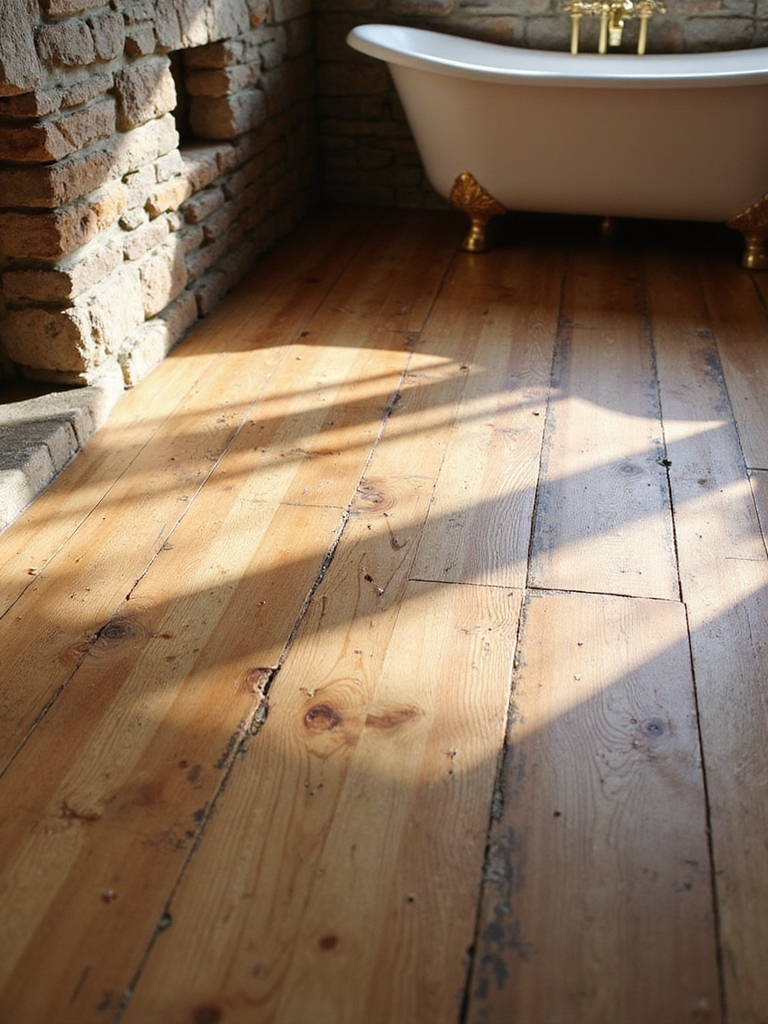
Choosing rustic floors means weighing moisture resistance, comfort underfoot, and long-term durability.
I’ll share practical picks that stay warm and stable in a bathroom, while resisting humidity and spills.
Let’s focus on reliable materials and textures that feel cozy yet easy to care for.
Incorporating luxurious bathroom flooring ideas can also elevate your space with a spa-like energy.
Moisture Safe Criteria
When selecting rustic bathroom flooring, moisture resistance tops the list because humidity, spills, and daily showers can quickly take a toll on wood and other natural materials.
I look for warp-resistant constructions, sealed finishes, and butcher-block alternatives with modern core layers.
Practical choices include tile, vinyl, and engineered wood, paired with proper underlayment and vapor barriers for lasting comfort.
Comfort and Durability Factors
Comfort and durability go hand in hand when selecting rustic floors, because a warm feel without lasting performance won’t satisfy.
I weigh comfort against moisture risk, support underfoot, and long-term wear. Prioritize solid core, proper underlayment, and tight seams.
I’ll balance texture with slip resistance, easy maintenance, and repairability, ensuring cozy vibes endure through daily family use and seasonal humidity shifts.
Warm Wood Planks: Comfort Underfoot in Bathrooms
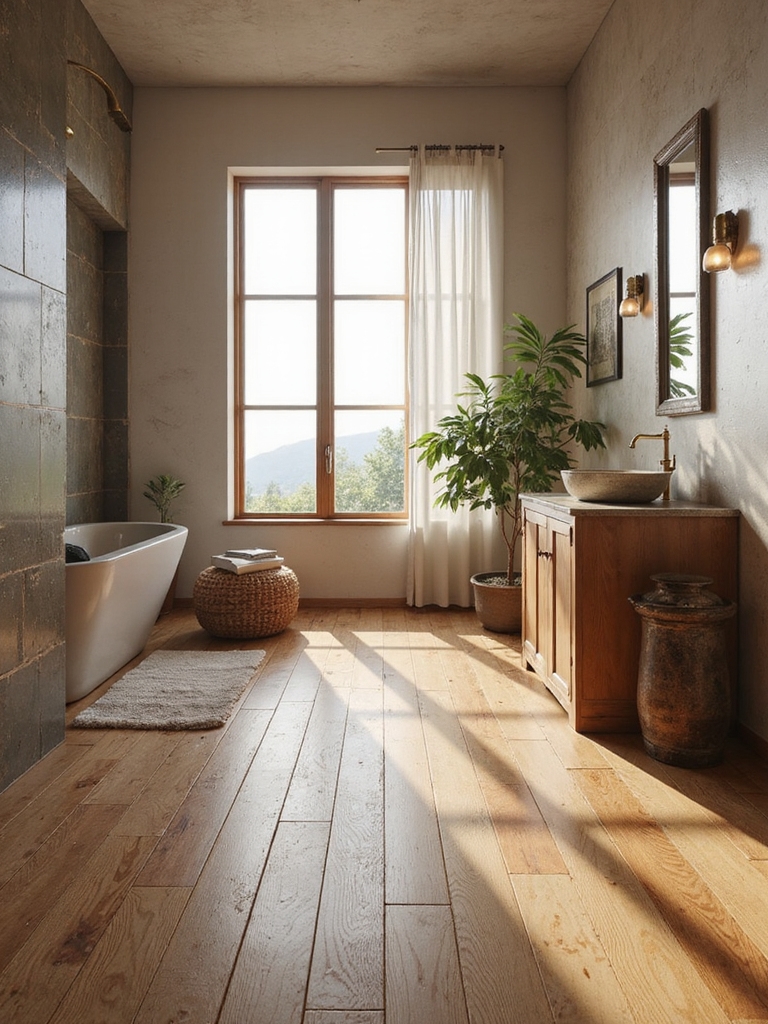
I love the feel of warm wood planks underfoot, a natural comfort that makes mornings gentler.
The texture and grain give each plank character while helping hide minor moisture spots, and they’ll age gracefully with time.
With moisture wear resistance in mind, I’ll share practical tips to keep this touchable comfort intact.
Choosing the right bathroom flooring tile can also complement the warmth of wood while providing durability and style.
Warmth Underfoot
Warmth underfoot starts with choosing the right wood planks for your bathroom.
I’ll guide you to select durable, water-friendly species, like hardwoods with protective finishes or bamboo, and consider non-slip textures.
Pair planks with proper underlayment to minimize movement.
Maintain by blotting spills, ventilating after showers, and resealing as recommended.
Comfort meets practicality when flooring stays warm and resilient.
Texture and Grain
- Pick a tight grain for smoother steps.
- Prefer longer planks to elongate space.
- Look for subtle contrast for warmth.
- Maintain consistency with surrounding finishes.
Moisture Wear Resistance
I’m talking warmth you can trust, even after showers. Wood planks treated for moisture resist, sealed edges, and proper ventilation keep warping away.
I prefer wide boards for a rustic feel, but I seal them well and choose performers like engineered options.
Comfort underfoot stays steady; beauty stays intact, year after year.
Weathered Wood: Practicality, Texture, and Maintenance
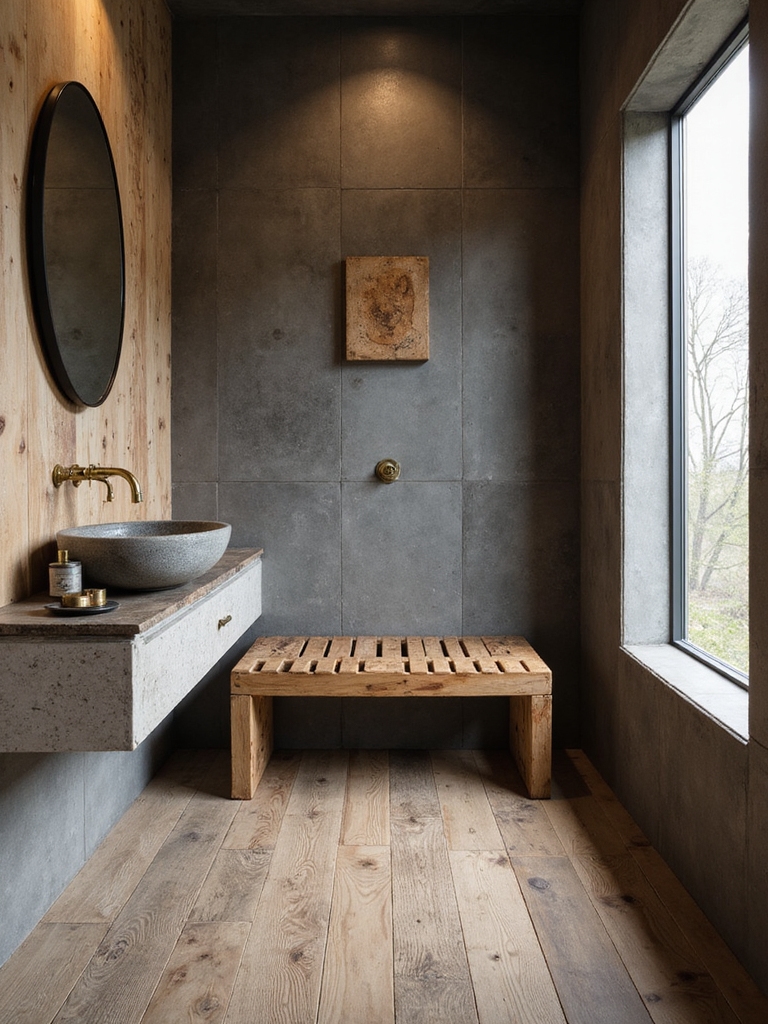
Weathered wood brings a grounded, lived-in feel to a bathroom, but it also requires smart choices about practicality, texture, and maintenance.
I share how to balance durability, grip, and moisture control while keeping warmth. Here are practical tips:
- Pick water-safe finishes
- Prefer engineered panels
- Use sealed edges
- Maintain humidity wisely
Incorporating elements like rustic hearts can enhance the cozy, charming atmosphere in your farmhouse bathroom décor.
Stone Slab Floors: Natural Warmth That Lasts
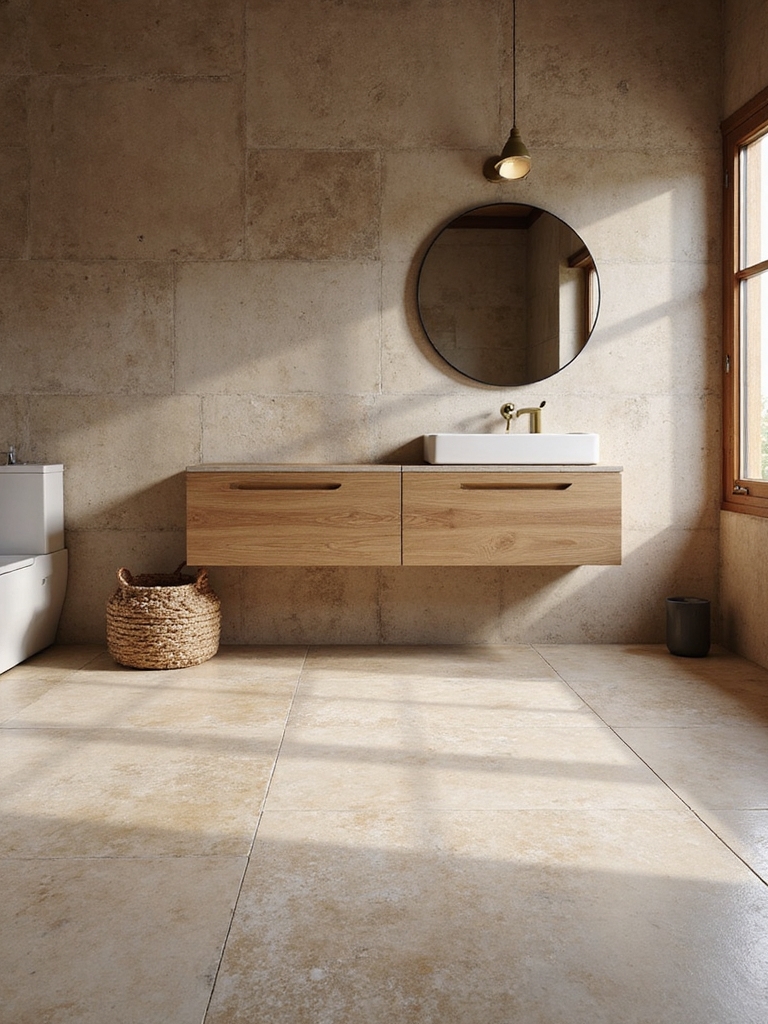
Stone slab floors bring natural warmth underfoot and a quiet, timeless beauty to a bathroom.
I love how one large piece or a few large slabs minimize grout lines, making cleaning simpler and the space feel bigger.
They’re durable, temperature-steady, and resist wear with proper sealing.
If you crave rustic luxury that lasts, this is your foundation.
Incorporating stone slabs can enhance a cozy modern rustic atmosphere that blends warmth with contemporary style.
Travertine and Marble Options: Subtle Veining for Rustic Luxury
Travertine and marble bring subtle veining that adds rustic luxury without shouting detail.
I choose pieces with soft, natural patterns to balance a cozy bath.
Here are practical picks:
- Light creamy travertine boards
- Honed marble slabs with gentle veining
- Large-format tiles for fewer seams
- Sealant considerations for longevity
Enjoy timeless warmth without loud statement. Incorporating modern luxury bathroom ideas can elevate your rustic flooring to a sophisticated new level.
Brick-Inspired Tile: Vintage Charm With Modern Durability
Brick-inspired tile brings vintage charm with modern durability into a bathroom.
I love how its textured surface hides splashes while adding character, and I mix grout shades for a subtle, timeless look.
It’s easy to clean, resists wear, and pairs with warm woods or cool metals.
Practical tip: seal properly, and choose a slip-resistant finish for safety.
For an extra touch of elegance, consider incorporating luxurious bathroom tile to elevate the overall aesthetic.
Matte Ceramic Tile in Earth Tones: Calm, Weathered Look
I love how matte ceramic tiles in earthy tones bring a calm, weathered vibe to a bathroom.
Their soft hues and textured surface hide everyday wear while keeping the space feeling warm and grounded.
Let’s explore how these calm earth tones can shape your rustic bathroom without shouting, just quietly elevating the mood.
Brown tile bathroom ideas often use color palettes done right to enhance the overall aesthetic and create a cohesive look.
Calm Earth Tones
I share simple ideas you can use today:
- Pair with warm wood accents for cohesion
- Choose low-sheen grout to maintain softness
- Use muted textiles to enhance calm
- Add subtle greenery for fresh contrast
Weathered Texture Appeal
Weathered texture brings a quiet sophistication to a bathroom floor, and matte ceramic tiles in earth tones deliver that calm, weathered look without shouting for attention.
I love how the soft, tactile finish hides fingerprints and wear, while remaining easy to clean.
Pair with warm woods, underfloor heat, and simple hardware for a cohesive, inviting, low-maintenance space.
Large-Format Tiles for Seamless, Cozy Surfaces
Large-format tiles instantly create a seamless, cozy bathroom floor by reducing grout lines and drawing the eye across the room.
I love how they feel underfoot and how the space reads larger.
- Choose neutral hues for warmth
- Plan layout to minimize cuts
- Use large slabs for continuity
- Seal properly for longevity
Incorporating modern bathroom tiles can elevate your design with stylish, functional surfaces that everyone saves for inspiration.
Hand-Scraped Wood-Look Porcelain: Durability Meets Warmth
I love how hand-scraped wood-look porcelain blends durability with warmth, giving you a floor that’s comfy underfoot and built to last.
It has strong indoor-outdoor appeal, so your bathroom can feel cohesive with adjacent spaces.
Let’s explore how this combination fits practical living while keeping that inviting, rustic vibe.
Bathroom tile flooring ideas trending right now often emphasize both style and functionality, making this material a top choice for many homeowners seeking trendy bathroom tile flooring inspiration.
Durable Yet Warm
Hand-scraped wood-look porcelain flooring blends the best of both worlds: the warm, inviting look of real wood with the resilience of porcelain, so your bathroom stays durable without feeling stark.
1) Easy maintenance
2) Scratch resistance
3) Timeless warmth
4) Subtle texture makes it cozy, not busy.
I love this balance—rugged yet refined for daily bliss.
Indoor-Outdoor Appeal
Its durable, grippy surface stays practical in a bathroom, while the warm tone mimics real timber.
I pair it with stone accents and outdoor textures for continuity.
Maintenance is simple—clean spills promptly, seal seams, and enjoy seamless shifts that feel cozy yet resilient.
Cork Flooring: Soft, Quiet, and Sustainable Underfoot
Cork flooring brings warmth and quiet to a bathroom, and it’s surprisingly practical for daily use.
I’ll share essentials you’ll love:
- Soft underfoot comfort that eases every step
- Excellent sound absorption for a serene space
- Naturally resistant to mold with proper sealing
- Sustainable harvest, low environmental impact, easy maintenance
Reclaimed Wood Flooring: Character, Pros, Cons, and Care
Reclaimed wood flooring brings a warm, weathered character to a bathroom, pairing beautifully with the calm, natural tones we’ve explored with cork.
I love its story: knots, grain, and provenance add immediate texture.
Pros: durability, sustainability, and timeless appeal.
Cons: potential moisture sensitivity, seasonal movement, and cost.
Care is simple: proper sealing, humidity control, gentle cleaners, and quick dry after showers.
Pebble Floors Near Showers: Natural Flow and Texture
Pebble floors near the shower create a natural texture that guides your step and draws the eye toward the wet area.
I love how the varied pebbles soften the edge between dry and damp, making a seamless change.
Let’s explore how this flow and grip can enhance both comfort and safety in a rustic bath.
Natural Texture Flow
Texture underfoot invites calm, so I love placing pebble floors near showers to create a natural flow from wet to dry.
- Feel the cool contrast underfoot as you move.
- Choose varied pebble tones for subtle depth.
- Install with a slip-resistant grout for safety.
- Seal gaps to resist moisture and maintenance.
Wet Area Transition
Moving from the natural pebble feel I love near showers, I focus on how the wet area meets the rest of the bathroom floor.
I keep grout lines tight and slope gently toward the drain for safety and flow.
Textures, colors, and mat options bridge wet and dry zones, ensuring comfort, durability, and a cohesive rustic vibe.
Wood-and-Stone Mixed Floors: How to Layer Texture Without Clutter
To keep rustic bathroom floors feeling cohesive, I layer wood and stone in a way that adds texture without clutter.
1) Pair matte wood with honed stone for quiet contrast
2) Use a limited color palette to unify the mix
3) Vary plank widths to create rhythm without chaos
4) Reserve focal areas, avoiding busy borders and patterns
Warm-Toned Grout: Unifying Rustic Tile Surfaces
Warm-toned grout does more than fill gaps; it ties rustic tile surfaces together with quiet warmth.
I choose grout that echoes wood and stone tones, creating a cohesive floor. It hides regular grime and guides the eye, making patterns feel intentional.
Maintenance stays simple when I seal early, wipe frequently, and avoid contrasting lines that shout. Comfort, consistency, practicality prevail.
Borders and Accents Without Cold Edges: Subtle Framing Tips
Borders and accents can elevate rustic bathrooms without creating sharp edges or jarring changes, so I frame them as gentle frames rather than hard borders.
1) Use thin, complementary trim
2) Choose subtly varied grout lines
3) Align patterns with natural edges
4) Add small framed accents near shelves or mirrors
Radiant Floor Heating Compatibility for Ultimate Comfort
Radiant floor heating can be a perfect match for rustic bathroom flooring, delivering cozy warmth underfoot without sacrificing the style you love.
I’m often asked if it’s compatible with wood-look planks and stone vibes I adore. It is, when you choose a compatible system, proper installation, and a reliable thermostat that preserves that timeless, comfortable atmosphere you crave.
Sealed Surfaces and Slip Resistance in Wet Bathrooms
When your rustic bathroom embraces sealed surfaces, you gain durability and easier maintenance without sacrificing style.
That naturally leads to better slip resistance in wet areas. I share practical tips:
- Choose textured seals for grip
- Test slip resistance ratings (R10+)
- Apply non-slip coatings in high-traffic zones
- Maintain seals with regular cleaning routines
Color Palettes That Elevate Cozy Rustic Vibes
Choosing color palettes that feel cozy and rustic is all about warmth, depth, and a touch of nature, so I’ll steer you toward combinations that look lived-in and inviting from day one.
Think earthy browns, creamy neutrals, and soft greens; pair matte textures with warm whites to soften edges.
Add charcoal accents for contrast, keeping surfaces forgiving and timeless for daily living.
Maintenance and Longevity: Keeping Rustic Floors Gorgeous
Maintenance and longevity are at the core of keeping rustic floors gorgeous, so I’ll share practical steps you can rely on every day.
- Dust daily to prevent grit grinding finishes.
- Use a damp mop with gentle cleaner; avoid soaking wood.
- Place mats to reduce moisture near entry points.
- Refinish every few years to refresh color and seal.
Conclusion
I’ve tested a hunch: rustic floors aren’t just pretty—they hug a bathroom’s rhythm, and that cozy truth holds up under life’s splashes. If you’re torn between warm wood, weathered textures, or stone, the real verdict is comfort underfoot, safety, and easy care. Choose a solution that ages gracefully, seals well, and pairs with radiant heat if you crave toasty mornings. Trust that the vibe you love will stay practical, resilient, and welcoming for years.