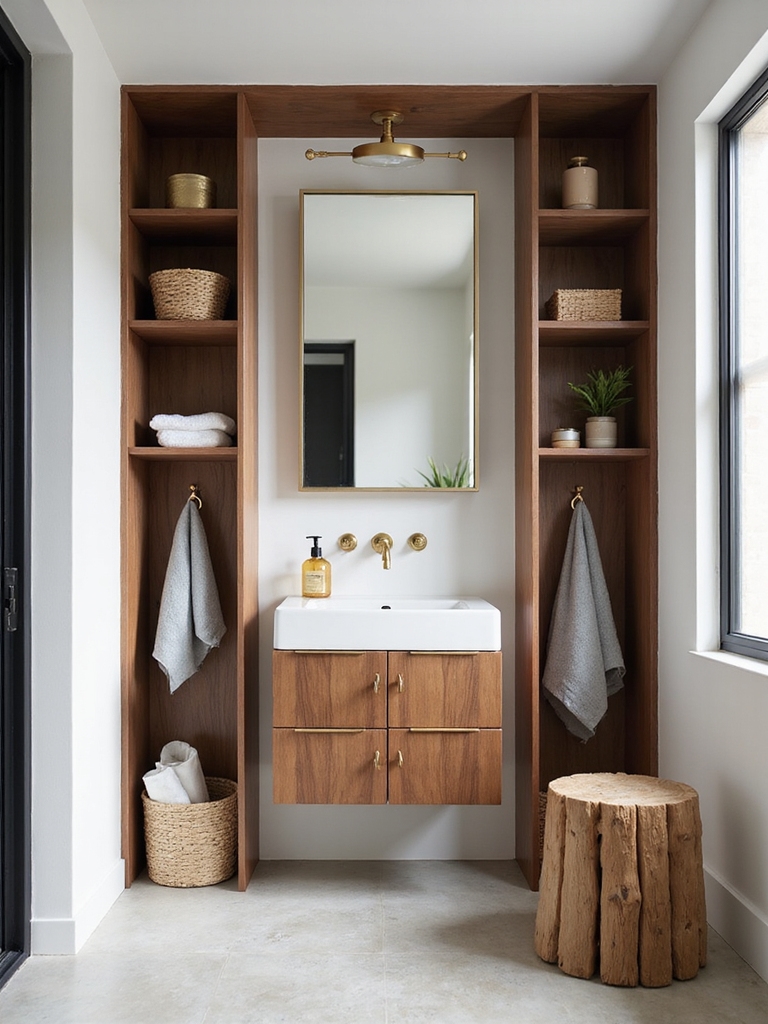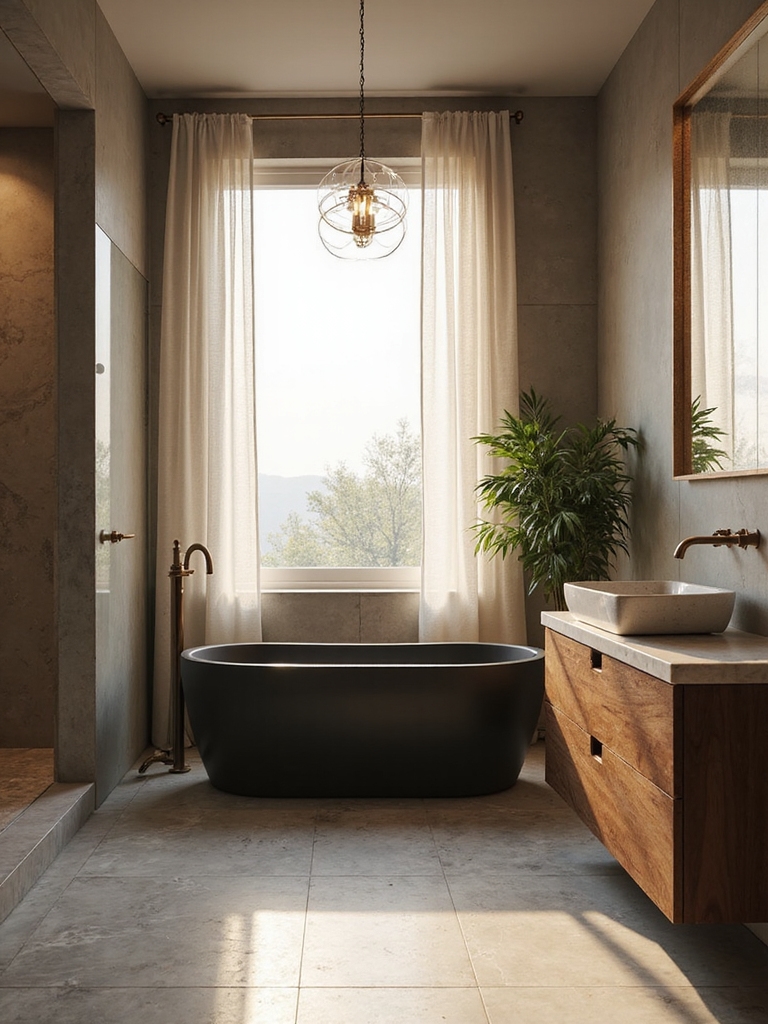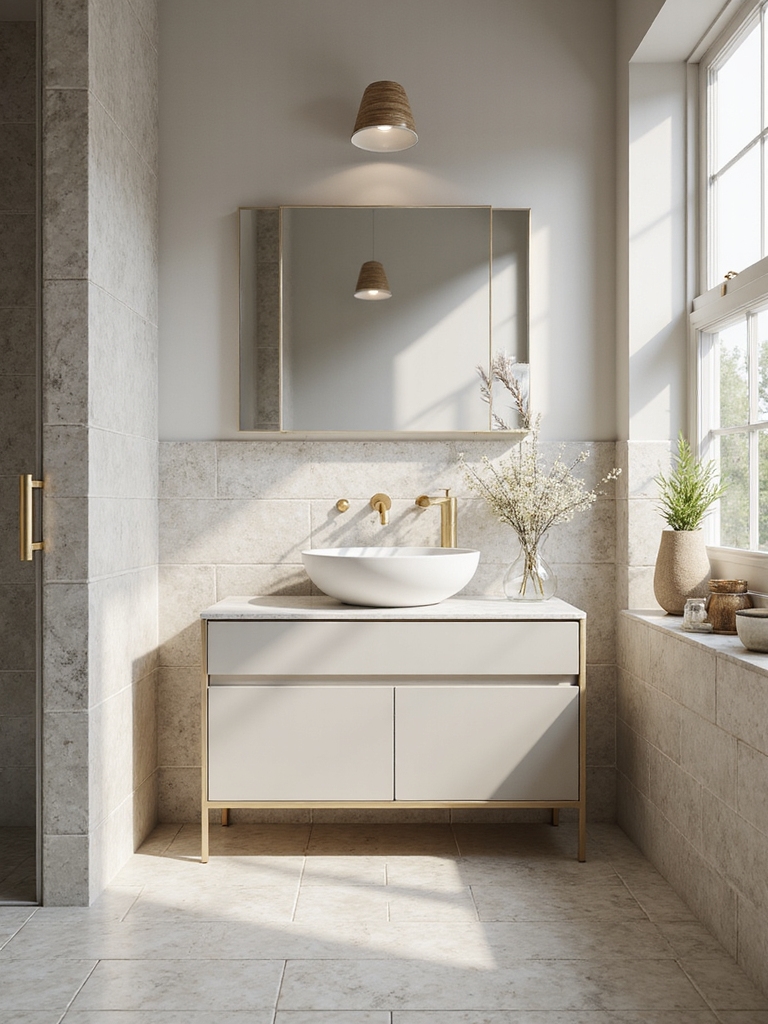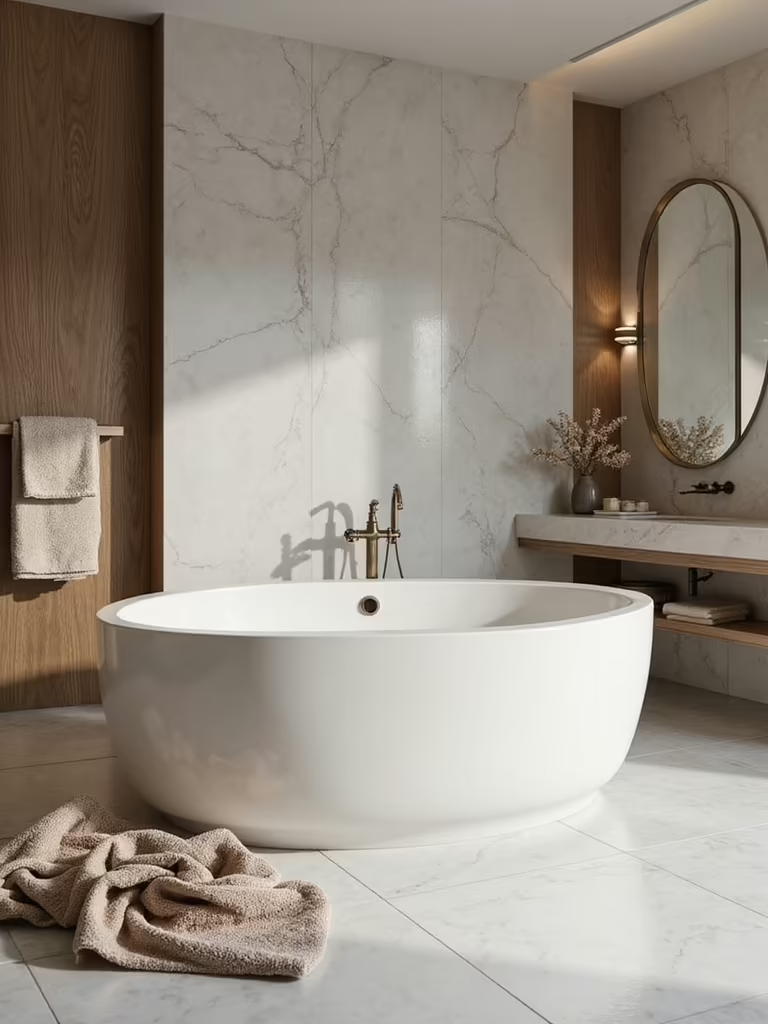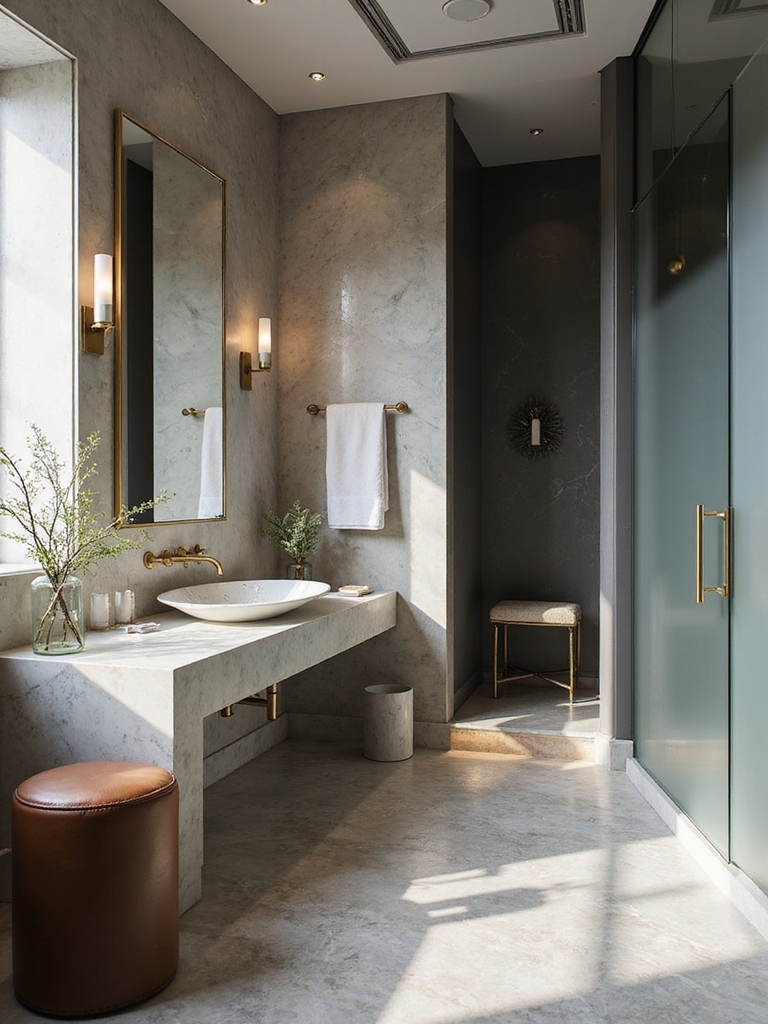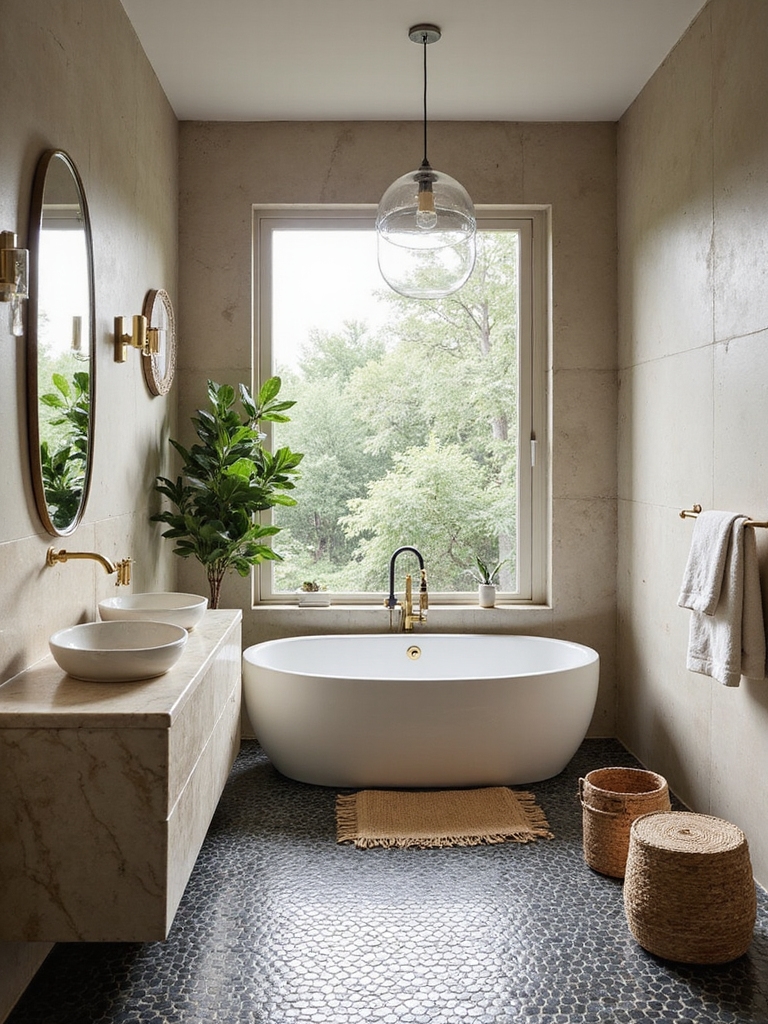
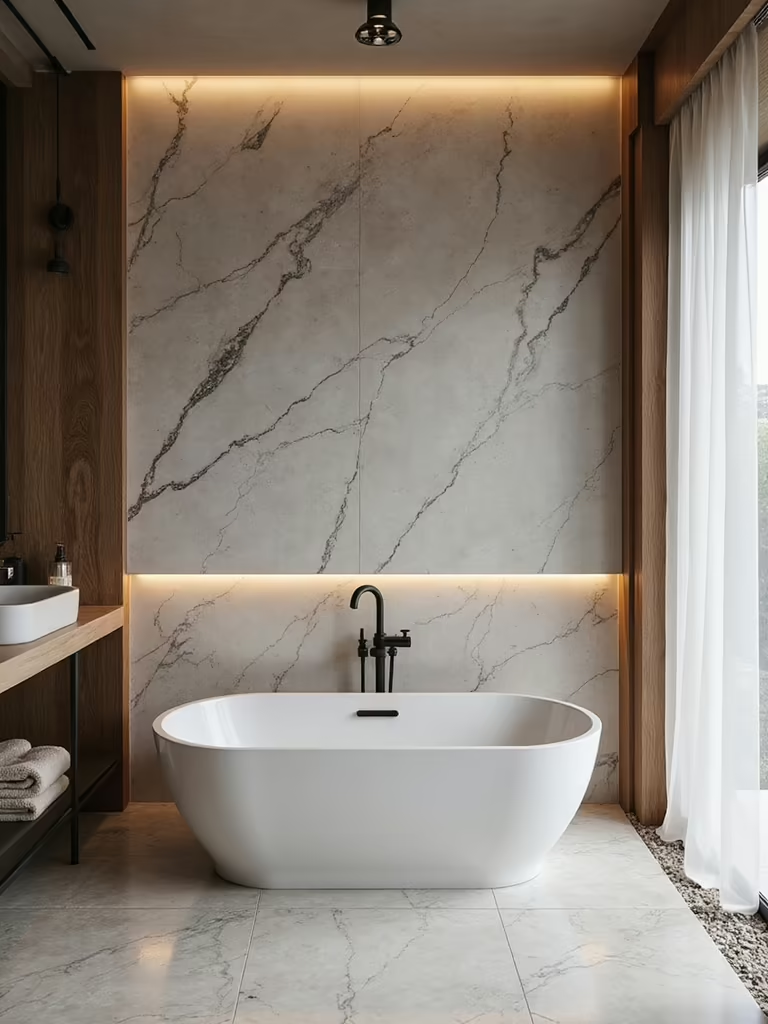
I’ll share practical bathroom layouts that flow, feel spacious, and adapt to daily routines, so every inch works smarter today and tomorrow. I identify traffic hotspots, map daily zones, and carve clear, accessible paths. I maximize storage without clutter—think recessed, vertical cabinets and smart organizers. I design for comfort with layered lighting, fresh airflow, and draft-free ventilation. Flexible fixtures and universal design keep options open as needs evolve. If you keep exploring, you’ll see how these ideas come together in real spaces.
Identify Your Bathroom’s Traffic Problems (And How to Fix Them)
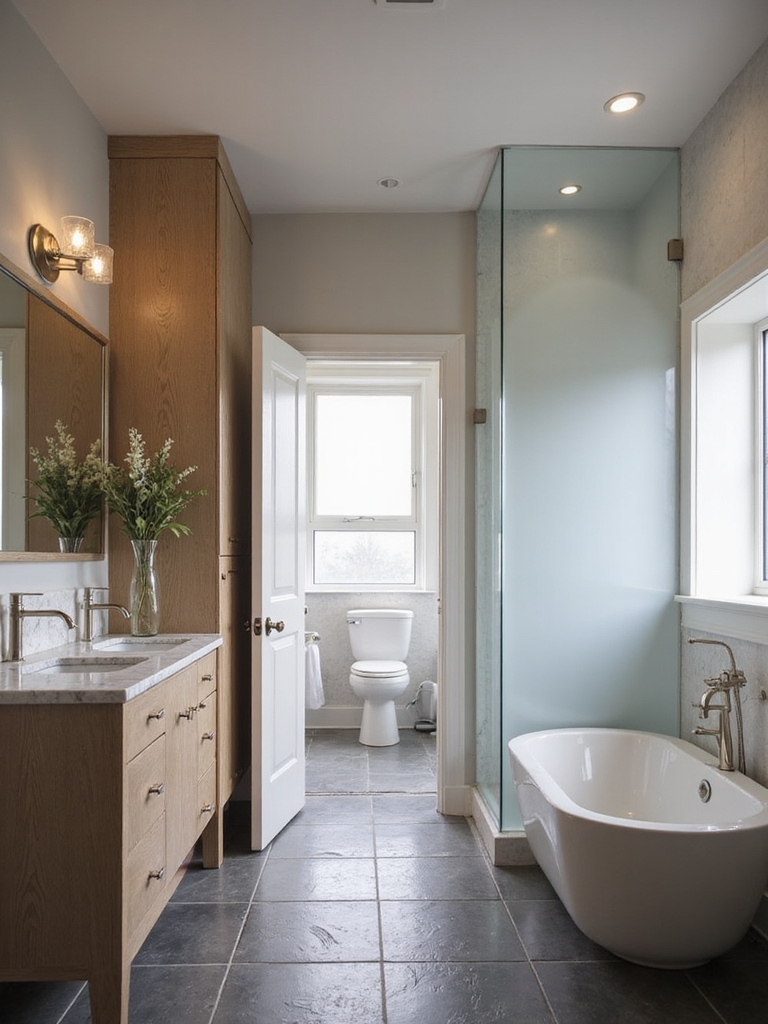
Figuring out where people bump into walls or elbows is the first step to a smarter bathroom layout.
I observe everyday paths, noting tight corners, door swings, and clogged zones.
Then I reconfigure traffic flow: widen clearance, relocate fixtures, and create clear, logical routes.
You’ll gain safer movements, quicker routines, and a calmer space that respects everyone’s needs.
Incorporating smart solutions tailored for tiny bathrooms can maximize both space and functionality.
Map Daily Zones for Routine, Access, and Comfort
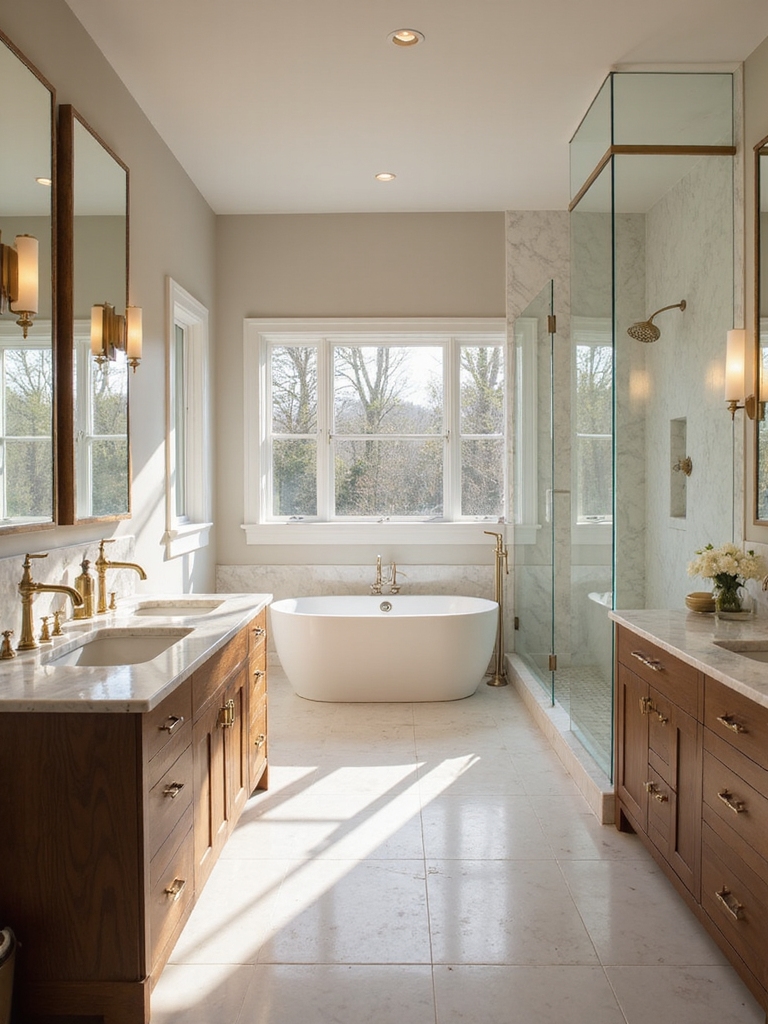
To map daily zones for routine, access, and comfort, I start by noting how you move through the bathroom in typical days: where you reach for essentials, how you pace from sink to shower, and where doors and drawers slow you down.
Then I assign zones for tasks, minimize travel, and prioritize flow, accessibility, and calm. Incorporating clever bathroom design tips can help make every inch count and enhance usability.
Maximize Storage Without Visual Clutter
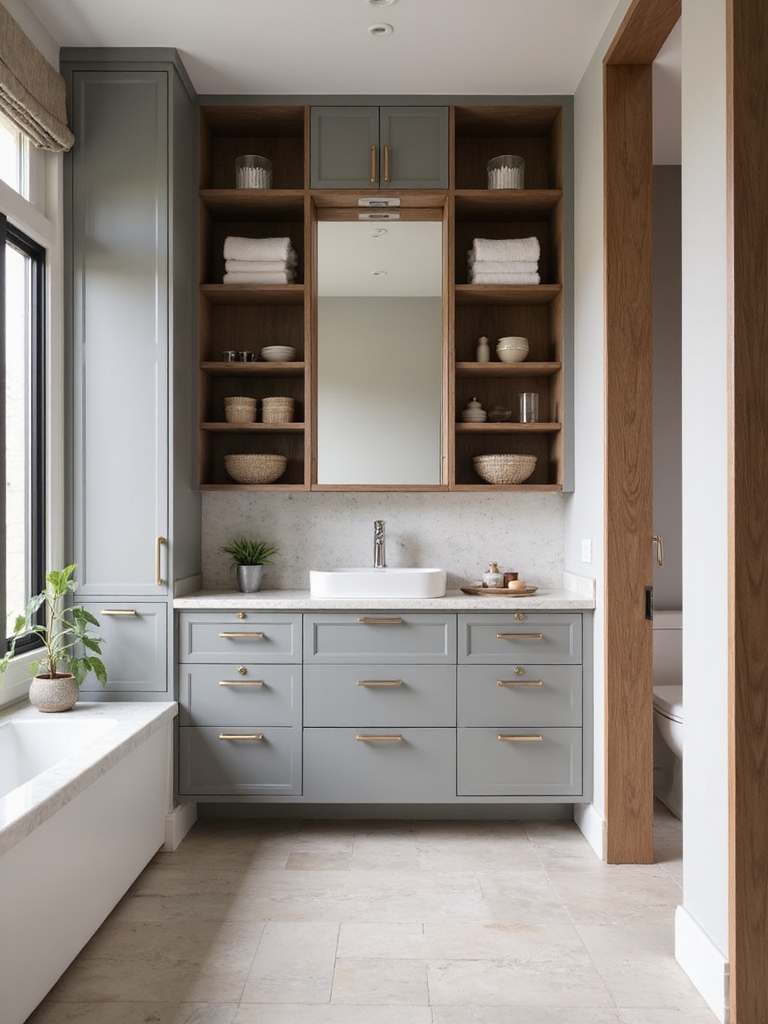
Maximizing storage without visual clutter starts with smart concealment: choose storage that blends with the bathroom’s look and remains easy to reach.
I’ll share practical ideas you can apply today, without crowding the space.
- Use recessed shelves or medicine cabinets that mirror wall color
- Opt vertical cabinets to free counter space
- Install drawer dividers for efficiency
- Hide cords with built-in power strips and cable channels
Consider incorporating creative bathroom storage solutions that complement every style while enhancing functionality.
Grounded, Accessible Layouts for All Users
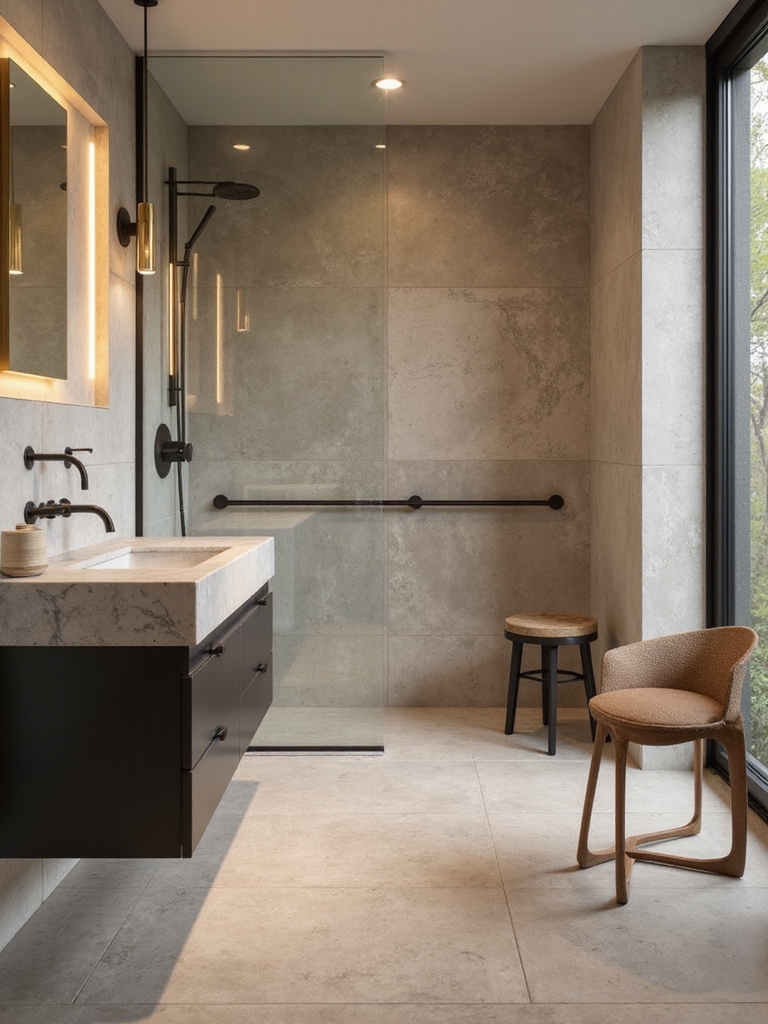
I’m focusing on grounded, accessible layouts that work for everyone, starting with unobstructed pathways, barrier-free storage, and controls that are easy to reach.
I’ll discuss clear, reachable controls, smooth circulation, and storage that stays within arm’s reach without clutter.
Let’s examine practical layouts that place essential elements within easy reach while keeping safety and comfort at the forefront.
Incorporating space-saving bathroom ideas can maximize functionality without sacrificing style or comfort.
Accessible Pathways In Baths
Are accessible pathways in baths truly possible without sacrificing style or function?
I walk you through practical choices that keep circulation clear and visually balanced.
- Wider doors and clear floor space
- Non-slip, seamless surfaces
- Grab bars integrated with design
- Clear shower entry with a bench
We’ll blend safety with aesthetics, ensuring comfort without clutter or compromise.
Barrier-Free Storage Solutions
Small, well-planned storage can transform a barrier-free bathroom by keeping essentials within easy reach without clutter.
I design low, open shelves and pull-out bins that adults and kids can use safely. Use labeled containers, moisture-resistant materials, and rounded edges.
Corner caddies and magnetic strips maximize space without crowding; keep daily items visible and reachable to minimize trips and frustration.
Clear, Reachable Controls
- Place dials within easy reach from seated positions
- Use lever or touch-activated mechanisms
- Mount controls at chair height and 48 inches max
- Guarantee clear, unobstructed access for all users
Compact Layouts That Feel Spacious
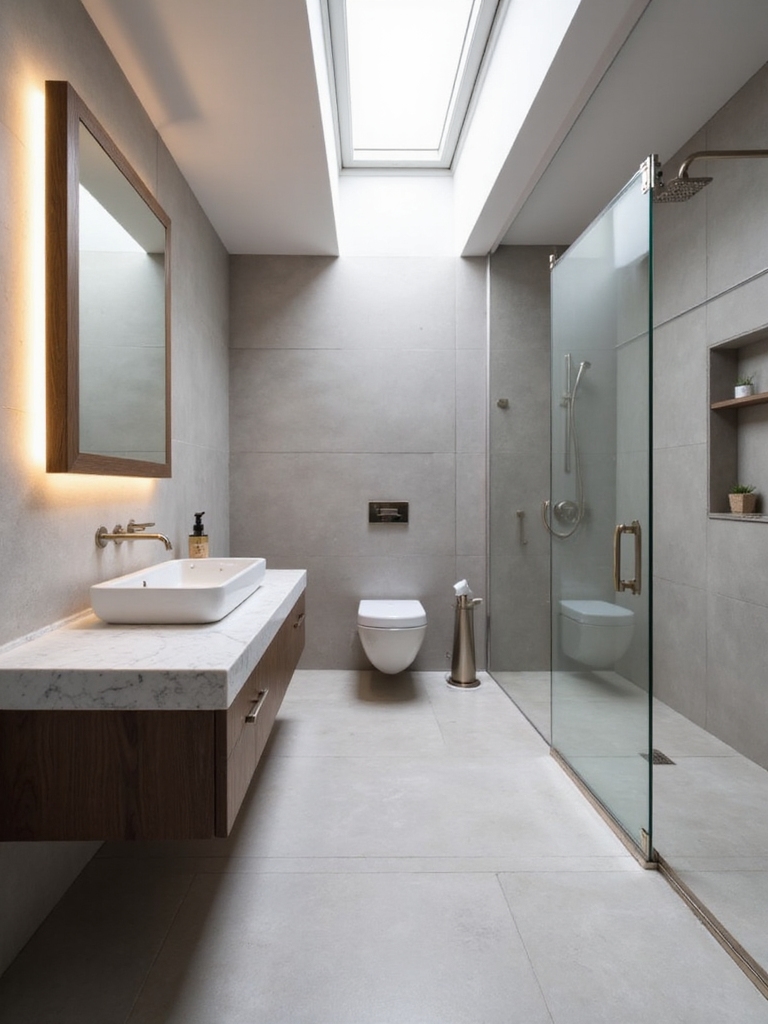
I’ll show you how to make a compact bathroom feel open by prioritizing space-savvy fixtures that serve dual purposes.
We’ll map out proportion-friendly zones so every move feels natural, not cramped.
And I’ll highlight clever storage solutions that tuck away essentials without stealing floor space.
You can easily create more room by incorporating DIY storage solutions that maximize every inch of your small bathroom.
Space-Savvy Fixtures
When space is tight, choosing fixtures that maximize function without hogging room makes a big difference.
I share compact choices that feel spacious yet practical, without sacrificing style or storage.
Think wall-hung vanity, recessed shelves, corner fittings, and multi-purpose units that clear floor area while keeping essentials accessible.
- Wall-hung vanity with slim profile
- Recessed built-ins above toilet
- Corner basin and angular taps
- Multi-purpose medicine cabinet with bottom drawer
Proportion-Friendly Zones
Compact layouts can feel more spacious when zones are sized and placed with intention.
I group functions into clear areas, matching activity to space. You’ll see a logical flow from sink to shower to toilet, with sightlines uninterrupted.
I keep margins generous where needed, and I favor compact fixtures that don’t crowd.
Proportion matters; calm, deliberate zoning delivers roomier, calmer daily routines.
Clever Storage Solutions
Smart storage can transform a compact bathroom into a calm, efficient space. I share practical ideas that keep essentials accessible without crowding sightlines.
Think wall-mounted cabinets, recessed shelves, over-toilet organizers, and pull-out baskets. Each solution adds function while preserving flow, so you still feel spacious, not cramped.
- Wall-mounted cabinet above sink
- Recessed niches for toiletries
- Over-toilet shelving with baskets
- Pull-out organizer in vanity
The 3-Way Wet Zone: Sink, Toilet, Shower Rule
A well-designed 3-way wet zone places the sink, toilet, and shower within easy reach of one another, making daily routines smoother and faster.
I prioritize logical flow and shared plumbing to minimize footprints and leaks.
Keep clear sightlines, slip-resistant floors, and proper ventilation.
Position outlets away from water, with smart storage nearby.
Consistency in height enhances usability for everyone.
Incorporating clever storage solutions ensures functionality in both large and small bathroom spaces.
Create Spa-Located Zones for Calm Moments
Creating spa-like zones in a bathroom means carving out calm pockets that invite rest amid routine.
I guide you to segment spaces with soft textures, warm light, and purposeful decor. You’ll feel calmer as zones promote ritual, not clutter.
- Soft lighting corner for unwinding
- Guilt-free shelf with textures and scent
- Quiet towel nook near the sink
- Greenery and natural accents for serenity
Incorporating spa-inspired bathroom decor elements enhances the overall sense of pure calm and relaxation.
Plan Doors and Openings for Smooth Flow
I map entry points to minimize collisions, guarantee clear thresholds, and keep doors from blocking wardrobes or fixtures.
I favor pocket or frameless options where possible, and I test paths with real moves.
The result is intuitive circulation that respects privacy and enhances daily routines.
Incorporating clever bathroom storage near doorways can maximize space efficiency without disrupting flow.
Lighting Layouts: Reveal, Highlight, and Retreat
Lighting can shape how we move through a bathroom just as plans for doors and openings do.
I reveal, highlight, and retreat with intent, guiding the eye and mood while keeping tasks simple.
Here are ideas:
- Layer ambient, task, and accent lighting
- Use dimmers for daily rhythms
- Highlight textures with directional fixtures
- Conceal glare with wall washes and shields
Incorporating creative mirror lighting can enhance both functionality and ambiance in your bathroom.
Window + Ventilation: Comfort Without Drafts
I’m exploring how window ventilation can balance fresh air with comfort, so drafts don’t disrupt your routine.
We’ll look at how to pair window placement, seals, and airflow design to keep air moving without chilly gusts.
Let’s discuss strategies for draft-free airflow that still feels bright and breathable.
Window Ventilation Balance
When balancing window airflow and built-in ventilation, the goal is to keep the bathroom fresh without drafts. I blend smarter placement with quiet fans, seal gaps, and tailor openings to usage.
Here are ideas:
- Match vent speed to bathroom size
- Use top-window or transom vents for daylight
- Add programmable timers
- Consider humidity sensors for auto adjustments
Draft-Free Airflow Design
Draft-free airflow in a bathroom comes down to smart design that blends window placement with quiet, efficient ventilation.
I’ll guide you through selecting layouts that minimize drafts and maximize comfort.
Think staggered or high windows paired with unobtrusive fans, controlled humidity, and smart dampers.
You’ll feel consistent airflow without chilly gusts, making every use comfortable and practical.
Budget-Smart Swaps That Move the Needle
If you want big impact without breaking the bank, start with small, smart swaps that change how your bathroom feels and works.
I share practical tweaks that quietly elevate function and style, without a remodel’s cost.
- Swap dated hardware for matte black or brushed nickel
- Add a floating shelf for space and texture
- Use glass containers for soap and cosmetics
- Replace bulky towels with slim storage solutions
- Incorporate smart storage solutions to keep your bathroom vanity tidy and clutter-free
Flexible Fixtures for Changing Needs
Flexible fixtures can make a bathroom adapt as needs change, from evolving grooming routines to accommodating accessibility concerns.
I choose components that are adjustable, durable, and easy to install. A movable shower head, adjustable vanity height, and lever-operated taps simplify daily use.
Prioritize universal design without sacrificing style, plan for future needs, and keep maintenance simple. Your space stays functional, flexible, and welcoming.
Real-World Case Studies: 13 Layouts That Work
Real-world layouts prove that good design isn’t a theory—it’s a proven approach you can copy.
I’ve seen 13 layouts work by prioritizing flow, storage, and sightlines. You’ll notice the same patterns: clear zones, compact fixtures, accessible reach, and adaptable spaces.
Try these concepts:
- open-proximity storage
- universal access pathways
- dual-purpose furniture
- balanced focal points
Conclusion
I’ve learned that a bathroom isn’t just tiles and fixtures—it’s a quiet crossroads where daily routines converge. Think of your space as a compass: traffic points meander toward comfort, storage hides in plain sight, and every fixture signals flexibility for changing needs. When the layout maps your habits, the room breathes with you. If a plan feels crowded, reframe it as a garden path—simple, deliberate, and open to growth. Your best layout waits where purpose meets possibility.