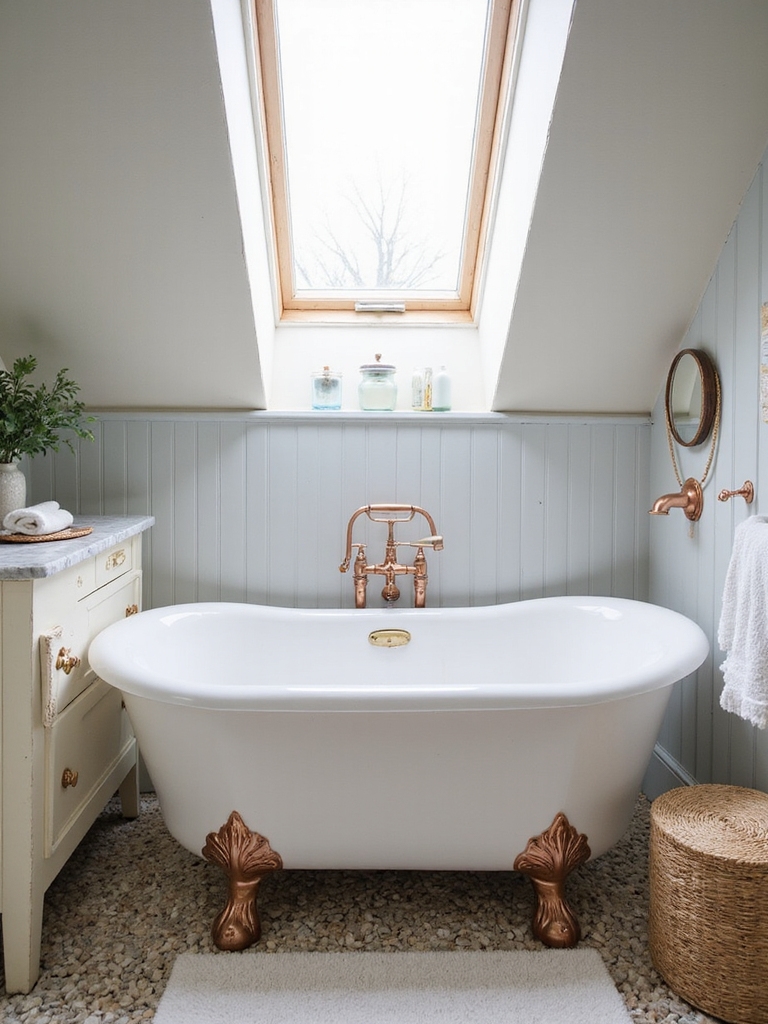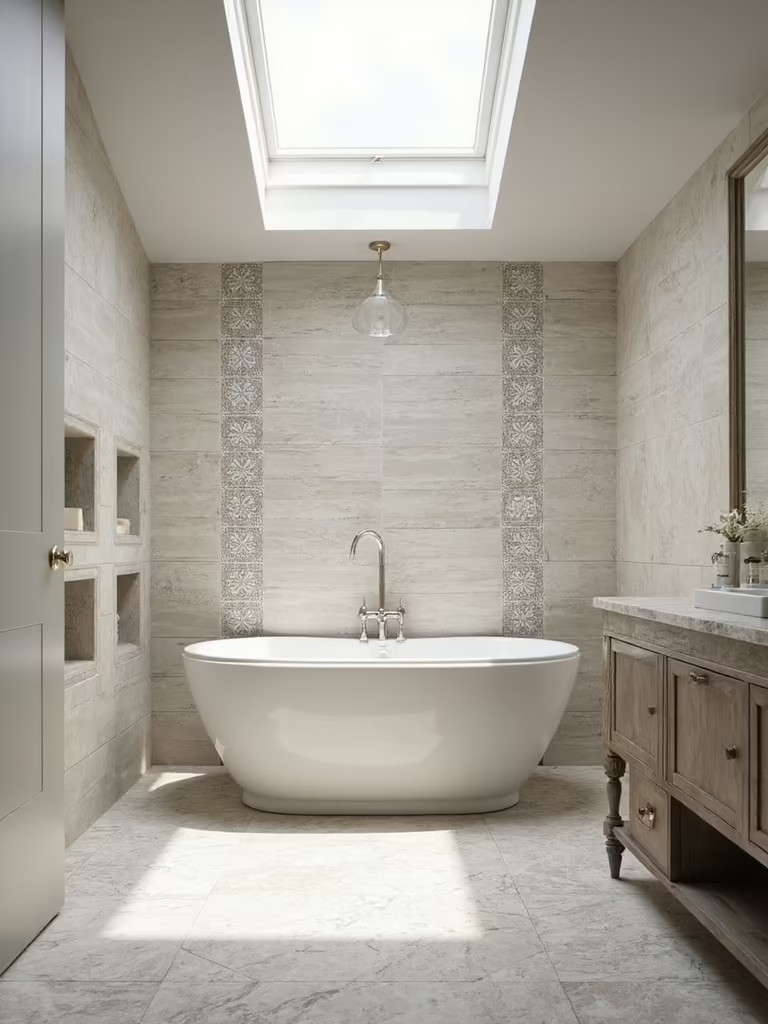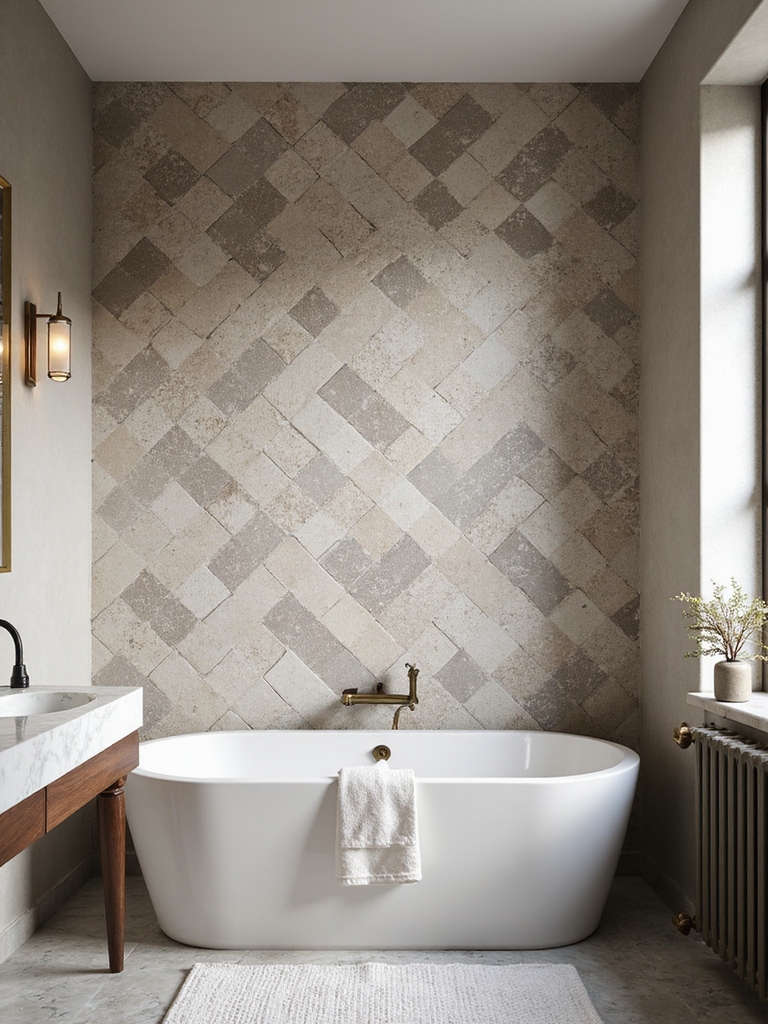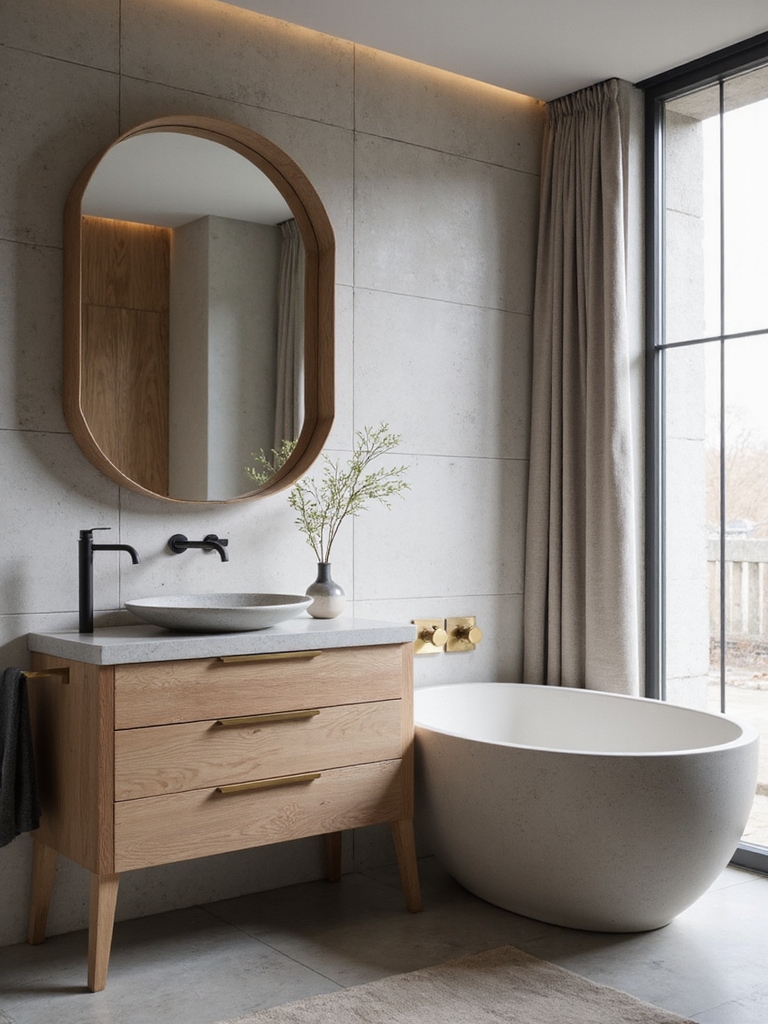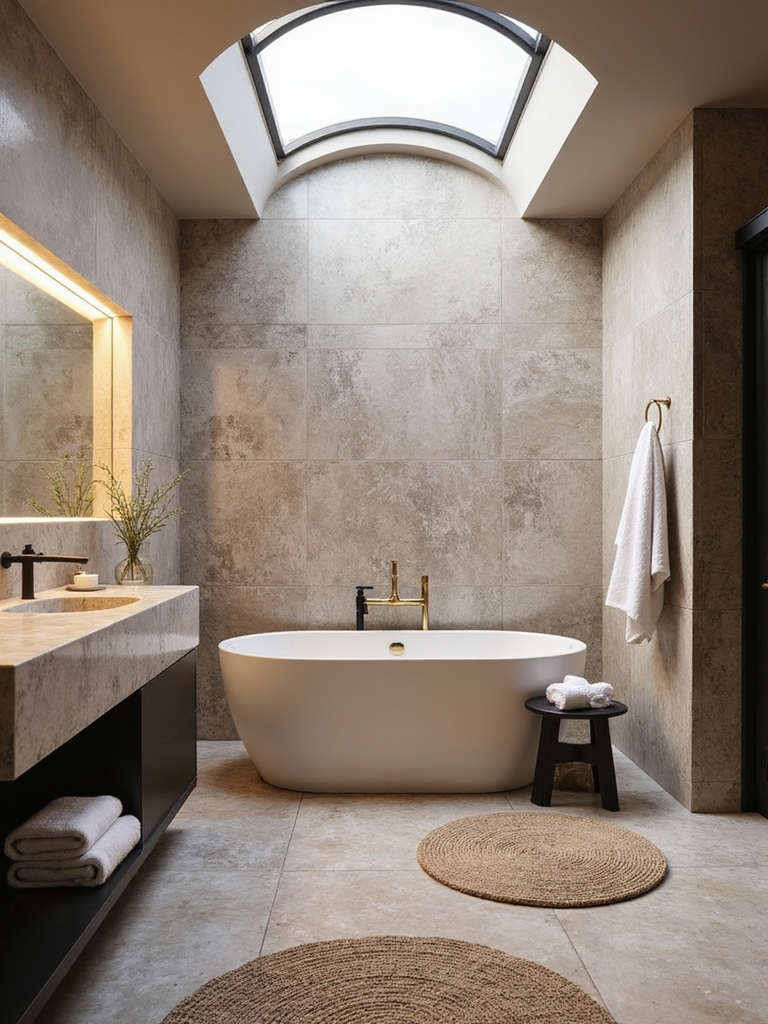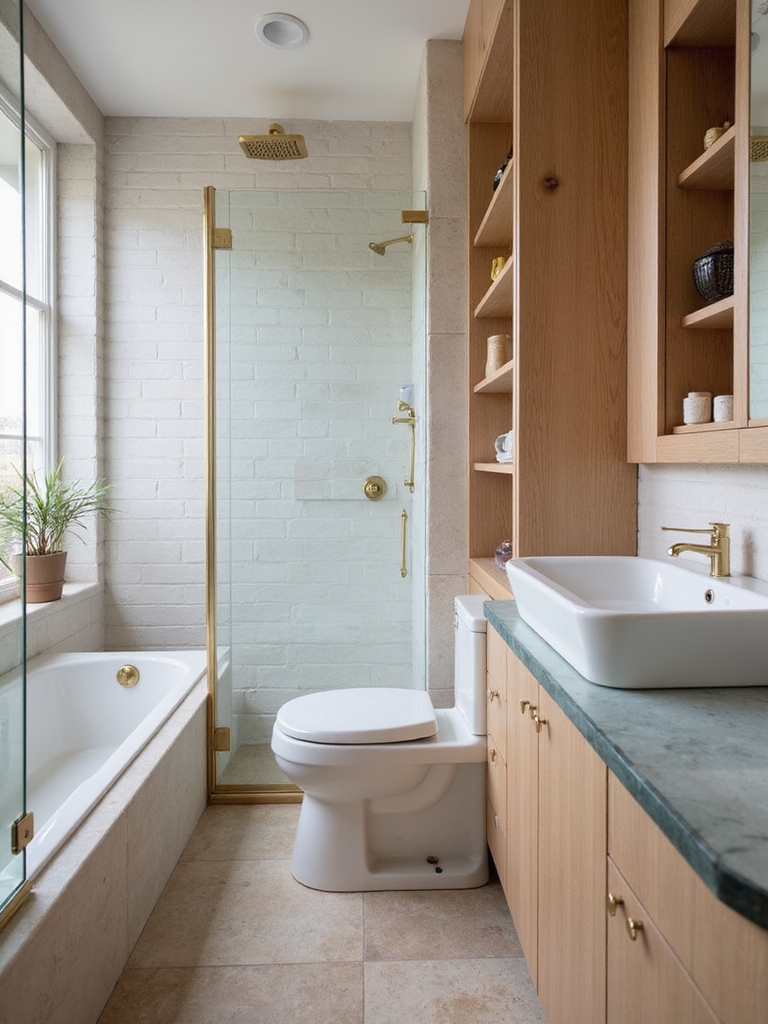
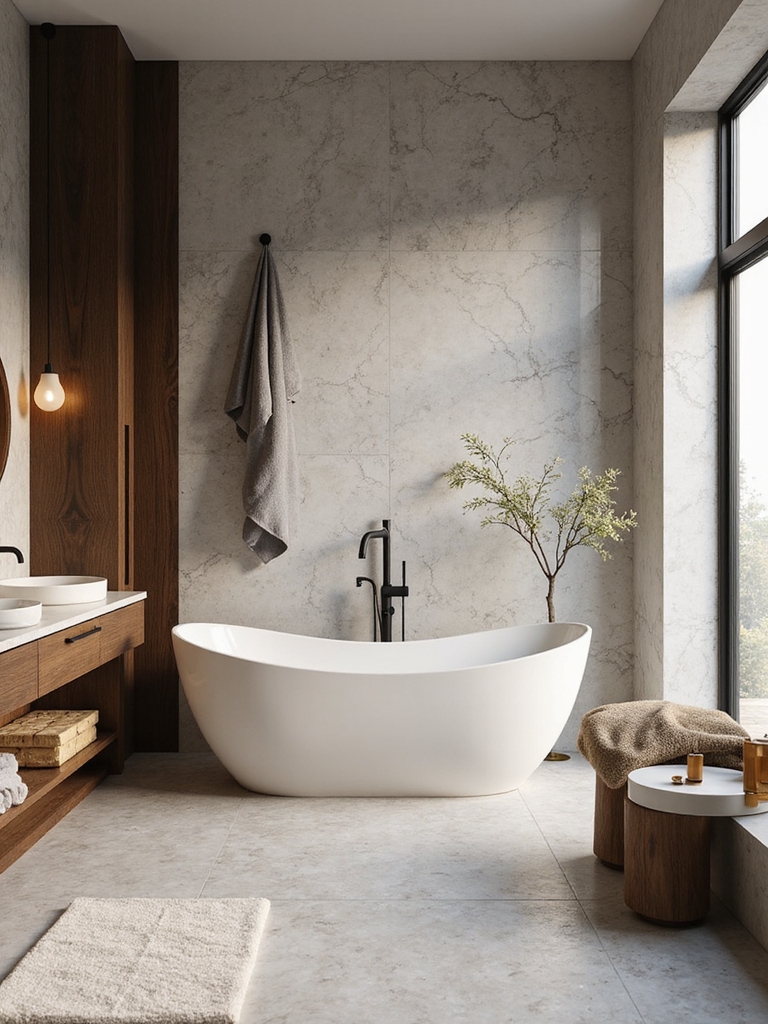
The smallest, most awkward bathroom in the house is usually the one with the most to gain. A clever design move can make a cramped box feel twice its size, and a moody one can turn a forgettable room into the one everyone remembers. After transforming dozens of tight, badly laid-out baths, I can tell you the magic is rarely more square footage. It is using what you have with intention.
These 13 bathroom design ideas transform a room from the inside out, whether it is tiny, dated, or just dull. Below you will find layout tricks that stretch a small footprint, texture and color that add depth, and lighting that does half the work. Most of these reshape how a room feels without moving a single wall.
Transform a Bathroom, in Short
- Stretch a small footprint with a floating vanity, a big mirror, and continuous floor tile.
- Add depth with layered texture and a confident, even moody, color story.
- Let layered, warm lighting do half the transformation; it sets the mood and the scale.
- Most of these need no wall moved and run $50 to a few hundred dollars.
Maximize a Tiny Bathroom Space
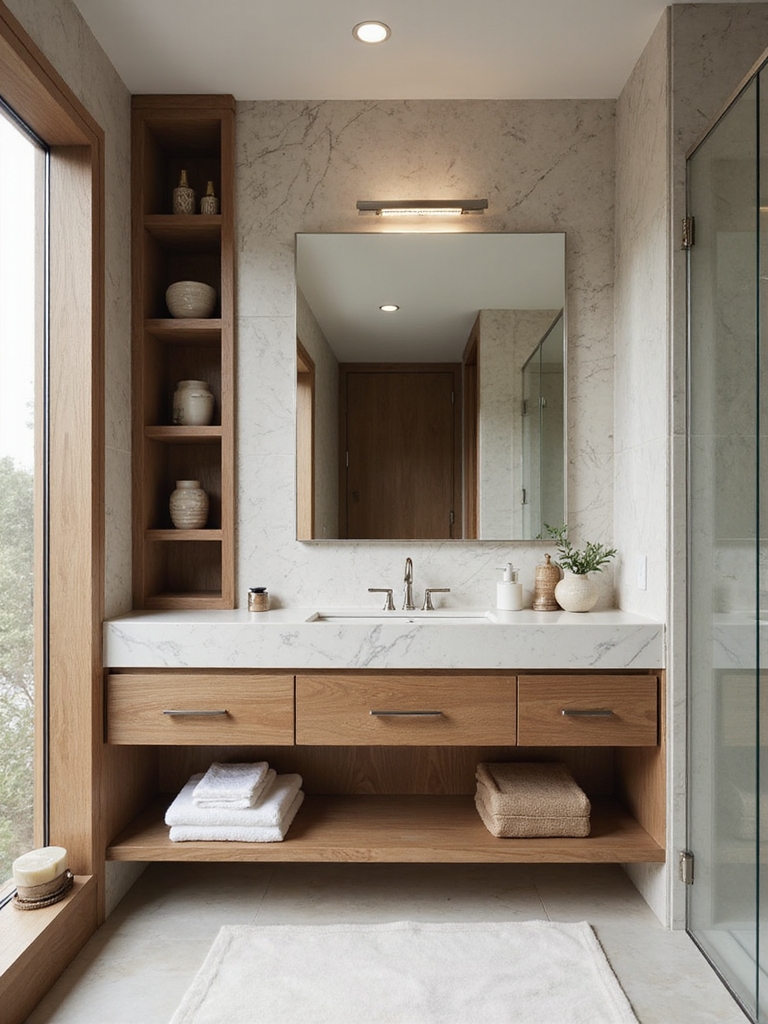
A tiny bathroom opens up most when you stop fighting its size and start working with it. The goal is to free the floor and trick the eye, so the room feels open even when the footprint cannot grow. A few moves do the heavy lifting, and none of them require knocking out a wall.
Float the Vanity, Free the Floor
Start by getting things off the floor. A floating vanity and a wall-hung toilet clear the ground beneath them, which instantly makes a small bath feel larger and easier to clean. A floating vanity runs $300 to $1,200, and it is the single biggest transformation you can make in a tight room.
Then stretch the space visually. A large mirror, light-reflecting surfaces, and one continuous floor tile blur the room’s edges and pull the eye out. Vertical lines, like tall tile or a floor-to-ceiling curtain, draw the gaze up and add height. Borrow a few small-space storage tricks to keep the cleared floor clear.
Clever Layouts for Small Spaces
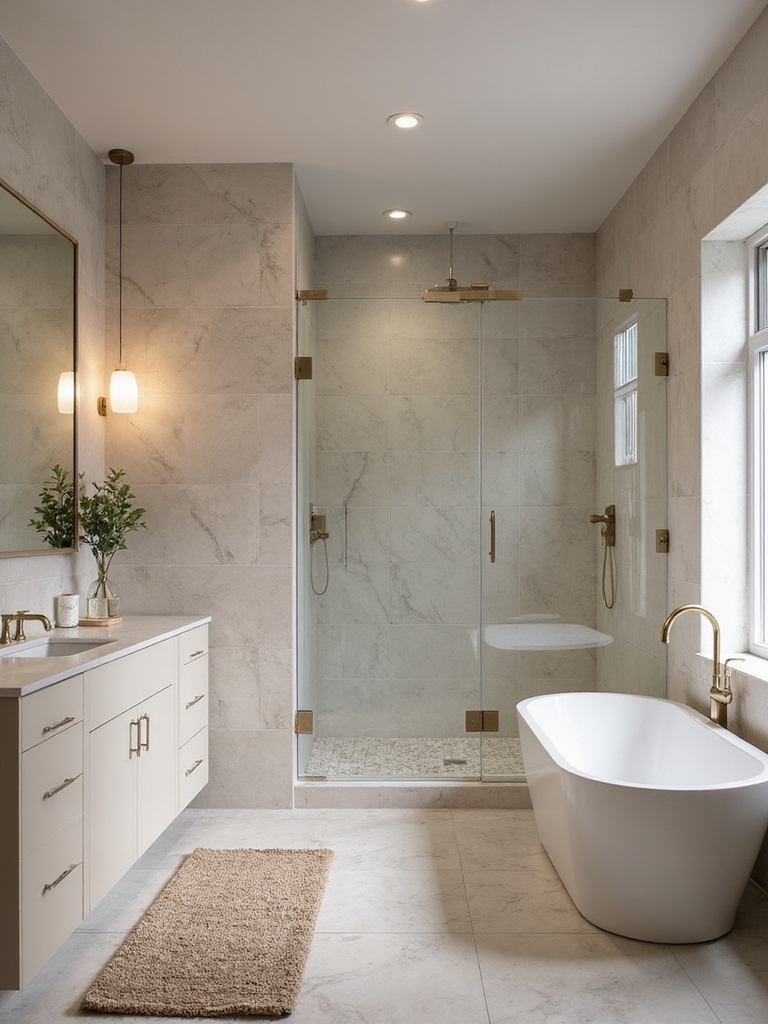
Sometimes a transformation is just a smarter layout, with no new materials at all. I tell every client to look hard at how the fixtures sit before spending a dollar, because a few inches in the right direction can change how the whole room works. A corner sink, a sliding door, or a shower swapped for the tub nobody uses can reclaim real space.
Think about the path you walk and the door swing. A pocket or barn-style door frees the floor a swinging door eats, and a curbless shower opens up a cramped corner. These are the bones of the room, and getting them right makes every later choice work harder.
- Swap a swinging door for a pocket or sliding door to reclaim floor space.
- Consider a corner sink or a curbless shower to open a tight corner.
- Trade an unused tub for a walk-in shower if a bigger footprint is the goal.
What is your bathroom’s biggest problem?
1It feels cramped and tight.
Float the vanity, go bigger on the mirror, and run one continuous floor tile to open it up.
2It feels flat and forgettable.
Add a moody color or a statement tile wall plus layered texture to give it depth and a focal point.
Tactile Texture for a Calm Feel
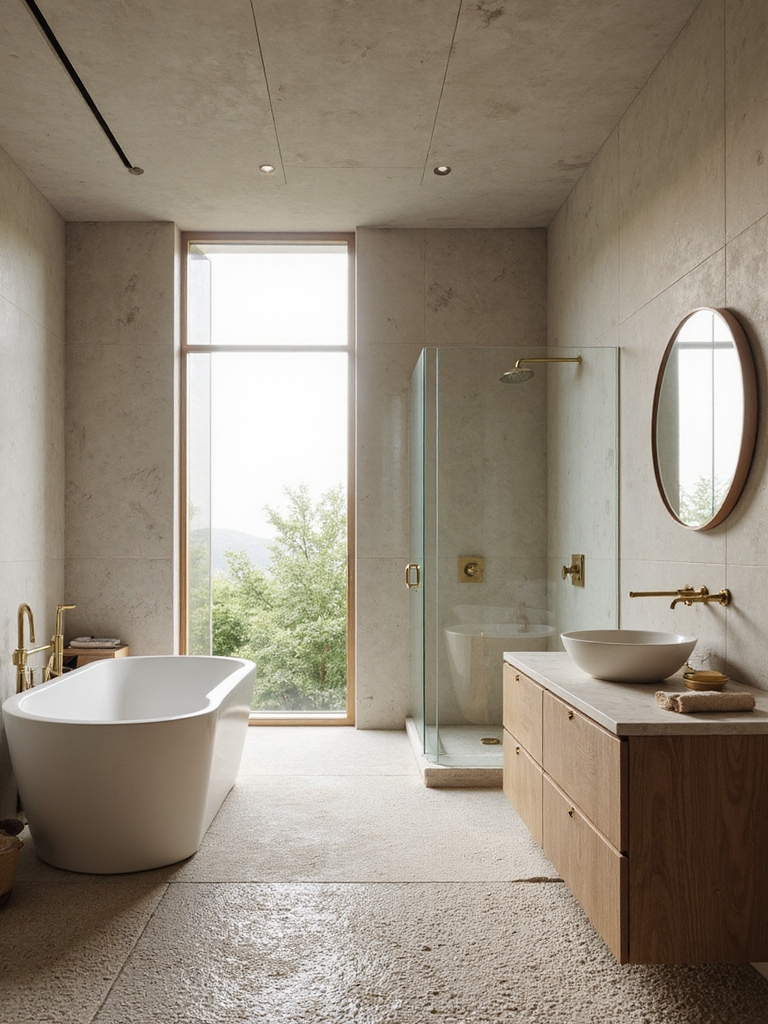
Texture is the transformation people forget, because it changes how a room feels without changing its size or layout. A flat bathroom of smooth tile and flat paint stays lifeless no matter the color you choose. Adding surfaces with grain and grip, a fluted vanity front, a waffle-weave towel, a jute mat, a ceramic dish, gives a plain room the depth that makes it feel considered.
The transformation comes from building up tactile layers in a single quiet palette. A ribbed cabinet, a limewashed wall, and a woven basket turn a builder box into something that feels intentional, even before you add a drop of color. Stack two or three of these and a dull bathroom suddenly has the spa-like richness it was missing.
A Moody Color Palette Done Right
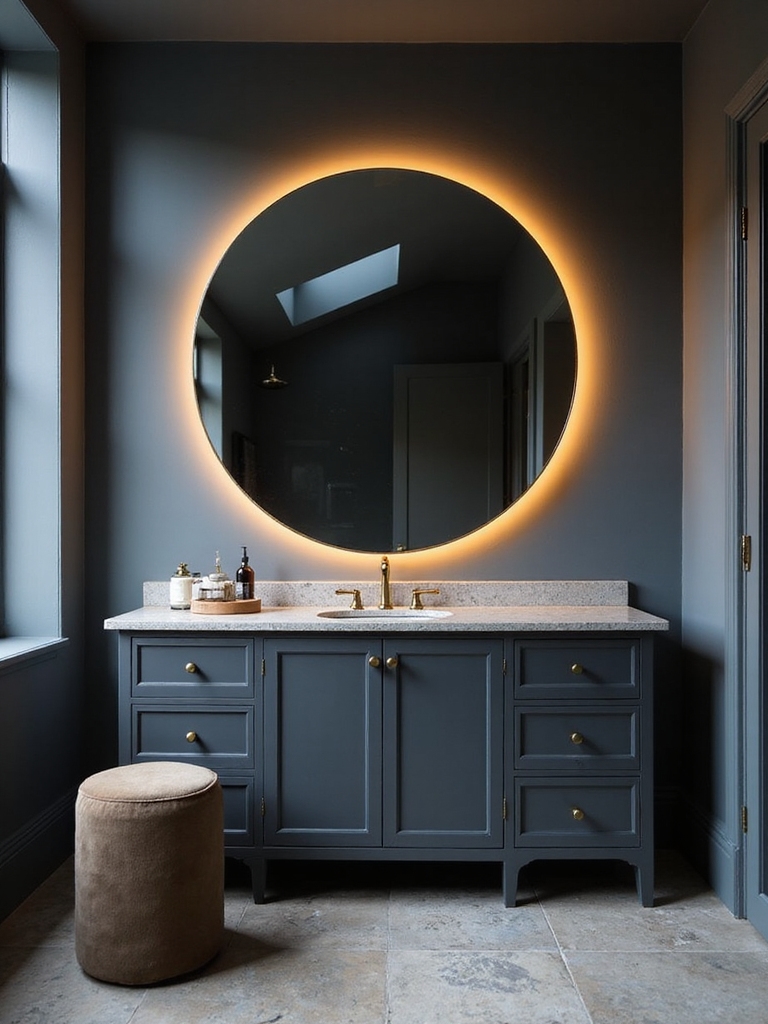
Nothing wakes up a forgettable bathroom faster than a moody color, and a small powder room is the perfect place to be brave. A deep charcoal, a rich navy, or a forest green wraps the space and makes it feel intimate and designed. Here is how to go dark without making the room feel like a cave:
- Pair the dark color with warm metals and good lighting so it feels cozy, not closed in.
- Let the moody shade lead and keep fixtures and counters simple around it.
- Use it boldest in a powder room you do not spend an hour in every morning; plan it like any color-by-mood scheme.
📋Small-Bath Transformation Checklist
- ✓Get fixtures off the floor (floating vanity, wall-hung toilet)
- ✓Go oversized on the mirror and reflective surfaces
- ✓Switch to warm, layered, dimmable lighting
Layered Lighting for Form and Function
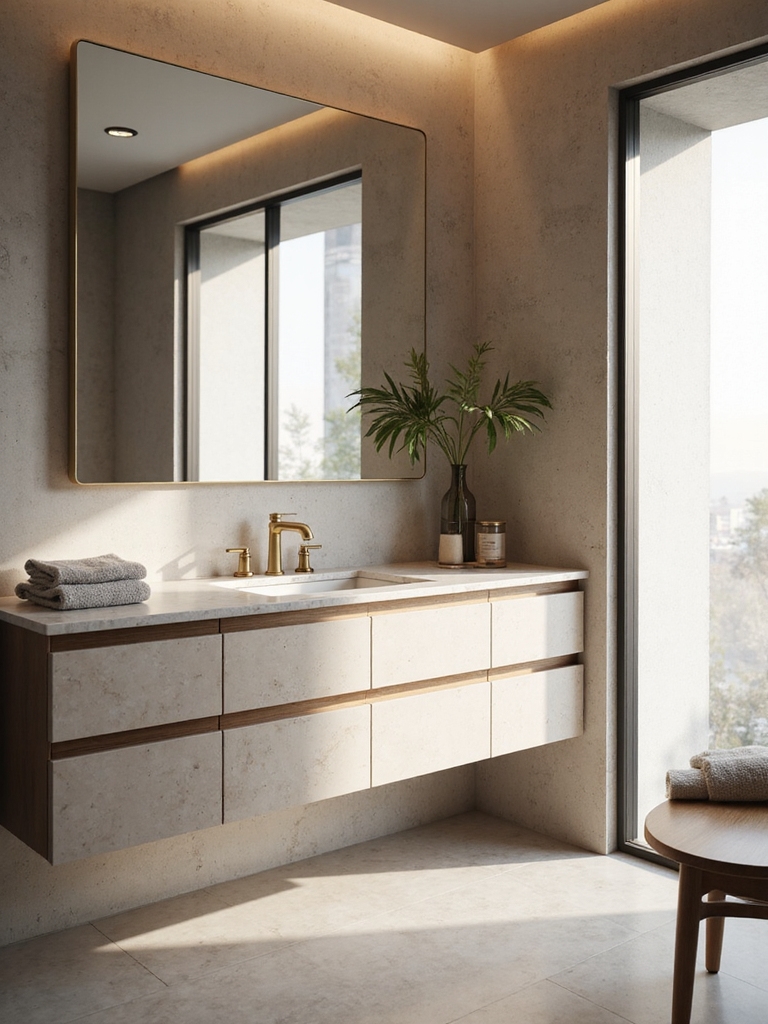
Lighting reshapes a bathroom more than almost any single change, because it sets both the mood and the sense of space. A single cold overhead flattens a room, while layered, warm light gives it depth and flatters every surface. I plan three jobs in every bath: ambient to fill the room, task at the mirror, and accent to add a glow.
Warmth is the part people miss. I spec warm 2700K to 3000K bulbs everywhere and add a dimmer, so the same room can go bright for a morning routine and low for a soak. Cool, bluish light is the fastest way to make even a transformed bathroom feel cheap again.
Use light to stretch the room, too. A big mirror opposite the brightest source doubles the brightness, and cove or backlit lighting makes a space feel custom. Coordinate the bulbs by lighting tone so the warmth stays consistent across every fixture.
Mirrors and Reflection to Open the Room
A bigger mirror is one of the highest-impact moves in a cramped bathroom, and it costs less than almost anything structural. Where a stock builder mirror boxes the room in, an oversized one stretches the walls and pulls the eye outward, so the space feels open the moment you swap it. A generous mirror runs a couple hundred dollars at most, a tiny price for that much change.
Angle it to do double duty. Set the mirror across from your strongest light so it throws that brightness back across the room and lifts the whole space. In a bath with no window, the reflection becomes your daylight, brightening corners that would otherwise sit dim.
Other shiny surfaces add to the trick. Glossy tile, a glass shower screen, and a polished tray each catch and pass the light along, deepening the sense of room. When a client wants a tight bath to feel airy, the mirror is the first swap I make. Borrow placement ideas from these mirror ideas worth copying.
One Statement Feature That Anchors the Room
A redesigned bathroom usually has one hero, a single feature the whole room organizes around. It might be a band of bold tile, a beautiful freestanding tub, a striking vanity, or a dramatic light fixture. Choosing one star and keeping everything else quiet is what makes a small budget feel designed rather than scattered.
The trick is to spend the attention, and most of the budget, in one place. A single statement wall of tile behind the vanity transforms a plain room for a few hundred dollars, while spreading the same money thinly across everything changes nothing. Pick your hero, give it a calm backdrop, and let it carry the room.
- Choose one hero feature: a tile wall, a tub, a vanity, or a light.
- Keep everything around it simple so the star stands out.
- Concentrate the budget on that one piece for the biggest visible change.
Carry One Surface Through to Transform the Whole Room
Letting one surface run unbroken through the room is a transformation that costs the same as a choppy approach but looks far more designed. When a single floor tile carries from the doorway straight into the shower, the borders that chop a small bath into pieces disappear, and the space suddenly behaves like one calm, intentional room instead of a patchwork stitched from leftover materials.
This is especially powerful in a tight footprint. With fewer transitions and fewer grout lines, the sightline stretches uninterrupted, and a cramped bath looks bigger than its measurements. Picking one material and letting it travel is a move I lean on whenever a room needs to feel larger than it really is.
The budget version works just as well. Take a wall color all the way up onto the ceiling so the edges blur, or wrap one tile from the floor up into a shower niche. The unbroken run guides the eye smoothly and the bathroom comes across as a single, deliberate whole.
Plan the Transformation
Before any of this, a quick plan keeps a transformation from turning into a scattered, costly mess. I tell every client to start with the room’s biggest problem, dark, cramped, dated, or dull, and aim the budget straight at it. Fixing the loudest issue first changes how the whole room feels more than a dozen small tweaks ever could.
If you are working with a designer or a contractor, lead with how you use the room and what bothers you most about it. Ask what the layout could become, where light and storage can hide, and which one feature is worth the splurge. A good pro will tell you which changes transform the space and which are just spending.
Keep the New Look Lasting
A transformation holds when a small habit protects it. I keep the counter to a styled few and run a one-minute nightly reset, so the open, calm feeling I designed stays that way instead of drowning under clutter within a week. That tiny routine is the difference between a room that stays transformed and one that slides back.
Maintain the surfaces on a slow rhythm. Reseal stone and grout a couple of times a year, wipe the metals and mirror twice a week so they stay bright, and refresh caulk when it yellows. A few minutes of care keeps a transformed bathroom looking new long after the work is done.
Bathroom Transformation Questions, Answered
?How can I make a small bathroom feel bigger without renovating?
Free the floor and trick the eye. A floating vanity, an oversized mirror, light-reflecting surfaces, and one continuous floor tile all make a small bath feel larger. Warm, layered lighting and a tight palette add to the effect, and none of it requires moving a wall.
?What is the single most transformative bathroom change?
It depends on the problem, but an oversized mirror plus warm, layered lighting transforms more rooms than anything else for the money. In a flat room, a moody color or a statement tile wall does the most. Aim the budget at the room’s biggest weakness first.
?Can a dark color work in a small bathroom?
Yes, and it can be beautiful in a small powder room, where a moody shade feels intimate and enveloping. Pair the dark color with warm metals and good lighting so it feels cozy rather than closed in, and avoid combining dark walls, dark floors, and dim light all at once.
?How do I transform a bathroom on a small budget?
Concentrate the money on one hero feature and the free wins. A statement tile wall or a bold paint color, a bigger mirror, warm bulbs, and a decluttered counter transform a room for well under a few hundred dollars. Spreading the same budget thinly across everything changes far less.
?Do I need to move walls to transform a bathroom?
Rarely. Most transformations come from layout tweaks within the existing footprint, like a sliding door or a corner sink, plus mirrors, lighting, color, and texture. Moving plumbing or walls is expensive, so it is the last resort, not the starting point.
Transformation Is Intention, Not Square Footage
The one idea behind every transformation here is that you change how a room feels by using it with intention, not by making it bigger. Free the floor, stretch the space with mirrors and light, add depth through texture and color, and let one hero feature anchor it. Do that and even the smallest, most awkward bathroom becomes a room you are happy to show off.
Start with whatever bothers you most about the space and aim the budget straight at it, because fixing the loudest problem lifts the room fastest. So when you look at your bathroom tonight, what is the one thing holding it back?