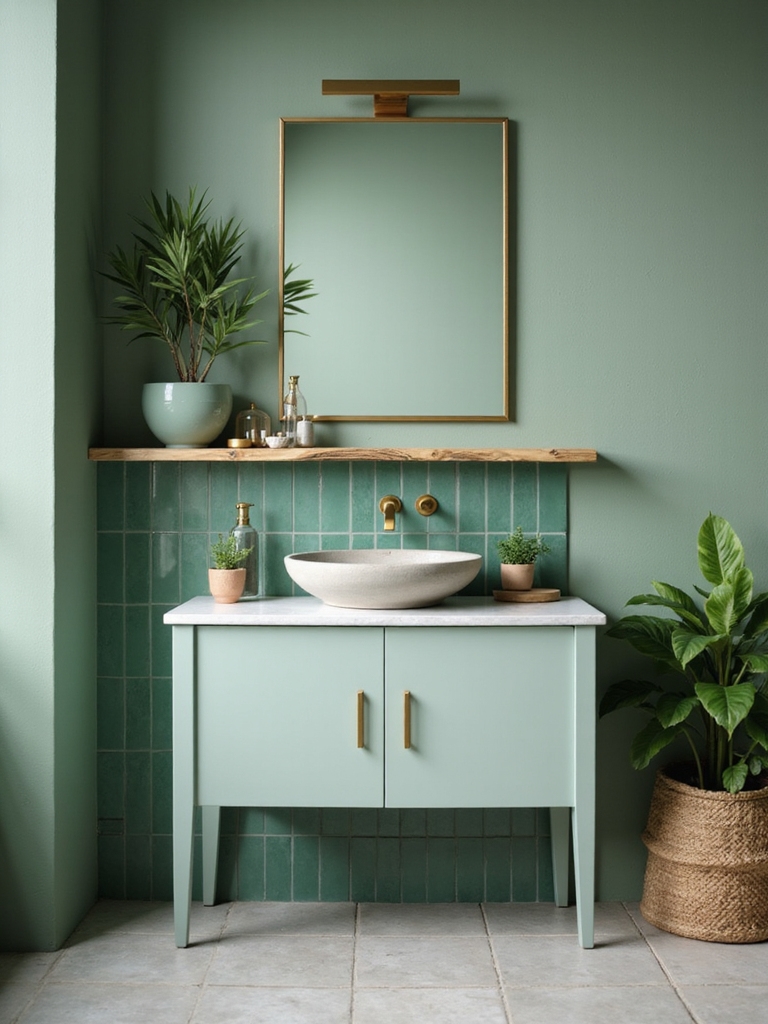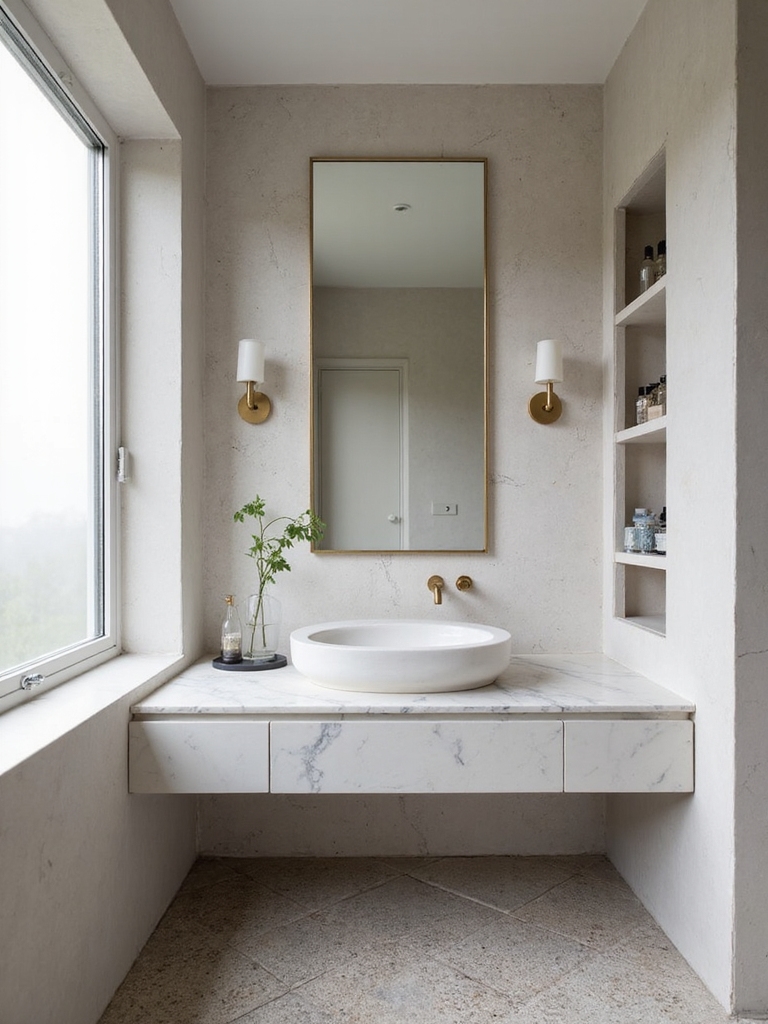

The ceiling is the one surface in a bathroom almost nobody styles, and that is exactly why a styled one stops people in their tracks. Designers call it the fifth wall for a reason. When you treat the ceiling as a surface that can draw the eye up, even a small, boxy bath suddenly feels taller and more considered.
Below are 16 bathroom ceiling ideas built to lift the gaze, from a coat of dramatic paint to wood, wallpaper, and light. I will be honest about which ones add real height, which just add drama, and which finishes actually survive the steam, because a bathroom ceiling has to handle moisture that a bedroom one never will.
Looking Up, in Short
The fastest way to draw the eye up is contrast or texture overhead: a painted ceiling, a papered one, or wood that gives the surface depth. Vertical lines and a continuous color from wall to ceiling stretch the height, while a bold ceiling becomes a focal point that makes the whole room feel designed.
Just remember a bathroom ceiling lives in steam. Use a moisture-rated, mildew-resistant finish rated for humid rooms, run your fan, and the look lasts. Most of these ideas are a weekend and a gallon of paint; the wood, coffered, and skylight options are bigger projects worth budgeting for.
Balanced Ceiling Design That Draws the Eye Up
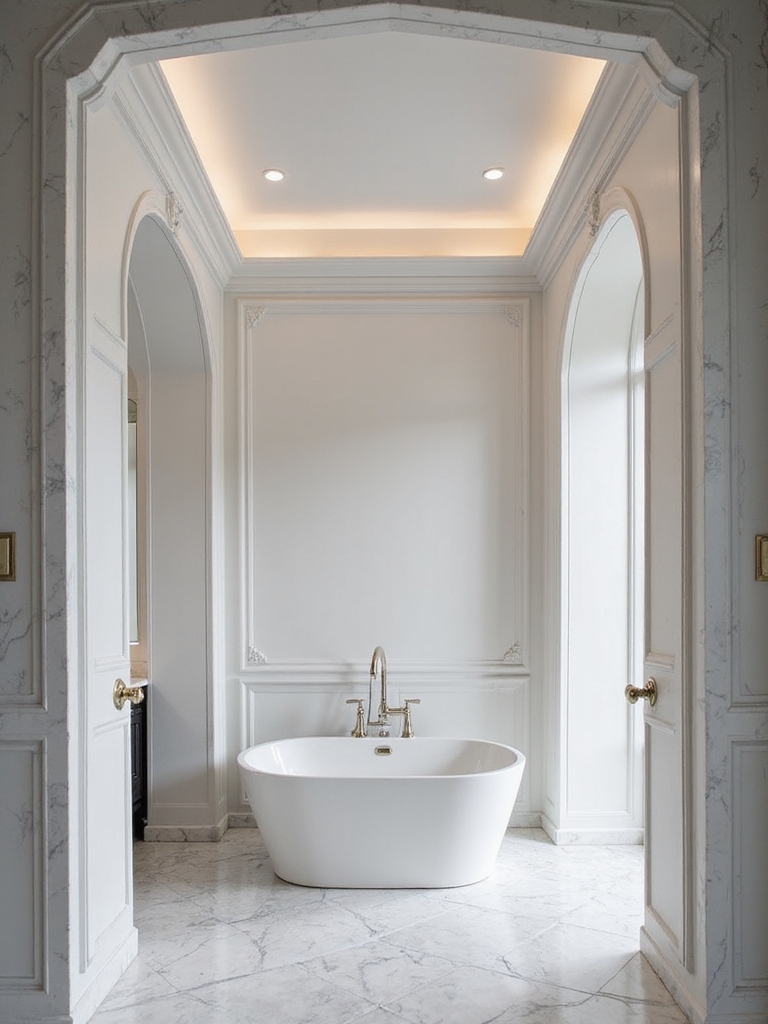
A ceiling that pulls the eye up does it with three tools working together: contrast, texture, and light. Push only one and the room can feel off; balance all three and the ceiling lifts the whole space without shouting. The ceiling is the surface I beg clients not to forget, because it is the cheapest drama in the room and the last place anyone expects it.
- Contrast draws the eye, whether that is a darker shade overhead or a crisp white against colored walls.
- Texture adds depth, so the surface catches shadow and looks like more than flat paint.
- Light is the finisher, since the best ceiling falls flat in a dim, evenly lit room.
Bold Paint That Lifts a Ceiling
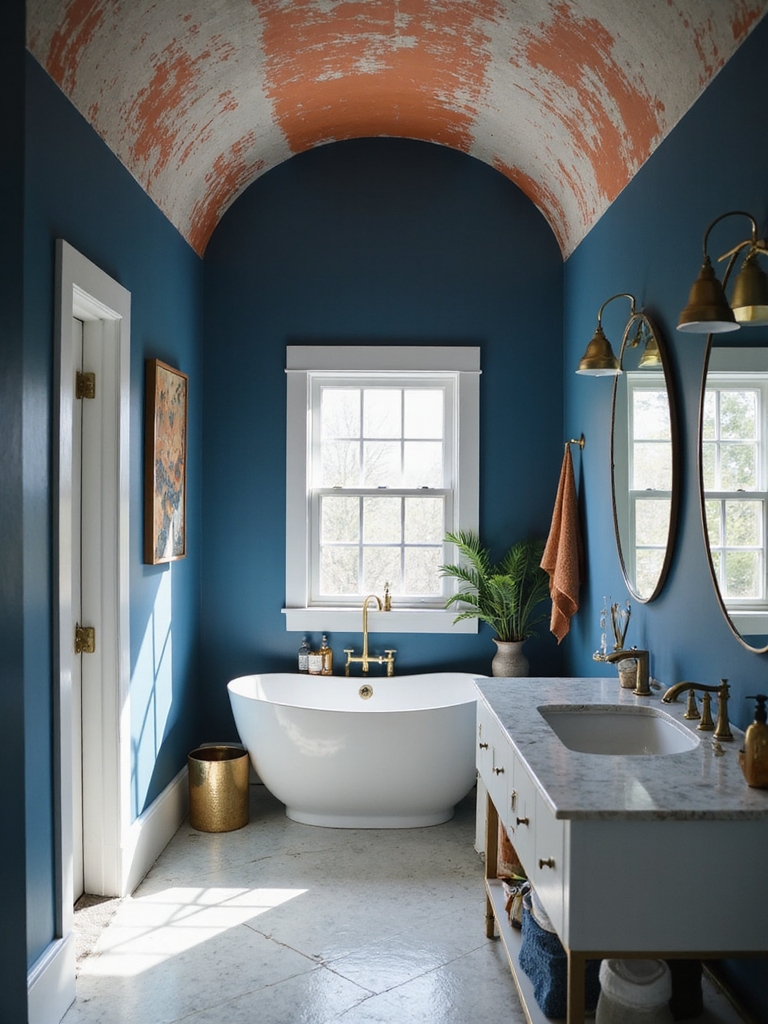
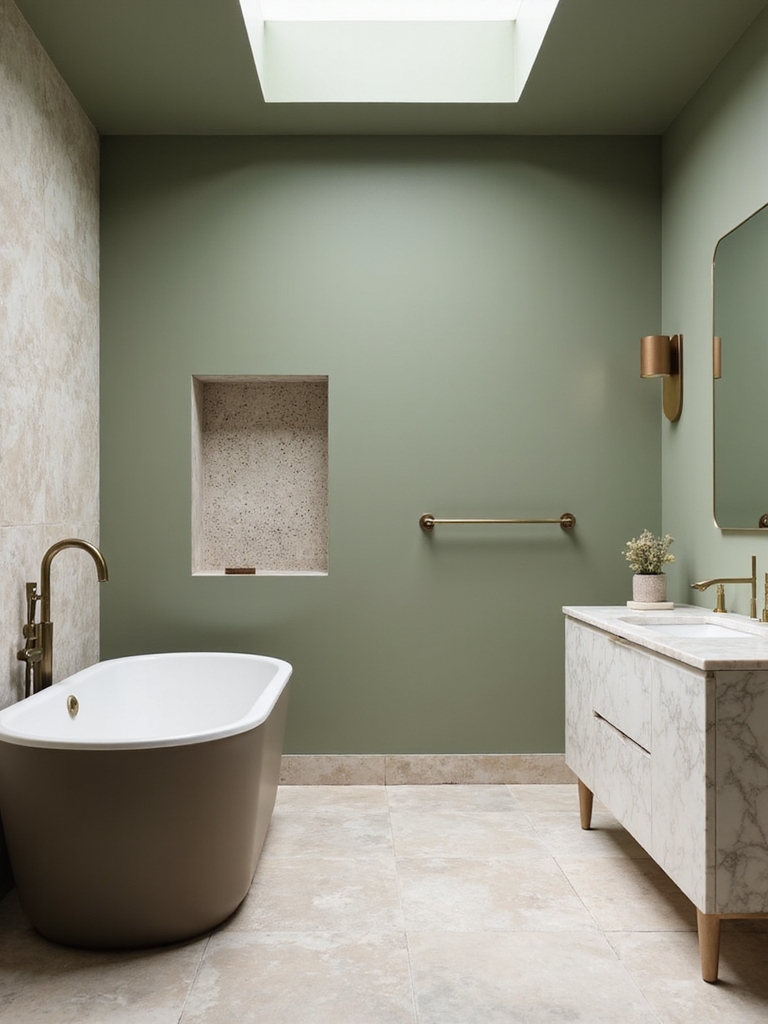
Paint is the cheapest, fastest way to turn a ceiling into a feature, and it is where I start with nearly every client. A rich color overhead, a deep green, a moody navy, a warm clay, gives the room a lid that feels intentional and surprisingly cozy. A gallon of moisture-rated ceiling paint runs about $30 to $60, and one afternoon changes the whole mood.
Carry the Wall Color Up to Fake Height
There is a height trick hiding in the color choice. Carrying the wall color straight up onto the ceiling blurs the line where the two surfaces meet, so the eye never quite finds the edge where the wall stops and the ceiling begins, and the whole room feels taller than its actual height. For a bolder move, a contrasting ceiling becomes a focal point that pulls every gaze upward the second you walk in.
Test before you commit, because overhead color looks darker than on a wall. Paint a sample patch and live with it for a day under your real lighting. Pair a dark ceiling with bright trim and good light so it lands as moody, not cave-like, and plan the relationship the way you would any color-by-mood scheme.
A common ceiling fear, cleared up:
❌ Myth: A dark ceiling makes a small bathroom feel smaller.
✅ Reality: Not necessarily. In a small bath, a dark ceiling can blur the room’s edges and feel cozy and enveloping, especially with good lighting and bright walls. The trap is a dark ceiling plus dark walls plus dim light; fix the light and the height reads fine.
❌ Myth: Ceiling treatments are only for tall rooms.
✅ Reality: Low ceilings benefit most. Vertical wallpaper, carried-up wall color, and beadboard lines all stretch a low ceiling upward, which is exactly where the eye-up trick earns its keep.
Bold Wallpaper for Overhead Drama
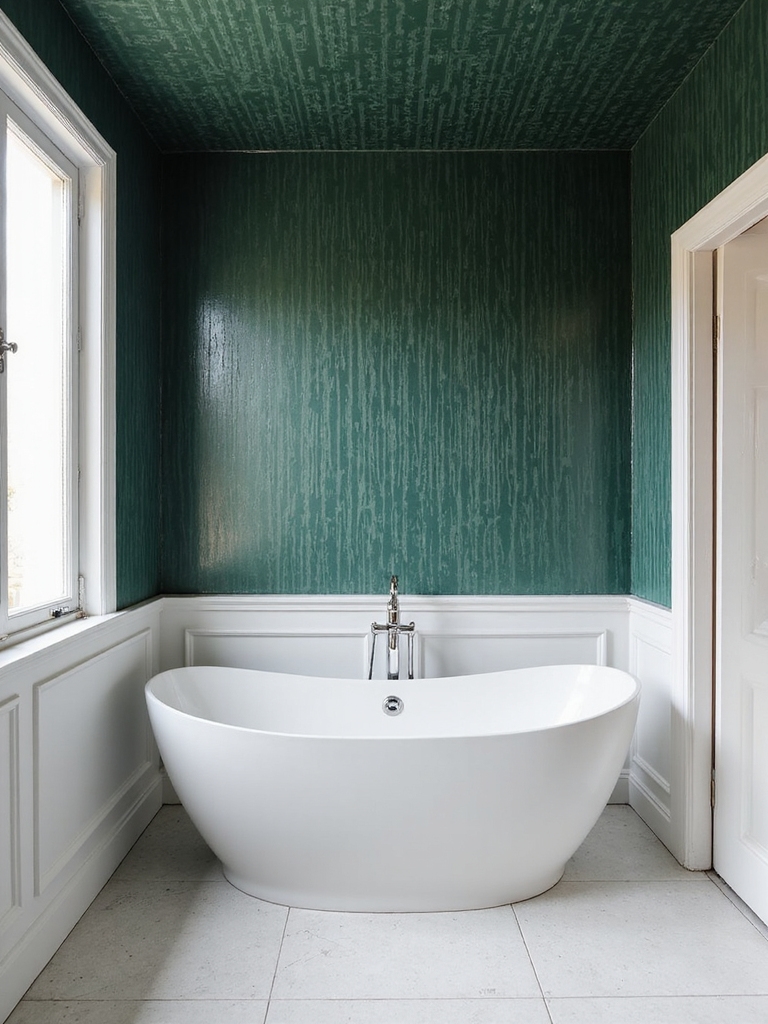
Wallpaper on the ceiling is the move that makes a powder room unforgettable, and a small bath is the perfect low-risk place to try it. Pattern overhead adds the kind of vertical drama paint cannot, drawing the eye up and rewarding anyone who looks. Here is how to do it without regret:
- Choose a moisture-resistant or vinyl-coated paper so steam does not lift the seams.
- Pick a small powder room first, where the square footage is tiny and the impact is huge.
- Run a tight, repeating pattern to multiply the height, and keep the walls quiet so the ceiling stars.
Textured Ceiling Finishes You Can Feel
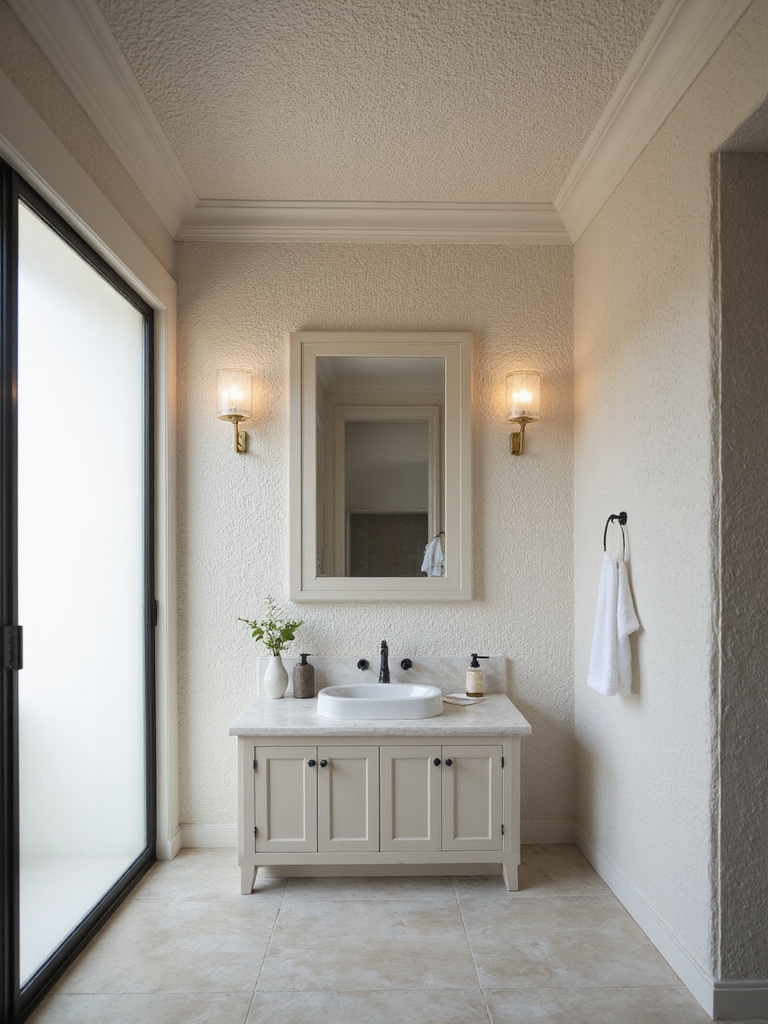
Texture gives a ceiling depth that flat paint never will, and depth is what makes the eye linger and travel upward. A beadboard or shiplap ceiling brings cottage warmth and crisp vertical lines, while a subtle plaster or limewash adds a hand-finished softness that catches light all day. These surfaces feel like architecture you can touch.
The one to approach carefully is the old popcorn ceiling. Used sparingly it offers acoustic softening in an echo-prone bath, though most people are tearing it out these days. I steer clients toward beadboard or wood instead, which delivers the texture and the charm without the dated association.
- Run beadboard or shiplap for vertical lines that visually stretch the height.
- Try a plaster or limewash finish for a soft, hand-troweled depth.
- Keep any texture moisture-sealed so humidity does not stain or lift it.
Heads-Up
Regular wall paint and uncoated wallpaper will not survive a bathroom ceiling. Use a moisture-rated, mildew-resistant paint or a vinyl-coated paper, and always run your exhaust fan during and after showers, or steam will lift seams and breed mold within a season.
Subtle Ceiling Hues That Heighten the Room
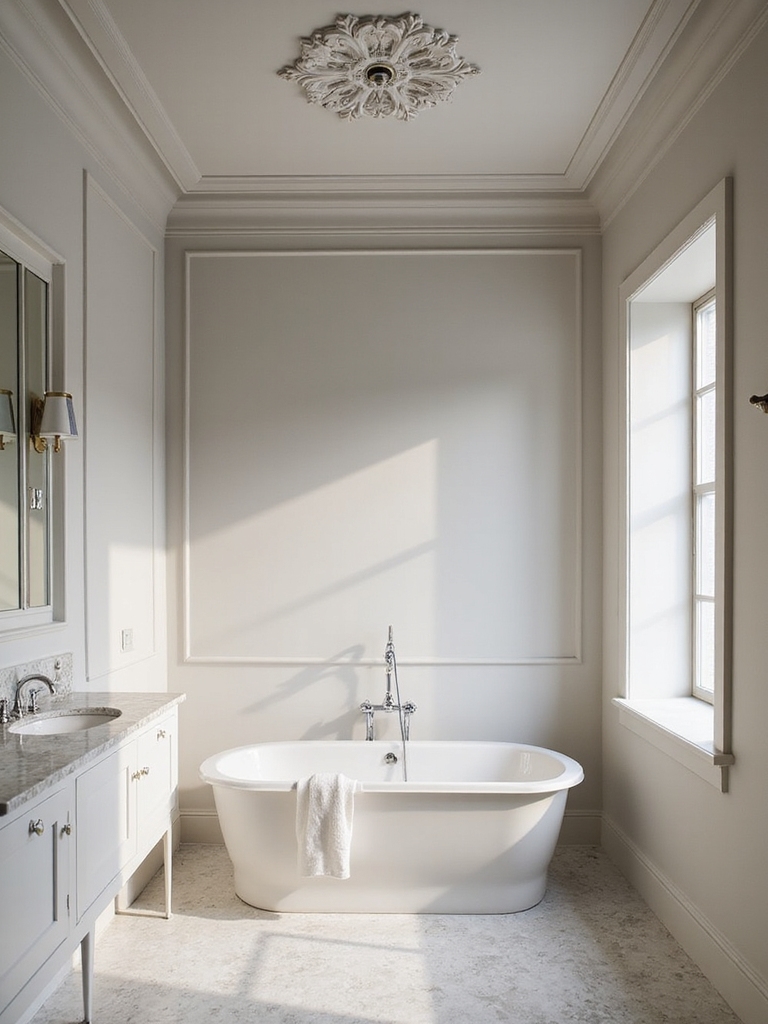
Not every ceiling wants drama, and the quiet approach is often the smarter one in a tight or low room. A whisper of color overhead, a soft blue, a pale mauve, a warm off-white, lifts the eye gently and keeps the space feeling airy. These restrained tones add height without the weight a dark ceiling can bring to a small bath.
The bonus is forgiveness. Subtle hues hide minor ceiling flaws better than stark white, age slowly, and play nicely with whatever you have on the walls. A matte finish minimizes glare from overhead lighting and helps the surface recede, which makes a low ceiling float a little higher.
Wood, Coffered, and Architectural Ceilings
When you want the ceiling to feel like real architecture, wood and millwork deliver it. A warm wood-paneled ceiling brings depth and a spa-like calm, and moisture-resistant species or a good sealed finish keep it safe above a shower. Plan on $2 to $5 a square foot for paneling materials, more if you bring in a pro to fit it cleanly.
Coffered ceilings are the dressier cousin, a grid of recessed panels that adds rhythm and serious dimension. They suit a larger, taller bath better than a cramped one, since the grid needs room to read. In the right space, a coffered ceiling is the detail that makes a bathroom feel custom and built to last.
Smaller architectural touches scale down for any room. A lightweight ceiling medallion around a fixture, a band of crown molding, or a single recessed niche adds polish and draws the eye up for far less commitment. These are the moves I lean on when a full wood ceiling is out of budget but a flat white one feels like a missed chance.
Lighting and Skylights That Lift the Eye
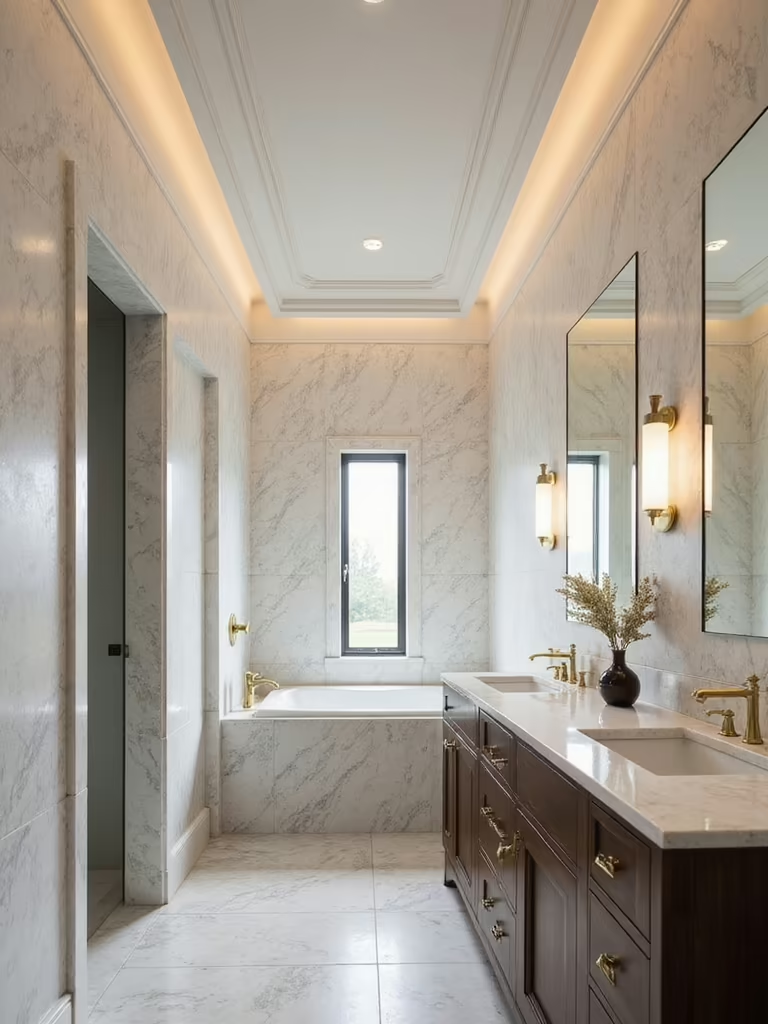
A beautiful ceiling dies under bad light, so lighting is half the work of drawing the eye up. I run LED tape along a crown edge or cove to wash the ceiling in a soft glow that makes it feel like it floats, then add a dimmer so the height effect can shift from bright to intimate. Up-light, and the eye follows it.
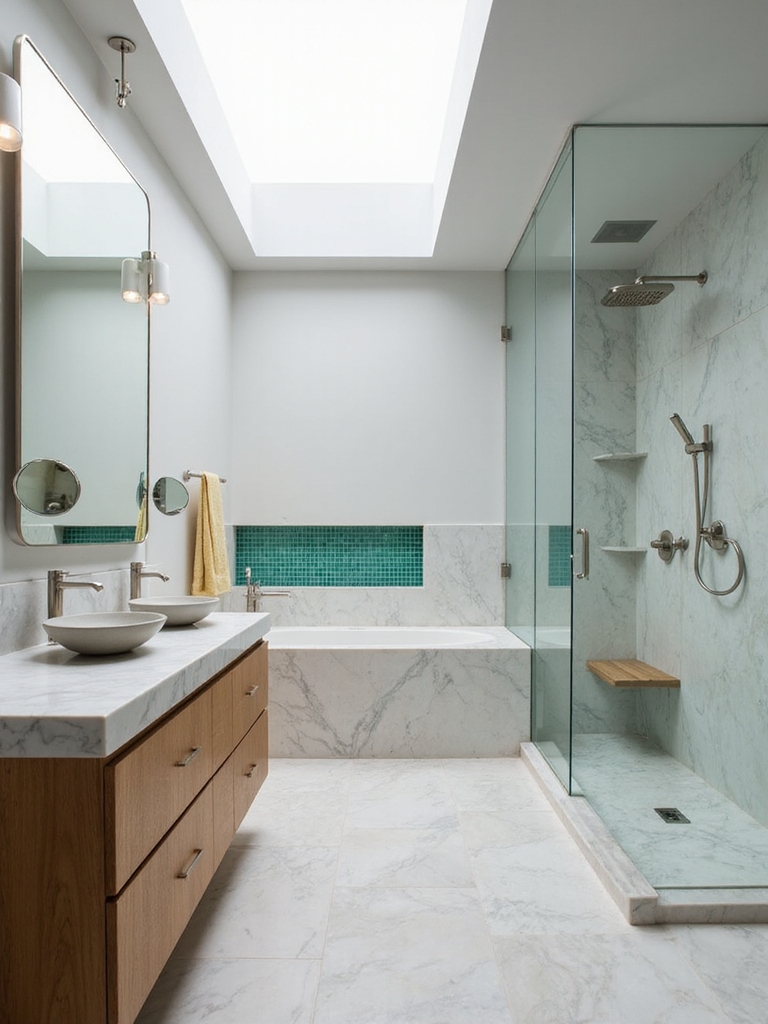
Daylight is the ultimate ceiling lift. A skylight or a sun tunnel pours light from above and instantly makes a room feel taller and more open, though both are structural projects for a pro, not a weekend job. Pair any of this with reflective surfaces and sort your fixtures by lighting tone so the warmth stays consistent overhead.
- Use cove or perimeter LED tape to graze the ceiling and exaggerate height.
- Add a dimmer so the ceiling can read dramatic at night and bright by day.
- Consider a skylight or sun tunnel for real daylight, installed by a pro.
Painted Patterns, Niches, and the Practical Side
A few smaller moves give you the eye-up effect without a big commitment. A simple painted pattern overhead, a wide stripe, a soft grid, or a shape that echoes your floor tile, adds rhythm and personality for the cost of two paint colors. Keep the lines crisp and the palette tight. One bold geometric looks deliberate. A busy one just rattles the eye.
Ceiling niches and shallow recesses are the architect’s version of the same idea. A recessed panel can frame a statement light or carry a band of cove lighting, which carves real depth into a flat ceiling and gives the gaze somewhere to travel. Align any recess with your existing plumbing and fixtures so the whole ceiling feels intentional rather than improvised.
Whatever you choose, plan for upkeep, because a damp room ages a ceiling faster than a dry one. I tell clients to expect a fresh coat every three to five years in a busy bath, and to wipe the corners and check for early mildew every few months. Catch a spot early and it is a five-minute fix; ignore it and you are repainting the whole thing a year sooner than you should.
What to Expect
Set expectations by effort and you will pick the right idea for your weekend and your wallet. The paint, wallpaper, and beadboard options are truly DIY-friendly, a day or two of work and a few hundred dollars at most. Wood, coffered, and skylight projects are bigger lifts, often worth a pro, and worth budgeting for if the room can carry them.
The non-negotiable across all of them is moisture. A bathroom ceiling takes more humidity than any other in the house, so use mildew-resistant, moisture-rated finishes, run the exhaust fan, and the look stays fresh for years. Skip that step and even the prettiest ceiling will stain and peel by the next humid season.
Bathroom Ceiling Questions, Answered
?What kind of paint should I use on a bathroom ceiling?
Use a moisture-rated, mildew-resistant paint made for humid rooms, ideally in a satin or semi-gloss that wipes clean and resists steam. A flat wall paint will stain and grow mildew over a shower. Pair it with a working exhaust fan and the finish holds up for years.
?Will a dark ceiling make my small bathroom feel cramped?
Usually no, if the lighting is right. A dark ceiling can blur the room’s edges and feel cozy rather than closed in, especially with bright walls and good light. The combination to avoid is a dark ceiling with dark walls and dim lighting, which does shrink the space.
?Can I wallpaper a bathroom ceiling?
Yes, and a small powder room is the ideal spot. Use a moisture-resistant or vinyl-coated paper so steam does not lift the seams, and keep the fan running. A tightly repeating pattern overhead adds vertical drama and makes a tiny room feel taller and intentional.
?Which ceiling ideas actually make a room feel taller?
Carrying the wall color up onto the ceiling, running vertical lines like beadboard or wallpaper, and grazing the surface with cove lighting all stretch perceived height. Subtle light tones lift a low ceiling more reliably than a heavy dark shade in a small, low room.
Give the Fifth Wall a Job
A bathroom ceiling is free real estate for drama, and treating it as a surface that can draw the eye up is the move most people never think to make. Carry a color up to fake height, add texture or pattern for depth, light it so it floats, and the room reads taller and far more designed than the square footage suggests.
Start with the lowest-risk idea that fits your room, usually paint or a papered powder-room ceiling, and just make sure the finish is rated for steam. Once you look up and see possibility instead of flat white, the whole bathroom gets more interesting. So which will you try first, color or texture?
More Looks Worth Saving